
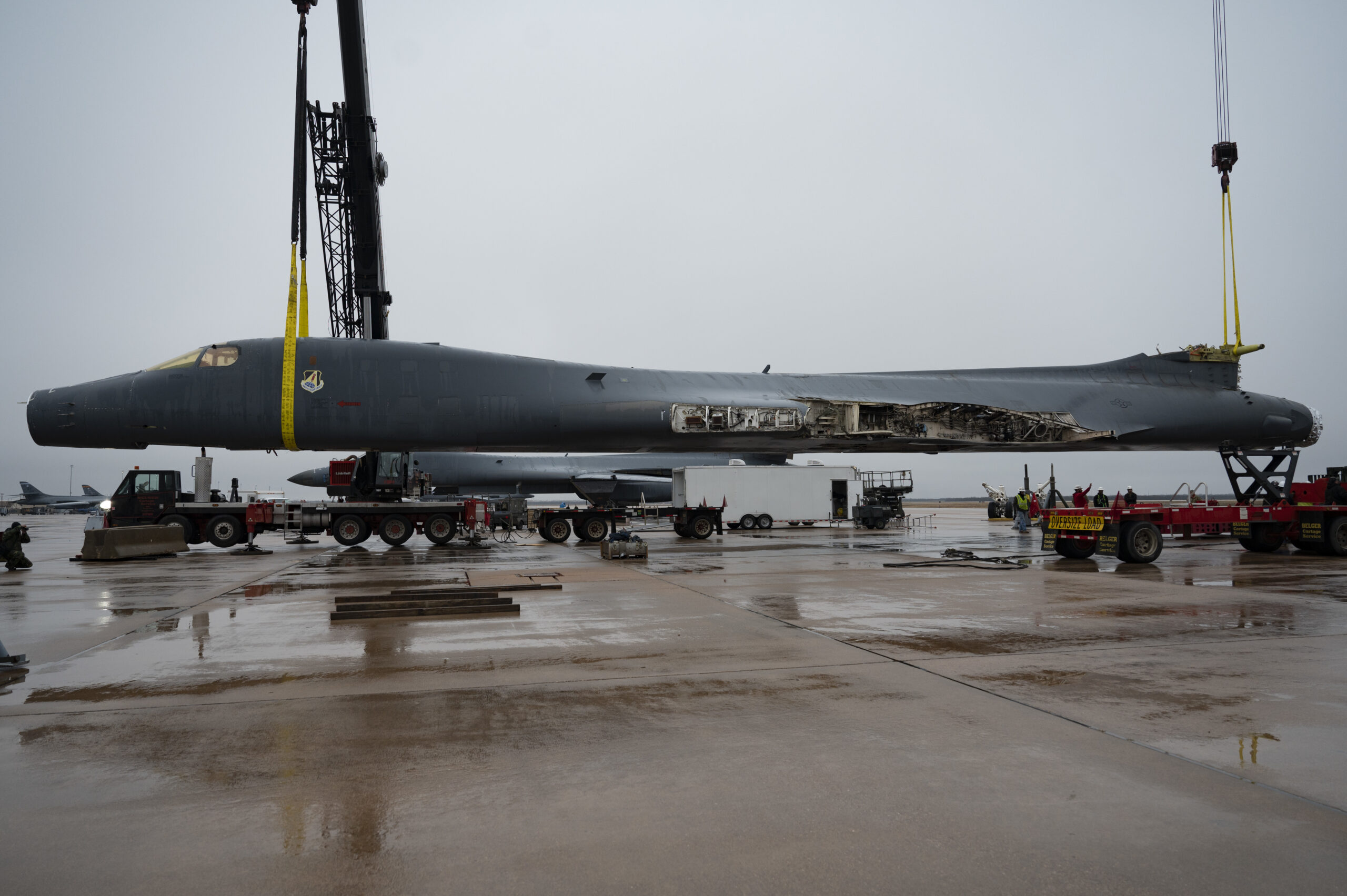
One year after its inception, the Air Force Global Strike Command’s “North Star Readiness Campaign” is reporting initial successes in its mission to enhance the operational readiness of the B-1B Lancer and B-52H Stratofortress bomber fleets. Launched in summer 2024, the campaign aims to address long-standing challenges in maintaining these aging but vital aircraft.
The campaign primarily focuses on a coordinated effort to streamline maintenance and supply logistics for two of the Air Force’s most critical yet increasingly stressed bomber fleets. Air Force Global Strike Command (AFGSC) has partnered with Air Force Materiel Command (AFMC) and the Defense Logistics Agency (DLA) to improve the availability of spare parts, provide engineering support, dismantle logistical obstacles, and optimize depot operations. These measures are designed to accelerate the repair and maintenance cycles for both the B-1 and B-52 aircraft.
Officials emphasize that this drive to improve readiness is crucial for extending the operational lifespan of the B-1 fleet through 2037 and the B-52 fleet even further, as the Air Force gradually transitions to its new generation of B-21 Raiders. The B-1 fleet, with an average age approaching 40 years, and the B-52 fleet, averaging over 60 years, have both seen increasing difficulties in maintaining mission-capable rates over recent years.
While the Air Force no longer publicly releases specific mission-capable rates—the percentage of time an aircraft is available and able to perform its designated mission—data from 2024 indicated that B-52s were available 54 percent of the time, with B-1s at an even lower 43 percent. Both figures represented a consistent downward trend prior to the campaign’s launch.
Gen. S.L. Davis, commander of Air Force Global Strike Command, underscored the campaign’s importance in a September 8 statement. “The North Star Readiness Campaign is our commitment to ensuring the warfighter has the nation’s bomber force ready to go at a moment’s notice,” Davis stated. “This is a team effort. It brings together the operators at Air Force Global Strike Command, the acquisition and sustainment experts at Air Force Materiel Command, and our logistics partners at the Defense Logistics Agency to focus on one thing: operational readiness.”
In its September 8 release, Global Strike Command did not provide updated mission-capable rates for the bomber fleets. However, the command did highlight several areas of notable progress.
For instance, the B-1 fleet has historically been significantly impacted by “mission-impacting part problems,” or MICAPs. These incidents occur when a critical component necessary for an aircraft’s mission capability fails, and a replacement or repair part is not immediately available. At the initiation of the North Star Readiness Campaign, the B-1 fleet recorded over 450 MICAPs. That figure has since been reduced to approximately 160, according to the Air Force release.
This substantial reduction in MICAPs has allowed maintenance personnel to shift their focus from addressing immediate emergencies on the B-1s to concentrating more on high-priority backorders and identifying emerging trends in aircraft failures. The proactive approach aims to prevent future breakdowns rather than merely reacting to them.
Another indicator of progress is the implementation of daily meetings involving representatives from the DLA, supply chain officials, base-level logistics readiness squadrons, and flightline maintainers. These sessions are designed to identify and resolve delays in part shipments more quickly. By addressing procedural bottlenecks, the command reports that it has been able to reduce some shipment timelines from over a week to just two or three days, significantly improving response times.
The campaign unfolds as the Air Force grapples with increasing concerns about its ability to sustain an adequate number of operational bombers, particularly as key platforms exhibit signs of advanced age and wear. The B-1 fleet, currently comprising 45 aircraft, underwent extensive utilization during the Global War on Terror, leading to accelerated wear and tear. Over the past five years, 17 of the most heavily used B-1s were retired, partly to enable maintenance personnel to concentrate resources on the remaining, healthier Lancers.
The B-52, renowned for its longevity, is nonetheless demonstrating its age. The 75-aircraft fleet still operates with its original Pratt & Whitney TF33 engines, dating back to the bombers’ initial production. These engines are prone to frequent malfunctions. Furthermore, many original manufacturers of B-52 spare parts have ceased operations, compelling the Air Force to seek alternative suppliers or resort to cannibalizing non-flying Stratofortresses for usable components.
In response, the Air Force is undertaking a comprehensive modernization program for the B-52. This extensive upgrade will involve replacing its engines, avionics, radar, cockpit displays, and other crucial systems. This modernization effort is so significant that the bomber will eventually be redesignated as the B-52J, with the goal of extending its service life into at least the 2050s.
The Air Force emphasizes that insights from maintainers, who work directly with these aircraft on a daily basis, are vital to the readiness campaign’s success. Flightline personnel are providing critical information that helps refine maintenance procedures and expedite the movement of essential parts to where they are needed most.
Chief Master Sgt. Shane Anderson, the change management lead for the North Star Readiness Campaign, cited an example where Airmen developed a new playbook for “phase maintenance.” This process, a comprehensive overhaul regularly scheduled after an aircraft accumulates a certain number of flight hours, can now be performed with significantly greater efficiency without compromising safety or security standards.
“The [readiness campaign] started as a concept at the strategic level, but we have also received ideas directly from the flight line,” Anderson noted. “They are the ones with the hands-on experience, and we would be remiss if we didn’t leverage their expertise to drive these improvements.”
The campaign also includes efforts to expedite the availability of parts for critical B-1 structural and avionics components, concurrently working with AFMC and DLA to “streamline depot-level maintenance cycles.” The Air Force stated, “These targeted efforts are designed to maximize the B-1’s operational readiness, ensuring it remains a lethal and highly visible conventional global strike option.”
Furthermore, the Air Force indicated that the campaign is assisting leaders in anticipating future issues that could compromise bomber readiness before they escalate into problems that halt missions. This unified approach to improving maintenance is considered essential for ensuring the strategic bomber fleet remains capable of projecting airpower globally.
Gen. Davis concluded, “By modernizing these incredible platforms and ensuring our maintainers have the parts and support they need, we are sending a clear message to our adversaries and allies alike that the United States’ long-range penetrating strike capability is, and will remain, second to none.”
Why This Matters
The operational readiness of the B-1B Lancer and B-52H Stratofortress fleets is a critical component of U.S. national security and global power projection. These long-range bombers serve as foundational elements of the Air Force’s strategic capabilities, capable of delivering conventional or nuclear payloads anywhere in the world. Their ability to conduct deterrence missions, provide close air support, and execute precision strikes is directly tied to their mission-capable rates.
The “North Star Readiness Campaign” highlights a significant challenge facing modern militaries: how to maintain legacy systems, some of which are decades old, in a state of high readiness amidst evolving threats and budgetary constraints. The B-52, in particular, is an engineering marvel for its longevity, but sustaining aircraft that predate most of their maintainers presents complex logistical, industrial, and human capital issues. The dwindling availability of original parts, the need for specialized skills, and the sheer volume of maintenance required for older airframes are substantial hurdles.
From a strategic perspective, the continued effectiveness of these bombers is crucial for bridging the gap until the new B-21 Raider fleet achieves full operational capability. Any degradation in their readiness could create a capability gap, potentially emboldening adversaries or weakening the confidence of allies. The B-1 and B-52 fleets are not merely flying platforms; they represent a flexible response option that signals U.S. commitment and capability on the international stage.
Economically, the campaign represents a significant investment in extending the life of existing assets, potentially saving billions compared to accelerating the acquisition of new platforms. However, it also underscores the high cost of maintaining complex military hardware over extended periods. The success of this campaign will influence future defense spending decisions, particularly regarding the balance between sustaining older platforms and investing in next-generation technologies.
Furthermore, the campaign’s emphasis on inter-agency cooperation (AFGSC, AFMC, DLA) and integrating feedback from flightline maintainers reflects a broader shift towards more agile and responsive defense logistics. This collaborative model, if successful, could serve as a blueprint for improving readiness across other aging fleets within the U.S. military, addressing systemic issues that affect everything from fighter jets to transport aircraft. Ultimately, the North Star Readiness Campaign is more than just a maintenance effort; it is a vital initiative to ensure the U.S. retains its decisive edge in global airpower for decades to come.