

Maurad Ali, chef and owner of the C.L.A.S.S. Soiree Steakhouse in Hollywood, Florida, and Tasheba Hart, the hostess for nude dining events held at the establishment, discuss the naked dining offering.
In an increasingly competitive and challenging restaurant landscape, establishments are constantly seeking novel ways to capture consumer attention and carve out profitable niches. The C.L.A.S.S. Soiree Steakhouse in Hollywood, Florida, has certainly found a distinctive approach: offering a monthly nude dining experience. While provocative, this strategy provides a fascinating case study for financial journalists examining market differentiation, experiential economics, and the ever-evolving consumer appetite for unique offerings.
Key Takeaways:
- **Niche Market Penetration:** C.L.A.S.S. Soiree Steakhouse leverages a highly specific, albeit controversial, niche (nude dining) to differentiate itself in a saturated fine-dining market, potentially offsetting broader industry challenges like rising operational costs and intense competition.
- **Experiential Economy Leverage:** The concept capitalizes on the growing consumer demand for unique, shareable “experiences” over traditional dining, creating high perceived value and enabling premium pricing through an event-based revenue model.
- **Strategic Risk & Reward:** While attracting significant media attention and a dedicated clientele, the strategy carries inherent reputational and regulatory risks. Its success hinges on meticulous execution, clear communication of its “classy” ethos, and effective management of public perception to ensure long-term viability and brand integrity.
The C.L.A.S.S. Soiree Steakhouse, under the ownership of Chef Maurad Ali, hosts its “nude dining” events on the first Monday of each month. Guests, after arriving clothed, are invited to disrobe for their meal, a concept facilitated and hosted by Tasheba Hart. Hart, who operates independently for these events, sells tickets directly: $150 for individual women, $250 for individual men, and $300 for couples, with the restaurant receiving a cut of the proceeds. This innovative model warrants a deeper dive into its market context and potential financial implications.
C.L.A.S.S. Soiree Steakhouse chef and owner Maurad Ali, left, and nude dining event hostess Tasheba Hart, right.(Fox News Digital / Fox News)
Differentiating in a Saturated Market
The restaurant industry, particularly the upscale steakhouse segment, is notoriously competitive and capital-intensive. Operators face persistent challenges ranging from escalating food costs – notably high beef prices, as highlighted by broader industry warnings – to labor shortages and rising real estate expenses. The recent bankruptcy filing of the 801 Restaurant Group, a steak and seafood chain, underscores the fragility even among established players. In such an environment, merely offering quality food and service is often insufficient to guarantee long-term success. Differentiation becomes paramount.
C.L.A.S.S. Soiree’s nude dining concept is a bold attempt at extreme differentiation. By creating an experience that is overtly “not your grandpa’s steakhouse,” as Ali puts it, they aim to bypass direct competition based solely on menu or ambiance. Instead, they compete on novelty and exclusivity. This move positions the steakhouse not just as a place to eat, but as a destination for a unique, memorable event, tapping into a psychological driver of consumer spending post-pandemic: the desire for novel, shareable experiences.
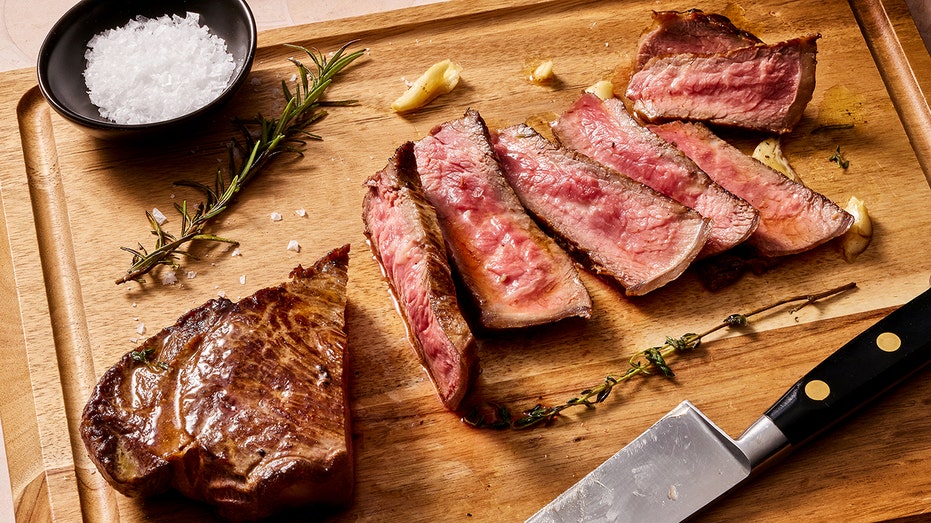
The Florida steakhouse offers a nude dining experience once a month.(Justin Tsucalas; food styling by Lisa Cherkasky/Both for The Washington Post via Getty Images / Getty Images)
The Experiential Economy and Niche Appeal
The global “experiential economy” has been a significant trend, where consumers prioritize spending on experiences – travel, entertainment, unique events – over tangible goods. Restaurants that can deliver on this front often command higher price points and cultivate greater customer loyalty. Nude dining, presented as a “fine-dining experience” that is “classy” and explicitly “does not allow ‘touchy-feely stuff’,” attempts to frame itself within this high-value experiential segment, rather than as a mere gimmick.
The revenue model for these events is particularly interesting. By structuring it as a ticketed event managed by an external host, Tasheba Hart, the restaurant likely minimizes its direct marketing costs and potential reputational exposure from directly promoting such a niche. The fixed ticket prices ($150-$300 per person/couple) suggest a high per-customer spend compared to a typical à la carte dinner. Assuming a reasonable number of attendees for a monthly event, this could provide a significant, predictable revenue stream that supplements the regular operations of the steakhouse, especially on a typically slower Monday evening. This model allows the restaurant to test a niche market with reduced upfront investment and overhead for the specific event’s promotion and ticketing.
The gender-specific pricing (men paying more than women, and couples receiving a slight discount compared to two individual male tickets) is also a notable aspect, likely influenced by demand dynamics and historical patterns in social events targeting specific demographics, though it could also invite scrutiny.
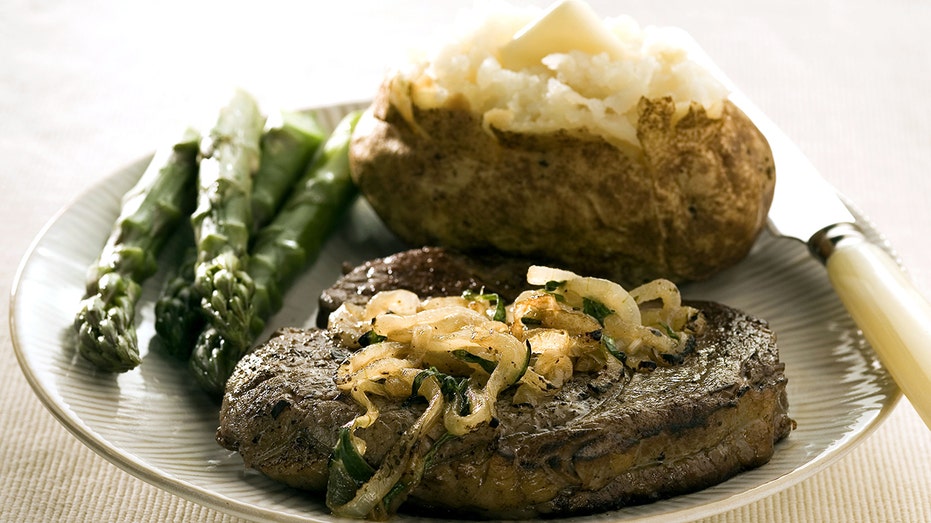
Rib-eye steak with a sweet onion-tarragon topping paired with a baked potato and asparagus. (Bonnie Trafelet/Chicago Tribune/Tribune News Service via Getty Images)
Risks, Rewards, and Sustainability
While the strategy has undoubtedly generated considerable media attention – a form of free marketing in itself – it is not without risks. Public perception, regulatory scrutiny (especially regarding health and safety codes, although staff remain clothed), and the potential for alienating a broader, more traditional customer base are significant considerations. The emphasis on “classy” and “no touchy-feely stuff” is a crucial attempt to mitigate these risks and position the offering as a legitimate, respectful experience rather than something lewd.
However, for the right niche audience, the reward could be substantial: a highly loyal and engaged clientele willing to pay a premium for an experience they cannot find elsewhere. The limited frequency (once a month) also helps maintain exclusivity and manage operational complexities, ensuring the core steakhouse brand isn’t entirely overshadowed or compromised.
From an operational standpoint, hosting such an event requires meticulous planning for privacy, security, and cleanliness. While guests are nude, the fact that chefs and servers remain fully clothed helps maintain a professional dining environment, a critical element in upholding the “fine-dining” claim. The long-term sustainability will depend on whether this niche remains vibrant and whether the steakhouse can consistently deliver on the promised “classy” and unique experience.
CLICK HERE TO GET FOX BUSINESS ON THE GO
Market Impact
The C.L.A.S.S. Soiree Steakhouse’s foray into nude dining serves as a potent indicator of the extreme lengths to which businesses in the hospitality sector are willing to go to differentiate and capture market share. This phenomenon reflects a broader industry trend towards hyper-specialization and the creation of “destination experiences” that transcend conventional offerings. For investors and industry watchers, it highlights the increasing valuation of uniqueness and narrative in business models, even if controversial. While this specific niche may not be widely replicable due to its inherent social and regulatory challenges, the underlying principle – innovating beyond core products to create compelling, high-value experiences – is a critical lesson for any business navigating a crowded and commoditized market. It signals a future where consumer engagement will be driven less by product alone and more by the emotional and experiential value a brand can deliver, pushing the boundaries of traditional business models.