
Check out what’s clicking on FoxBusiness.com.
Key Takeaways for Investors:
- Strategic Cost Recovery:United Airlines’ move to raise checked bag fees by $10, following JetBlue, signals a proactive industry response to persistent inflationary pressures, particularly soaring jet fuel costs exacerbated by geopolitical tensions in the Middle East affecting global oil supply. This strategy aims to bolster revenue and protect margins.
- Ancillary Revenue Growth:The fee hike underscores the airline sector’s increasing reliance on ancillary revenue streams to enhance profitability and manage operational volatility. This trend suggests a potential for other major carriers to adopt similar measures, further unbundling services and raising the overall cost of travel for consumers.
- Demand vs. Price Elasticity:While United CEO Scott Kirby cites robust travel demand, sustained high fuel prices and escalating ancillary fees will ultimately test consumer price sensitivity. Investors should closely monitor demand indicators and competitive responses, as a tipping point could impact future revenue growth and the broader market sentiment for airline equities.
NEW YORK –In a significant move reverberating through the competitive and cost-sensitive airline industry, United Airlines (UAL) announced an increase in checked bag fees, effective for tickets purchased starting Friday. This decision, which sees a $10 hike for first and second checked bags on routes within the U.S., Mexico, Canada, and Latin America, closely follows a similar adjustment by JetBlue earlier in March, underscoring a growing trend among carriers to pass on escalating operational costs to consumers amidst a challenging economic backdrop.
The revised fee structure for United will see prepaid first checked bags jump from $35 to $45, while second bags will increase from $45 to $55. For those paying within 24 hours of travel, the first bag fee will rise from $40 to $50, and the second from $50 to $60. The cost for a third checked bag will also see a substantial increase, rising by $50 to $200, irrespective of whether it’s prepaid or paid at the airport. United highlighted that a $5 discount for prepaying first and second bags online 24 hours prior to flight will remain available in most markets, offering a slight incentive for early planning.
While United Airlines did not explicitly link the price increase to the ongoing geopolitical tensions, particularly the U.S.-Israel conflict with Iran which erupted on February 28th, the timing and context strongly suggest a connection. This conflict has drastically disrupted global oil markets, specifically impacting roughly 20% of the global oil supply that transits through the Strait of Hormuz. Jet fuel, a major operating expense for airlines, has consequently surged to multi-year highs. According to Argus data published by Airlines for America, jet fuel in major U.S. markets averaged $4.88 per gallon as of Thursday, a staggering increase of over 95% since the onset of the conflict.
United Airlines airplanes proceed to a runway at Newark Liberty International Airport on January 27, 2024, in Newark, New Jersey.(Gary Hershorn / Getty Images)
United CEO Scott Kirby had previously issued stark warnings regarding the financial pressures posed by higher jet fuel costs. In a memo to employees, Kirby highlighted that if prices were to remain at elevated levels, it would translate into an additional $11 billion in annual expense for jet fuel alone. To put this into perspective for investors, Kirby noted that United’s most profitable year ever saw the company make less than $5 billion. This illustrates the immense operating leverage of airlines and how even seemingly minor percentage changes in fuel costs can disproportionately impact their bottom line, making ancillary fee adjustments a critical strategy for margin protection.
The airline industry often operates with a “follow the leader” dynamic when it comes to pricing strategies. JetBlue’s earlier announcement in March, raising its checked bag fees by up to $9 for economy passengers and citing disruptions in global oil supply from the Iran war, set a precedent. United’s subsequent move reinforces this trend, suggesting a collective industry effort to adapt to the new cost environment. The key question for market participants now shifts to whether other major carriers – American Airlines, Delta Air Lines, Southwest Airlines, and Frontier Airlines – will soon announce similar measures. Should they follow suit, it would indicate a broader industry acceptance of higher ancillary fees as a necessary response to macroeconomic pressures, potentially boosting the sector’s overall revenue outlook.
However, the competitive landscape also presents a delicate balance. While the immediate impulse might be to match competitors to avoid being at a cost disadvantage, airlines must also weigh the potential impact on customer loyalty and demand. Eligible passengers, such as United Chase credit card holders, MileagePlus Premier members, active military members, and travelers in premium cabins, will continue to enjoy free checked bags, insulating a segment of their high-value customer base from these increases. This targeted approach aims to mitigate potential customer backlash while still capturing additional revenue from more price-sensitive travelers or those without elite status.
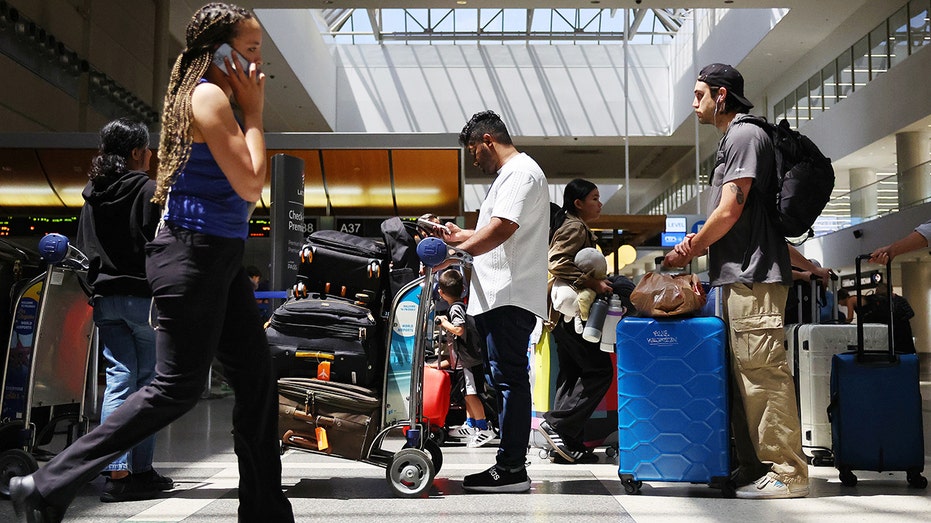
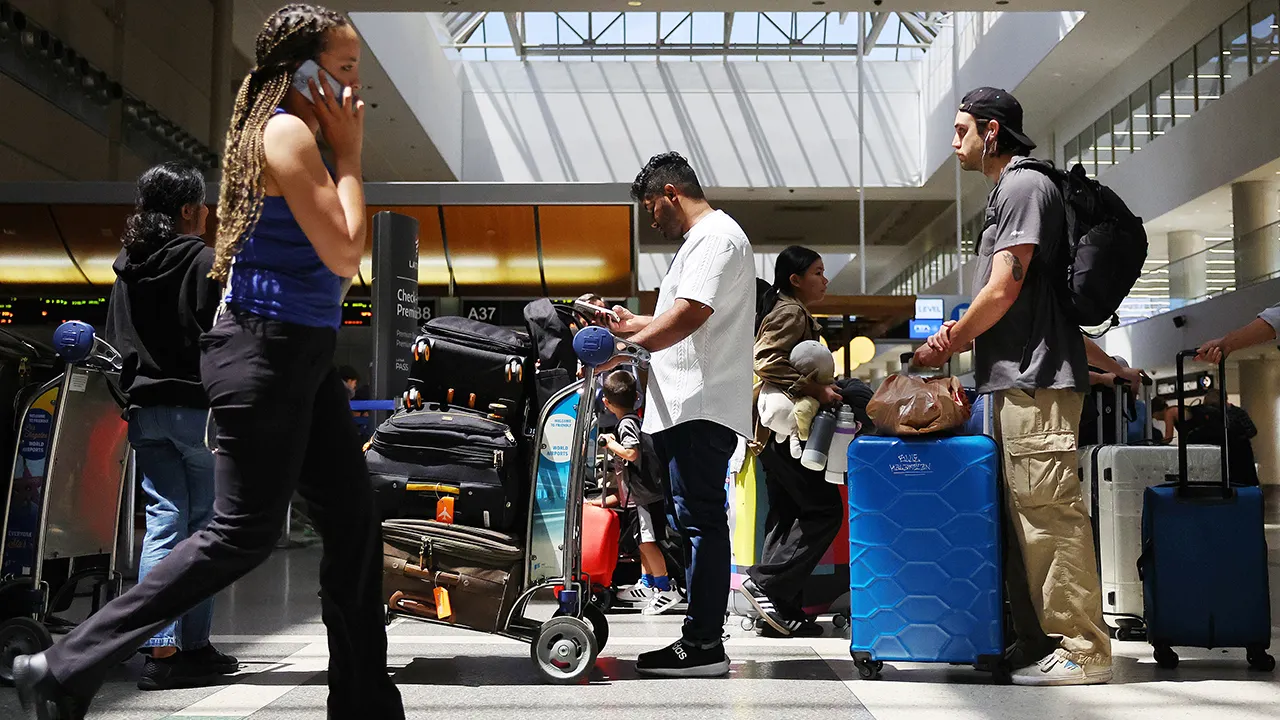
Travelers gather with their luggage in the international terminal at Los Angeles International Airport (LAX) on June 25, 2024 in Los Angeles, California.(Mario Tama / Getty Images)
Despite the significant cost headwinds, United CEO Scott Kirby also offered a counterbalancing perspective, noting the sustained strength of travel demand. “The 10 biggest booked revenue weeks in our history have been the last 10 weeks,” Kirby stated, emphasizing that for now, demand remains “the strongest we’ve ever seen.” This robust demand environment provides airlines with a crucial buffer, enabling them to implement fee increases without immediately fearing a drastic drop-off in bookings. This dynamic allows carriers to maintain pricing power in a market where consumers appear willing to absorb higher costs for travel experiences, at least for the time being.
The broader strategy of increasing ancillary fees aligns with a long-term industry trend of unbundling services. Airlines have progressively shifted from all-inclusive fares to a model where base fares are lower, and customers pay à la carte for services like checked bags, seat selection, and in-flight amenities. This approach provides flexibility for consumers while creating significant new revenue streams for airlines. For investors, ancillary revenue growth is a key metric, often representing higher-margin revenue that contributes directly to profitability, especially in periods of elevated operational costs like the current environment.
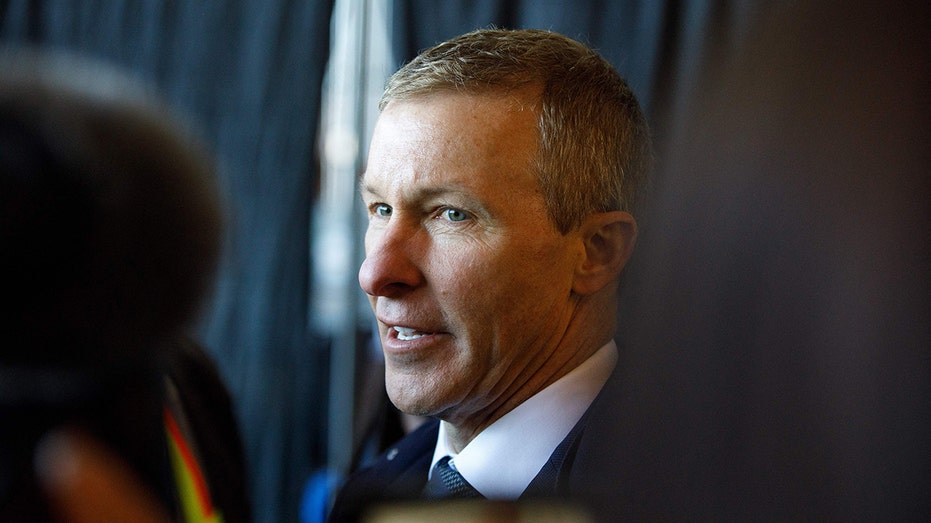
United Airlines CEO Scott Kirby speaks to reporters after a joint press event on December 13, 2022.(LOGAN CYRUS/AFP via Getty Images / Getty Images)
As the airline industry navigates these complexities, the financial health of carriers like United will increasingly depend on their ability to balance cost management with maintaining strong customer demand. The decision to raise bag fees, while potentially unpopular with some travelers, is a calculated business move aimed at bolstering the company’s financial resilience in an unpredictable global economic and geopolitical landscape.
| Ticker | Security | Last | Change | Change % |
|---|---|---|---|---|
| UAL | UNITED AIRLINES HOLDINGS INC. | 92.21 | -2.87 | -3.02% |
Market Impact:
United Airlines’ decision to raise checked bag fees is likely to be viewed positively by investors in the short term, as it directly addresses margin pressure from soaring jet fuel costs and promises an immediate boost to ancillary revenue. This move, particularly following JetBlue’s similar action, signals an industry-wide recognition of the need to protect profitability, which could lead to a sector-wide uplift in ancillary revenues if other major carriers like American, Delta, and Southwest follow suit. For UAL specifically, the increased revenue stream offers a buffer against the volatility of fuel prices and strengthens its financial position. However, the long-term market impact will hinge on several factors: the elasticity of consumer demand for air travel in the face of rising overall costs, the competitive response from other airlines (whether they match or choose to differentiate), and the trajectory of geopolitical events impacting oil markets. Should demand remain robust, and competitors align their pricing, UAL and the broader airline sector could see improved investor sentiment. Conversely, if these fee hikes lead to a significant drop in discretionary travel or if a major competitor abstains from similar increases, UAL could face competitive headwinds and a potential re-evaluation of its pricing power.
FOX Business’ Eric Mack contributed to this report.