
Mohamed El-Erian, Allianz’s Chief Economic Advisor, delves into the monetary repercussions of the Iranian unrest, noting the escalation of oil prices during ‘Mornings with Maria.’
With the Iranian strife escalating and no swift resolution apparent, the U.S. Department of Energy is drawing more from the nation’s strategic petroleum reserves.
Authorities unveiled an initiative on Wednesday to lend another 10 million barrels of unrefined petroleum from the Strategic Petroleum Reserve (SPR). This constitutes a portion of a larger 172 million-barrel depletion that detractors contend could expose the U.S. to risk, particularly as West Texas Intermediate (WTI) unrefined petroleum prices exceed $111 per barrel.
The unprocessed oil is slated for extraction from the Bryan Mound site in Texas. Furthermore, the department will be receiving bids from petroleum firms until Monday.
STATE-BY-STATE OVERVIEW OF FUEL COSTS AS IRAN CONFLICT DRIVES OIL MARKETS UPWARD
This recent action is part of a pact involving 32 other nations to distribute a total of 400 million barrels of stored petroleum. Last month, the International Energy Agency (IEA) convened an urgent session at its Paris main office with delegates from the energy sector of G7 countries to “evaluate market dynamics.” IEA Executive Director Fatih Birol stated that these conditions “have been profoundly impacted by the turmoil in the Middle East.”
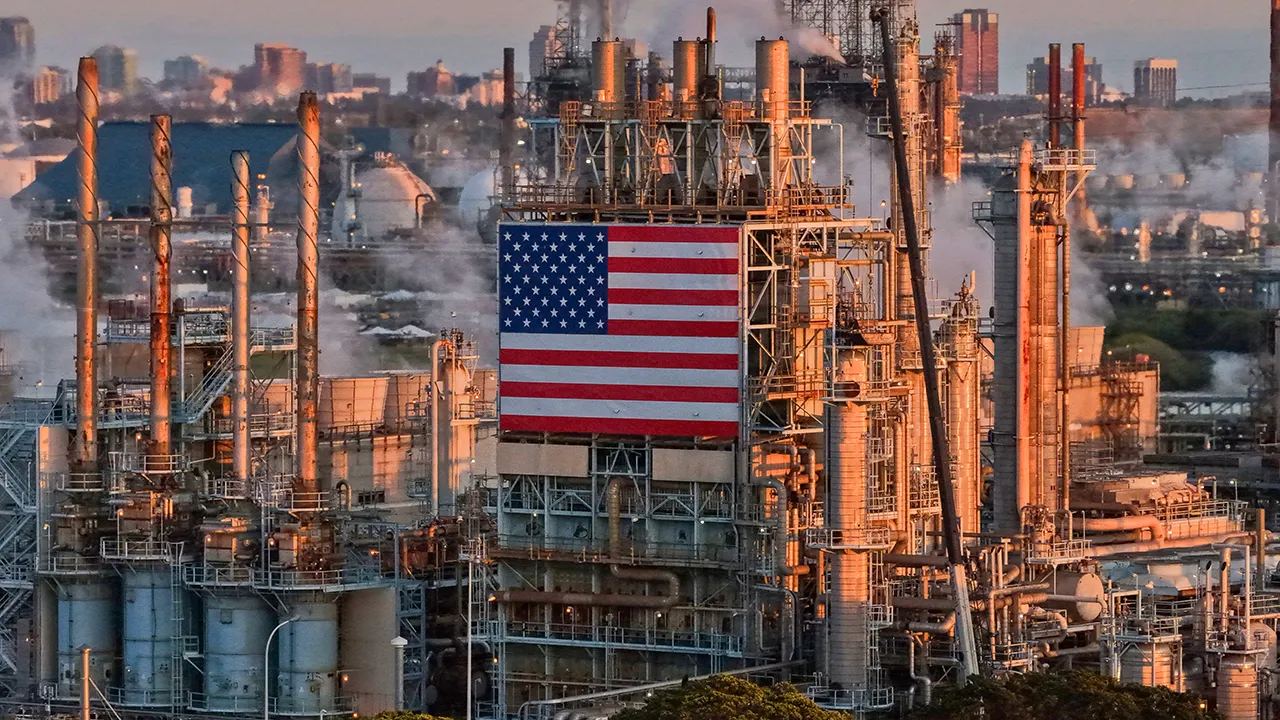
From an overhead perspective, Marathon Petroleum Corp’s Los Angeles Refinery is depicted on April 2, 2026, in Carson, California.(Getty Images)
Birol remarked, after the announcement regarding the distribution of the strategic oil stockpiles: “The oil market difficulties we are encountering are of unparalleled magnitude. Consequently, I am highly pleased that IEA member countries have undertaken an urgent joint effort of record scope.”
The Department of Energy did not promptly reply to Fox News Digital’s inquiry for remarks. However,in a press release, it specified that the restoration of the SPR would occur “without expense to the American taxpayer.”
Experts at Goldman Sachs cautioned in past weeks that the 400 million-barrel disbursement, the largest ever recorded, might be inadequate to address delivery interruptions resulting from the blockade of the Strait of Hormuz, potentially creating a daily deficit exceeding 10 million barrels.
John Williams, President of the Federal Reserve Bank of New York, examines the economic repercussions of the Iranian conflict, prospective inflation, and other topics on ‘The Claman Countdown.’
By early Friday afternoon, WTI — the U.S. benchmark for petroleum costs — had surpassed $112 per barrel, marginally higher than the day prior. The countrywide mean for a gallon of standard petrol stands at over $4, an increase of more than $1since the onset of hostilities, as per AAA.
John Williams, President of the Federal Reserve Bank of New York, cautioned on Thursday during an interview on “The Claman Countdown” that the consequences of the Iranian hostilities on fuel costs could pervade multiple segments of the economy.
ACCESS FOX BUSINESS ANYWHERE BY CLICKING HERE
Rep. Mike Haridopolos, R-Fla., addresses petroleum prices in light of the Iranian unrest on ‘The Evening Edit.’
Williams stated: “There’s a transfer of power costs into numerous items that we acquire, such as flight tickets. … With elevated propellant expenses, flight tickets will rise.” He added, “It will disperse. It usually impacts other goods and services. That typically requires months, perhaps even a year, to manifest its complete impact.”
During a national broadcast to the country on Wednesday evening, President Donald Trump suggested that combat activities in Iran would persist for several weeks, likely imposing further strain on the petroleum market.
DISCOVER ADDITIONAL CONTENT FROM FOX BUSINESS
Alec Schemmel of Fox News and Nora Moriarty of FOX Business assisted in compiling this article.