
Gain complimentary access to the Editor’s Curated Summary
Roula Khalaf, the FT’s Chief Editor, hand-picks her preferred narratives for this weekly publication.
Talent scouts and agitators who formerly served Russia’s Wagner Group have become a key channel for Moscow-orchestrated disruptive assaults across the European continent, as reported by Western espionage agencies.
The militant collective’s condition has remained dubious following an unsuccessful uprising against the Russian army’s senior command in June 2023, which triggered a suppression and the demise of its originator, Yevgeny Prigozhin.
Nevertheless, Wagner’s talent scouts, who once excelled at convincing young men from Russia’s provincial regions to engage in combat in Ukraine, have been assigned a fresh objective: enlisting financially susceptible Europeans to perpetrate aggression on NATO territory, authorities stated.
Russia’s military intelligence agency (GRU) “is exploiting the expertise it possesses and has accessible,” remarked one Western espionage officer, alluding to the Wagner network.
Both the GRU and Russia’s internal security agency (FSB) have grown extremely busy in their endeavor to enlist “expendable operatives” across Europe to instigate disorder.
Over the last two years, the Kremlin has broadened an initiative of destabilization and disruptive acts across the continent, intended to diminish the resolve of Western nations in their support for Ukraine and foment societal disturbance.
Confronted with a significantly reduced contingent of clandestine operatives in Europe following a series of diplomatic ejections by EU member states, Moscow’s espionage leaders have nonetheless progressively resorted to surrogates to execute their commands.
For the GRU, the Wagner network has demonstrated itself to be an especially potent — albeit unsophisticated — instrument for this purpose, distinguished European espionage executives have informed the FT.
Operatives have been assigned by Wagner agents with various missions, ranging from incendiary assaults against politicians’ automobiles and storage facilities holding humanitarian assistance for Ukraine, to impersonating Nazi agitators.
Generally, those enlisted undertake these actions for monetary gain and are frequently ostracized persons, at times devoid of objective or guidance.
Wagner possessed a pre-established network of agitators and talent scouts who “understand their idiom,” remarked one European authority.
Russia’s espionage bodies usually endeavor to insert at least two “intermediary levels” between themselves and the operatives they wish to execute their commands, stated the authority. “They continuously desire a measure of plausible deniability . . . And Wagner, along with the personnel who belonged to it, have an enduring and intimate association operating on behalf of the GRU in this manner.”
The FSB, in the meantime, has inclined to rely on underworld and expatriate connections it has fostered relationships with in Russia’s proximate foreign countries; however, these have proven less efficient in mass recruitment, they further noted.
Wagner and its proponents already possessed a considerable digital presence on social media platforms targeted at Russians, which has been converted with comparative simplicity into a more globally oriented undertaking.
Telegram channels specifically utilized by the group have been remarkably polished and skillful in how they have presented themselves, another European authority declared. “They comprehend their demographic,” they added.
Prigozhin was also accountable for managing the St Petersburg-based Internet Research Agency — the most extensively recognized Russian “troll farm” — which commenced aiming at Western publics with misinformation well over a decade past.
The Wagner network’s part in Russia’s disruptive initiative has been subject to examination by European espionage and security organizations since its inception. For instance, Wagner-managed social media accounts were answerable for enlisting a cohort of British nationals at the close of 2023.

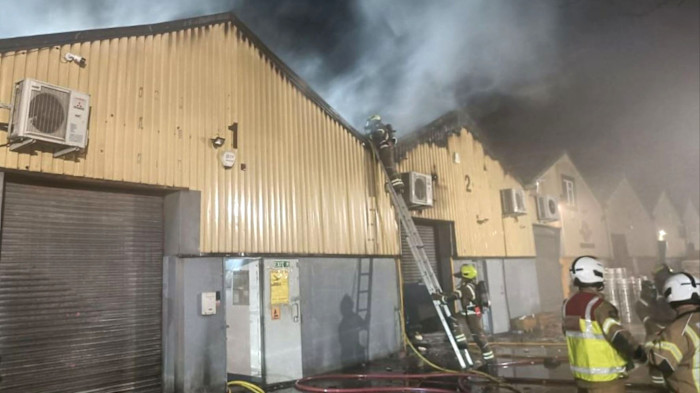
Dylan Earl, a 21-year-old minor offender, was enlisted by Wagner via digital platforms. In March 2024, having subsequently in turn enlisted four more young men, Earl incinerated a storage facility in East London. He was found guilty the previous year and condemned to 23 years of incarceration.
“The unseen influence of the internet yielded outcomes because nameless talent scout surrogates, functioning via online forums, ordinarily on secure channels, discovered within the United Kingdom young men willing to experience a type of extremism and treacherously abandon their nation for what appeared to be effortless funds,” stated Justice Cheema-Grubb during her pronouncements for sentencing.
Following that assault, European bodies have gradually been compiling a profile of a considerably broader network of Wagner’s “expendables” throughout Europe.
By proceeding thus, security services possess at least one benefit: what Russia’s espionage leaders acquire in magnitude and expense by employing surrogates such as Wagner to enlist inexperienced saboteurs, they forfeit in proficiency and confidentiality. To date, numerous assaults have been averted than have triumphed.