
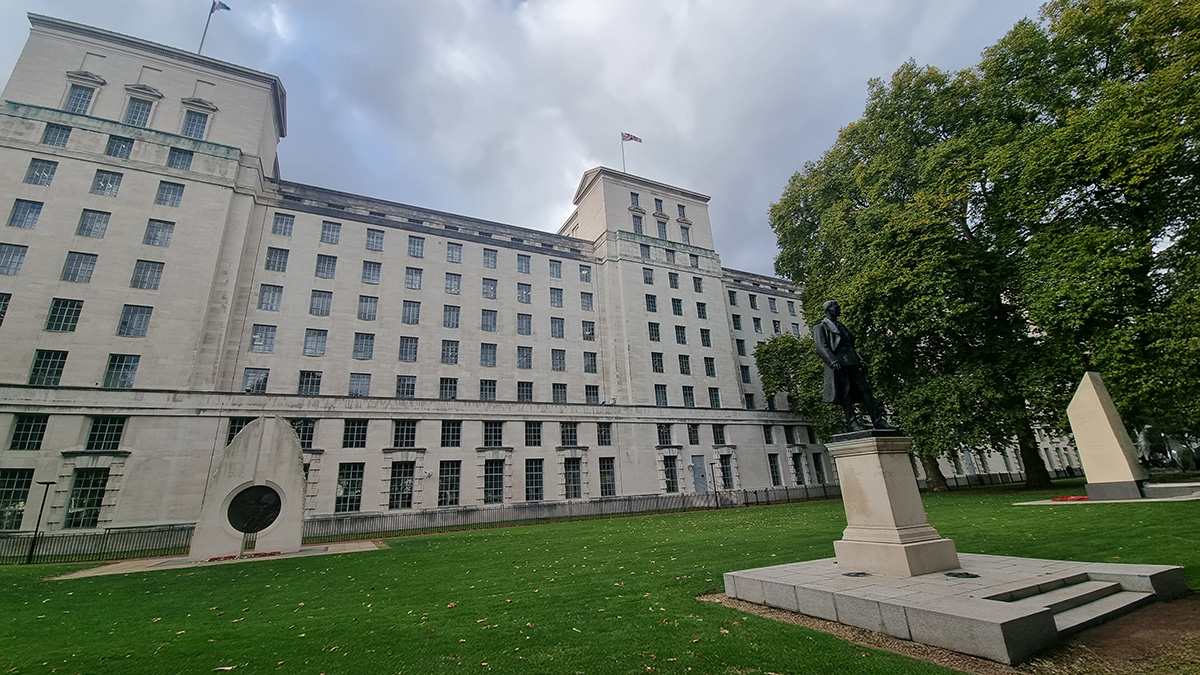
On March 23, during a Public Accounts Committee session, lawmakers were informed that the Ministry of Defence’s financial records had been impacted by a substantial £6.1 billion error, linked to inaccurately categorized expenditure.
This predicament led the National Audit Office to issue a qualified opinion on the department’s 2024–25 financial statements, primarily revolving around historical outlays at the Atomic Weapons Establishment. Permanent Secretary Jeremy Pocklington stated,“Prior expenditure, originating as early as 2007, was erroneously classified as capital spending. It failed to satisfy the criteria for capital recognition”, he further explained, noting that a substantial portion of these funds pertained to initial feasibility studies for critical nuclear projects.
The department underscored that this particular issue bears no connection to operational nuclear assets. Pocklington informed legislators,“It holds no bearing on the functional assets or on nuclear substances”, while Aneen Blackmore, Director General of Finance, elucidated that the £6.1 billion sum indicates a lack of supporting audit documentation, rather than suggesting the spending was completely unwarranted. She remarked,“The challenge lay in our capability to present the necessary evidence within the allotted time, rather than the entire balance being indefensible”.
Lawmakers questioned how such a significant inconsistency could have gone unnoticed for so many years, with Committee Head Sir Geoffrey Clifton-Brown characterizing the scenario as“remarkable”. Blackmore attributed this to deficiencies that emerged after the Atomic Weapons Establishment (AWE) reverted to direct Ministry of Defence oversight in 2021, citing“misconceptions and accountability shortcomings”among the organizations responsible for financial disclosures.
The session also delved into a distinct £2.56 billion transgression of parliamentary spending thresholds. Blackmore clarified that this matter pertained to provisions set aside for legal actions and resettlement initiatives, rather than actual overspending. She explained,“This does not signify a finding of expenditure within the current fiscal year”but rather a technical financial anomaly linked to insufficient budget coverage for adjustments originating from prior years.
The department recognized the escalating pressure from legal challenges, particularly those related to noise-induced hearing loss. However, it refrained from offering detailed projections due to the ongoing nature of these cases. Pocklington remarked,“We have observed an uptick in the quantity of personal injury claims, specifically pertaining to noise-induced hearing loss”, adding that these estimates remain sensitive as litigation continues.
Aside from the financial irregularities, lawmakers voiced apprehensions regarding broader pressures impacting the department, encompassing delays to the Defence Investment Plan and escalating expenditures within the Defence Nuclear Enterprise. Pocklington stated that atomic spending is anticipated to constitute between 20% and 25% of the defence budget, propelled by fresh initiatives, modifications in scope, and inflationary trends.
Regarding the security of equipment, officials addressed apprehensions concerning the Ajax armoured vehicle, following reports of personnel falling ill during its trials. Lieutenant General Anna-Lee Reilly asserted,“When properly maintained and operated according to its design, [Ajax] presents no safety risks”, though she confirmed that further preparatory work is being conducted before its return to service receives approval from ministers.
The Public Accounts Committee is anticipated to release a report featuring recommendations subsequent to these proceedings.