
United Kingdom Seeks Next-Generation Jet Training System to Modernize Air Force and Support Iconic Red Arrows
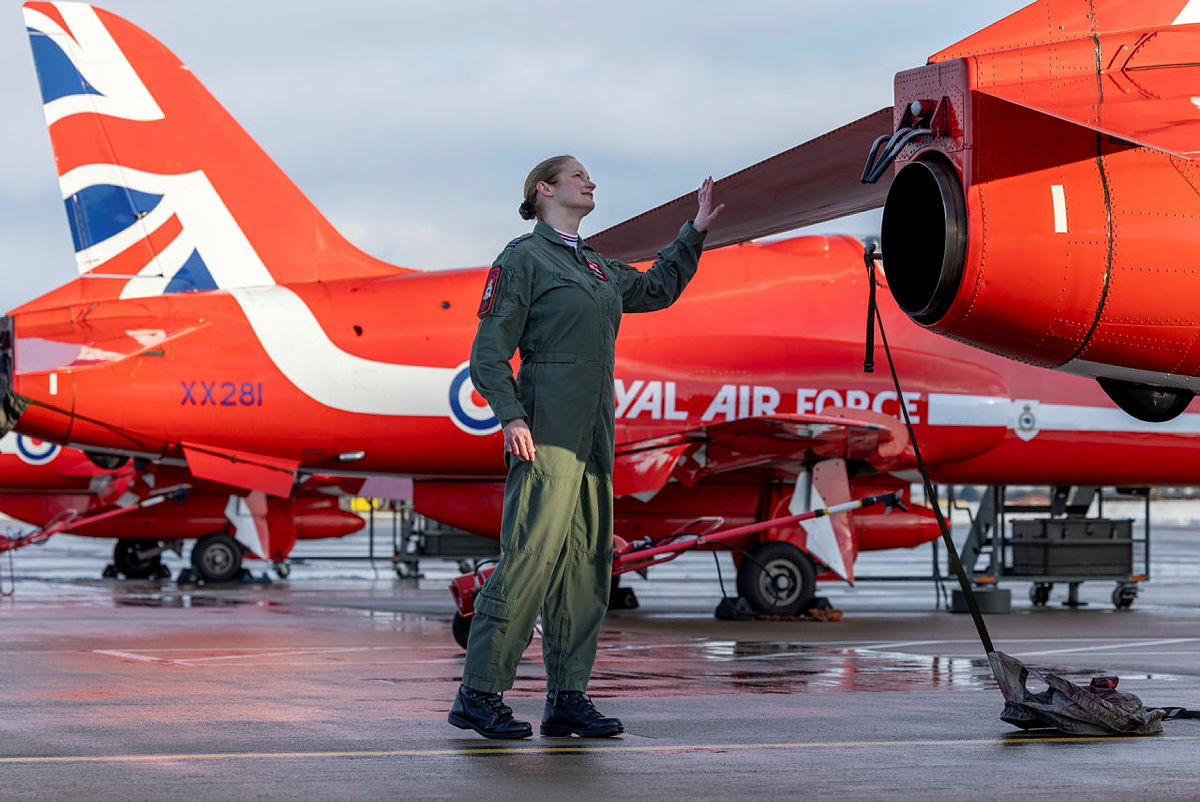
The United Kingdom’s Ministry of Defence (MOD) has initiated the search for a new Jet Training System, marking a pivotal step in modernizing its fast jet pilot training capabilities and securing the future of the Royal Air Force’s (RAF) aerobatic display team, the Red Arrows. This development comes as the venerable Hawk T1 aircraft, which has served the RAF for decades, approaches its planned out-of-service date in 2030.
The department formally announced its intent through a Request for Information (RFI) to potential suppliers, signalling the start of market engagement for a programme listed under project code 700004994-RFI. This initiative was previously highlighted within the Defence Investment Plan 2026, underscoring its strategic importance to the UK’s long-term defence capabilities.
According to the RFI, the forthcoming investment is designed to achieve several critical objectives. Primarily, it will provide new aircraft for a significantly modernised fast jet training system, ensuring that future RAF and Royal Navy pilots are equipped with the skills necessary to operate advanced military aircraft. Crucially, the programme also aims to replace the Red Arrows’ aging Hawk T1s, allowing the globally recognised display team to continue its vital role in public engagement and international diplomacy. A key condition for the proposed system is the requirement for a significant UK workshare, indicating the MOD’s desire to leverage and support domestic industry where possible.
Furthermore, the notice explicitly states that the new system is being conceived to support a seamless transition for pilots and ground crews to operate fifth and sixth-generation air systems. This forward-looking requirement highlights the UK’s commitment to maintaining a technological edge in air combat and ensuring its personnel are trained for the advanced aircraft of tomorrow, such as the F-35 Lightning II and future platforms like the Global Combat Air Programme (GCAP).
Suppliers interested in participating in this significant procurement exercise have been invited to submit their company details, a designated point of contact, and their specific areas of interest to the programme team. The deadline for these submissions is 11 September 2026. The MOD has included the standard disclaimer that this exercise is solely for gathering information, does not constitute an invitation to tender, and does not commit the department to any future procurement. It also clarifies that participation in this RFI confers no advantage in any subsequent competitive bidding process. The work is classified as ‘services,’ and the contracting entity is the Ministry of Defence, with the programme team operating under the purview of the National Armaments Director group, responsible for defence equipment acquisition.
The Hawk T1 has been a cornerstone of RAF operations for decades, first entering service in 1976. Its association with the Red Arrows began in 1979, when the team transitioned from the Folland Gnat, making the Hawk T1 synonymous with British aerial excellence. While the type was withdrawn from its primary training role at RAF Valley several years ago, a small number of aircraft have continued to operate in aggressor and support roles, alongside their prominent use by the Red Arrows. However, the advancing age of the fleet and accumulating airframe fatigue have necessitated its eventual withdrawal, prompting the urgent need for a replacement.
Advanced fast jet training for RAF and Royal Navy pilots is currently conducted using the Hawk T2 aircraft at RAF Valley on Anglesey, as part of the broader UK Military Flying Training System (UKMFTS), overseen by No 4 Flying Training School. This system, while advanced, has encountered operational challenges in recent years, with the National Audit Office and parliamentary committees raising concerns about aircraft availability and the overall throughput of the pilot training pipeline. These issues underscore the necessity for a robust and reliable successor system to ensure a steady supply of highly trained aviators.
A complicating factor in this procurement is the current state of the UK’s aerospace manufacturing industry concerning jet trainers. The BAE Systems Hawk production line, once a global leader, ceased operations after its final export orders were fulfilled. BAE Systems has indicated that restarting this capability would require a new, substantial order. This situation means the UK will likely need to consider international options or a significant industrial investment if it wishes to develop a new trainer domestically. The international market offers several established alternatives, including the Leonardo M-346, which is in service with Italy, Poland, and other nations; the Boeing and Saab T-7A Red Hawk, currently being introduced by the United States Air Force; and the Korea Aerospace Industries (KAI) T-50 family, which has seen considerable export success.
Additionally, a British venture named Aeralis had been developing an innovative modular jet trainer concept specifically aimed at this requirement. However, the company recently ceased operations, further illustrating the complexities and financial hurdles involved in developing new indigenous aircraft platforms.
Beyond its military and industrial implications, the requirement for a new training system carries an unusual national visibility dimension. The Red Arrows, with their iconic air displays and extensive overseas engagements, serve as powerful ambassadors for the United Kingdom. The RFI notice itself acknowledges this, framing the new aircraft as a tool to ‘inspire future generations for decades to come,’ highlighting the significant public relations and recruitment value embedded in this defence procurement.
Why This Matters
The UK’s pursuit of a new Jet Training System is a multifaceted endeavour with profound implications for national security, industrial strategy, and international standing. Its significance extends far beyond the technical specifications of a new aircraft and touches upon several critical areas:
National Security and Pilot Readiness:At its core, this programme is about ensuring the UK’s ability to defend its airspace and project power globally. Modern fast jets are incredibly complex, and training pilots to operate them effectively requires cutting-edge systems that simulate real-world scenarios. The current challenges with the Hawk T2 fleet’s availability highlight potential bottlenecks in the pilot training pipeline, directly impacting the number of qualified pilots entering frontline service. A new, reliable, and advanced training system is essential to maintain a steady supply of highly skilled aviators, which is fundamental to the operational readiness of the Royal Air Force and Royal Navy in an increasingly volatile global environment. This directly underpins the UK’s ability to respond to threats, participate in NATO operations, and protect its interests.
Industrial Strategy and Sovereign Capability:The requirement for a “significant UK workshare” in the new system points to the government’s ambition to support domestic industry, create jobs, and foster technological innovation. With the closure of the Hawk production line, the UK currently lacks an indigenous jet trainer manufacturing capability. This procurement offers an opportunity to either revive parts of this industrial base, invest in new aerospace technologies, or forge strategic international partnerships that benefit UK companies. The choice between an off-the-shelf foreign solution and a more domestically integrated approach will have long-term consequences for the UK’s aerospace skills base, its research and development landscape, and its ability to maintain a degree of sovereign control over critical defence technologies.
International Standing and Soft Power:The Red Arrows are a globally recognized symbol of British excellence, precision, and innovation. Their continued ability to perform at international air shows and diplomatic events is a vital component of the UK’s soft power strategy, fostering goodwill and strengthening diplomatic ties. Replacing their iconic Hawk T1s with a modern aircraft ensures the team can continue to represent the UK effectively on the world stage for decades to come. The capabilities and design of the new aircraft will also subtly communicate the UK’s technological prowess and commitment to its defence forces.
Future-Proofing for Next-Generation Warfare:The explicit mention of preparing pilots for fifth and sixth-generation air systems underscores the programme’s forward-looking nature. As air combat evolves with stealth technology, advanced sensors, artificial intelligence, and networked warfare, pilot training must adapt. The new system will need to incorporate advanced simulation, virtual reality, and data analytics to prepare aviators for the complex operational environments they will face in aircraft like the F-35 and future platforms under development in programmes like GCAP. This investment is not just about replacing old aircraft; it’s about building the foundation for future air superiority.
Economic Impact and Long-Term Investment:A programme of this scale represents a substantial, multi-billion-pound investment over its lifecycle. This will translate into direct economic benefits through contracts for manufacturing, maintenance, support services, and training facilities. It will also generate indirect economic activity across the supply chain. Furthermore, a well-designed and reliable system will lead to more efficient and cost-effective pilot training in the long run, reducing the operational costs associated with maintaining an aging fleet and addressing training bottlenecks. The longevity of the system – “for decades to come” – signifies a sustained commitment to modernizing a core defence capability.