
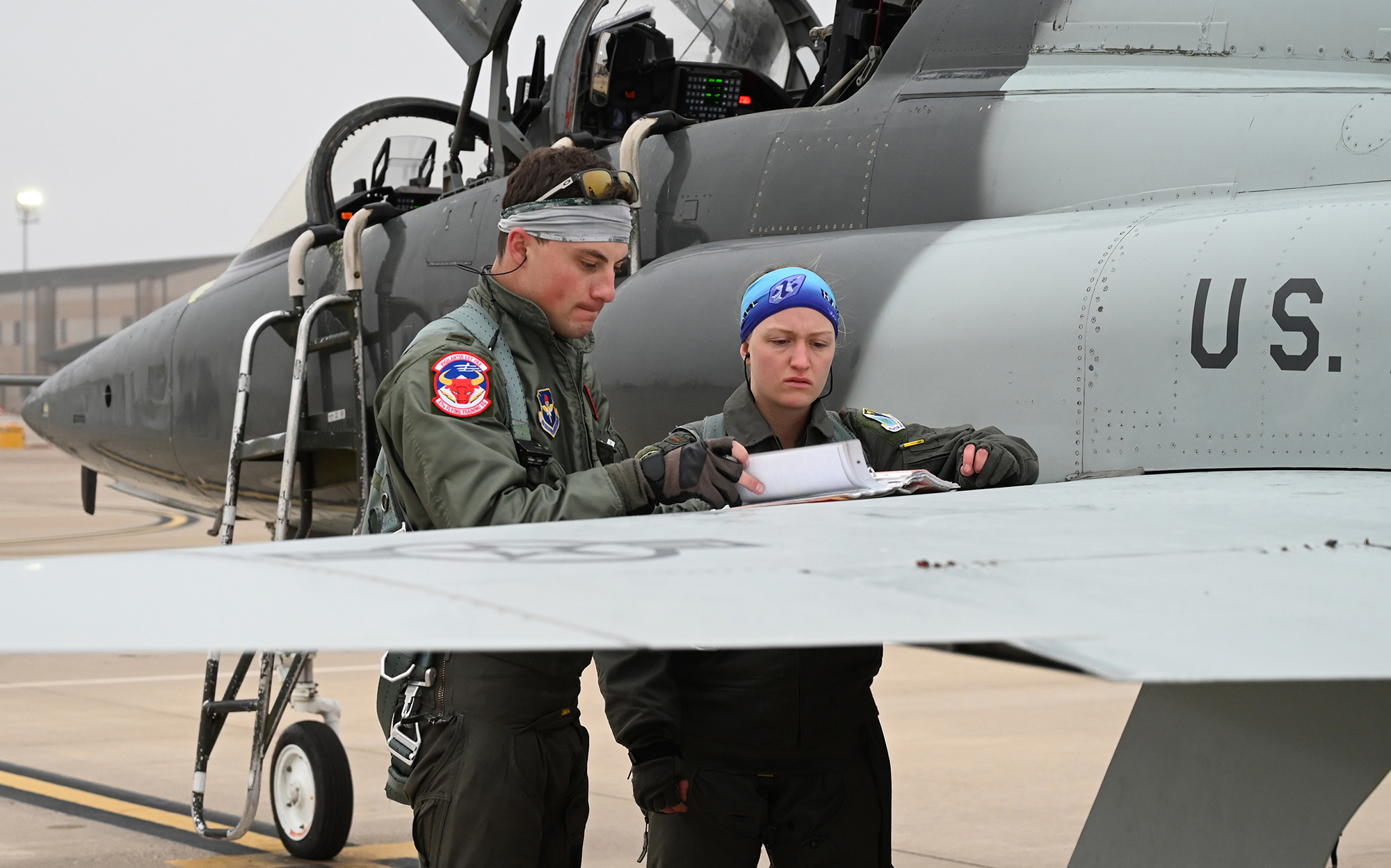
WASHINGTON D.C.— The U.S. Air Force is on track to achieve its annual objective of graduating 1,500 new pilots for the first time in several years, a significant milestone attributed to a comprehensive overhaul of its undergraduate pilot training program. This achievement, announced by Air Education and Training Command (AETC) on September 14, 2026, marks a crucial step in addressing the persistent pilot shortage faced by the service.
The success follows the implementation of the new Future of Undergraduate Pilot Training (FUPT) program, which was launched in spring 2025. AETC stated in a release that reaching this benchmark will “support the Air Force’s broader effort to address a pilot shortage” that has impacted military readiness for years.
“Reaching 1,500 pilots is a milestone, but it is not the finish line,” stated Maj. Gen. Clark Quinn, Vice Commander of Air Education and Training Command, during the announcement at the Air & Space Forces Association’s (AFA) 2026 Air, Space & Cyber Conference. “FUPT was built to overcome long-standing constraints including instructor shortages and aircraft availability to deliver the aviators our combatant commanders require.”
For years, the Air Force struggled to meet its annual pilot production target, with the shortfall often attributed to a combination of factors including insufficient training capacity, aging aircraft, and challenges in retaining experienced instructors. The FUPT program was conceived as a radical departure from traditional methods, aiming to streamline the training pipeline and produce “elite aviators through a training system that is more deliberate, data-driven, and aligned with the demands of operational units,” according to Maj. Gen. Travolis A. Simmons, commander of the 19th Air Force, who spoke about the program’s inception in spring 2025.
A cornerstone of AETC’s new pilot training model is a hybrid instruction approach that leverages private, university-based flight programs for initial instruction, while retaining military-specific elements at Air Force training bases. This strategic shift is designed to optimize resources and enhance efficiency.
“Moving foundational flight training to civilian partners allows us to reserve military aircraft, instructor capacity, and flying hours for the advanced, military-specific training only the Air Force can provide,” Maj. Gen. Quinn explained. This segmentation of training aims to ensure that valuable military assets and personnel are focused on the most critical stages of a pilot’s development, specifically those requiring tactical and operational expertise unique to military aviation.
Under the new construct, aspiring Air Force pilots first enter an Initial Pilot Training (IPT) phase. This phase consists of 120 flying hours completed over 139 days at one of four designated civilian flying universities. Upon successful completion, students earn their private pilot licenses, along with instrument and multi-engine ratings, all under Federal Aviation Administration (FAA) Part 141 standards. These standards certify flight schools and instructors to provide flight training, ensuring a high level of quality and safety.
Following IPT, these newly certified pilots transition to one of the USAF’s four Undergraduate Pilot Training (UPT) bases: Columbus Air Force Base, Mississippi; Laughlin Air Force Base, Texas; Sheppard Air Force Base, Texas; and Vance Air Force Base, Oklahoma. At these military installations, they undergo the advanced, mission-specific training necessary to become combat-ready Air Force aviators.
“Achieving 1,500 validates that we can scale future undergraduate pilot training and we now continue the focus on refining the training to ensure the quality of our graduates matches the scale,” Maj. Gen. Quinn emphasized. He commended the dedicated efforts of “our instructor pilots, maintainers, and support teams [who] adapted this enterprise to meet the need ensuring a steady flow of skilled aviators for our combatant commands.” This acknowledgment highlights the complex logistical and human effort required to implement such a significant training transformation.
The Air Force’s ongoing pilot shortage stood at approximately 2,470 pilots at the conclusion of fiscal year 2025. This persistent deficit has been a critical concern for military planners and commanders, attributed over the years to a confluence of factors including insufficient pilot production, challenges in retaining experienced pilots due to competitive civilian airline offers, and difficulties in absorbing newly trained pilots into operational “line” cockpits quickly enough.
The positive trajectory was hinted at earlier in the year. On May 20, 2026, Air Force Chief of Staff Gen. Kenneth S. Wilsbach informed lawmakers on the House Armed Services Committee that AETC was “meeting our goals for creating 1,500 pilots per year.” He added, “We did that this year, and we see no issues with doing that into the future.” Gen. Wilsbach clarified that the final push to reach the fiscal year 2026 goal would come from the graduation of a class of student pilots currently undergoing training at Vance Air Force Base, as confirmed by an AETC spokesperson.
However, Gen. Wilsbach also highlighted a critical follow-on challenge: “The challenge will be absorbing all those into line cockpits.” This refers to the process of transitioning newly qualified pilots from initial training into specific aircraft platforms and operational units, which requires additional specialized training, resources, and squadron capacity. Ensuring these pilots can quickly move into active roles is vital for effectively alleviating the shortage.
To support not only the increased pilot production but also their continued readiness, Gen. Wilsbach underscored the necessity of robust funding for flying hours. He stressed to lawmakers the importance of the roughly $10 billion requested in the fiscal year 2027 budget for this purpose. This significant allocation covers essential operational costs such as fuel, spare parts, and consumable supplies crucial for safely and reliably operating aircraft during training and operational missions.
The proposed fiscal year 2027 budget includes $7.4 billion for Active-Duty flying hours, representing a substantial 22 percent increase from the $6.1 billion allocated in fiscal year 2026. Additionally, $1.6 billion would cover Air National Guard hours, and $867 million would be dedicated to Air Force Reserve hours, bringing the total request to approximately $9.9 billion. This funding is critical to ensure pilots maintain proficiency and operational readiness.
“This 2027 budget gets us about $10 billion for flying; the pilots want to fly, they don’t want to sit on the ground and do admin,” Gen. Wilsbach stated, emphasizing the direct correlation between flying hours and pilot morale and retention. He also detailed complementary retention strategies, such as offering pilots the ability to remain at specific duty locations for longer periods, rather than the traditional two-to-three-year rotation cycles.
These combined efforts—increased pilot production, adequate funding for flying hours, and improved retention incentives—are all integral to the Air Force’s overarching strategy. The hope is that these measures will collectively “help us with pilot retention and that will, in turn, help with the pilot shortage,” Gen. Wilsbach concluded, signaling a comprehensive approach to a long-standing challenge.
Why This Matters
The U.S. Air Force’s success in meeting its annual pilot production goal of 1,500 for the first time in years holds significant implications for national security, military readiness, and the strategic posture of the United States globally. This achievement, driven by the innovative Future of Undergraduate Pilot Training (FUPT) program, marks a crucial turning point in addressing a persistent challenge that has long concerned defense planners.
Ensuring Military Readiness and Global Projection:A sufficient number of highly trained pilots is fundamental to the Air Force’s ability to execute its diverse missions, from air superiority and global strike to intelligence, surveillance, and reconnaissance. A shortage of aviators directly impacts the operational readiness of squadrons, prolongs deployment cycles for existing pilots, and can limit the nation’s capacity to respond to crises or project power effectively across various theaters. Meeting the production goal helps ensure that the Air Force has the human capital necessary to operate its advanced fleet of aircraft and maintain its technological edge against potential adversaries.
Strategic Investment in Human Capital:The Air Force’s commitment to overhauling its training system, including the innovative integration of civilian flight schools, represents a strategic investment in its most critical asset: its people. By streamlining the initial training phase and focusing military resources on advanced, mission-specific instruction, the FUPT program aims to create a more efficient and adaptable pipeline for future aviators. This approach not only addresses the immediate pilot shortage but also establishes a more resilient and scalable training infrastructure capable of adapting to future demands and technological advancements in aviation.
Impact on Defense Budget and Efficiency:The substantial budget request for flying hours, alongside the development of more efficient training methods, underscores the significant financial commitment required to maintain a world-class air force. While the upfront investment in pilot training is considerable, ensuring pilots receive adequate flying hours for proficiency is a cost-effective measure to prevent skill degradation and maintain operational effectiveness. Furthermore, innovative training models that leverage civilian partnerships could potentially offer long-term cost efficiencies compared to an entirely military-run system, freeing up resources for other critical defense priorities.
Retention and Quality of Life for Service Members:Beyond production numbers, the Air Force’s efforts to address retention, such as offering longer duty station assignments, are vital for maintaining an experienced and satisfied pilot force. High attrition rates due to burnout, competitive civilian opportunities, or dissatisfaction with service conditions can negate gains in pilot production. Improving quality of life and career stability for pilots is crucial for building a sustainable force, reducing the need for costly retraining, and preserving institutional knowledge. This holistic approach signals a recognition that simply producing pilots is not enough; retaining them and ensuring their well-being is equally important for long-term success.
In essence, the Air Force’s renewed success in pilot production is not just about numbers; it’s about safeguarding the nation’s ability to defend its interests, project power, and maintain its technological superiority in an increasingly complex global security environment.