
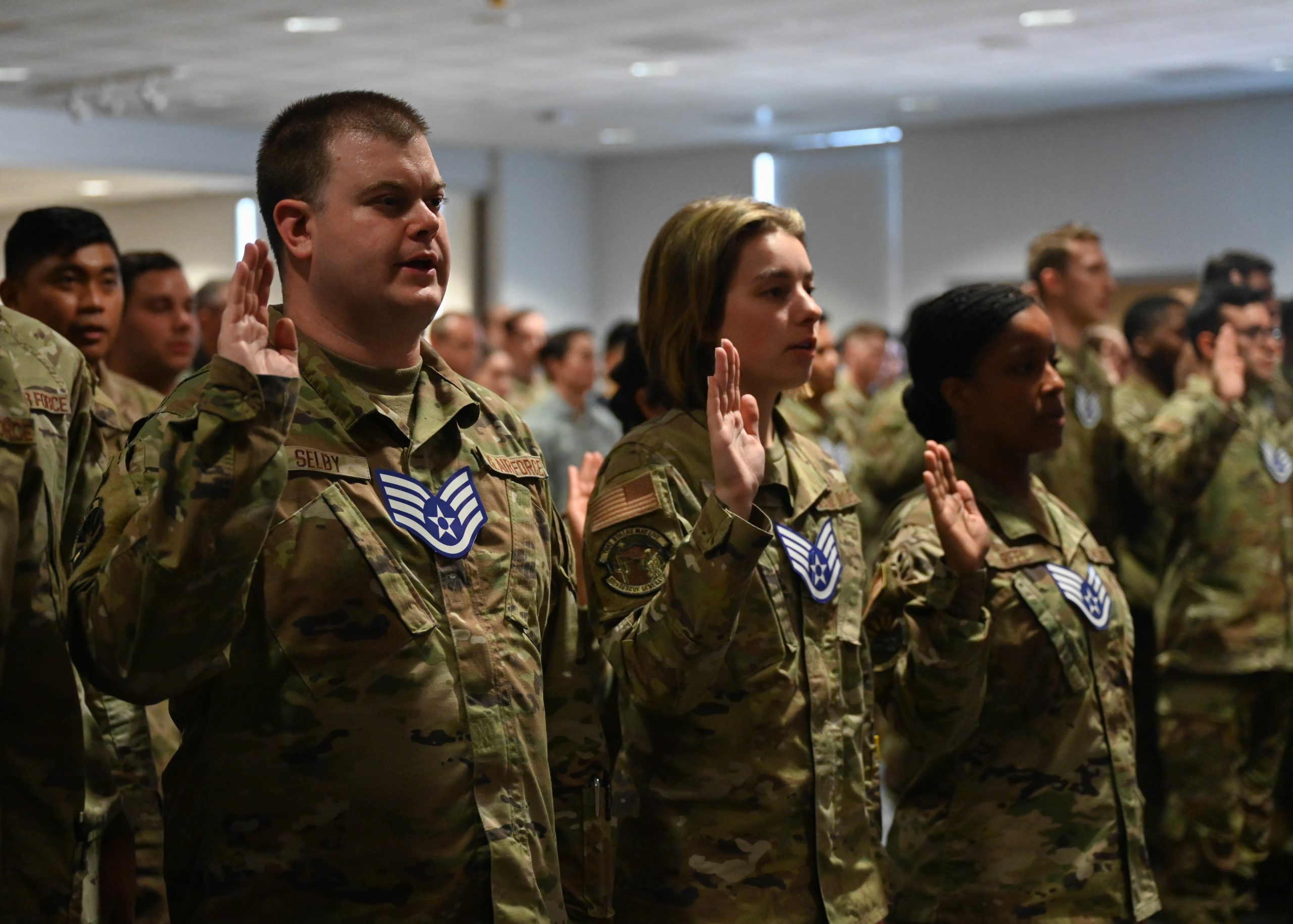
**Air Force Announces Fewer Staff Sergeant Promotions for Current Cycle Compared to Previous Year**
The U.S. Air Force has announced the selection of approximately 12,500 Senior Airmen for promotion to Staff Sergeant (E-5) for the current cycle, marking a notable decrease of roughly 20 percent compared to the previous year’s significantly larger promotion cohort. This adjustment reflects ongoing strategic management of the enlisted force structure.
On August 10, the service confirmed that 12,671 Senior Airmen out of a total pool of 39,774 eligible candidates were selected to receive their first Non-Commissioned Officer (NCO) stripes. This results in a selection rate of 31.86 percent, according to an official announcement from the Air Force Personnel Center. The comprehensive list of promoted Airmen is scheduled for public release on August 13.
For comparison, the previous year (referred to in the table as 2025) saw 15,894 Senior Airmen promoted to Staff Sergeant from an eligible pool of 47,007, yielding a selection rate of 33.81 percent. That promotion cycle represented a substantial increase, marking the largest number of new Staff Sergeants since 2016 and the second-highest total since 2002, a period coinciding with the early stages of the Global War on Terror.
The reduction in promotions for the current cycle amounts to 3,223 fewer individuals selected than in the previous year. This decline in selected personnel exceeded the decrease in the eligible candidate pool, which saw 7,233 fewer eligible Senior Airmen this year. Consequently, the selection rate experienced a modest reduction of approximately two percentage points.
Analyzing the eligible pool, the Air Force has not observed the number of eligible Senior Airmen drop below 40,000 since 2020, when only 33,341 E-4s were eligible for promotion to E-5. The fluctuation in the number of eligible candidates can often serve as an indicator of broader trends in Air Force retention, reflecting whether experienced Airmen are choosing to remain in service or separate.
To qualify for promotion to Staff Sergeant (E-5), Airmen must meet specific criteria as outlined by Air Force enlisted promotion guidelines. These requirements include possessing a 5-skill level in their Air Force Specialty Code, having at least six months in their current grade (Senior Airman), and completing a minimum of three years of total active military service. Additionally, eligible Airmen must successfully complete the 24-day Airmen Leadership School (ALS), a foundational course designed to prepare junior enlisted personnel for increased leadership responsibilities.
Despite the current year’s decline in the number of promoted individuals, this total remains considerably higher than the record lows observed in 2022 and 2023, when fewer than 10,000 Airmen received promotions to Staff Sergeant in each of those years. Those periods of reduced promotions were part of a deliberate strategic initiative by the Air Force. The goal was to extend the tenure of troops in mid-level enlisted ranks, addressing concerns that Airmen were advancing too rapidly through the career ladder without acquiring sufficient experience at each pay grade. This strategy aimed to achieve a more balanced and “healthier” grade distribution across the enlisted force by 2025. In line with this objective, promotion numbers have indeed shown an upward trend in recent years, with the current cycle’s numbers reflecting a continued, albeit adjusted, commitment to this strategic direction.
Staff Sergeant Promotion Rates
| Year | Selected | Eligible | Selection Rate |
|---|---|---|---|
| 2026 | 12,671 | 39,774 | 31.86 |
| 2025 | 15,894 | 47,007 | 33.81 |
| 2024 | 12,827 | 56,124 | 22.85 |
| 2023 | 9,000 | 51,717 | 17.4 |
| 2022 | 9,706 | 45,991 | 21.1 |
| 2021 | 15,660 | 44,663 | 35.06 |
| 2020 | 13,864 | 33,341 | 41.58 |
| 2019 | 14,235 | 29,179 | 48.79 |
| 2018 | 15,669 | 30,651 | 51.12 |
| 2017 | 14,181 | 32,006 | 44.31 |
| 2016 | 16,506 | 39,064 | 42.25 |
| 2015 | 13,269 | 39,260 | 33.8 |
| 2014 | 9,403 | 36,739 | 25.59 |
| 2013 | 11,212 | 34,078 | 32.9 |
| 2012 | 13,448 | 33,060 | 40.68 |
| 2011 | 11,337 | 26,549 | 42.7 |
| 2010 | 13,518 | 28,510 | 47.41 |
| 2009 | 15,223 | 30,574 | 49.79 |
| 2008 | 12,209 | 28,098 | 43.45 |
| 2007 | 15,130 | 36,608 | 41.33 |
| 2006 | 13,298 | 33,656 | 39.51 |
Why This Matters
The annual Staff Sergeant promotion cycle is a critical component of the U.S. Air Force’s personnel management strategy, with implications extending across operational readiness, career progression, and long-term force structure.
**Operational Readiness and Experience:** Staff Sergeants (E-5) are the backbone of the enlisted force, serving as frontline supervisors, trainers, and technical experts. They bridge the gap between junior enlisted personnel and senior NCOs, providing essential leadership and experience at the unit level. Fluctuations in promotion rates directly impact the experience level and readiness of these critical non-commissioned officer ranks. A balanced distribution of ranks ensures that units have enough seasoned leaders to effectively execute missions, train new recruits, and maintain operational standards. Too many or too few promotions can create imbalances, potentially leading to a deficit of experienced leaders or a bottleneck in career progression.
**Personnel Management and Retention:** Promotion opportunities are a primary incentive for Airmen to continue their service and dedicate themselves to a military career. Consistent and transparent promotion pathways are crucial for maintaining high morale and retaining skilled personnel, particularly in specialized fields where civilian opportunities may be abundant. The reduction in promotions this year, following a large promotion cycle, signals a deliberate recalibration of the force. While necessary for strategic grade distribution, such changes can influence retention decisions among eligible Airmen who may be weighing their career options inside and outside the service. The size of the eligible pool, influenced by recruitment and retention trends, plays a direct role in how competitive promotions become.
**Career Progression and Morale:** For individual Senior Airmen, promotion to Staff Sergeant represents a significant milestone: increased responsibility, leadership authority, and a raise in pay. The anticipation of promotion and the clarity of the promotion process are vital for individual career planning and overall morale. Periods of low promotion rates, such as those seen in 2022 and 2023, can cause anxiety and frustration, potentially leading some talented Airmen to leave the service. Conversely, a healthy promotion rate, even if slightly lower than a peak year, reinforces the perception of a viable career path and rewards dedicated service. The Air Force’s stated goal of achieving a “healthier grade distribution” by keeping troops in mid-level ranks longer indicates a strategic effort to ensure Airmen gain sufficient experience before advancing, which ultimately benefits the quality of leadership throughout the force.
**Strategic Force Structure:** These annual promotion decisions are not isolated events but are part of a larger, long-term strategy to shape the Air Force’s enlisted force. The objective is to ensure the right number of personnel at each rank to meet current and future national security requirements. By adjusting promotion numbers, the Air Force can manage its overall size, age, and experience profile, adapting to evolving operational demands and budgetary constraints. These decisions reflect a continuous effort to optimize the human capital within the Air Force, ensuring it remains an effective and responsive fighting force.
| Year | Aircraft in Major Depot Maintenance/Extended Overhaul | Total Aircraft Inventory | Percentage in Major Depot Maintenance |
| 2006 | 13,313 | 37,071 | 35.87 |
| 2005 | 14,614 | 36,405 | 40.14 |
| 2004 | 13,625 | 33,306 | 40.91 |
| 2003 | 13,651 | 27,416 | 49.79 |
| 2002 | 19,448 | 30,880 | 62.98 |
| 2001 | 20,793 | 32,170 | 64.63 |
| 2000 | 19,605 | 38,654 | 50.72 |
| 1999 | 16,053 | 44,109 | 36.39 |
| 1998 | 11,033 | 48,719 | 22.65 |
| 1997 | 9,854 | 52,820 | 18.66 |
| 1996 | 9,541 | 57,523 | 16.59 |
## Major Air Force Grappled with Soaring Maintenance Burden and Shrinking Fleet in Early 2000s
**WASHINGTON D.C. –** Data spanning a decade from 1996 to 2006 reveals a critical period for a major global air force, marked by a significant reduction in its total aircraft inventory alongside a dramatic surge in the proportion of its fleet undergoing extensive maintenance. The statistics highlight a peak in maintenance requirements around 2001, when nearly two-thirds of the total aircraft inventory was in major depot maintenance or extended overhaul, posing substantial challenges to operational readiness.
The period under review, from the mid-1990s through the mid-2000s, was a time of significant geopolitical shifts, including post-Cold War military drawdowns and the heightened operational tempo following the September 11th, 2001 attacks. These external factors, combined with an aging aircraft fleet, appear to have placed immense strain on maintenance capabilities and overall force structure.
### Declining Inventory and Escalating Maintenance Needs
The total aircraft inventory, which includes active, reserve, guard, and potentially stored units, saw a consistent decline throughout the decade. In 1996, the inventory stood at 57,523 aircraft. By 2006, this number had decreased by over 35%, settling at 37,071. This reduction reflects a broader trend of military modernization and efficiency initiatives aimed at maintaining a smaller, more capable force.
However, juxtaposed against this shrinking inventory was a pronounced increase in the number of aircraft requiring major depot maintenance or extended overhaul. Starting at 9,541 units in 1996, this figure steadily climbed, reaching a peak of 20,793 aircraft in 2001. This represents a staggering 118% increase in just five years, indicating a growing backlog of essential repairs and upgrades for an increasingly aged fleet.
### The Readiness Crisis of 2001
The most striking aspect of the data is the percentage of the total fleet engaged in major maintenance. In 1996, 16.59% of the inventory was in such a state, a figure that is generally considered manageable for routine upkeep. However, this percentage began to rise sharply, exceeding 36% by 1999 and then accelerating dramatically in the early 2000s.
By 2001, the percentage of aircraft in major depot maintenance reached an unprecedented 64.63%. This means that nearly two out of every three aircraft in the total inventory were undergoing significant repair or overhaul, rendering them unavailable for immediate operational deployment or training. Such a high proportion suggests a severe readiness crisis, potentially impacting the air force’s ability to project power and respond to global contingencies during a critical period.
The high figures in the early 2000s are consistent with the challenges faced by many air forces reliant on older airframes that were designed for a different operational environment. The increased operational demands of the Global War on Terrorism, coupled with deferred maintenance from prior budget cycles, likely exacerbated the situation, pushing aircraft beyond their typical service life without adequate replacement or refurbishment programs.
### Partial Recovery and Enduring Challenges
Following the 2001 peak, the percentage of aircraft in major maintenance began to decline, albeit unevenly. By 2006, it had fallen to 35.87%. While this represented a significant improvement from the crisis levels of 2001-2002 (where the percentage remained above 60%), it was still more than double the proportion seen in 1996.
This partial recovery suggests that efforts were made to address the maintenance backlog, potentially through increased funding for repairs, accelerated retirement of the most problematic airframes, or the initial stages of new aircraft acquisitions. However, the data for 2006 indicates that the air force still contended with a substantial maintenance burden compared to the mid-1990s, even with a significantly smaller overall fleet.
The trends observed in this data underscore the delicate balance between maintaining an aging fleet, managing operational demands, and securing adequate funding for both maintenance and modernization. The period serves as a case study for the profound impact that such imbalances can have on the operational capabilities and readiness of a major military power. The Air & Space Forces Association regularly advocates for the resources necessary to support airmen, guardians, and their families, acknowledging the crucial role maintenance plays in national defense.
### Why This Matters
The detailed analysis of aircraft inventory and maintenance burdens between 1996 and 2006 reveals several critical implications for national security, defense policy, and the operational capabilities of air forces globally:
* **Impact on National Security and Global Power Projection:** A high percentage of an air force’s fleet tied up in maintenance directly translates to a reduced operational capacity. In an era of evolving global threats, the inability to rapidly deploy a significant portion of an air fleet can severely diminish a nation’s ability to deter aggression, respond to crises, or support allies. The peak maintenance rates around 2001, coinciding with a period of increased geopolitical instability, highlight potential vulnerabilities that could have significant strategic consequences.
* **Budgetary Implications and Resource Allocation:** The surge in maintenance requirements points to a substantial drain on defense budgets. Maintaining older aircraft often becomes more expensive than procuring new ones over the long term, due to unique parts, specialized labor, and increased downtime. This data underscores the critical choices policymakers face regarding investment in new platforms versus extending the life of existing ones, and the need for consistent funding for sustainment to avoid future readiness crises.
* **Personnel Readiness and Morale:** The strain on the aircraft fleet inevitably impacts the personnel responsible for its operation and maintenance. High maintenance backlogs can lead to increased workloads for airmen and guardians, extended deployment cycles, and reduced training opportunities on fully mission-capable aircraft. This can affect morale, retention, and the overall readiness of the human element of the air force.
* **Future Force Planning and Modernization:** This historical data provides valuable lessons for current and future defense planning. It emphasizes the importance of a well-structured recapitalization strategy that balances the needs of an aging fleet with the acquisition of modern, more sustainable platforms. Understanding the causes and consequences of past maintenance crises is crucial for developing robust defense strategies that ensure long-term operational effectiveness and technological superiority. The trends observed serve as a stark reminder that a strong defense requires not just advanced equipment, but also the sustained commitment to maintain and modernize it.