
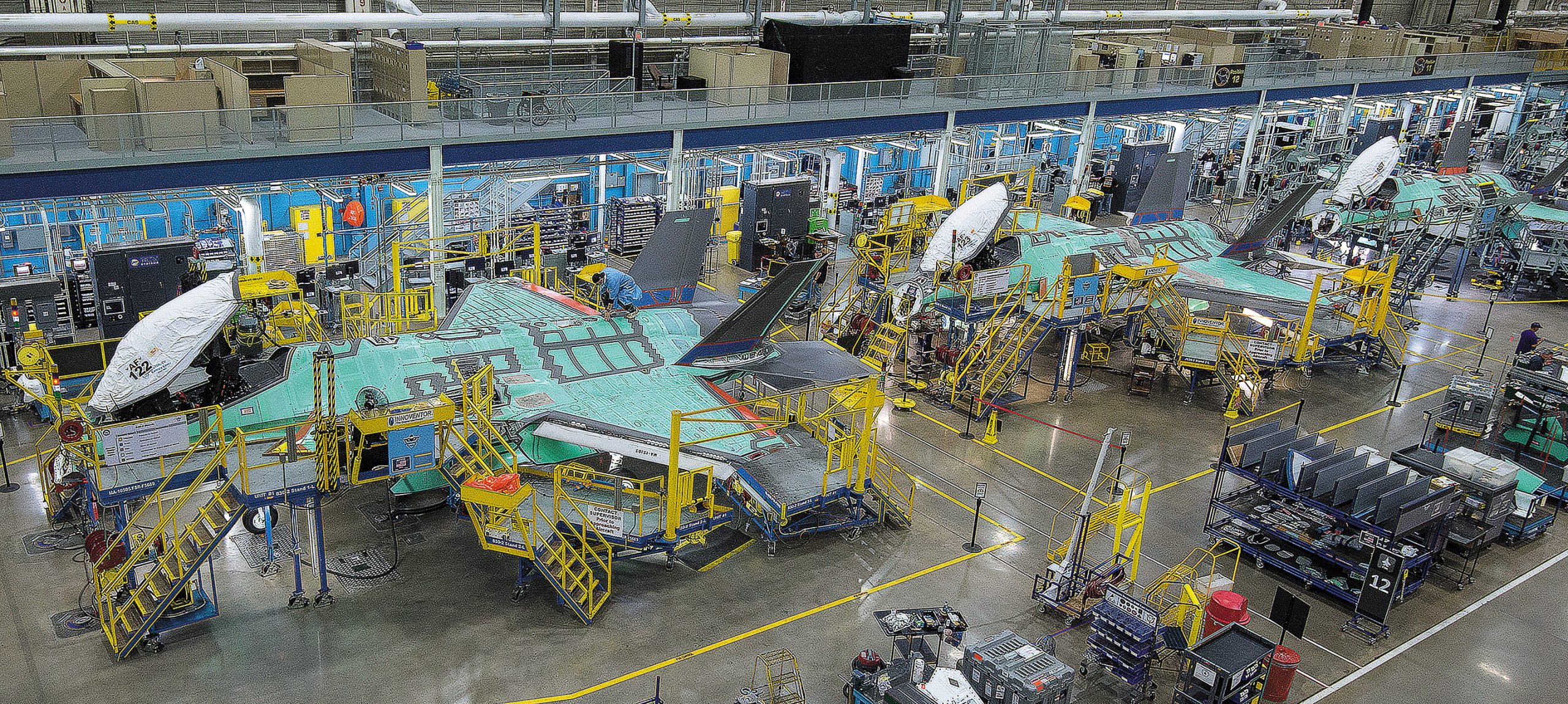
The United States Air Force is encountering significant challenges in its efforts to modernize its fleet, with senior officials indicating that the defense industrial base currently lacks the capacity to meet the service’s desired aircraft acquisition goals. While the Air Force aims to purchase approximately 108 new aircraft in fiscal year 2027, its leadership expresses a preference for an even greater number, constrained not by budget availability but by manufacturing limitations.
General John Lamontagne, the Vice Chief of Staff of the Air Force, articulated this challenge on June 4 during an event hosted by AFA’s Mitchell Institute for Aerospace Studies. He emphasized that the core issue extends beyond financial allocations; rather, it pertains to the defense industry’s ability to produce sufficient quantities of aircraft within established timelines and quality standards.
“It’s [about] how quickly can industry respond to our demand signal? And right now, I’d say our demand signal is outstripping their ability to produce quality airplanes on schedule, on time,” General Lamontagne stated. He further explained the complexities involved in scaling up production, noting that it takes considerable time for manufacturers to establish or expand production lines—a process often referred to as “facilitization”—to increase output over time.
The proposed fiscal year 2027 budget request outlines the acquisition of the following aircraft:
- F-35A Lightning II fighters: 42 units
- F-15EX Eagle II fighters: 20 units
- MH-139 Grey Wolf helicopters: 15 units
- KC-46A Pegasus tankers: 15 units
- CV-22 Osprey tiltrotor aircraft: 4 units
- C-130J Super Hercules transport aircraft: 5 units
- MC-130J Commando II special operations aircraft: 2 units
- E-11 Battlefield Airborne Communications Node (BACN) aircraft: 1 unit
This procurement plan totals 108 aircraft. The proposed number of new fighters, specifically 62 (comprising 42 F-35As and 20 F-15EXs), drew particular attention upon the budget’s release earlier this spring. This figure falls short of the Air Force’s long-standing objective of acquiring 72 new fighters annually, a target designed to manage the fighter fleet’s average age and maintain steady operational capacity. This shortfall is notable given that the overall defense budget is projected to reach $1.5 trillion, with the Air Force’s budget seeing an increase of approximately 25 percent.
General Lamontagne clarified that this reduced fighter acquisition was not a consequence of the Air Force choosing to allocate its increased budget elsewhere. He indicated that the service would have directed more funds toward aircraft procurement if industrial capabilities had allowed for it. “Candidly, we probably had some more opportunities to buy, but industry can’t quite respond that quickly to what we’d like to do,” he remarked, underscoring the production bottlenecks.
In response to these immediate constraints, the Air Force is implementing short-term strategies, such as extending the operational life of older aircraft previously slated for retirement. This includes platforms like the A-10 Thunderbolt II close air support aircraft and the KC-135 Stratotanker. General Lamontagne noted that the recent increase in the Air Force’s overall budget makes it more feasible to sustain these legacy systems.
Looking beyond immediate measures, the overarching goal is to enhance the production rates of the defense industry. Pentagon and Air Force leadership are working towards this by providing vendors with a more consistent and robust “demand signal.” This approach aims to instill greater confidence in defense contractors, encouraging them to invest in and expand their production lines. Currently, the industry is often deterred by what General Lamontagne described as “sawtooth” funding—an unpredictable pattern of fluctuating annual budgets that complicates long-term planning and investment.
“The more predictable and stable that funding is over time, it will enable that facilitization and the incentives to build more airplanes over time,” he explained. “So, we’d love to buy more.”
A key mechanism for achieving predictable funding is the implementation of multiyear procurement contracts. General Lamontagne highlighted ongoing efforts to garner Congressional support for legislation that would enable the Air Force to enter into such contracts for critical platforms like the F-35 and F-15EX, stating, “I think that serves our interest very, very well going forward.”
Next-Generation Aerial Refueling System (NGAS) and Tanker Modernization
General Lamontagne’s tenure prior to becoming Vice Chief included a period at Air Mobility Command, where he supervised an analysis of alternatives for the Next-Generation Aerial Refueling System (NGAS). For several years, the Air Force had envisioned NGAS as a future tanker designed to replace the oldest KC-135s, with capabilities to penetrate deeper into contested airspace to refuel stealth aircraft such as the F-35 and future fighter platforms.
However, the fiscal year 2027 budget request effectively deferred the NGAS program, opting instead for a new “Advanced Tanker Systems” initiative. Air Force officials, facing an extensive modernization portfolio that spans new bombers, fighters, drones, trainers, and intercontinental ballistic missiles over many years, decided to prioritize system upgrades for existing refuelers to enhance their survivability in hostile environments, rather than focusing on developing a completely new airframe at this time, according to General Lamontagne.
Despite this shift, the concept of a future NGAS tanker is not definitively abandoned but rather postponed as the service concentrates on procuring and integrating more KC-46s. “We certainly need to procure another airplane,” General Lamontagne affirmed. He indicated that after reaching the planned acquisition of 188 KC-46s, followed by an additional 75, a decision would be necessary regarding the continued recapitalization of the KC-135 fleet. “There will still be probably north of 200 KC-135s that need to be recapped, and so we’ll need to make a decision on exactly how we’re going to do that going forward.”
Why This Matters
The Air Force’s struggle to acquire desired numbers of new aircraft due to industrial capacity constraints carries significant implications for national security, economic stability, and the future of military readiness. A modern and numerically sufficient Air Force is critical for maintaining the United States’ technological edge and global power projection capabilities, especially in an era of increasing geopolitical competition. Delays in fleet modernization can impact the Air Force’s ability to deter potential adversaries, respond to emergent threats, and support allies effectively.
From an economic standpoint, the health of the defense industrial base is vital. Consistent and predictable government contracts, facilitated by mechanisms like multiyear procurement, are essential for manufacturers to invest in facilities, workforce training, and research and development. The current “sawtooth” funding model creates uncertainty, potentially hindering innovation and leading to less efficient production, which can ultimately cost taxpayers more in the long run. A robust industrial base supports high-skilled jobs and critical supply chains across the nation. Moreover, the decision to retain older aircraft, while a necessary short-term fix, can lead to increased maintenance costs and operational limitations compared to newer, more advanced platforms. The ongoing debate over tanker modernization underscores the careful balancing act between immediate operational needs, long-term strategic goals, and fiscal realities that will shape the Air Force’s capabilities for decades to come.