
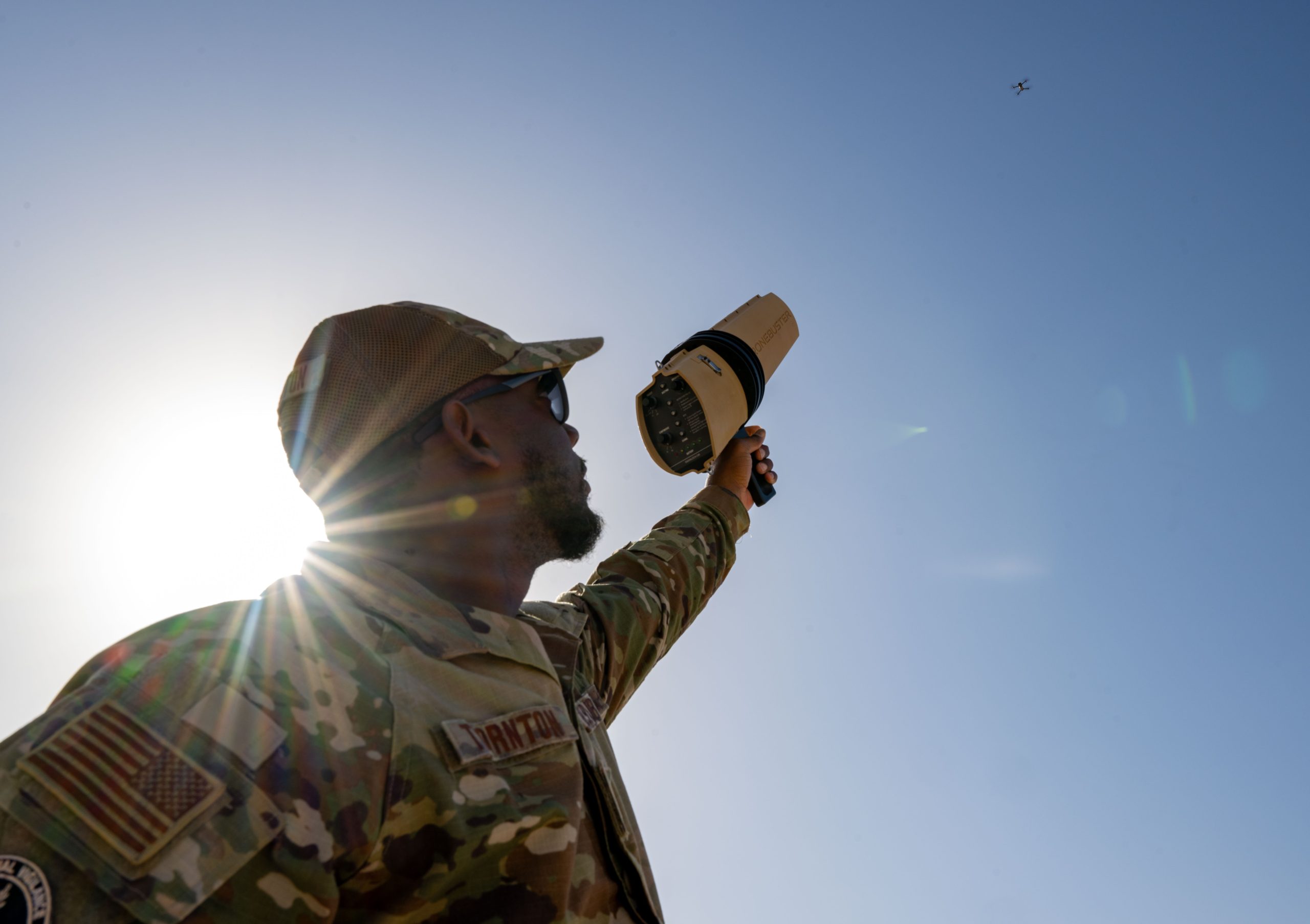
The United States Air Force has commenced the standing up of its inaugural rapidly deployable units, specifically designed to bolster air base defenses in potential global flashpoints, particularly within the Pacific theater. These specialized units are tailored to protect critical installations from aerial threats, with a primary focus on the growing challenge posed by uncrewed aerial systems (UAS), commonly known as drones.
Designated as “point defense flights,” these units typically comprise approximately 20 enlisted Airmen. Their personnel are drawn from backgrounds in aviation and battle management, bringing a specialized skill set to the task. While capable of safeguarding permanent installations within the United States, their core training emphasizes the defense of remote airfields. This capability is crucial for supporting agile combat employment (ACE) missions, which require the rapid deployment and dispersal of air assets to austere or temporary locations, making them vulnerable to attack.
Michael Sheehy, the director of future operations under the Air Force deputy chief of staff for operations, underscored the expeditionary nature of these units, stating, “It’s an expeditionary capability, so we want it to be light and lean.” This philosophy reflects the need for mobility and adaptability in contemporary military operations.
The Air Force is currently in the initial phases of refining the operational structure and training protocols for these counter-drone units. This effort is closely tied to the recent announcement of a new Air Force specialty code (AFSC) for base defense. This new career path aims to institutionalize expertise in countering evolving drone threats from both current and future adversaries. The widespread proliferation of low-cost, readily available drones, including quadcopters and jet-powered variants such as Iran’s Shahed series, has significantly escalated the threat profile for military installations globally.
The urgency of this initiative is highlighted by recent events. At least nine of the 16 U.S. service members who have perished during recent conflicts involving Iran in the Middle East were casualties of Iranian drone and missile attacks on air bases. While Sheehy acknowledged the persistent Iranian drone threat in the U.S. Central Command region, he noted that the Pentagon’s Joint Interagency Task Force 401, established last year, is actively providing counter-drone support for U.S. forces deployed in that area.
For the immediate future, these newly formed air base defense flights are being prepared for potential deployments from the U.S. homeland to strategic locations in the Pacific. Historically, Airmen from Security Forces, particularly at high-security sites like nuclear bases, have received training in counter-drone operations. However, the Air Force is now placing a significant emphasis on identifying personnel with command-and-control experience for these new units. Sheehy specified a preference for “enlisted aviator and enlisted air battle manager sort of folks that are on the operational side and have that kind of airmindedness about them,” referring to an Airman’s intrinsic awareness of their role in sustaining combat airpower.
Airmen selected for these units undergo an intensive, approximately three-week training curriculum at the Joint Counter Unmanned Aircraft Systems University, located at Fort Sill, Oklahoma. This program educates them in the effective deployment of U.S. military counter-drone technologies and strategies for defending against enemy drone attacks.
Currently, the Air Force is collaborating with JIATF-401 to procure commercially available counter-drone systems. Concurrently, the service’s established program of record for addressing such threats remains the Small Unmanned Air Defense Systems (SUADS). Sheehy described SUADS as primarily a detection system, capable of identifying and tracking a wide range of enemy drones.
SUADS is an integral component of the Air Force’s broader Air Base Defense Systems effort, with budget documents indicating a procurement allocation of $51.8 million for SUADS in the fiscal year 2026 budget. The system is available in two distinct variants: one designed for fixed air bases and another specifically engineered for rapid deployment via an aircraft pallet. A point defense flight, for instance, would deploy with the mobile SUADS variant as a force package to support ACE operations, Sheehy explained. This mobile system integrates a sensor, an effector, and command-and-control capabilities into a single, deployable unit, enabling Airmen to operate it in forward-deployed environments on short notice.
Future Base Defense Specialty Code
While air base defense has traditionally been considered an Army mission, the evolving nature of warfare, particularly the rise of drone technology, has compelled senior Air Force leaders to acknowledge and address the critical need for dedicated personnel and units to combat this threat. Air Force Secretary Troy E. Meink, in congressional testimony in May, affirmed that Airmen “have a responsibility to defend our air bases and defend our forces, regardless of where they are.”
The decision to establish a dedicated Air Force specialty code (AFSC) focused on base defense was formalized during a semiannual “Corona” meeting held at Wright-Patterson Air Force Base, Ohio, in June. Many of the specific details regarding this new AFSC are still under development. Sheehy noted that the Air Staff is “in the very nascent stages of exploring the development of an AFSC,” and must still establish key elements such as accession processes, initial qualification training (IQT), and a comprehensive career progression path to ensure Airmen can advance beyond junior enlisted ranks.
The Air Force is actively cooperating with Fort Sill’s C-UAS University to develop the technical training syllabus for these future base defense Airmen. This collaboration is crucial for defining the initial qualification training that will prepare new recruits for this emerging career field.
Why This Matters
The establishment of these rapidly deployable counter-drone units and a dedicated Air Force specialty code marks a significant strategic pivot for the U.S. Air Force. This initiative directly addresses a fundamental shift in modern warfare, where readily available and increasingly sophisticated drone technology poses a persistent and evolving threat to military installations and personnel globally. The lessons learned from recent conflicts, particularly the vulnerability of air bases to drone attacks in regions like the Middle East, underscore the critical need for proactive, specialized defense capabilities.
Strategically, these units are vital for the Air Force’s implementation of Agile Combat Employment (ACE) doctrine. ACE relies on the ability to rapidly disperse and operate air assets from a network of temporary, often remote, airfields to complicate adversary targeting and enhance survivability. Without robust, mobile point defense, these forward operating locations would remain highly susceptible to drone incursions, undermining the very premise of ACE. By enabling secure forward operations, these units directly contribute to projecting air power effectively in contested environments, especially in the Indo-Pacific where distributed operations are key to deterring potential adversaries.
Furthermore, the creation of a new AFSC for base defense signifies a long-term commitment to institutionalizing expertise in counter-UAS operations. This move will ensure a pipeline of highly trained Airmen dedicated to this crucial mission, offering them a defined career path and fostering specialized knowledge that might otherwise be fragmented across various existing roles. It acknowledges that effective air base defense in the age of drones requires dedicated professionals with specific training, technology, and a distinct mission focus. This investment in human capital and specialized technology, such as the SUADS system, reflects a recognition that protecting high-value air assets and personnel on the ground is as critical as projecting air power offensively. It’s a proactive step to adapt to a changing threat landscape, ensuring the Air Force can operate effectively and protect its forces in an era of ubiquitous aerial threats.