
U.S. Northern Command (NORTHCOM) is poised to formalize a crucial agreement with its European and Pacific counterparts, U.S. European Command (EUCOM) and U.S. Pacific Command (PACOM), to significantly enhance coordination and close critical security gaps in the Arctic region. This area, where the geographical responsibilities of all three commands converge, is increasingly recognized as a strategically vital theater for global security and competition, U.S. officials have informed Air & Space Forces Magazine.
The agreement is expected to be finalized by Gen. Gregory M. Guillot of NORTHCOM, Gen. Alexus G. Grynkewich of EUCOM, and Adm. Samuel Paparo of PACOM. Its primary objective is to strengthen information sharing protocols and ensure that potential adversaries cannot exploit the existing geographic boundaries or “seams” between the commands to advance their strategic interests or threaten U.S. and allied security.
NORTHCOM’s long-standing motto, “We have the watch,” has taken on heightened urgency in recent years. The command, which also oversees the binational U.S.-Canadian North American Aerospace Defense Command (NORAD), faces a rapidly evolving threat landscape. Its geographic focus spans from Canada and Greenland south to Mexico and parts of the Caribbean. The array of potential dangers has expanded considerably, now encompassing intelligence-gathering balloons, ballistic missiles, cruise missiles, and various drone systems, presenting complex challenges to homeland defense.
In a September interview with Air & Space Forces Magazine, Gen. Guillot affirmed the command’s ability to adapt to these new demands. “Over the last couple of years, we’ve received a few new missions with Greenland, the Southern Border, Golden Dome, and the counter-UAS mission, and we’ve been able to evolve and incorporate those into our daily homeland defense operations, I think, seamlessly,” Guillot stated. He further noted that “The command is growing as the number of threats and the number of avenues of approach that they can use to threaten us increase,” underscoring the dynamic nature of NORTHCOM’s responsibilities.
The strategic significance of the Arctic has been amplified by climate change, specifically the melting of polar ice. This phenomenon has opened up new commercial shipping routes, shortening transit times between continents, and increased accessibility to previously inaccessible natural resources, thereby attracting greater geopolitical interest and activity.
Russia, possessing more than half of the Arctic coastline, has historically maintained a significant military presence and projected its power in the region. Its substantial investment in Arctic military infrastructure and capabilities continues to be a primary concern for Western nations.
More recently, China has actively sought to establish itself as an Arctic player, despite lacking direct territorial claims. China’s interest is driven by the region’s potential as a transit venue for trade, offering shorter maritime routes between Asia and Europe. Beijing has invested in Arctic research, operating research vessels and submersibles in the area, and has publicly declared itself a “near-Arctic state.”
Retired Gen. Glen D. VanHerck, Guillot’s predecessor at NORTHCOM and NORAD, highlighted China’s broader ambitions in an interview. “They’re seeking to move themselves forward militarily and become global power projectors, not regional power projectors, and part of that will involve holding us at risk through the Arctic and ensuring that policy in the Arctic reflects their interests,” VanHerck said.
Concerns about growing cooperation between Russia and China in the Arctic were underscored by a joint bomber patrol conducted by the two nations in 2024. Operating from a Russian base, this exercise demonstrated closer military ties and prompted widespread attention across North America and Europe regarding their coordinated activities in the region.
Iris Ferguson, who served as deputy assistant secretary of defense for Arctic and global resilience from 2022-2025, emphasized the significance of inter-command cooperation. “When you see Russia and China cooperating militarily in the Arctic, with a greater capacity arguably than anywhere else on Earth, I think that should give some signals that we should be paying attention to what’s going on in the region,” Ferguson observed. She views the effort to close gaps between U.S. military commands in the Arctic as fundamental to enhancing overall security. “There are multiple seams in the Arctic for the United States,” she said. “The one between NORTHCOM and EUCOM is a significant one and is one area that deserves more attention.”
NORTHCOM initiated the drive to formalize this agreement, working in close collaboration with EUCOM and its commander, Gen. Grynkewich. Grynkewich also serves as NATO’s Supreme Allied Commander Europe (SACEUR), a role that provides critical links to NATO’s Nordic allies, including Canada, Finland, Norway, Sweden, Denmark, and Iceland, alongside the U.S. Through NATO, Grynkewich is responsible for defending what the alliance terms the High North. NATO has notably conducted multiple large-scale Arctic exercises in recent years, with the Arctic Sentry “enhanced vigilance activity” operating in cooperation with NORAD and NORTHCOM. Alliance officials describe this level of cooperation as unprecedented in decades.
Gen. Guillot clarified that the potential threats extend beyond America’s largest adversaries. “I see the threat to our continent changing not just from Russia and China, but from multiple adversaries,” Guillot explained. “The biggest change is that it’s from all avenues of approach instead of just from the north, and it’s with systems that could affect us from further away. So therefore our defense capabilities need to be expanded further from our borders to make sure that we’re defending at the appropriate range.”
This necessitates a comprehensive approach, as Guillot articulated: “What that necessitates is cooperation with EUCOM, PACOM, and SOUTHCOM, where we can exchange information, pictures, intelligence, and even resources to defend further away.”
VanHerck strongly supported efforts to bolster Arctic security and intercept threats before they can reach North America. “Homeland defense doesn’t start in the homeland,” VanHerck stressed. “It starts forward with allies and partners and fellow combat commanders forward. Ideally, you have a posture and a presence and enough domain awareness that you deter those activities before they ever start. And if they’re going to attack, you can defeat those adversaries or capabilities further forward.”
Greenland, an autonomous territory of Denmark, has been a centerpiece of U.S. Arctic foreign policy. The Trump administration, in particular, pressed for new concessions regarding American basing in Greenland, seeking to expand beyond a single Space Force installation to establish two new bases. Demonstrating Greenland’s critical importance to North American security, the administration transferred responsibility for Greenland from U.S. European Command’s area of responsibility to U.S. Northern Command.
This transfer was more than symbolic, as Guillot affirmed: “A lot of exercises and operations that we would normally conduct either unilaterally, or perhaps with Canada through NORAD, we’re now doing with other countries to include Denmark.”
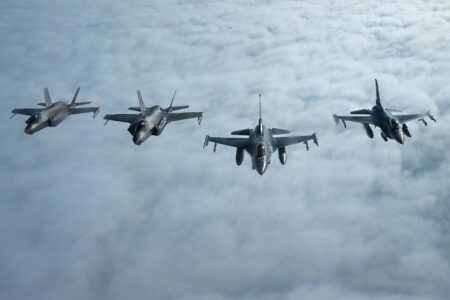
A recent exercise involving the U.S. and allied nations notably marked the first time Danish F-35s landed in Greenland, signifying enhanced interoperability and a commitment to joint defense in the High North.
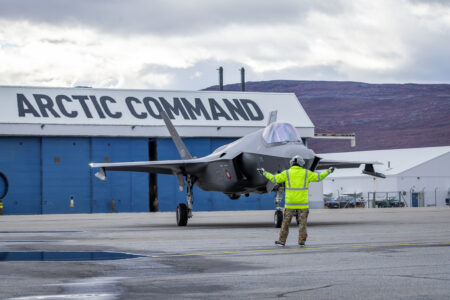
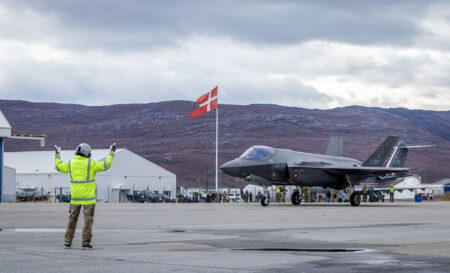
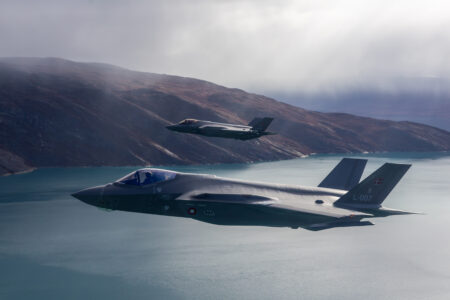
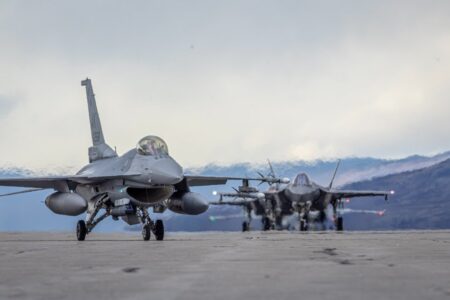
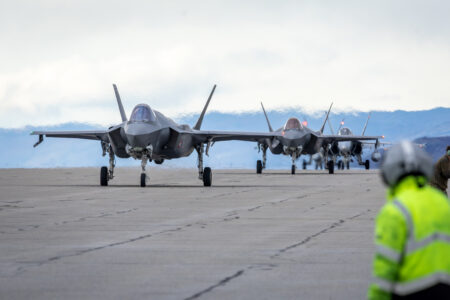
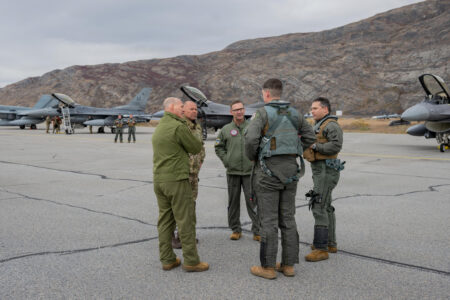
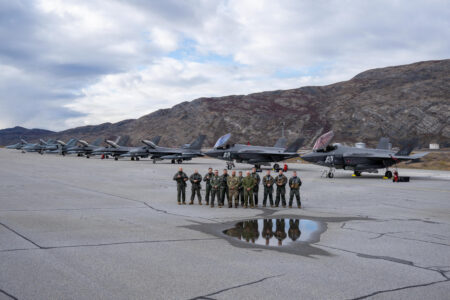
Danish F-35s on the ground in Greenland for the first time, in Kangerlussuaq, West Greenland. Two Danish F-35As landed alongside U.S. F-16s and Canadian CF-18s, Sept. 16, 2026. Danish Armed Forces photo by Rune Dyrholm.
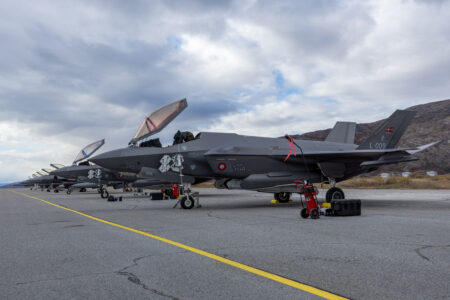
Danish F-35s on the ground in Greenland for the first time, in Kangerlussuaq, West Greenland. Two Danish F-35As landed alongside U.S. F-16s and Canadian CF-18s, Sept. 16, 2026. Danish Armed Forces photo by Rune Dyrholm.
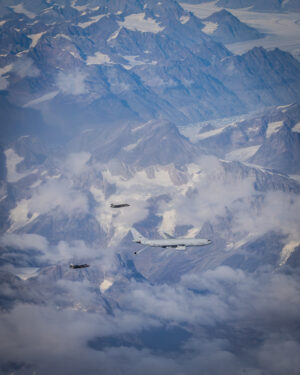
Danish F-35s on the ground in Greenland for the first time, in Kangerlussuaq, West Greenland. Two Danish F-35As landed alongside U.S. F-16s and Canadian CF-18s, Sept. 16, 2026. Danish Armed Forces photo by Rune Dyrholm.
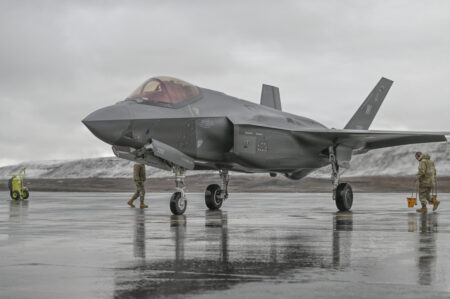
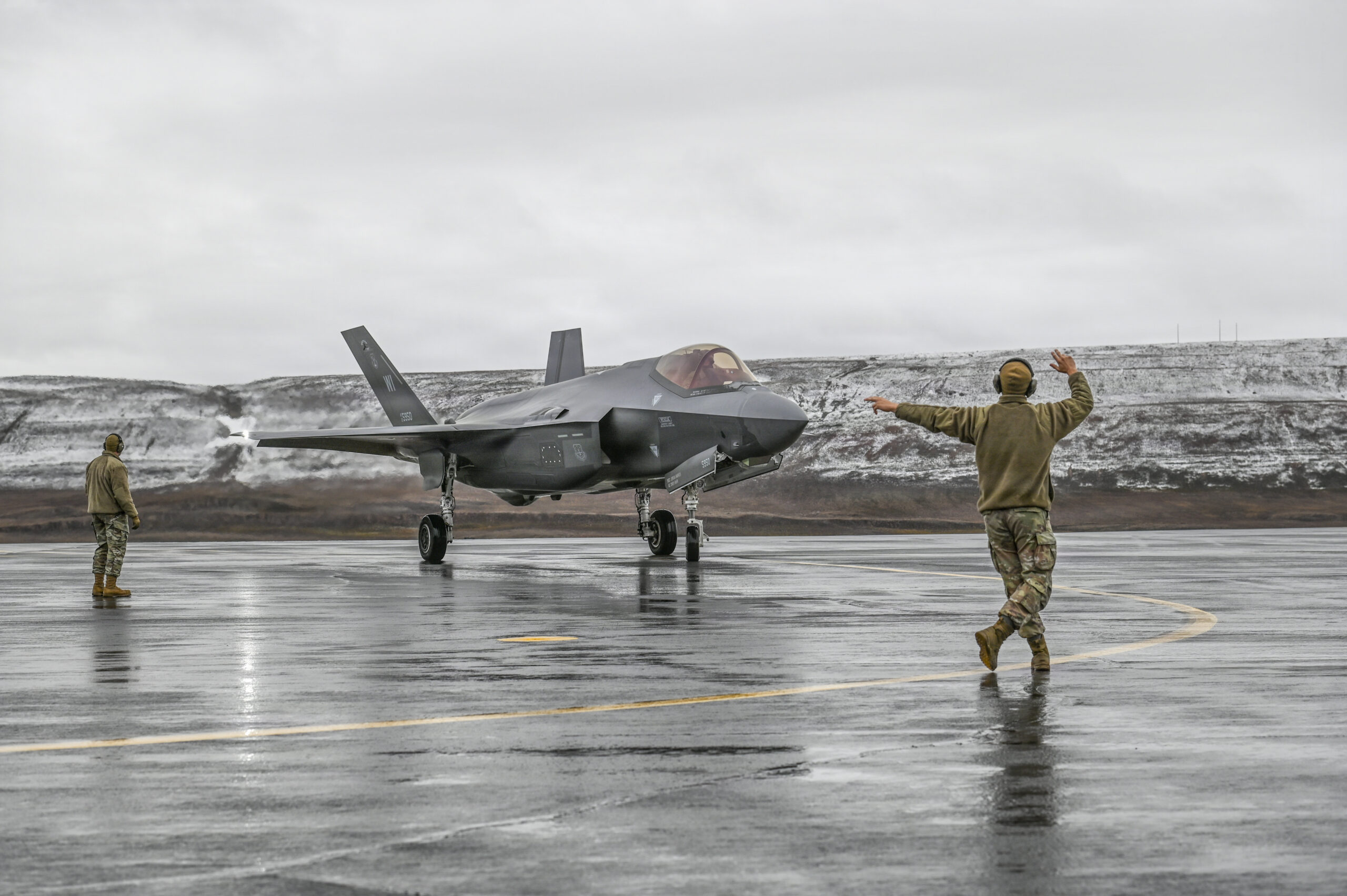
An F-35A Lightning II assigned to the 115th Fighter Wing, Wisconsin Air National Guard, operates out of Pituffik Space Base, Greenland, Sept. 10, 2026. The Arctic Region is an austere and demanding environment that tests the operational abilities of USNORTHCOM; iterations of Operation ARCTIC VANGUARD aid in developing resiliency and consistency in these environments. (U.S. Air National Guard photo by Master Sgt. Mary Greenwood)
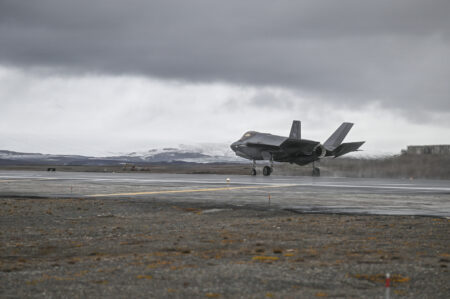
An F-35A Lightning II aircraft assigned to the 115th Fighter Wing, Wisconsin Air National Guard, lands at Pituffik Space Base, Greenland, Sept. 10, 2026. The Arctic Region is an austere and demanding environment that tests the operational abilities of USNORTHCOM; iterations of Operation ARCTIC VANGUARD aid in developing resiliency and consistency in these environments. (U.S. Air National Guard photo by Master Sgt. Mary Greenwood)
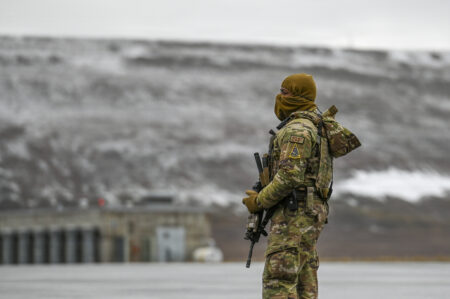
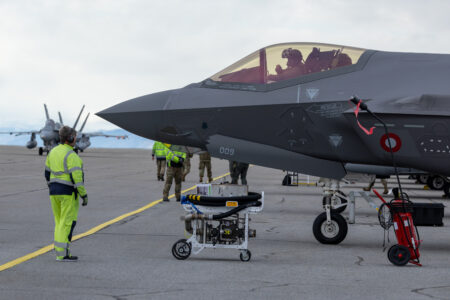
A U.S. Airman protects assets at Pituffik Space Base, Greenland, Sept. 10, 2026. The Arctic Region is an austere and demanding environment that tests the operational abilities of USNORTHCOM; iterations of Operation ARCTIC VANGUARD aid in developing resiliency and consistency in these environments. (U.S. Air National Guard photo by Master Sgt. Mary Greenwood)
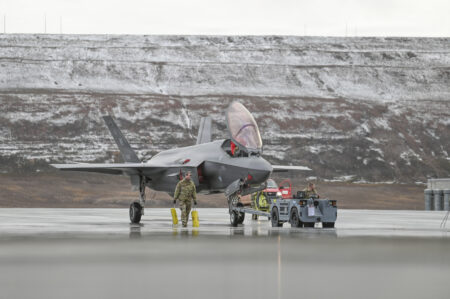
U.S. Air Force tactical aircraft maintenance technicians assigned to the 115th Fighter Wing, Wisconsin Air National Guard, tow an F-35A Lightning II aircraft at Pituffik Space Base, Greenland, Sept. 10, 2026. The Arctic Region is an austere and demanding environment that tests the operational abilities of USNORTHCOM; iterations of Operation ARCTIC VANGUARD aid in developing resiliency and consistency in these
NATO Allies Bolster Arctic Presence with Historic F-35 Deployments in Greenland Amid Strategic Drills
**Kangerlussuaq, Greenland – September 2026** – Allied air forces, including Denmark, the United States, and Canada, have conducted significant exercises in Greenland, marking a notable increase in their operational presence within the strategically vital Arctic region. On September 16, 2026, Danish F-35A Lightning II fighter jets made their inaugural landing on Greenlandic soil, specifically at Kangerlussuaq in West Greenland. This historic deployment occurred alongside U.S. F-16s and Canadian CF-18s, signaling a concerted effort to enhance interoperability and readiness in the demanding Arctic environment. Simultaneously, U.S. F-35As from the Wisconsin Air National Guard operated out of Pituffik Space Base as part of Operation ARCTIC VANGUARD, underscoring the collaborative and multinational approach to Arctic security.
The arrival of two Danish F-35As at Kangerlussuaq represents a new chapter for Danish defense capabilities and their role within NATO. As Denmark progresses with the integration of its new fifth-generation fighters, their deployment to Greenland demonstrates an advanced stage of operational readiness and a commitment to defending its autonomous territory. Greenland, a self-governing entity within the Kingdom of Denmark, holds immense strategic importance due to its geographic location, vast natural resources, and evolving role in global shipping as Arctic ice melts. The presence of these advanced aircraft allows Danish forces to familiarize themselves with the unique challenges of operating cutting-edge technology in extreme northern latitudes, from harsh weather conditions to vast distances and limited infrastructure.
The simultaneous presence of U.S. F-16s and Canadian CF-18s alongside the Danish F-35s highlights a broader pattern of strengthened cooperation among NATO allies in the Arctic. These exercises are not isolated events but form part of larger initiatives like Operation ARCTIC VANGUARD, which specifically aims to test and develop the operational abilities of forces within the U.S. Northern Command (USNORTHCOM) area of responsibility. Such multinational drills facilitate the sharing of expertise, refine joint tactics, and ensure that allied air forces can operate seamlessly in a combined effort to deter potential threats and respond to contingencies across the vast Arctic expanse. The integration of different aircraft types, from fourth-generation F-16s and CF-18s to the fifth-generation F-35s, further enhances the complexity and realism of the training scenarios.
A key component of this enhanced Arctic presence was the deployment of F-35A Lightning II aircraft assigned to the 115th Fighter Wing, Wisconsin Air National Guard, to Pituffik Space Base (formerly Thule Air Base). These operations, which commenced around September 10, 2026, underscore the critical role of Pituffik as a strategic outpost for monitoring and defending Arctic airspace. The base serves as a vital early warning radar station and a hub for satellite operations, making its resilience and accessibility crucial for North American and allied security. The deployment of F-35s to Pituffik allows U.S. Airmen and tactical aircraft maintenance technicians to gain invaluable experience in supporting and operating advanced fighter aircraft in an isolated, severe environment. The images released from these operations show personnel working to protect assets and tow F-35s, illustrating the logistical and technical demands involved in maintaining such sophisticated equipment far from established infrastructure.
The increased military activity in Greenland reflects the escalating strategic importance of the Arctic region on the global stage. Climate change is rapidly transforming the Arctic, making previously inaccessible areas navigable and opening up new opportunities for shipping, resource extraction, and scientific research. This transformation has, in turn, intensified geopolitical competition, with nations like Russia and China increasing their presence and capabilities in the region. For NATO, maintaining a robust and visible presence in the Arctic is critical for ensuring freedom of navigation, protecting sovereign territories, and deterring potential aggression. Greenland, situated between North America and Europe, is a geographical lynchpin in this evolving strategic landscape. Its airfields and potential deep-water ports are becoming increasingly relevant for projecting power and maintaining surveillance across the North Atlantic and Arctic Ocean.
Operating in the Arctic presents unique and formidable challenges. The extreme cold, prolonged darkness, severe weather conditions, and vast, sparsely populated terrain test the limits of personnel and equipment alike. Aircraft, ground support systems, and communication networks must be hardened against temperatures that can drop significantly below freezing, and against powerful blizzards. The logistical footprint required to sustain operations in such remote locations is substantial, necessitating careful planning and robust supply chains. Operation ARCTIC VANGUARD and similar exercises are designed to confront these very difficulties, building what USNORTHCOM describes as “resiliency and consistency” in these environments. By repeatedly deploying advanced assets and personnel to the Arctic, allied forces are developing the specialized skills, tactics, and procedures necessary to ensure effective operations regardless of the conditions. This includes everything from cold-weather maintenance protocols to long-range search and rescue capabilities and secure communication methodologies.
Why This Matters
The recent deployments and exercises in Greenland carry significant implications for international security, allied defense, and the future of the Arctic region:
* **Geopolitical Competition:** The Arctic is rapidly emerging as a critical arena for geopolitical competition. As climate change opens new sea lanes and access to natural resources, nations are vying for influence. Increased allied military presence in Greenland signals a commitment to defending national interests and maintaining stability in the face of growing interest from both Arctic and non-Arctic states.
* **Enhanced NATO Deterrence:** The integration of advanced platforms like the F-35 and the multinational nature of these exercises demonstrate NATO’s resolve and capability to operate effectively across its entire area of responsibility, including its northern flanks. This enhanced deterrence capability is crucial for signaling to potential adversaries that the alliance is prepared to protect its members and their strategic territories.
* **Modernization and Interoperability:** The deployment of Denmark’s new F-35s, alongside U.S. and Canadian aircraft, highlights the ongoing modernization of allied air forces. These exercises are vital for developing interoperability between different generations and types of aircraft, ensuring that allied forces can operate as a cohesive unit in complex, high-stakes environments. They also provide crucial data for refining operational doctrines for fifth-generation fighters in extreme climates.
* **Operational Readiness in Extreme Environments:** The Arctic’s harsh conditions present unique challenges that test the limits of military personnel and equipment. By regularly conducting operations like ARCTIC VANGUARD, allied forces are building critical resilience, refining operational procedures, and developing specialized skills necessary for effective defense and humanitarian response in some of the world’s most demanding environments. This experience is directly transferable to other cold-weather operations globally.
* **Sovereignty and Security of Greenland:** For Denmark, the deployment of its F-35s to Greenland is a clear affirmation of its commitment to the security and sovereignty of its autonomous territory. It underscores the strategic value of Greenland to both national and collective defense, ensuring that its vital airfields and maritime approaches are secure and capable of supporting advanced military operations crucial for North American and European security.
* **Future of Arctic Governance:** The increased military activity by NATO allies will inevitably factor into ongoing discussions about the governance and future development of the Arctic. It underscores the region’s transformation from a remote frontier to a zone of significant international strategic importance, requiring careful diplomatic and security considerations that balance national interests with environmental protection and indigenous rights.
Allied Forces Intensify Arctic Drills Amid Rising Geopolitical Interest in High North
KANGERLUSSUAQ, Greenland & BERING SEA — In a concerted effort to enhance deterrence and interoperability in the strategically vital Arctic region, military forces from the United States, Canada, and Denmark, augmented by NATO and other allied assets, recently concluded a series of comprehensive joint exercises. These operations, notably ‘Arctic Vanguard’ in Greenland and ‘Tundra Merlin’ near Alaska, underscore a significant shift towards integrated multinational training, aimed at solidifying collective defense capabilities in an increasingly complex geopolitical environment.
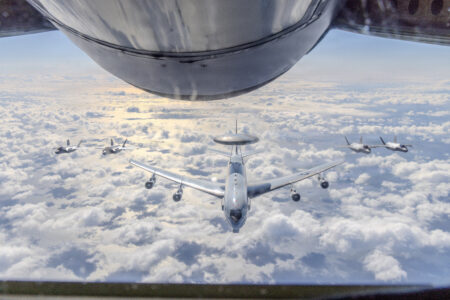
Operation Arctic Vanguard, held throughout September 2026 in and around Greenland, brought together a formidable array of air assets. The exercises featured advanced fifth-generation F-35A Lightning II fighter jets from both continental U.S. bases (specifically, the 115th Fighter Wing, Wisconsin Air National Guard, which operated from Pituffik Space Base, Greenland) and Danish forces, alongside U.S. F-16 Fighting Falcons from Alaska (including pilots from the 18th Fighter Interceptor Squadron), and Canadian CF-18 Hornets. Further integrating the multinational effort, French air-to-air refueling aircraft provided critical support, extending the operational range and endurance of the fighter fleets, while NATO-operated E-3 AWACS (Airborne Warning and Control System) command-and-control jets managed the complex aerial environment as part of the broader ‘Arctic Sentry’ framework.
These exercises in Greenland were designed to demonstrate the “Nordic Bridge concept,” a strategic initiative aimed at enhancing seamless cooperation between United States Northern Command (USNORTHCOM), United States European Command (USEUCOM), North American Aerospace Defense Command (NORAD), and NATO. The core objectives included expanding domain awareness across the vast Arctic expanse, strengthening deterrence against potential adversaries, and improving the interoperability of diverse allied forces operating in a challenging environment. The Arctic, characterized by extreme cold, vast distances, and limited infrastructure, serves as a rigorous testing ground for operational abilities, developing essential resiliency and consistency in these austere conditions.
General Gregory Guillot, Commander of NORAD and USNORTHCOM, highlighted the qualitative leap in allied collaboration. Referencing the recent exercises, Guillot stated that allies were “fully integrated” and “operating in multiple lanes at the same time,” marking a departure from the more unilateral training approaches observed just a few years prior. This integrated strategy, according to Guillot, creates “dilemmas for adversaries” and acts as a significant “force multiplier” for the allied nations. He specifically commended the “great relationship and partnering by the Danish forces,” whose strategic location and capabilities are pivotal to regional defense and the success of combined operations.

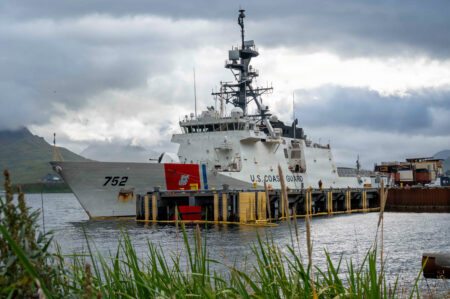
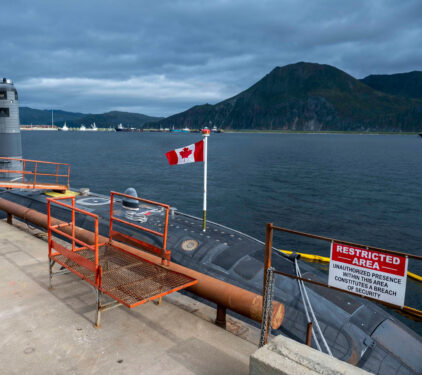
Parallel to Operation Arctic Vanguard, allied forces conducted Operation Tundra Merlin on the western side of North America, near Alaska and extending into the Bering Sea. This exercise focused on practicing joint maritime strike scenarios, integrating a diverse array of military assets. Participants included aircraft from Pacific Air Forces stationed in Alaska (which also supported Arctic Vanguard on the other side of NORAD’s region), surface vessels such as the U.S. Coast Guard Cutter Stratton (WMSL 752) and the Royal Canadian Navy Victoria-class long-range patrol submarine HMCS Corner Brook (SSK 878), along with Royal Canadian Air Force Maritime Patrol and Reconnaissance Aircraft. Alaskan-based U.S. Air Force F-35 fighters and E-3 Airborne Warning and Control System aircraft also played crucial roles, demonstrating the combined capability of allied forces in a complex maritime environment.
Operation Tundra Merlin specifically aimed at enhancing deterrence and operational readiness across the western Arctic and Northern Pacific. The inclusion of U.S. Coast Guard assets alongside military units highlights a comprehensive approach to regional security, encompassing both defense and law enforcement responsibilities in challenging maritime domains. These exercises, conducted under the purview of Alaskan Command, complement the broader NORAD and USNORTHCOM mandate, which includes safeguarding North American airspace and maritime approaches, emphasizing binational surface and subsurface vessel integration with air assets.
The increasing frequency and complexity of these joint exercises reflect a strategic reorientation by the United States and its allies towards the High North. As climate change continues to open up new sea lanes and access to natural resources, the Arctic has emerged as a critical arena for geopolitical competition. Nations like Russia have significantly increased their military presence and activity in their Arctic territories, while China has expressed growing interest in the region, branding itself a “near-Arctic state” and pursuing its “Polar Silk Road” initiative. The integrated training conducted in operations like Arctic Vanguard and Tundra Merlin is therefore crucial for developing and maintaining the capacity to operate effectively in this unique and demanding theater, ensuring collective security and stability across North America and the broader transatlantic area.
Why This Matters
The recent series of joint military exercises in the Arctic holds significant geopolitical and strategic implications for global security. The High North, once considered a remote frontier, is rapidly transforming into a pivotal region due to the accelerating effects of climate change. The melting ice caps are opening new shipping routes, such as the Northern Sea Route, potentially reducing transit times between Europe and Asia, and making previously inaccessible natural resources more attainable. This increased accessibility has intensified strategic competition, particularly from non-Arctic states like China, which seeks to establish a presence through its “Polar Silk Road” initiative, and Russia, which has substantially re-militarized its Arctic coastline and infrastructure.
For the United States, Canada, Denmark, and their NATO allies, these exercises are critical for several reasons. Firstly, they serve as a powerful deterrent. By demonstrating advanced capabilities and seamless integration of forces, the allies signal their collective resolve and capacity to defend their interests and territories against potential aggression. The “force multiplier” effect highlighted by General Guillot means that the combined strength of integrated allies is far greater than the sum of individual nations’ capabilities, presenting a more formidable challenge to any adversary.
Secondly, enhancing interoperability and domain awareness is vital for effective collective defense. Operating in the Arctic’s extreme and austere environment presents unique logistical and tactical challenges. Exercises like Arctic Vanguard and Tundra Merlin allow forces to train with diverse equipment, communication systems, and operational procedures, ensuring that they can act cohesively and effectively under stress. Improved domain awareness – the comprehensive understanding of the operational environment – is essential for monitoring growing military activity and ensuring the security of critical infrastructure and sea lanes.
Finally, these exercises reinforce the strength and relevance of alliances like NATO and bilateral partnerships, such as those between the U.S. and Canada or the U.S. and Denmark. In an era of shifting global power dynamics, robust alliances are the cornerstone of international stability. The coordinated efforts showcased in Greenland and the Bering Sea reaffirm these commitments, sending a clear message about the unity and readiness of the democratic world to protect shared values and strategic interests in the face of evolving threats.
North American Allies Bolster Arctic Defenses with Extensive Joint Exercises
WASHINGTON D.C. & OTTAWA, CANADA – October 1, 2026– Throughout August and September 2026, the United States and Canada, alongside NATO partners, conducted a series of large-scale military exercises across the Arctic and sub-Arctic regions, signaling a concerted effort to enhance domain awareness, strengthen deterrence, and improve joint defense capabilities in the increasingly strategic High North. These operations, including Operation ARCTIC VANGUARD, Operation TUNDRA MERLIN, and Exercise AMALGAM DART 26, involved significant air and maritime assets, underscoring the enduring defense partnership between the two nations and their commitment to securing North American approaches.
Operation ARCTIC VANGUARD: Enhancing Air Defense and Interoperability
Operation ARCTIC VANGUARD (OAV) served as a primary air defense operation, orchestrated under the joint direction of the North American Aerospace Defense Command (NORAD) and U.S. Northern Command (USNORTHCOM). The exercise, which spanned locations from Eielson Air Force Base in Alaska to 5 Wing Goose Bay in Canada and the skies over Greenland, aimed to significantly enhance joint integration and interoperability among U.S. Northern Command, U.S. European Command, NORAD, and NATO allies.
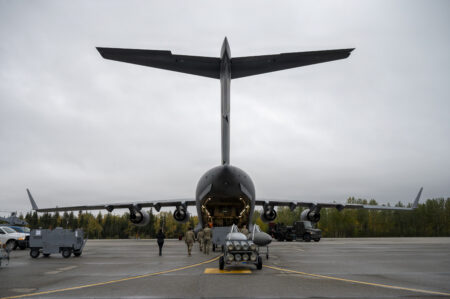
Activities during OAV included the deployment and transportation of critical personnel and equipment. For instance, on September 10, 2026, a Royal Canadian Air Force (RCAF) CC-177 Globemaster III heavy transport aircraft was utilized to move forces in support of OAV at Eielson Air Force Base. This logistical movement highlighted the multinational cooperation essential for operating across the vast Arctic terrain.
Aerial refueling capabilities were a central focus. On September 15, 2026, a U.S. Air Force Boeing KC-135 Stratotanker was observed taxiing for departure at 5 Wing Goose Bay, while an RCAF Airbus CC-150T Polaris tanker aircraft also landed at the base on September 14, 2026. These tankers were instrumental in extending the reach and endurance of fighter aircraft, exemplified by an RCAF CF-18 Hornet engaging in air-to-air refueling with a CC-150 Polaris above Greenland on September 15, 2026. Such exercises are crucial for maintaining continuous air patrol and response capabilities over expansive Arctic distances.
Ground operations and equipment testing were also integrated into OAV. A USAF F-16 Fighting Falcon fighter jet was seen taxiing for departure at 5 Wing Goose Bay on September 15, 2026, alongside an RCAF CF-18 Hornet performing an equipment test, catching a cable on the runway, indicating readiness for emergency landing procedures or specific operational requirements. The overarching objective of OAV was to leverage the unique challenges and vastness of the Arctic to strengthen domain awareness and reinforce the collective deterrence posture against potential threats.
Operation TUNDRA MERLIN: Strengthening Maritime and Homeland Defense
Concurrently, Operation TUNDRA MERLIN focused on integrating joint and multinational forces within the Alaskan theater of operations, specifically targeting homeland defense and the protection of North American maritime approaches. This exercise primarily involved naval and air assets operating in the Bering Sea and Bering Strait, a critical strategic waterway.
Key maritime components of TUNDRA MERLIN included a combined sail between the U.S. Coast Guard Cutter Stratton (WMSL 752) and the Royal Canadian Navy’s HMCS Max Bernays (AOPV 432) in the Bering Strait on August 11, 2026. This joint patrol underscored the ability of U.S. and Canadian forces to seamlessly integrate maritime capabilities in the demanding Arctic environment, reinforcing their longstanding defense partnership.
Air-maritime integration was also a significant element. On September 21, 2026, U.S. Air Force F-35A Lightning II aircraft, assigned to the 354th Fighter Wing, conducted simulated combined maritime strike operations over the U.S. Coast Guard Cutter Stratton in the Bering Sea. This activity demonstrated the capacity for advanced fifth-generation fighter aircraft to work in conjunction with naval assets to defend critical maritime zones and execute precise strike missions, further enhancing the defense of North American approaches.
Exercise AMALGAM DART 26: Binational Air Defense Readiness
Adding to the comprehensive series of exercises was Exercise AMALGAM DART 26 (AmD26), a routine NORAD and USNORTHCOM exercise conducted from August 24 to September 1, 2026. Centered at CFB Bagotville in Québec, AmD26 specifically aimed to demonstrate NORAD and USNORTHCOM’s readiness to defend North America against modern air domain threats.
The exercise involved binational air forces, with U.S. Air Force F-16 Fighting Falcon aircraft and Royal Canadian Air Force CF-188 Hornet fighter aircraft participating. A photo taken on the tarmac at CFB Bagotville on August 27, 2026, captured these aircraft, symbolizing the close collaboration. AmD26 was designed to strengthen integrated deterrence through resilient binational operations and to reaffirm the enduring defense partnership between the United States and Canada, focusing on the rapid identification and interdiction of airborne threats.
Conclusion of Arctic Readiness
The coordinated execution of Operations ARCTIC VANGUARD and TUNDRA MERLIN, along with Exercise AMALGAM DART 26, collectively highlighted the commitment of the United States, Canada, and their NATO allies to maintaining a robust and integrated defense posture in the Arctic region. These exercises served as critical platforms for refining joint operational procedures, testing advanced military capabilities, and reinforcing the strategic importance of a united front in a rapidly evolving geopolitical landscape.
Why This Matters
The series of extensive military exercises conducted by the United States and Canada in the Arctic in late 2026 holds significant geopolitical and strategic importance for several key reasons:
- Geopolitical Significance of the Arctic:The Arctic region is undergoing profound changes due to climate change, particularly the melting of sea ice. This is opening new shipping lanes (such as the Northwest Passage and the Northern Sea Route) and making previously inaccessible natural resources more reachable. These developments are transforming the Arctic from a remote frontier into an area of increasing strategic competition and economic interest. Nations like Russia have significantly militarized their Arctic presence, while China has declared itself a “near-Arctic state” and is actively pursuing economic and research interests in the region.
- Homeland Defense and Sovereignty:For both the United States and Canada, the Arctic represents the northern flank of their respective homelands. Maintaining robust air and maritime defense capabilities in this region is paramount to national security and sovereignty. The exercises demonstrate a clear intent to defend against potential incursions or challenges to their territorial integrity, particularly concerning air domain threats and maritime approaches to North America.
- Integrated Deterrence and Alliance Strength:The participation of multiple commands (USNORTHCOM, USEUCOM, NORAD) and international partners (NATO, Canadian forces) in these exercises underscores the concept of “integrated deterrence.” This involves leveraging a diverse range of military capabilities, diplomatic tools, and economic instruments to deter aggression. The seamless interoperability demonstrated between U.S. and Canadian forces, including their ability to share intelligence, coordinate complex maneuvers, and conduct joint operations across vast distances, sends a strong signal to potential adversaries about the collective resolve and readiness of the alliance.
- Evolving Threat Landscape:The exercises explicitly mention addressing “modern air domain threats.” This reflects an acknowledgment of evolving military technologies and tactics that could challenge traditional air defense systems. By routinely practicing air defense, aerial refueling, and simulated strike scenarios with advanced aircraft like the F-35A and F-16, the allies are preparing for a wide spectrum of potential threats, including those from advanced stealth aircraft or long-range missile systems.
- Environmental Challenges of Arctic Operations:Operating in the Arctic presents unique logistical and environmental challenges, including extreme cold, vast distances, and limited infrastructure. The exercises allow forces to train and test their equipment and personnel in these demanding conditions, improving their resilience and effectiveness should real-world contingencies arise. The ability to conduct complex aerial refueling and maritime patrols in such an environment is a testament to advanced planning and training.
In essence, these exercises are not merely routine training events; they are a critical component of a broader strategy to ensure stability, protect national interests, and maintain a credible defense posture in a strategically vital and rapidly changing global region.
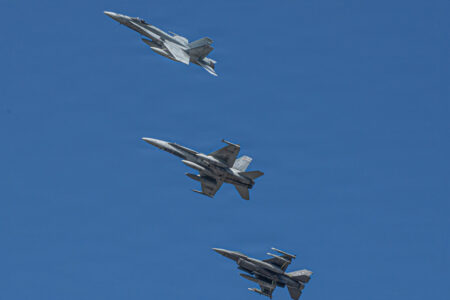
Two Royal Canadian Air Force CF-18 Hornets fly in formation with two United States Air Force F-16 Fighting Falcon fighter jets over 5 Wing Goose Bay during Operation Arctic Vanguard 26, on September 15, 2026. Operation ARCTIC VANGUARD is an air defense operation under the direction of the North American Aerospace Defense Command and/or United States Northern Command. Photo credit: MCpl Krista Blizzard
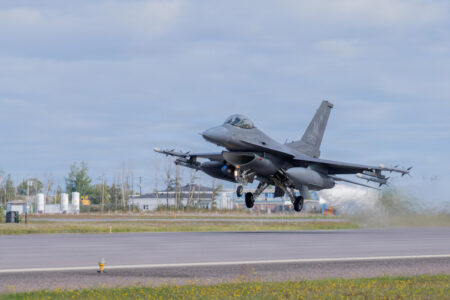
A U.S. Air Force F-16 Fighting Falcon assigned to the 18th Fighter Interceptor Squadron takes off in support of Operation ARCTIC VANGUARD at 5 Wing Goose Bay, Newfoundland and Labrador Sept. 17, 2026. OAV is an air defense operation directed by the North American Aerospace Defense Command that strengthens its aerospace warning and control missions. Training alongside allies and partners helps develop seamless processes, systems, platforms and capabilities, creating a more capable and agile force. (U.S. Air Force photo by Senior Airman Colin Perkins)
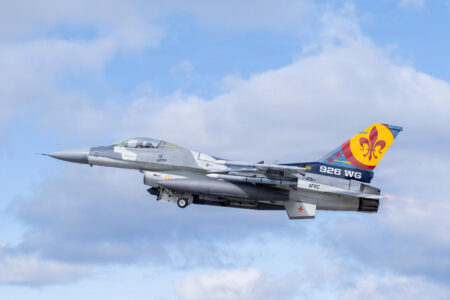
A U.S. Air Force F-16 Fighting Falcon assigned to the 18th Fighter Interceptor Squadron takes off in support of Operation ARCTIC VANGUARD at 5 Wing Goose Bay, Newfoundland and Labrador Sept. 17, 2026. OAV is an air defense operation directed by the North American Aerospace Defense Command that strengthens its aerospace warning and control missions. Training alongside allies and partners helps develop seamless processes, systems, platforms and capabilities, creating a more capable and agile force. (U.S. Air Force photo by Senior Airman Colin Perkins)
**Allied Air Forces Bolster Arctic Defenses Amid Rising Geopolitical Tensions**
In late summer and early autumn 2026, air forces from the United States and Canada conducted a series of joint exercises across North America’s Arctic and sub-Arctic regions, signaling a concerted effort to enhance continental air defense and project allied power. These operations, notably Operation Arctic Vanguard 26 and Operation Tundra Merlin, underscore the increasing strategic importance of the Arctic and the commitment of allied nations to strengthen interoperability and deterrence in a rapidly evolving geopolitical landscape.
Operation Arctic Vanguard 26, held in September 2026, saw Royal Canadian Air Force (RCAF) CF-18 Hornets flying in formation with United States Air Force (USAF) F-16 Fighting Falcon fighter jets over 5 Wing Goose Bay in Newfoundland and Labrador. The exercise, conducted under the direction of the North American Aerospace Defense Command (NORAD) and/or United States Northern Command (USNORTHCOM), focused on fortifying aerospace warning and control missions. Photographs from September 15 and 17, 2026, depicted these allied aircraft executing integrated maneuvers, with U.S. Air Force F-16s assigned to the 18th Fighter Interceptor Squadron participating in takeoff operations. The stated objective was to develop seamless processes, systems, platforms, and capabilities through training alongside allies, thereby fostering a more capable and agile joint force.
Concurrently, Operation Tundra Merlin took place in August 2026 at Eielson Air Force Base in Alaska. This exercise featured U.S. Air Force F-16 Fighting Falcons and F-35 Lightning IIs. The operation was designed to demonstrate the joint force’s capacity to integrate air and land-based combat power. Its primary aim was to detect, track, and effectively counter simulated threats against the homeland, showcasing advanced capabilities and coordinated response strategies in a critical northern theater. The inclusion of the F-35 Lightning II, a fifth-generation stealth fighter, highlights the emphasis on leveraging cutting-edge technology for air defense and projection.
These exercises are set against the backdrop of Alaska’s unique and vital strategic position. Situated at the nexus of the USNORTHCOM and U.S. Indo-Pacific Command (USPACOM) areas of responsibility, Alaska is geographically proximate to potential geopolitical actors such as China, Russia, and North Korea. A defense official, identified as Ferguson, emphasized this dual significance, stating, “I don’t think people appreciate the role that Alaska plays for our homeland defense mission, but also for our Indo-Pacific mission.” Ferguson further elaborated on Alaska’s critical function as a hub for power projection, enabling forces to operate not only in the Indo-Pacific in the event of a contingency but also within the European theater, underscoring its broad strategic utility.
The recent military drills are integral to a broader initiative known as Nordic Bridge, launched earlier this year by a senior military official, Guillot. The Nordic Bridge initiative seeks to enhance the integration of allied operations across the expansive Arctic region. This collaborative framework involves coordination among various U.S. combatant commands with interests in the Arctic, alongside key allied nations: Canada, Sweden, Finland, Denmark, Norway, and Iceland. All these nations are members of the North Atlantic Treaty Organization (NATO), with Sweden and Finland having recently joined, further solidifying the alliance’s presence in the High North. The overarching goals of Nordic Bridge include enhancing domain awareness—a comprehensive understanding of activities within the Arctic—and improving interoperability among participating forces.
Guillot articulated the initiative’s forward-looking approach, stating, “We’re working with other friendly Arctic nations to increase our presence, to increase and expand the deterrence, and make sure that every exercise we do up there is multinational and along multiple avenues of approach.” This statement highlights a strategy centered on robust allied presence, collective deterrence, and diversified operational methods to address the complex challenges and opportunities presented by the Arctic region. As climate change continues to open new sea lanes and access to natural resources, the Arctic is increasingly becoming an arena of geopolitical competition, making these integrated defense efforts more critical than ever.
Why This Matters
The recent series of joint air defense exercises in the Arctic and sub-Arctic regions holds significant importance for several reasons:
**Heightened Geopolitical Competition in the Arctic:** The Arctic is emerging as a critical frontier for geopolitical competition. As climate change makes the region more accessible, new shipping routes become viable, and previously inaccessible natural resources become attainable. This has led to increased strategic interest and military activity from various global powers, including Russia and China. These exercises serve as a direct response to, and a deterrent against, potential challenges to regional stability and national interests.
**Strengthening Homeland Defense:** For both the United States and Canada, these operations are fundamental to ensuring the security of their homelands. NORAD’s mission to detect, deter, and defend against aerospace threats requires constant vigilance and advanced capabilities. Exercises like Arctic Vanguard and Tundra Merlin directly enhance the ability of allied forces to identify and neutralize potential airborne threats originating from or traversing the Arctic, thereby safeguarding North American airspace and critical infrastructure.
**Reinforcing Allied Unity and Deterrence:** The participation of both U.S. and Canadian forces, and the broader Nordic Bridge initiative involving multiple NATO allies, sends a clear message of solidarity and collective defense. This enhanced interoperability and coordinated presence in the Arctic acts as a powerful deterrent against any potential adversary contemplating aggressive actions in the region. It demonstrates that an attack on one ally in this critical area would be met with a unified and capable response from the alliance.
**Strategic Power Projection and Global Reach:** Alaska’s role as a “nexus” for USNORTHCOM and USPACOM, and its capacity for power projection into both the Indo-Pacific and European theaters, underscores its immense strategic value. These exercises hone the ability to rapidly deploy and sustain forces from Alaska, enabling a swift response to contingencies across vast distances. This flexibility is crucial for maintaining global stability and protecting allied interests beyond North America.
**Adaptation to Emerging Threats and Environments:** The Arctic presents unique operational challenges, including extreme weather conditions, vast distances, and limited infrastructure. These exercises are vital for military personnel to gain experience operating in such an environment, testing equipment, tactics, and communication systems. The integration of advanced platforms like the F-35 Lightning II ensures that allied forces are equipped with the latest technology to maintain a qualitative edge in this complex and evolving operational space.