
UK AUKUS AI Deployment on P-8 Poseidon Aircraft Awaits Future Integration, UK Benefits from Partner Data
Artificial intelligence (AI) algorithms, developed collaboratively under the trilateral AUKUS security pact, have not yet reached operational deployment on the Royal Air Force’s (RAF) P-8 Poseidon maritime patrol aircraft, the United Kingdom’s Ministry of Defence has confirmed. While the advanced software is slated for future integration into the RAF’s fleet, the UK is presently leveraging crucial data and operational insights gathered from its partners’ existing deployments, ensuring a coordinated and informed approach among the three allied nations.
The confirmation was provided on Wednesday by Luke Pollard, the Minister for Defence Readiness and Industry, in a written response to a query from Conservative MP Ben Obese-Jecty. Obese-Jecty had sought an update following an earlier parliamentary discussion regarding the AUKUS agreement and the progress of AI deployment within the Royal Air Force’s operational capabilities.
Minister Pollard underscored that the AI algorithms in question are a testament to trilateral collaboration, having been developed through the combined expertise and resources of Australia, the United Kingdom, and the United States. He reiterated that the implementation of these sophisticated algorithms onto the UK’s P-8 aircraft is part of a planned future rollout. This phased strategy is designed to allow for continuous refinement, rigorous testing, and optimal integration before achieving full operational capability across the RAF fleet.
In the intervening period, Pollard highlighted that the United Kingdom is actively “benefitting from access to data, insights and operational learnings” generated through its AUKUS partners’ current deployments of these capabilities. This strategic data-sharing initiative constitutes a vital component of a broader, overarching programme dedicated to fostering robust and seamless interoperability across all three allied nations. The overarching objective is to maximize the collective operational advantages derived from AUKUS-developed technologies as they are progressively introduced into service within each nation’s armed forces.
These advanced algorithms fall under Pillar 2 of the AUKUS agreement, a critical component of the pact focused on accelerating the development and sharing of advanced defense capabilities. This pillar encompasses crucial technological domains such as artificial intelligence, autonomous systems, hypersonics, quantum technologies, and advanced undersea warfare technologies. Pillar 2 operates in parallel with the more widely recognized Pillar 1, which concentrates on delivering conventionally-armed, nuclear-powered attack submarines to Australia, a move poised to significantly enhance regional security dynamics and strategic stability.
One of the foundational and earliest publicly acknowledged projects within AUKUS Pillar 2 involved the trilateral development and extensive trialling of AI algorithms specifically engineered for processing sonobuoy data. Sonobuoys are expendable sonar systems deployed by aircraft to detect and track submarines by listening for acoustic signatures underwater. The primary goal of this shared software is to significantly enhance the speed, accuracy, and efficiency with which P-8A maritime patrol aircraft operators can analyze vast amounts of acoustic returns, thereby dramatically improving the efficacy of submarine detection and tracking operations.
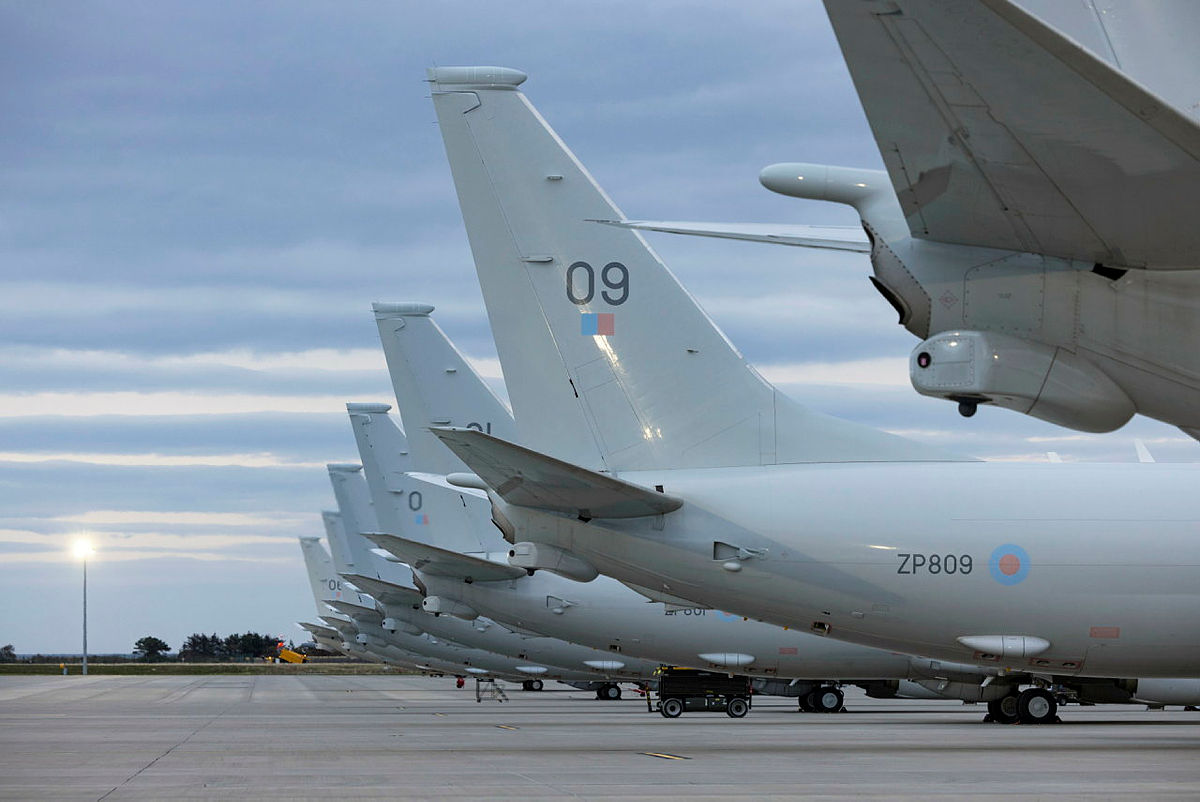
The Royal Air Force maintains a critical fleet of nine P-8A Poseidon aircraft, which are strategically based at RAF Lossiemouth in Moray, Scotland. These highly capable aircraft bear the primary responsibility for British anti-submarine warfare (ASW) patrols across the strategically vital North Atlantic region and the maritime approaches to the United Kingdom. Their missions are paramount for safeguarding national security interests, including the continuous protection of the UK’s nuclear deterrent and the persistent tracking of submarine activities, particularly those originating from Russia, in the high north. The P-8’s capabilities extend to intelligence, surveillance, and reconnaissance (ISR) missions, making it a versatile asset in a complex maritime environment.
The P-8 Poseidon serves as a common and exceptionally capable maritime patrol airframe across all three AUKUS partners. Both Australia and the United States operate larger fleets of P-8s, making the aircraft a natural and highly efficient early platform for the integration and testing of trilaterally developed software and advanced capabilities. This commonality across the three nations streamlines the processes of development, testing, training, and eventual deployment, fostering a robust framework for shared technological advancement and deep operational synchronization, ultimately enhancing collective defense postures.
The strategic importance of these AI developments within the AUKUS framework cannot be overstated. In an increasingly complex global security landscape, where maritime threats, including highly sophisticated and stealthy submarine capabilities, are evolving at an accelerated pace, the ability to quickly and accurately detect, classify, and track underwater vessels is of paramount importance. AI algorithms offer a transformative solution by processing vast amounts of sensor data at speeds and accuracies unattainable by human operators alone, providing a critical tactical advantage in the demanding domain of anti-submarine warfare. This technological edge is vital for maintaining deterrence and ensuring maritime domain awareness.
Furthermore, the emphasis on profound interoperability is a cornerstone of the entire AUKUS pact. By jointly developing and eventually deploying shared technologies, the three nations aim to forge a seamless operational environment where their respective forces can communicate, share intelligence, and operate in a highly coordinated manner. The current phase, where the UK actively draws on data and insights from its partners’ deployments, exemplifies this unwavering commitment to a collective learning process. This approach ensures that the technology is robust, operationally effective, and fully aligned with the diverse operational doctrines and requirements of all three countries before widespread and comprehensive adoption.
This collaborative approach underscores a broader commitment to collective security, particularly in the strategically critical Indo-Pacific and Euro-Atlantic regions. By pooling resources, expertise, and technological capabilities, the AUKUS partners seek to maintain a decisive qualitative military edge, effectively deter potential adversaries, and project stability in key international areas. The phased deployment of these advanced AI capabilities reflects a deliberate and careful strategy to integrate cutting-edge technology responsibly and effectively into critical defense platforms, ensuring long-term security benefits.
Why This Matters
The parliamentary update regarding the deployment status of Artificial Intelligence (AI) algorithms on the Royal Air Force’s P-8 Poseidon aircraft under the AUKUS pact holds significant implications across global security, military interoperability, and the trajectory of defense technology. This information is important for several key reasons:
- Enhancing Anti-Submarine Warfare (ASW) Capabilities:The primary purpose of these AI algorithms is to revolutionize the processing of sonobuoy data, thereby drastically accelerating and improving the detection and tracking of submarines. In an era marked by increasing naval activity and the proliferation of sophisticated submarine fleets, notably from nations such as Russia and China, superior ASW capabilities are absolutely crucial. They are essential for maintaining maritime security, safeguarding vital global sea lanes, and protecting strategic national assets, including nuclear deterrents. The P-8 Poseidon is a frontline asset in this domain, and AI integration promises to significantly amplify its effectiveness, providing a critical advantage in underwater surveillance.
- Deepening AUKUS Interoperability and Alliance Strength:A fundamental principle of the AUKUS security pact between Australia, the United Kingdom, and the United States is to foster deep interoperability and facilitate the sharing of advanced defense technologies. The trilateral development and planned shared deployment of these AI tools on a common platform like the P-8 serve as prime examples of this commitment in action. The UK’s current reliance on data and operational learnings from its partners signifies a practical and robust implementation of this interoperability, ensuring that shared technologies are thoroughly vetted, effective, and seamlessly integrated across allied forces. This collective approach significantly enhances the combined military strength, responsiveness, and resilience of the three nations in a contested global environment.
- Validation of AUKUS Pillar 2 Advancement:This development provides tangible evidence of the progress being made under AUKUS Pillar 2, which focuses on advanced capabilities beyond the nuclear submarine program of Pillar 1. AI, autonomy, hypersonics, and quantum technologies represent the cutting edge of military innovation and are crucial for future defense. The successful development and phased deployment strategy of these AI algorithms demonstrate that AUKUS is not merely an aspirational agreement but is actively delivering on its promise to enhance the technological superiority of its members across a diverse range of critical defense domains.
- Shaping the Future of Military AI and Autonomous Systems:The integration of AI into complex military platforms like the P-8 Poseidon marks a significant and transformative step in the evolution of military technology. AI’s capacity to process vast quantities of sensor data, identify subtle patterns, and assist human operators in making faster, more informed decisions under pressure is revolutionary. This project serves as a key indicator for how AI will be adopted and utilized in future defense systems, setting important precedents for ethical considerations, operational protocols, and international collaboration in the responsible development and deployment of military AI.
- Strategic Positioning in a Contested Geopolitical Landscape:The AUKUS pact itself is a deliberate strategic response to evolving geopolitical realities, particularly the assertive rise of China in the Indo-Pacific and Russia’s continued aggression. By collectively investing in and deploying advanced technologies, the AUKUS partners aim to maintain a decisive qualitative military edge, deter potential adversaries, and project stability in key strategic regions. The incremental yet determined deployment of these AI tools reinforces the alliance’s steadfast commitment to modernizing its defense capabilities to effectively meet both contemporary and future security challenges across the globe.
- Parliamentary Oversight and Transparency in Defense Spending:The fact that this detailed information was disclosed in a parliamentary answer underscores the enduring importance of democratic oversight in major defense initiatives and international agreements. It provides essential transparency regarding the progress, challenges, and fiscal implications of significant international defense agreements and complex technological integrations, allowing elected officials to scrutinize government spending, strategic decisions, and the effectiveness of defense policies on behalf of the public.