
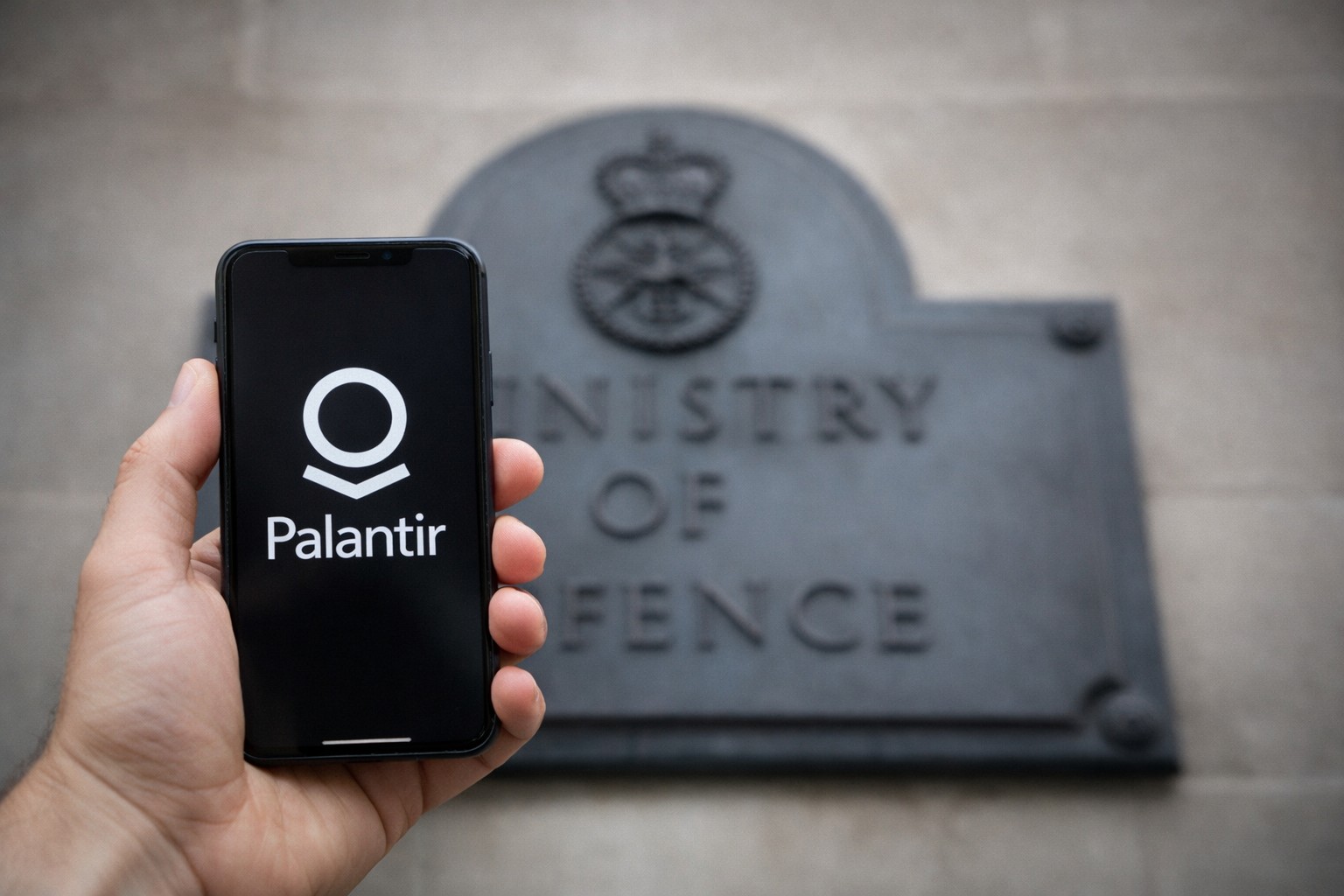
Legislators have challenged the Ministry of Defence concerning its decision to grant Palantir an additional three-year agreement without competitive bidding, prompting apprehension about ethical conduct, economic efficiency, and sustained reliance on a solitary US provider for crucial military information and artificial intelligence capacity, as reported by the UK Defence Journal.
In the Lords, Baroness Goldie stated that the current pact was understood to be concluding in 2025 and maintained that British enterprises had expressed interest in tendering. She denounced the choice to bestow a new agreement in December 2025 without an open solicitation, contending that there was “a deeply disturbing aura hovering over this particular matter” and inquiring about the discussions at a February 2025 meeting in Washington involving the Prime Minister, Palantir, and Peter Mandelson.
Lord Coaker, a Minister of State at the Defence Ministry, affirmed he would ponder her observations and respond after consultations with others, but he championed the practice of sole-supplier contracting. He referenced a Conservative declaration from the Commons, stating that “numerous agreements within the MoD are appropriately issued on a sole-source basis,” and added that the Ministry assessed Palantir’s competencies and performance history as the rationale for the direct allocation.
He highlighted a disclosure announcement released in December 2025 which, he noted, elucidated why a non-competitive award was warranted, asserting that it was “in our best interests, the interests of the MoD, and the interests of our nation” to proceed on that foundation.
Lord Fox expressed worries about whether the arrangement amounted to externalizing a national competence, maintaining that while the Government claimed the intelligence would remain safeguarded, the proficiency to leverage it for AI applications would reside within Palantir’s exclusive platforms.
In response, Coaker confirmed that UK military data utilized in Palantir software maintained national ownership and remained under MoD oversight, appending: “It is located in the United Kingdom.” He mentioned the existence of established contractual stipulations and that modifications could not be made without British authorization, outlining “very tangible protections” to secure the data while facilitating the MoD to gain from Palantir’s strengths.
When queried by Lord Bellingham about whether notes were kept of the February 2025 visit to Palantir, Coaker replied: “No records were taken of that gathering, but it was a customary visit.” He stated the attendance included a brief demonstration, a guided inspection, and introductions to personnel, characterizing it as part of typical governmental interaction with the business sector.
Baroness Wheatcroft requested information on agreements with Anduril, having previously sought particulars on contracts featuring Palantir and Anduril. Coaker said he would correspond with her, further stating that the reply would be placed in the Library.
Lord Watts, a Labour peer, remarked that the situation prompted wider inquiries concerning the bestowal of substantial defence agreements without competitive bidding and economic efficiency, advocating that British industry should be encouraged to contend where feasible. Coaker concurred that open tendering was generally preferable but contended there were instances where direct grants were justified. He also said Palantir had pledged, as part of the December 2025 corporate agreement, to “1.5 billion-worth of capital to foster British business” through backing for small and medium-sized enterprises and talent cultivation, portraying this as integral to ensuring UK advantage from a contract granted to a US-based provider.
Baroness Cash voiced concerns documented by openDemocracy pertaining to political funding and purported connections to entities that could gain from state contracts, inquiring whether potential clashes had been investigated. Coaker said he would correspond if required, but affirmed: “everything was conducted justly and appropriately,” explaining that the choice to award the agreement was made solely by the Defence Secretary and that such considerations were disallowed from affecting acquisition rulings.
Baroness Brinton revisited queries regarding how Palantir might utilize the intelligence, alluding to earlier deliberations during the Purchasing Legislation on curbing access to confidential health data. Coaker re-emphasized that oversight of military information remained a national prerogative for the British administration and stated: “Nothing can be done without the authorization of the UK Government,” appending that safeguards were established to hinder data transmission outside its designated location.