
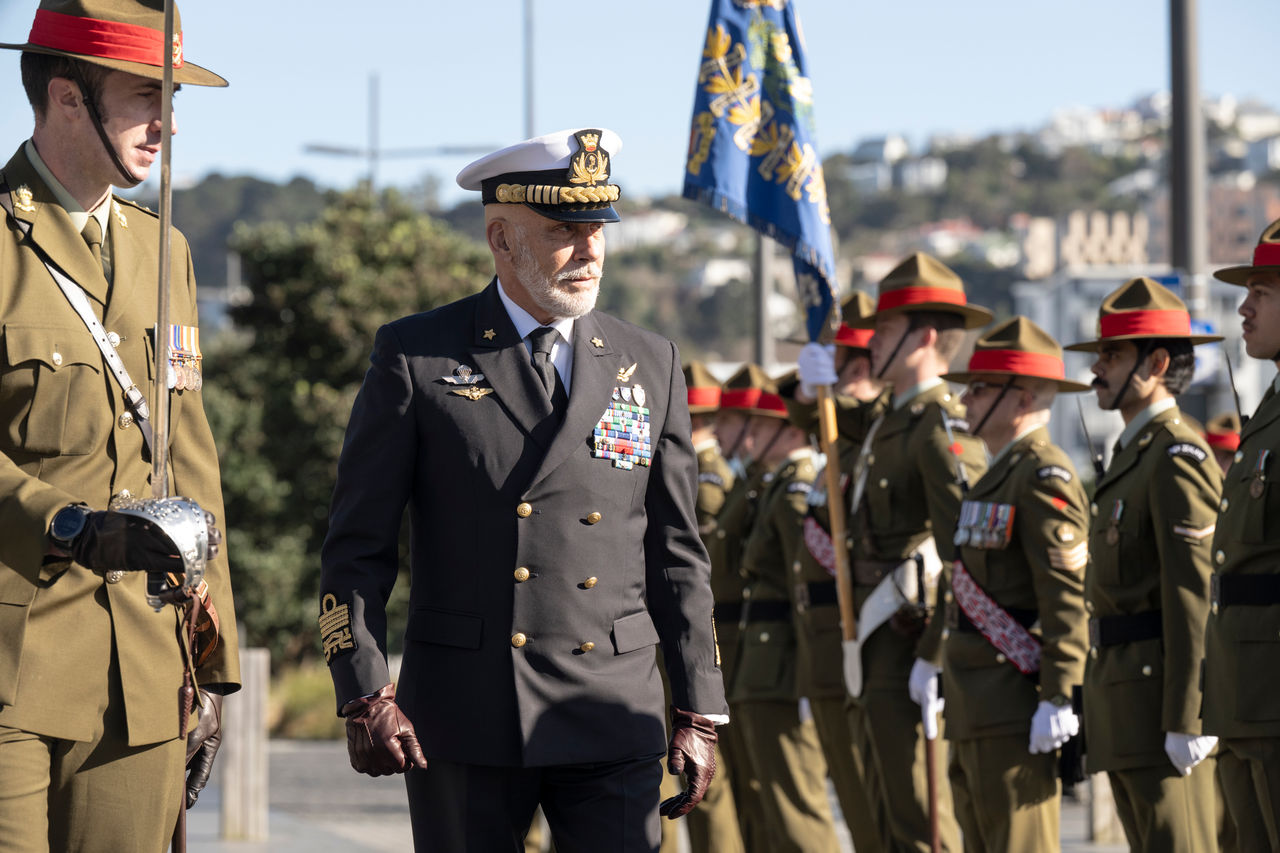
NATO’s senior military representative has visited New Zealand for talks on maritime security, cyber threats and interoperability as the alliance strengthens links between Euro-Atlantic and Indo-Pacific partners.
Wellington, New Zealand – Admiral Giuseppe Cavo Dragone, Chair of the NATO Military Committee, concluded a three-day visit to New Zealand from August 23 to 25, engaging with key political and defence leaders on enhancing military cooperation. The discussions, which focused on critical areas such as maritime security, interoperability, and emerging technologies, underscore NATO’s ongoing efforts to deepen partnerships between Euro-Atlantic and Indo-Pacific nations.
During his visit, Admiral Cavo Dragone met with Prime Minister Christopher Luxon, Defence Minister Paul Goldsmith, Chief of Defence Force Air Marshal Tony Davies, and Dr. Brook Barrington, Secretary of Defence, among other senior officials. According to official reports from NATO, the agenda encompassed a broad spectrum of contemporary security challenges, including the imperative of freedom of navigation, safeguarding secure sea lines of communication, mitigating cyber incursions, and understanding the military implications posed by emerging and disruptive technologies.
A central theme throughout the high-level meetings was maritime security. Discussions with Prime Minister Luxon and Taha Macpherson, Deputy Chief Executive for Policy at New Zealand’s Ministry of Foreign Affairs and Trade, specifically addressed the importance of maintaining open and resilient maritime routes. NATO emphasized that these conversations reflected the vital role of sea lines of communication for both European and Indo-Pacific security. This is particularly salient given the increasing interconnectedness of military, commercial, and strategic activities across these two vast geographical regions, making the unimpeded flow of goods and information across oceans a shared priority.
This engagement positions New Zealand firmly within NATO’s expanding network of Indo-Pacific partners, rather than indicating any shift in the North Atlantic alliance’s core geographic scope or membership criteria. While New Zealand is not a NATO member, it holds a longstanding and established partnership with the organization. This relationship has historically seen Wellington contribute personnel and resources to various NATO-led missions and operations. Furthermore, NATO acknowledged New Zealand’s continued and robust support for Ukraine in its defence against aggression as a significant element reinforcing the shared values and strategic alignment between the partner and the alliance.
Admiral Cavo Dragone’s meetings with Air Marshal Davies and Secretary of Defence Dr. Brook Barrington delved into the practical military dimensions of this partnership. NATO stated that improving interoperability and developing shared capabilities remain pivotal objectives for cooperation. The goal is to enhance the ability of New Zealand’s defence forces to operate seamlessly and effectively alongside those of NATO member states whenever joint operations or exercises are required. Interoperability is a comprehensive concept, encompassing common procedures, standardized communications protocols, joint training initiatives, and the capacity for forces utilizing diverse equipment to function cohesively within a unified command structure. NATO has increasingly prioritized these areas in its relationships with partners outside the alliance, recognizing how security developments in one region can directly influence another.
The meeting with Defence Minister Paul Goldsmith specifically addressed common technological and security challenges. NATO articulated that both the alliance and New Zealand confront overlapping concerns, ranging from sophisticated state-sponsored and non-state cyber activities to the rapid evolution of emerging and disruptive technologies. These fields are becoming progressively more crucial in modern military planning, as armed forces globally increase their reliance on complex networked systems, artificial intelligence, autonomous platforms, and other advanced digital capabilities. Collaborative approaches to understanding and countering these threats were a key topic.
Admiral Cavo Dragone articulated the broader strategic rationale behind NATO’s increased focus on the Indo-Pacific during a public lecture at the Centre for Strategic Studies at Victoria University of Wellington. He stated, as quoted in the NATO news update, that“Euro-Atlantic and Indo-Pacific security are one conversation held in two time zones.”This powerful formulation encapsulates NATO’s evolving strategic outlook, emphasizing the intrinsic connections between security dynamics in Europe and the Indo-Pacific. It highlights a recognition that geopolitical shifts, economic pressures, and security threats in one region have ripple effects across the globe. This approach allows for closer political and practical relationships with several regional partners without extending the alliance’s collective defence commitments to nations like New Zealand. Areas such as interoperability, resilience, and technology cooperation are receiving heightened attention in these partnerships.
For New Zealand, a geographically isolated island nation heavily dependent on long-distance international trade, maritime security holds particular and profound relevance. The discussions on freedom of navigation and the resilience of sea routes directly link NATO’s concerns about maintaining vital transatlantic reinforcement and commercial routes with New Zealand’s own essential interest in secure maritime communications and unhindered access across the expansive Indo-Pacific region. This shared strategic interest forms a strong basis for continued cooperation.
Beyond the strategic discussions, Admiral Cavo Dragone also participated in a wreath-laying ceremony at the Hall of Memories in Pukeahu National War Memorial Park. This symbolic gesture underscored the shared history and sacrifices, reinforcing a partnership built not only on contemporary security interests but also on a foundation of shared values and enduring practical military cooperation. The visit concluded with both sides reaffirming their commitment to closer interoperability, enhanced capability development, and coordinated responses to security challenges that affect both the Euro-Atlantic and Indo-Pacific regions, with New Zealand continuing its significant role as a NATO partner rather than an alliance member.
Why This Matters
The visit by NATO’s senior military representative to New Zealand holds significant implications for both regional and global security dynamics, highlighting a fundamental shift in how major alliances perceive and address international threats:
- Globalisation of Security:Admiral Cavo Dragone’s statement that “Euro-Atlantic and Indo-Pacific security are one conversation held in two time zones” encapsulates the core message. It signifies NATO’s formal recognition that security challenges are no longer confined to specific geographic theatres. Instability, economic disruption, and military buildups in the Indo-Pacific can directly impact European security, just as European conflicts have global repercussions. This expanded outlook redefines the scope of collective security, pushing alliances to forge broader networks.
- NATO’s Evolving Role and Reach:While not extending collective defence commitments, this visit demonstrates NATO’s strategic adaptation to a more complex geopolitical landscape. By fostering deeper partnerships with nations like New Zealand, NATO aims to project influence, share intelligence, and build common capabilities beyond its traditional borders. This “partners across the globe” strategy is crucial for addressing transnational threats like cyber warfare, maritime piracy, and supply chain vulnerabilities that require a coordinated international response.
- Strengthening the Rules-Based International Order:Discussions on freedom of navigation and secure sea lines of communication are not merely about military logistics; they are foundational to the global economy and international law. By reinforcing these principles with Indo-Pacific partners, NATO and its allies are implicitly pushing back against any attempts to challenge or undermine established international norms, particularly in strategically vital waterways. New Zealand, as a trading nation, has a direct interest in maintaining these norms.
- Enhancing New Zealand’s Security and Influence:For New Zealand, this visit reinforces its position as a credible and valuable international security partner. By enhancing interoperability and capability development with NATO, New Zealand strengthens its own defence forces and gains access to advanced training, technologies, and strategic insights. This partnership allows Wellington to contribute more effectively to global security efforts while securing its own national interests, particularly its reliance on stable maritime trade routes across the Indo-Pacific.
- Addressing Emerging Threats:The focus on cyber incursions and emerging and disruptive technologies highlights the contemporary nature of warfare. These threats transcend borders and traditional military domains. Collaborative efforts between NATO and partners like New Zealand are essential for developing shared doctrines, technological countermeasures, and resilience strategies to protect critical infrastructure and defence capabilities from sophisticated digital attacks and the rapid pace of technological change.
- Solidarity and Shared Values:New Zealand’s continued support for Ukraine, as noted by NATO, underscores a commitment to democratic values and the principle of national sovereignty. This alignment strengthens the moral and political cohesion between NATO countries and their partners, demonstrating a united front against aggression and promoting a shared vision for a stable and secure international environment.