
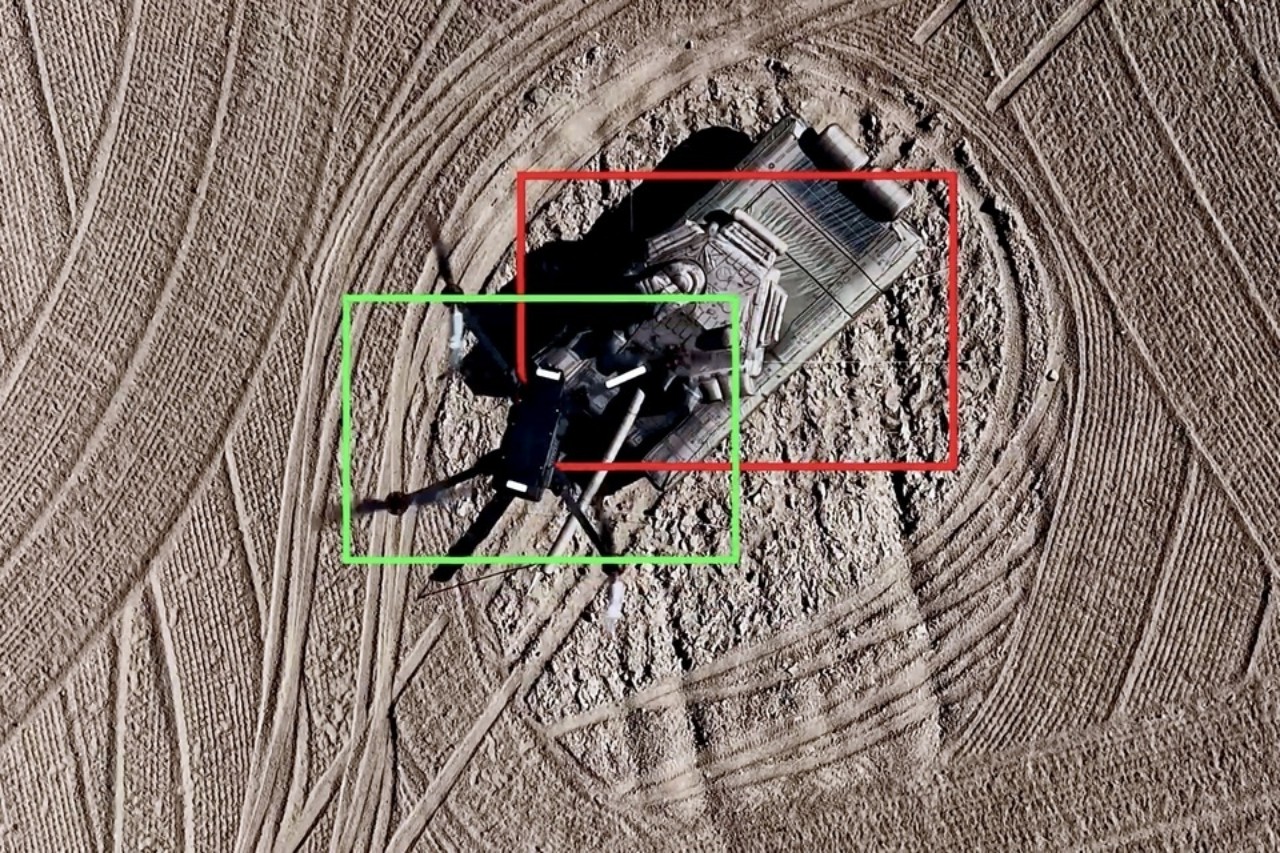
British Army Tests Advanced Drone Swarm Technology in Battlefield Trials
The British Army, in collaboration with the Defence Science and Technology Laboratory (Dstl), has completed initial battlefield trials for an eight-aircraft drone swarm system. This marks a significant step in the development of technology that enables groups of uncrewed systems to be commanded collectively, rather than individually, during complex military operations. The trials aimed to assess the practical application of this “true swarming” capability in realistic scenarios.
This initiative represents the inaugural phase of the “Software Defined Swarms Concept Demonstrator,” a collaborative project spearheaded by Dstl alongside Army Headquarters and various industry partners. The work builds upon prior activities conducted under AUKUS Pillar 2, a security pact involving Australia, the United Kingdom, and the United States focused on advanced capabilities. The “Software Defined Swarms” approach emphasizes flexible, adaptable systems that can evolve with new technological advancements, rather than being tied to specific hardware.
During the trials, two distinct industry-led approaches were rigorously tested within simulated operational environments. One system was developed by BlueBear, a subsidiary of the Swedish aerospace and defence company Saab, known for its expertise in autonomous systems. The second system emerged from the Disruptor Group, a consortium of British companies led by Applied Intuition, a firm specializing in autonomous vehicle development and testing software. These diverse contributions allowed for a broad assessment of the nascent technology’s capabilities and limitations.
A primary objective of these trials was to enable soldiers to directly assess how these swarming systems performed representative battlefield tasks. The Army demonstrated a particular interest in applications such as intelligence, surveillance, and reconnaissance (ISR) for forward-deployed forces. Swarms of drones could potentially cover larger areas more efficiently, maintain persistent oversight, and offer redundancy should individual units be compromised, providing a comprehensive and resilient ISR capability.
Central to this development is the Army’s definition of “true swarming,” which fundamentally differs from simply operating multiple drones independently in the same vicinity. True swarming involves commanding groups of robotic systems as a cohesive, collaborative entity, where individual units work together to achieve a unified objective. This requires sophisticated algorithms for coordination, communication, and collective decision-making, allowing the swarm to adapt to changing circumstances and operate with a higher degree of autonomy under human oversight.
Brigadier Kieran Sheldon, Head of Military Capability Plans at Army Headquarters, underscored the success and collaborative spirit of the project. “The partnership with Dstl to develop swarming technology has been hugely energising for all involved,” he stated. “Dstl has enabled, with industry, the Army to conduct extensive in-field trials since May.” Brigadier Sheldon further emphasized the transformative potential of this technology: “The technology for true swarms, groups of robots that are commanded as collaborative groups, has significant potential and due to the work of Dstl and the industry teams, the Army is more informed and empowered to seize it.”
The Army has already completed an intensive eight-week experimentation phase utilizing the “Swarm Capability Test Bed,” a system comprising eight uncrewed aerial vehicles (UAVs). This initial phase provided critical data and feedback. The system has now transitioned into the hands of British Army operators within the Experimentation and Trials Group, who are conducting live flying exercises to further refine its capabilities. Future trials are strategically planned to continue through 2026 and 2027, indicating a long-term commitment to integrating this technology into military operations.
Dstl highlighted that the demonstrator system employs open architectures. This design choice is crucial for future adaptability, allowing the system to be modified and upgraded as new technologies emerge, rather than being permanently linked to a single type of drone or control system. This modularity ensures longevity and flexibility in a rapidly evolving technological landscape. Moreover, Dstl affirmed that the underlying principles and approaches developed for aerial swarms could be extended beyond the air domain, potentially transforming capabilities in uncrewed ground vehicles (UGVs) and uncrewed surface vessels (USVs), fostering multi-domain integration.
This project represents the culmination of over a decade of Dstl’s dedicated research and development in artificial intelligence (AI), autonomy, and swarming technology. By bringing these disparate elements together into a direct field-testable bed, soldiers can now gain firsthand experience and provide invaluable operational insights. Richard, Dstl’s Land Systems Programme Manager, praised the collaborative effort: “The team has demonstrated what true partnership can achieve, uniting technical excellence, operational insight, and strategic coherence to drive forward a capability that will fundamentally reshape future military advantage.”
The British Army views swarming systems as a strategic pathway to augmenting battlefield mass and operational effectiveness without solely relying on expensive, crewed platforms. The deployment of lower-cost, autonomous systems that can operate collaboratively offers a more financially sustainable and adaptable approach. These “attritable and consumable” systems, designed to be less costly to replace if lost, can achieve a coordinated effect that might otherwise require significantly more resources or expose human personnel to greater risk. Brigadier Sheldon reiterated this advantage, stating, “This offers the opportunity to really accelerate the Army’s adoption of uncrewed, autonomous and swarming systems to increase fighting power through lower cost attritable and consumable systems that provide coordinated effect.”
Furthermore, the development directly reflects critical lessons learned from the ongoing conflict in Ukraine. The rapid evolution and widespread deployment of drones, autonomous systems, and advanced electronic warfare capabilities in that theatre have underscored the imperative for military technologies that can be rapidly adapted and deployed to counter dynamic and evolving threats. Swarming systems, with their inherent flexibility and distributed nature, are seen as a potent response to these modern battlefield challenges.
Why This Matters
The British Army’s trials of advanced drone swarm technology signify a fundamental shift in military strategy and capability, with far-reaching implications for global security and defense. This development is not merely an incremental improvement but represents a potential paradigm shift in how military forces operate, gather intelligence, and project power.
Firstly, it underscores a major push towards **autonomous and uncrewed systems** as a core component of future warfare. By enabling “true swarming,” militaries can achieve coordinated effects with a multitude of smaller, less expensive units, rather than relying solely on a few large, costly, and potentially vulnerable crewed platforms. This approach promises to increase “battlefield mass” – the sheer volume of assets and capabilities – in a cost-effective manner. It allows for distributed operations, where multiple units can simultaneously perform tasks, enhancing resilience against attack and overwhelming adversaries with sheer numbers and coordinated actions.
Secondly, the focus on **Intelligence, Surveillance, and Reconnaissance (ISR)** highlights the technology’s immediate practical value. Swarms can cover vast areas more efficiently, provide persistent monitoring, and offer redundancy, making them invaluable for situational awareness in complex and contested environments. This could lead to faster, more accurate decision-making for commanders and significantly reduce the risk to human personnel in dangerous scouting missions.
Thirdly, the emphasis on **open architectures and adaptability** is crucial for remaining competitive in an era of rapid technological change. Lessons from conflicts like Ukraine demonstrate that static, single-purpose military systems can quickly become obsolete or ineffective. A “software-defined” approach allows for continuous upgrades and integration of new sensors, algorithms, and capabilities without requiring a complete overhaul of hardware. This agility is vital for responding to evolving threats and maintaining a technological edge.
Fourthly, the mention of **AUKUS Pillar 2** places this development within a broader geopolitical context. It signals a collaborative effort among key Western allies to invest in and share advanced defense capabilities. This strategic alignment aims to deter potential adversaries and maintain a technological advantage in critical domains like AI and autonomy, impacting the global balance of power and fostering interoperability among allied forces.
Finally, while the current trials focus on human-commanded swarms, this research lays the groundwork for more advanced autonomous capabilities. This raises ongoing **ethical and regulatory debates** surrounding the role of AI in warfare, the balance between human control and machine autonomy, and the implications for international humanitarian law. As this technology matures, these discussions will become increasingly important, shaping how future conflicts are conceived and conducted.