
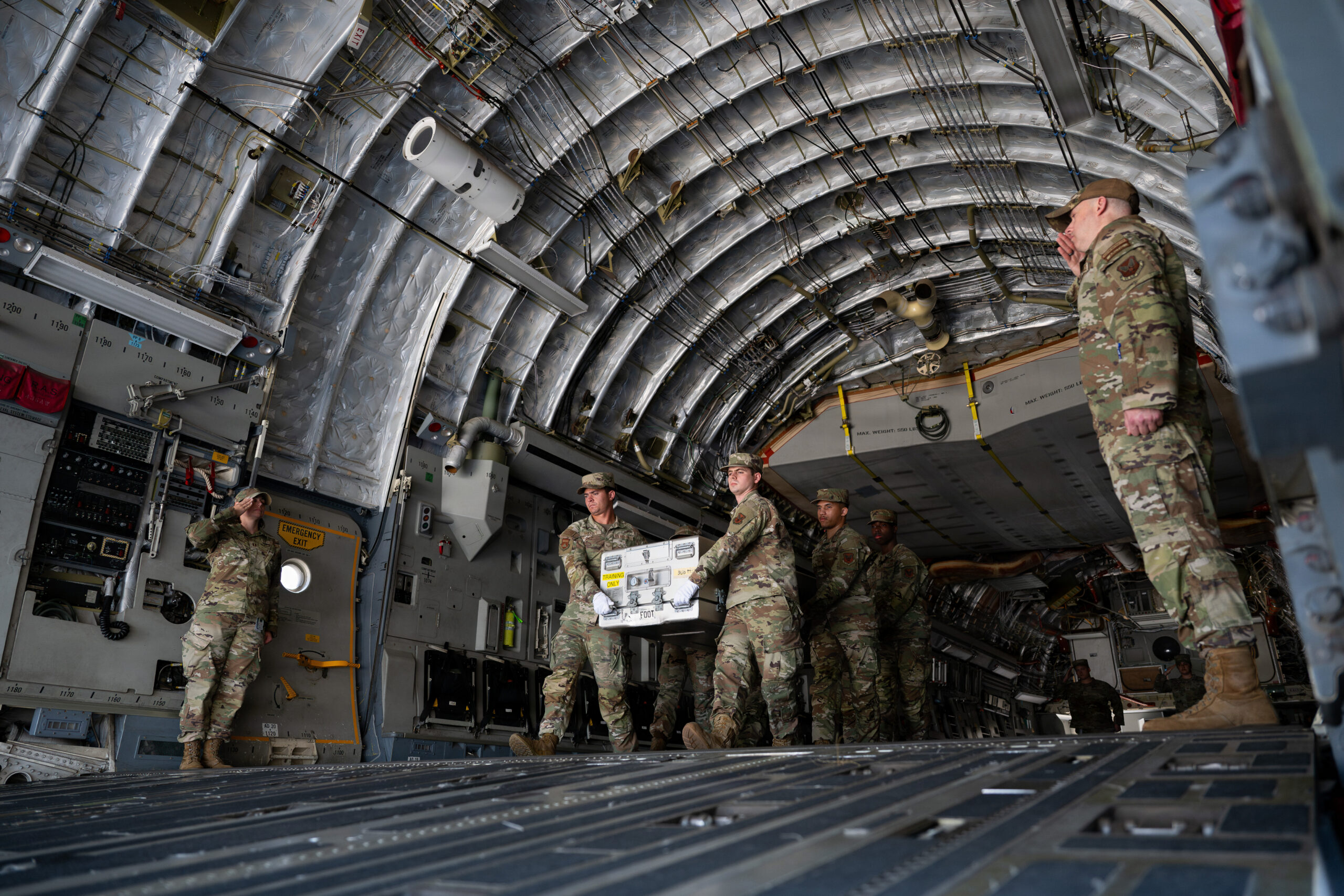
The Pentagon has confirmed the deaths of two U.S. Airmen this month in what are officially categorized as “non-hostile” incidents, bringing renewed attention to the human cost of ongoing American military operations in connection with Iran. These latest fatalities contribute to a growing casualty count that includes deaths from direct military action, accidents, and non-combat related causes since hostilities began in late February.
Official records, updated through October 29 by the Defense Casualty Analysis System (DCAS), indicate that both Airmen were assigned to U.S. Central Command (CENTCOM), which oversees U.S. military operations in the Middle East. However, the Pentagon has yet to publicly release the identities of the deceased personnel or the specific locations where their deaths occurred. The designation of a death as “non-hostile” signifies that the fatality resulted from causes other than direct engagement with enemy forces.
Details released by U.S. officials provide some insight into the circumstances surrounding these recent losses. One Airman died in the United States after being medically evacuated due to an illness or injury sustained while deployed. The cause of this death is officially listed as “illness/injury.” The second Airman passed away in the Middle East, with the cause of death currently listed as “pending” while an investigation into the incident is underway. These investigations are standard procedure for non-combat fatalities to determine the exact circumstances.
Both deceased Airmen were described as mid-to-senior enlisted personnel, holding ranks between E-5 (Staff Sergeant) and E-9 (Chief Master Sergeant) – indicating individuals with significant experience and responsibility within the Air Force. According to the database, one was between 31 and 35 years old, while the other was older. These details, while limited, underscore the loss of experienced service members in the field.
The two recent deaths bring the total number of U.S. service members killed in operations related to the conflict with Iran to at least 23. This count includes 15 fatalities that occurred during “Operation Epic Fury,” the initial strike campaign against Iran which the Trump administration stated concluded in early May. An additional eight service members, including the two recently reported Airmen, have died during subsequent operations, which the Pentagon refers to broadly as “Overseas Operations,” encompassing the ongoing military pressure campaign and naval blockade against Iran.
The conflict has seen direct hostile actions resulting in U.S. casualties. Iranian missile and drone attacks have targeted U.S. personnel at critical regional installations, including Prince Sultan Air Base in Saudi Arabia and Muwaffaq Salti Air Base in Jordan. Beyond hostile engagements, accidents have also tragically contributed to the casualty figures. A notable incident occurred on March 12, when six Airmen were killed in a mid-air collision between two KC-135 Stratotankers over Western Iraq, resulting in the crash of one of the aircraft and the loss of its entire crew.
In addition to the fatalities, the Defense Casualty Analysis System reports that at least 865 U.S. service members have been wounded in action since hostilities commenced on February 28. The vast majority of these injuries are attributed to “hostile” acts, reflecting the intensity of the operational environment. Among the wounded, 64 are Airmen, underscoring the broad impact of these military engagements across different branches of the armed forces.
The current operational landscape is characterized by a “shaky cease-fire” that has been in place between the U.S. and Iran. Simultaneously, the United States has maintained a comprehensive naval blockade of Iran since early April, aiming to exert economic and strategic pressure on the country. This blockade is part of the broader “Overseas Operations” designed to constrain Iran’s military capabilities and regional influence.
Despite the current cease-fire, the Trump administration is actively weighing its next strategic moves in the region. A recent report by The Wall Street Journal on October 28 detailed a significant meeting held by President Trump with key defense leaders. Attendees included Secretary of Defense Pete Hegseth, Chairman of the Joint Chiefs of Staff Gen. Dan Caine, and U.S. Central Command boss Adm. Brad Cooper. The discussions reportedly focused on military options beyond the existing blockade, indicating a potential shift in strategy or an escalation of current operations. President Trump himself hinted at future action during a mid-term campaign event, stating, “We may do another little Epic Fury,” a clear reference to the initial strike campaign that marked the beginning of direct military engagement. This statement suggests that further offensive actions remain a distinct possibility, adding to the uncertainty surrounding the future trajectory of U.S.-Iran relations.
Why This Matters
The deaths of two U.S. Airmen, even in “non-hostile” incidents, underscore the persistent and multifaceted human cost of military deployments, particularly in high-tension environments like the ongoing U.S. operations related to Iran. While not a result of direct combat, these fatalities highlight the inherent dangers of sustained overseas presence, including risks from illness, accidents, and the strenuous conditions of military service. The Pentagon’s limited disclosure regarding the identities and specific locations of these deaths also raises questions about transparency, a critical aspect of public accountability in military engagements.
These latest casualties add to a total of 23 American service members lost and over 865 wounded, demonstrating that even a “shaky cease-fire” and a blockade do not eliminate the risks faced by deployed personnel. The distinction between “hostile” and “non-hostile” deaths, while important for classification, does little to diminish the grief for military families or the overall impact on military units. It also highlights the broader implications of long-term military engagements, where operational tempo and living conditions can contribute to non-combat related injuries and fatalities.
Furthermore, the ongoing deliberations within the Trump administration regarding potential new military options, as indicated by President Trump’s hint at “another little Epic Fury,” signal a critical juncture in U.S.-Iran relations. Any escalation beyond the current blockade could significantly increase the risk of direct conflict, potentially leading to a higher number of casualties, destabilizing the already volatile Middle East region further, and drawing in other international actors. The decisions made in Washington will have profound consequences not only for regional stability but also for the lives of thousands of American service members and their families, making careful consideration and clear communication paramount.