
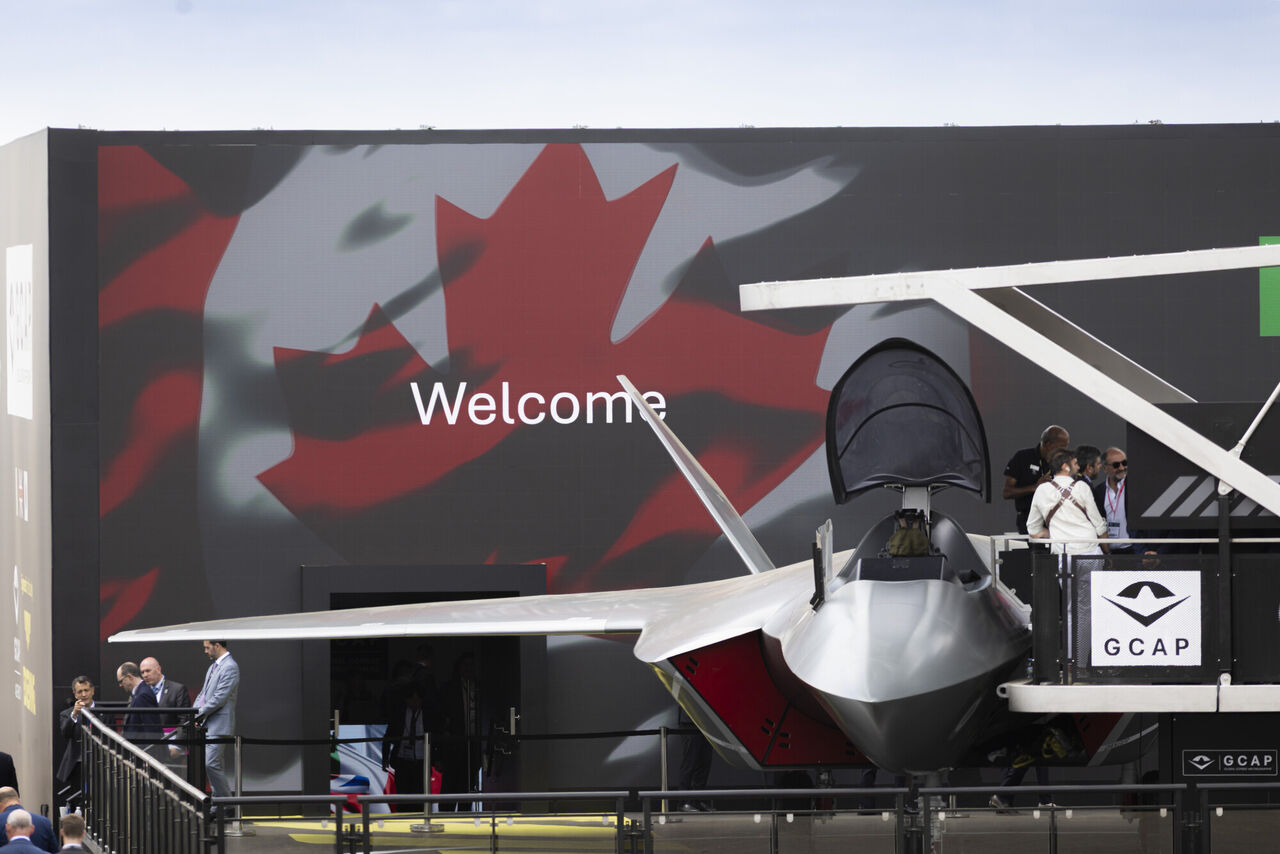
Canada has announced its intention to join the Global Combat Air Programme (GCAP), a collaborative effort between the United Kingdom, Italy, and Japan to develop a sixth-generation fighter aircraft. This decision, revealed on July 21 during the Farnborough International Airshow in England, signifies a growing trend among U.S. allies to pursue independent defense capabilities and reduce reliance on American-made systems. Experts suggest this broader shift could have significant implications for the U.S. defense industrial base, potentially driving up costs for American military systems and spare parts.
The move also casts further doubt on the likelihood of the U.S. exporting its own prospective sixth-generation fighter, the F-47, despite previous suggestions by former President Donald Trump. Such a development underscores evolving dynamics in international defense cooperation and the strategic priorities of allied nations.
Under the agreement, Canada will participate as the first observer nation in GCAP. The U.K.’s Ministry of Defence confirmed in a statement that this status grants Canada direct insight into the program’s capability development, industrial collaboration, and long-term delivery plans. While Canada has not yet committed to procuring GCAP aircraft and will not hold decision-making power within the program, its observer status provides privileged access and initiates discussions regarding Canada’s potential future participation and contributions to the multi-national initiative.
Doug Birkey, executive director of the Mitchell Institute for Aerospace Studies, highlighted that Canada’s decision aligns with a broader pattern among U.S. allies. “Allies are increasingly pushing to buy domestic systems for a variety of reasons,” Birkey observed, noting that these motivations can stem from political considerations, a desire to stimulate national or regional economies, or to foster greater strategic autonomy.
This development occurs against a backdrop of recent strain in the political relationship between the U.S. and Canada. Former President Trump had previously suggested the U.S. might consider annexing Canada as its “51st state” and announced new tariffs on Canadian goods on July 20. Concurrently, Canadian Prime Minister Mark Carney has advocated for a “middle powers” strategy, aiming to reduce Canada’s dependency on the U.S. and other global superpowers by strengthening ties with a broader array of international partners.
Despite the ongoing trade dispute, Canadian Defense Minister David McGuinty asserted at a July 21 press briefing in London that Canada’s decision to join GCAP was independent of current U.S.-Canada trade relations, though he did characterize the latest U.S. tariffs as “unilateral.” McGuinty emphasized the importance of international cooperation, stating, “This is about recognizing that we have got to come together.” He recounted discussions at a recent NATO conference in Ankara, Turkey, where multiple members expressed a consensus that “it was time for our member states to come together in a way that we haven’t previously done, that no one nation is going to be able to deal with these challenges alone, and that there is strength in cooperation.”
U.K. Defense Minister Wes Streeting echoed these sentiments, stressing that the participation of the four nations—U.K., Italy, Japan, and now Canada as an observer—demonstrates a shared commitment to common values and interests, and a collective resolve to deepen defense and industrial cooperation with close allies.
The F-47 Program and Export Prospects
The United States is actively developing its own sixth-generation fighter through the F-47 program, with its inaugural flight tentatively scheduled for 2028. In March 2025, when announcing Boeing as the prime contractor and designating the aircraft as the F-47, former President Trump had hinted at future export opportunities. “Our allies are calling constantly, they want to buy them also,” Trump stated. “And certain allies, we’ll be selling them perhaps toned-down versions. We’d like to tone them down about 10 percent, which probably makes sense, because someday maybe they’re not our allies, right?”
However, experts largely agree that Canada’s participation in the F-47 program was improbable from the outset. Birkey suggested that the F-47 would likely be prohibitively expensive for Canada’s defense budget. Furthermore, its envisioned role as a long-range air-to-air fighter, primarily optimized for potential conflicts in the Pacific theater against China, renders it a suboptimal fit for Canada’s specific defense requirements and strategic priorities.
Beyond Trump’s initial remarks, there have been no public indications of foreign sales being on the table for the F-47. Defense budget analyst Bryon Callan noted in a July 21 newsletter that the F-47 “may have no export prospects given its cost and the desire of the U.S. to protect its technology.” This sentiment is supported by historical precedent; concerns over safeguarding critical technologies previously led the U.S. Congress to impose a ban on any exports of the fifth-generation F-22 Raptor, which the F-47 is intended to replace. In an interview with Air & Space Forces Magazine, Clark stated, “The U.S. has already boxed itself out when it comes to next-generation aircraft sales.”
With the F-47 effectively off-limits for export, countries seeking to acquire sixth-generation fighter capabilities are compelled to explore alternatives. The collaborative Future Combat Air Systems (FCAS) fighter project, involving Germany, Spain, and France, experienced setbacks and ultimately collapsed earlier this year. This left GCAP as essentially “the only game in town” for a country like Canada looking to participate in a cutting-edge fighter development program outside the American system, according to Clark.
A Broader Trend: Hedging Against U.S. Reliance
Canada’s alignment with GCAP is emblematic of a wider international trend: a strategic effort by allies to diversify their defense procurement and reduce an over-reliance on U.S.-made systems. Several nations, including Canada, the U.K., and Italy, were instrumental partners in the development of the Lockheed Martin-produced F-35 Joint Strike Fighter, and Japan has also been a significant purchaser of F-35s. Yet, these same countries are now re-evaluating their long-term dependencies. Clark explained, “These countries are looking at [the current environment] and saying, ‘Well, do I want to be in a situation where I have to have good relations with the U.S. because I’m dependent upon a U.S. company to support my sophisticated piece of hardware?’”
This strategic re-evaluation is evident in Canada’s recent actions. The nation has paused its plans to acquire 88 F-35s and is now reportedly considering a mixed fleet comprising F-35s and Canadian-made Saab Gripen-E fighters. Although Canada is currently under contract for 16 F-35s, further procurement beyond that initial batch remains uncertain.
Another illustration of this hedging strategy emerged earlier this month when NATO announced its decision to purchase Saab’s GlobalEye airborne early warning and control (AEW&C) system aircraft. This move came despite previous plans to acquire Boeing’s E-7 Wedgetail. Birkey suggested that the Pentagon’s prolonged indecision since summer 2025 regarding whether to build an Air Force fleet of E-7s to replace its aging E-3 Sentries was a significant contributing factor to NATO’s shift in preference.
The implications of allies increasingly turning away from U.S. defense systems and investing in their own homegrown or alternative international programs could have profound second and third-order effects on the U.S. military, as highlighted by both Clark and Birkey. If allied militaries operate significantly different systems from U.S. forces, Birkey warned, it could severely impede joint interoperability, hindering the effectiveness of multinational operations and collective defense efforts.
Moreover, a reduction in foreign customers for U.S. systems means lower production volumes for defense contractors. This diminished demand makes it harder to achieve economies of scale, potentially driving up the unit costs that the Pentagon must bear. Clark specifically pointed out that this could particularly inflate the prices of spare parts, which are crucial for the long-term repairs and sustainment of military hardware. “If there’s fewer customers, there’s fewer fees for parts,” Clark explained. “The scale of parts production might be lower. … It’s indicative of the challenge the U.S. is going to have going forward with selling military hardware to allies who are going to be reticent to get tied up with the U.S., given the U.S. track record on how they treat allies.” This sentiment underscores a growing apprehension among allies about long-term dependency on a single supplier, especially one whose diplomatic and trade policies may fluctuate.
Why This Matters
Canada’s decision to join the Global Combat Air Programme as an observer is more than a singular procurement choice; it reflects and reinforces several significant shifts in global defense and geopolitics. Firstly, it signals a profound re-evaluation of defense partnerships and national strategic autonomy. As nations increasingly prioritize domestic industrial benefits and reduce potential vulnerabilities associated with sole reliance on a single foreign supplier, especially from a country whose political landscape may be perceived as unpredictable, the traditional U.S.-led model of defense procurement is undergoing a fundamental transformation.
Secondly, this trend has tangible implications for the global defense industrial base. Increased competition and the rise of multi-national defense programs outside of U.S. influence could reshape markets, foster new centers of innovation, and alter the cost structures for advanced military hardware. For the United States, a decline in foreign military sales means reduced economies of scale, potentially leading to higher procurement and sustainment costs for the Pentagon and impacting the competitiveness of its defense industry in the long run.
Thirdly, the diversification of military systems among allies poses potential challenges to interoperability and collective security. For multinational alliances like NATO, operating disparate platforms could complicate joint operations, logistics, and intelligence sharing, potentially hindering their effectiveness in responding to global threats. This necessitates new approaches to defense cooperation and standardization.
Finally, Canada’s move, alongside other examples like NATO’s GlobalEye procurement, represents a subtle yet significant shift in global power dynamics. It indicates a potential decline in the unquestioned dominance of the U.S. as the primary provider of cutting-edge military technology. This trend will likely prompt Washington to re-evaluate its foreign military sales policies, technology transfer protocols, and diplomatic strategies to maintain influence and ensure strong alliance relationships in an increasingly multi-polar defense landscape.