
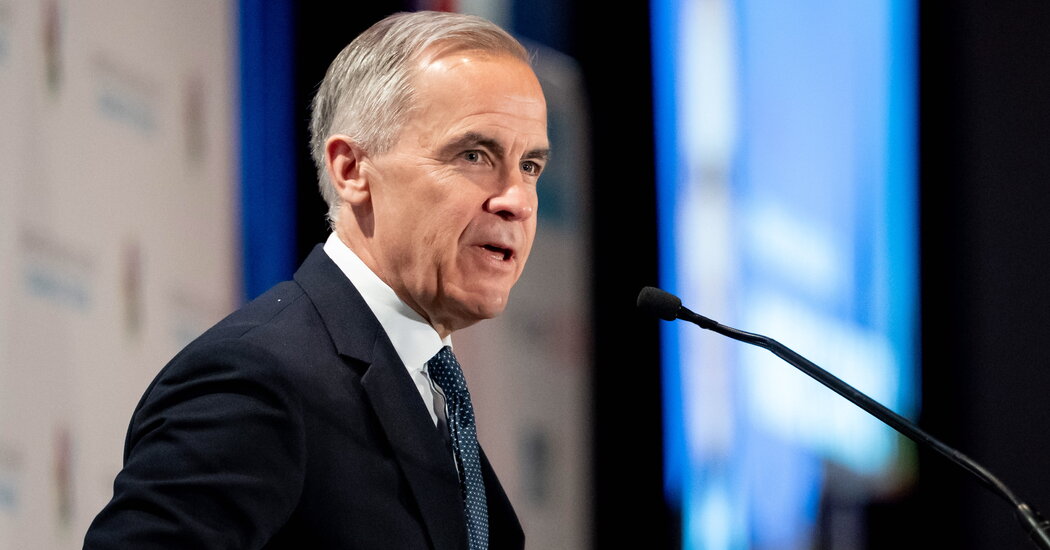
Canadian Prime Minister Mark Carney issued a stark warning on Monday regarding a forthcoming referendum in Alberta concerning a potential separation from Canada, describing it as a “dangerous bluff.” Drawing on his direct experience with the United Kingdom’s 2016 vote to leave the European Union, Mr. Carney cautioned against the complex and potentially unintended consequences of such a plebiscite.
Mr. Carney, who served as Governor of the Bank of England during the tumultuous period surrounding the Brexit referendum, now finds himself at the helm of a nation grappling with a similar specter of division. The oil-rich western province of Alberta is poised for a vote on October 19, following an announcement last week by Premier Danielle Smith that her government would facilitate a referendum on separation.
The specific wording of the ballot question has ignited considerable controversy. Albertans will be asked to decide “if they want to remain in Canada or if they want to hold a separate, binding referendum to secede.” This phrasing has drawn criticism from multiple angles: pro-independence advocates argue it dilutes their desire for a clear “yes/no” question on independence itself, while staunch federalists are dismayed that the question of separation is being posed at all.
Reflecting on the Brexit experience, Prime Minister Carney articulated his concerns in Ottawa. “I saw firsthand what happened in the United Kingdom when the view was, vote for this, it’ll be soft, and then we’ll negotiate,” he stated, referring to the widespread belief among some British voters and politicians that a “leave” vote would merely strengthen their hand in negotiations with the EU, rather than lead to a full departure. “They’re still, 10 years later, trying to undo what people didn’t think they were voting for,” he added, underscoring the long-term, unforeseen repercussions that can arise from such votes.
During his tenure at the Bank of England, Mr. Carney had openly warned against the economic fallout of Brexit, a stance that drew criticism at the time for allegedly overstepping his apolitical mandate. Following the vote, he was instrumental in formulating monetary policy aimed at stabilizing the British pound and supporting the UK economy through the immediate post-Brexit shocks.
The sentiment for separatism in Alberta, while historically supported by a minority, has seen a discernible rise in recent years. This surge is largely fueled by long-standing grievances among some Albertans regarding their relationship with the federal government in Ottawa. A primary concern revolves around the increasingly stringent environmental regulations affecting the province’s vital oil and gas industry. Many Albertans perceive these federal policies, particularly those implemented by the preceding government led by Justin Trudeau, as unfairly stifling economic growth and prosperity in a sector crucial to the provincial economy.
Furthermore, Alberta, as one of Canada’s wealthiest provinces, contributes significantly to federal tax revenues. This has led to a perception among some residents that their contributions disproportionately benefit less prosperous regions of the country, without adequate recognition or return for Alberta. This fiscal imbalance argument forms a core component of the separatist narrative.
Recent polling data reflects this growing sentiment. An Angus Reid Institute poll released on Monday indicated that 35 percent of Albertans would vote to pursue secession from Canada, meaning they would answer “yes” to the referendum question. This figure represents an increase from earlier polls in recent months, which typically placed support for secession between 25 and 30 percent.
Prime Minister Carney’s recent comments mark his strongest critique to date on the Alberta referendum. This comes despite his ongoing collaboration with Premier Smith on other key issues, including efforts to advance a pro-oil agenda. Notably, Mr. Carney has been working closely with Ms. Smith to facilitate the construction of a pipeline to transport Albertan oil to the Pacific Coast in British Columbia, enabling access to lucrative Asian markets. His comparison of the referendum to Brexit, however, signals a willingness to publicly challenge Premier Smith on matters of national unity, even while cooperating on economic initiatives.
Premier Smith, for her part, has stated publicly that she personally advocates for Alberta to remain within Canada and intends to campaign against secession. However, she has also taken steps to streamline the process for holding a separation referendum. After a lower court initially rejected a petition to hold such a vote, Premier Smith intervened to ensure the referendum would proceed, albeit with the revised phrasing now on the ballot, which differs from the more direct question sought by some independence activists.
Premier Smith justified her decision last week by emphasizing her desire to uphold the democratic rights of Albertans who have actively campaigned for a vote on the province’s future relationship with the federation.
Prime Minister Carney, however, directly challenged this rationale. “Is it helpful to ask these fundamental questions?” he queried. “No, it’s not helpful. Of course, it’s not. Is it the democratic will of Albertans? Did they vote for this in the last provincial election? No, they didn’t. It wasn’t on the ballot paper; it wasn’t in the mandates or platforms of the governing party and the official opposition.” He concluded by acknowledging the situation’s reality, stating, “It is what it is.”
Why This Matters
The proposed referendum on Alberta’s potential separation from Canada carries profound implications, not only for the province and the nation but also for democratic principles and global energy markets.
National Unity and Identity:At its core, this referendum challenges the very fabric of Canadian national unity. Alberta is a foundational province, and its potential departure would fundamentally alter Canada’s geographical, economic, and political landscape. It could embolden separatist movements in other provinces, notably Quebec, reigniting debates over national identity and the future composition of the federation. For Canada, a country often celebrated for its multiculturalism and peaceful internal relations, this represents a significant internal challenge to its cohesion.
Economic Ramifications:Alberta is Canada’s primary energy producer, holding the third-largest proven oil reserves globally. A separation, or even the uncertainty surrounding it, could have massive economic consequences. It would disrupt critical supply chains, impact federal finances (as Alberta is a net contributor), and introduce volatility into Canadian and potentially global energy markets. The future of the Canadian dollar, foreign investment, and Canada’s credit rating could all be affected. For Alberta, independence would necessitate creating new national institutions, currency, trade agreements, and defense capabilities, all while navigating a complex relationship with its former federation and securing market access for its resources.
Political Precedent and Democratic Process:Prime Minister Carney’s comparison to Brexit highlights concerns about the clarity and potential for misinterpretation in referendums. The phrasing of Alberta’s ballot question—asking about holding afuturebinding referendum rather than immediate separation—could lead to voters expressing dissatisfaction with the federal government without necessarily intending to support full independence. This raises critical questions about voter intent, the design of direct democracy mechanisms, and the legitimacy of outcomes when questions are ambiguous. Globally, it underscores the challenges of managing secessionist movements within established democracies.
Energy Policy and Climate Goals:Alberta’s oil and gas industry is central to its economy but also a significant contributor to Canada’s greenhouse gas emissions. Federal policies aimed at transitioning to a greener economy have been a key driver of Alberta’s grievances. A separate Alberta might pursue a more aggressive fossil fuel development strategy, potentially conflicting with Canada’s (and global) climate change commitments and creating complex cross-border environmental issues. Conversely, a Canada without Alberta’s oil industry might find it easier to meet its climate targets, but would also lose a significant economic engine.
International Standing:Canada is often seen as a stable, prosperous G7 nation. Internal disputes of this magnitude can affect its international image, its influence on the world stage, and its ability to act as a unified voice in international forums. It could also influence how other countries with internal regional tensions view their own challenges.