
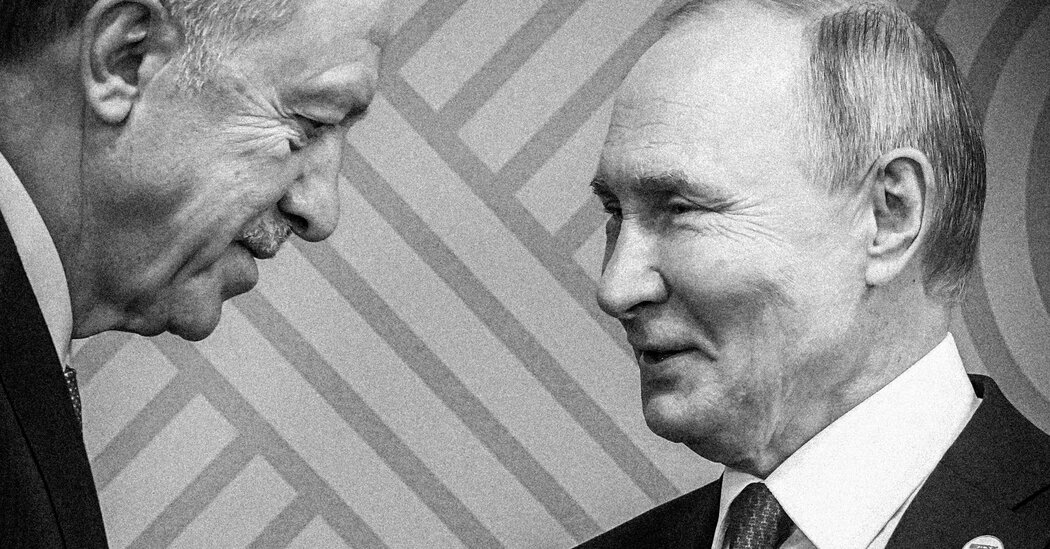
A significant geopolitical shift is underway in the Middle East, signaling a transformation in the strategic relationship between Turkey and Russia, a partnership that emerged approximately a decade ago amidst the Syrian conflict. This alliance, once characterized by mutual accommodation despite divergent interests, is now showing clear signs of strain, with Turkey increasingly facilitating Ukraine’s engagement in a region where Russian influence has historically been substantial.
The operational understanding between Russian President Vladimir Putin and Turkish President Recep Tayyip Erdogan has always been complex and pragmatic, rather than ideological. For a period, the Syrian civil war, which saw Ankara support rebel factions aiming to depose President Bashar al-Assad and Moscow intervene to bolster his regime, appeared to be a potential flashpoint for direct confrontation. However, both nations ultimately navigated these opposing positions through a series of tactical arrangements.
An illustration of this complex relationship occurred in 2016, when Turkey launched military operations into northern Syria. This was only possible with Russia’s tacit approval, as Moscow exercised significant control over Syrian airspace at the time. In return, Turkey calibrated its support for Syrian opposition groups. Such arrangements underscored a broader, unstated agreement: both powers acknowledged and, to an extent, reinforced each other’s presence in the country, perceiving mutual benefits from this strategic coexistence.
For Russia, this understanding with Turkey provided a degree of acquiescence to its assertive power projection in Syria and the wider Middle East. Furthermore, it served to highlight potential divisions within Western alliances, given Turkey’s status as a NATO member. President Erdogan, in turn, benefited from a regional partner during a period when Turkey’s relations with some NATO allies were experiencing considerable strain, offering a degree of strategic flexibility and leverage on the international stage.
In the initial phase of their cooperation, President Erdogan’s position was often perceived as the less influential of the two. However, the ongoing conflict in Ukraine has dramatically altered this power dynamic. Facing isolation from numerous Western nations, Russia’s President Putin increasingly found himself reliant on Turkey, which notably chose not to join Western-imposed sanctions against Moscow. This stance transformed Turkey into a crucial conduit for Russian trade, investment, and energy flows, significantly enhancing Ankara’s diplomatic and economic leverage.
A pivotal moment in the reorientation of this partnership occurred with the change in leadership in Syria in late 2024, when President al-Assad’s regime was replaced. With Russia deeply engaged in the Ukrainian conflict, Moscow did not intervene to prevent this shift. Instead, Russian diplomacy quickly pivoted, seeking to establish ties with Syria’s interim leader, Ahmed al-Sharaa, and continuing to provide the country with essential oil supplies. This development placed Russia in a novel position, requiring it to negotiate with a government largely composed of individuals whose factions it had previously targeted during years of conflict. Consequently, Turkey, which had consistently supported the opposition forces that ultimately contributed to this governmental change, emerged with a newly dominant position in Syrian affairs.
For Turkey, this represents a strategic opportunity to recalibrate its international standing. It allows Ankara to potentially reposition itself as a more central and reliable ally within NATO, while simultaneously rebalancing its intricate relationship with Russia. Critically, it also enables Turkey to play a facilitating role in helping Ukraine forge new diplomatic and security relationships across the Middle East, an area traditionally marked by complex power plays.
In April, Ukrainian President Volodymyr Zelensky undertook his inaugural visit to Syria, utilizing a Turkish state aircraft for his journey. During his discussions with interim leader Ahmed al-Sharaa and the Turkish foreign minister, key areas of military and energy cooperation were explored. A significant aspect of this collaboration involves Turkey’s commitment to assist in the reconstruction and modernization of the Syrian Army, aiming to transition it away from decades of Soviet-era influence towards a more contemporary force. For Ukraine, this initiative offers a valuable avenue to contribute its advanced expertise in military production and drone warfare, capabilities honed through years of conflict with Russia, while simultaneously cultivating a relationship with a nation that was once firmly within Moscow’s geopolitical orbit.
Beyond Syria, Ukraine has also been actively leveraging regional security challenges, including those involving Iran, to foster closer military ties with Gulf states. Following incidents where Iranian-made Shahed-136 kamikaze drones, identical to those utilized by Russia in Ukraine, were reportedly deployed against neighboring countries, President Zelensky quickly moved to offer Ukraine’s battle-tested expertise. This involved dispatching air defense teams to key strategic partners such as Qatar, Saudi Arabia, and the United Arab Emirates, demonstrating Ukraine’s capacity as a security provider.
Turkey, possessing its own robust military relationships with Gulf nations, views Ukraine’s expanding role as a synergistic complement to its existing ties. This collaboration allows Ankara to broaden the scope of its regional offerings, enhancing its strategic influence. For Russia, which has invested years in cultivating deeper economic and security partnerships with Gulf monarchies, this evolving dynamic represents yet another significant setback, indicative of a broader recalibration of regional allegiances.
Ukraine is actively seeking new alliances and revenue streams, and its increasing engagement in the Middle East solidifies its emerging role as a security and defense provider. The proactive assistance provided by President Erdogan in opening these doors for Ukraine powerfully underscores a diminishing capacity for Russian President Putin to project global power, highlighting the profound shifts that have occurred in the bilateral relationship between Turkey and Russia. It is evident that Ankara is no longer attempting to maintain an equal balance between Moscow and NATO; instead, it is strategically tilting its alignment in a manner that favors Western interests and opposes Russia’s regional objectives. This perceived decline in Russia’s influence has granted Turkey, after a decade of navigating a delicate relationship with Moscow, greater freedom to independently pursue its national and regional interests. In this evolving geopolitical landscape, Ukraine stands as a clear beneficiary of these significant transformations.
Why This Matters
The shifting dynamics between Turkey, Russia, and Ukraine in the Middle East carry profound implications for regional stability, international power balances, and the future of key conflicts. Firstly, the erosion of the Turkey-Russia strategic partnership, once a cornerstone of Middle Eastern geopolitics, signifies a major recalibration of influence. For years, this complex relationship allowed both nations to advance their interests, often at the expense of traditional Western alliances. Its unraveling suggests a more fragmented and competitive environment, particularly in Syria, where the implications of President al-Assad’s departure and Russia’s diminished role are still unfolding.
Secondly, Turkey’s assertive repositioning has significant ramifications for NATO and its role in the region. By facilitating Ukraine’s entry into the Middle East and seemingly moving away from its previous equidistant stance between Moscow and Western powers, Turkey is signaling a renewed alignment with the alliance. This could strengthen NATO’s southern flank and provide a more coherent Western approach to security challenges in the Levant and beyond, potentially bolstering efforts to counter Russian and other revisionist influences.
Thirdly, Ukraine’s emergence as a security provider in the Middle East is a notable development. For a nation embroiled in its own existential conflict, its ability to offer military expertise, particularly in drone warfare and air defense, not only creates new revenue streams and diplomatic ties but also reshapes perceptions of its capabilities. This engagement allows Ukraine to build a network of allies and partners outside of its immediate European context, diversifying its support base and demonstrating its relevance on a global stage. The collaborative effort to rebuild and modernize the Syrian Army, specifically, could dramatically alter the power balance within Syria, potentially leading to a more stable, or at least differently aligned, future for the war-torn nation.
Finally, for Russia, these developments represent a substantial geopolitical setback. The loss of a key partner in Turkey, coupled with diminished influence in Syria and eroding ties with Gulf states, highlights the long-term costs of its war in Ukraine. It underscores a global re-evaluation of Russian power projection capabilities and reliability, potentially emboldening other regional actors to challenge its interests. The overall trajectory points towards a more multipolar Middle East, where new alliances are forged, old ones are redefined, and the strategic landscape becomes increasingly complex and unpredictable for all involved stakeholders.
Gonul Tol is a senior fellow at the Middle East Institute and the author of “Erdogan’s War: A Strongman’s Struggle at Home and in Syria.”
The Times is committed to publishinga diversity of lettersto the editor. We’d like to hear what you think about this or any of our articles. Here are sometips. And here’s our email:letters@nytimes.com.
Follow the New York Times Opinion section onFacebook,Instagram,TikTok,Bluesky,WhatsAppandThreads.