
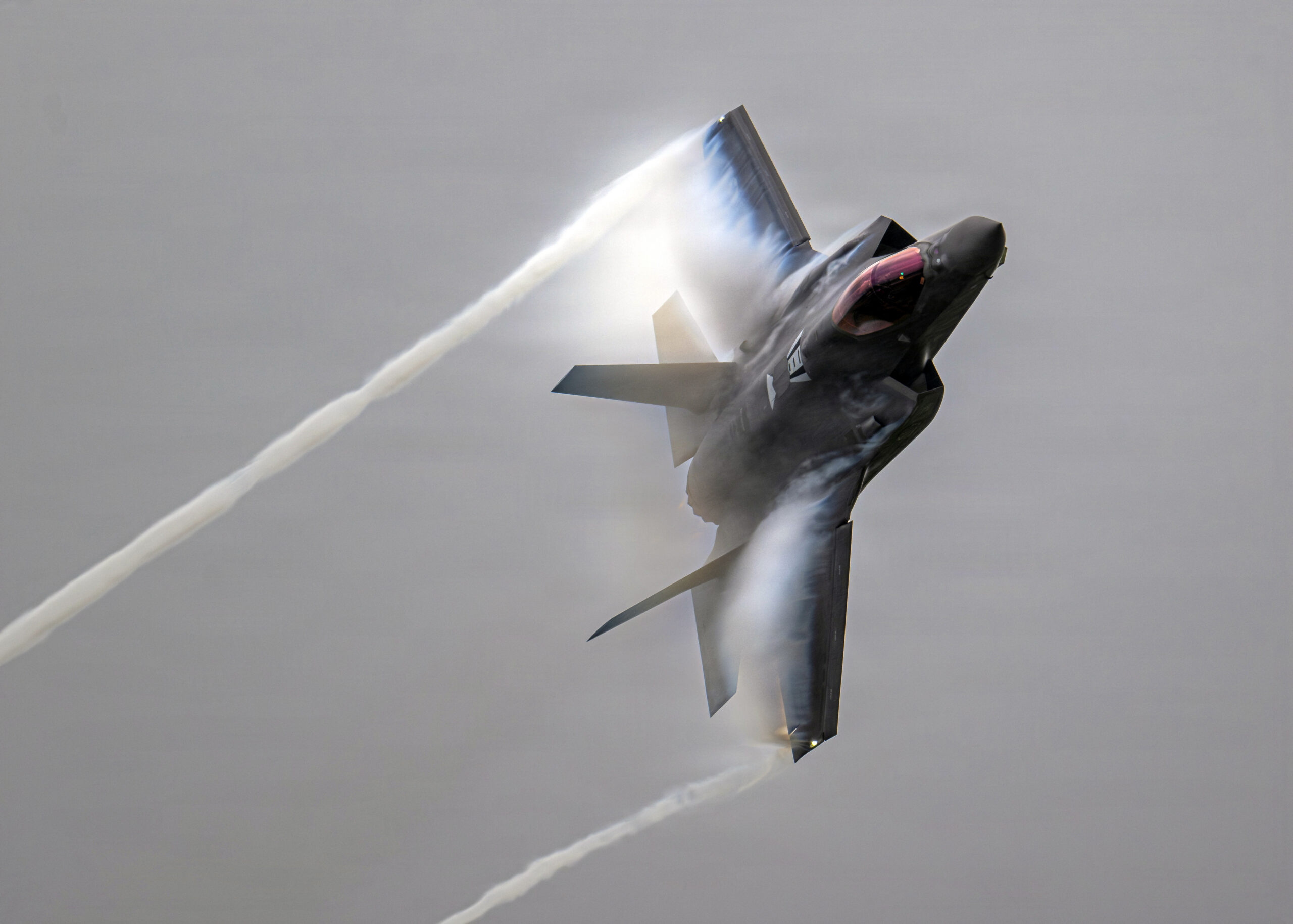
A new report from the Government Accountability Office (GAO) reveals that only approximately one in four F-35 stealth fighters were fully mission-capable in fiscal year 2025, meaning they could perform all their assigned tasks at any given time. This low readiness rate is attributed to persistent challenges including software shortcomings, shortages of spare parts, and corrosion issues across the fleet, according to the GAO’s June 11 report on F-35 Sustainment. The F-35 Joint Program Office (JPO) estimates that resolving these readiness issues could cost an additional $13.7 billion over the next five years.
The report highlights significant disparities among the three F-35 variants operated by the U.S. military. Air Force F-35As, the conventional takeoff and landing variant, achieved the highest full mission-capable rates, nearly double those of the Marine Corps’ F-35Bs (short takeoff/vertical landing) and the Navy’s F-35Cs (carrier variant). However, even the F-35A’s rate stood at a mere 28.5 percent in fiscal 2025. This figure represents a continuing downward trend for the Air Force’s full mission-capable rates over the past five years, despite generally outperforming the other services.
When considering general mission-capable rates—the percentage of time an aircraft can perform at least one of its assigned missions—the F-35A recorded 38.6 percent in 2025. This was notably lower than the F-35B and F-35C variants, which maintained rates ranging from approximately 54 percent to 64 percent. This contrasts sharply with 2020-2021, when the Air Force’s F-35As led the other services in general mission-capable rates, indicating a reversal in performance trends.
The persistent readiness challenges within the F-35 program have been a recurring concern for GAO auditors, who have consistently flagged the aircraft’s availability issues. Despite efforts by the F-35 Joint Program Office to improve fleet readiness, the latest report details mounting problems. These are exacerbated by delayed technology upgrades, escalating sustainment costs, and the ongoing delivery of new F-35s that are not yet fully mission-capable upon arrival.
Officials from the F-35 JPO informed auditors that the fundamental cause of these issues lies in the program’s historical prioritization of aircraft procurement over the establishment of essential depot and repair capabilities. This strategy led to a “historic underinvestment in sustainment” during the early phases of the program’s lifecycle. Consequently, the current sustainment infrastructure is deemed inadequate to fully support the expanding F-35 fleet. The JPO further warned that without substantial changes, the F-35’s already strained sustainment system will deteriorate as the fleet continues to grow in size.
While overall readiness rates paint a challenging picture, the F-35 has demonstrated its combat effectiveness in specific operations, such as “Operation Epic Fury,” where aircraft parts and maintenance attention were highly prioritized. Douglas Birkey, Executive Director of the Mitchell Institute for Aerospace Studies, noted that such focused efforts prove the aircraft’s capability when properly supported. However, Birkey also cautioned that the intense resources required to maintain jets for combat inevitably strain the broader F-35 fleet, suggesting that overall readiness rates could decline further in the coming fiscal year 2026.
The report underscores a significant decline in overall fleet readiness since 2021. The F-35’s general mission-capable rate plummeted from 66.8 percent in fiscal 2021 to 44.1 percent in 2025. Similarly, the full mission-capable rate—reflecting an aircraft’s ability to perform all its designated missions—dropped from 38.1 percent in 2021 to 24.6 percent in 2025, signaling a worrying trend for the U.S. military’s premier fighter jet.
In response to the GAO’s findings, the F-35 JPO released a statement confirming its concurrence with the report and its support for the recommended actions. These recommendations include developing robust plans to mitigate risks associated with sustainment improvement initiatives, ensuring that future incentive programs effectively drive better performance, and establishing stringent financial quality controls. “Through our Global Support Solution Reset initiative, the JPO remains focused on achieving our 2030 readiness goals and ensuring strict fiscal accountability for every sustainment dollar spent,” the JPO stated.
Lockheed Martin, the primary contractor for the F-35 program, also addressed the report. A company spokesperson stated, “Lockheed Martin continues to partner with the Joint Program Office and our industry partners to ensure we are delivering efficient and effective sustainment for the warfighter.” The spokesperson added that Lockheed Martin has invested over $2 billion in advanced funding to accelerate the provision of spare parts, aiming to enhance readiness rates across the F-35 fleet.

The U.S. Air Force currently operates more than 500 F-35As, constituting the majority of the over 800 F-35s in the U.S. military’s inventory. The Air Force, Navy, and Marine Corps collectively plan to acquire approximately 1,700 additional F-35s by the mid-2040s, underscoring the long-term importance of the aircraft to national defense strategies. Despite being the simplest and least expensive of the three variants, the F-35A’s full mission-capable rates have severely underperformed. They dropped from 54 percent in 2021 to 36.2 percent in fiscal 2024, falling further to 28.5 percent in 2025. This is significantly below the Air Force’s goal of achieving a 65 percent full mission-capable rate for F-35As by 2025.
The GAO report explicitly states, “Since 2020, the F-35 has not met the minimum performance goals desired by the U.S. military services by wide margins and performance has generally trended down for [full mission-capable] rates and [mission-capable] rates, particularly for the Air Force F-35A.” Air Force officials informed GAO auditors that the decline in 2025 was partly due to the acceptance of new F-35s that were not yet capable of performing all missions because of persistent software issues. Specifically, F-35s equipped with the Technology Refresh 3 (TR-3) upgrades, which previously led to a year-long suspension of deliveries, are still limited. While an interim software release allowed deliveries to resume, these newer TR-3 jets are currently restricted to basic training flights and cannot yet be deployed in combat scenarios.
Beyond software, Air Force officials also cited ongoing spare parts shortages and pervasive corrosion problems as significant contributors to the declining readiness rates. The F-35’s sustainment is managed by the Pentagon’s Global Support Solution (GSS), which is responsible for sharing spare parts among all U.S. and international F-35 customers. The supplier base for the F-35 has struggled to find alternative sources for critical components, such as canopies, further compounding the parts shortage. The introduction of new aircraft configurations has also added “high technical complexity” to the already challenging sustainment environment.
In response to these challenges, the F-35 JPO announced a “Global Support Solution Reset” last year. This ambitious initiative aims to significantly improve readiness, targeting an 80 percent general mission-capable rate and a 65 percent full mission-capable rate by 2030. The GSS Reset plan outlines several key strategies: increasing the procurement of spare parts and consumables; investing in enhanced repair capabilities; overhauling the system for allocating spare parts to improve efficiency; expanding and accelerating the repair capabilities of maintenance depots; making the most problematic spare parts more readily available; streamlining maintenance processes and staffing; and adopting new maintenance tools and best practices. The GAO report confirms that the JPO will require the aforementioned $13.7 billion investment to implement this comprehensive reset plan.
Why This Matters
The readiness of the F-35 fighter jet is a critical issue with profound implications for national security, international alliances, and the responsible allocation of taxpayer funds. As the cornerstone of future air combat capabilities for the United States and its allies, the F-35’s inability to consistently perform its full range of missions undermines military deterrence and operational effectiveness. A fleet with low mission-capable rates means fewer aircraft are available for deployment, training, or response to global crises, potentially impacting the U.S. military’s ability to project power and defend its interests.
Economically, the F-35 program represents a multi-trillion-dollar investment over its lifetime. The estimated $13.7 billion required over five years to address sustainment issues, in addition to already soaring costs, raises significant questions about accountability and efficiency in defense spending. Taxpayers have funded the procurement of these advanced aircraft, and ensuring they are operational and effective is paramount. Persistent sustainment challenges could lead to further cost overruns and delays, diverting resources from other critical defense priorities.
Internationally, the F-35 is operated by numerous allied nations, creating a global network of interoperability. U.S. sustainment issues, particularly concerning spare parts and technical upgrades, can ripple through this global supply chain, affecting the readiness of partner air forces. This could strain alliances and compromise collective defense capabilities at a time of increasing geopolitical tensions. The F-35’s success is not just a U.S. matter; it is a shared challenge for a wide array of international partners who have invested heavily in this platform.
Finally, the long-term viability of the F-35 program is at stake. With plans to acquire thousands more jets, addressing these fundamental sustainment problems now is crucial to prevent the issues from escalating as the fleet grows. Failure to rectify software, parts, and maintenance challenges could jeopardize the F-35’s role as the backbone of future air power, forcing difficult strategic choices and potentially compromising the technological edge the U.S. and its allies rely upon.
Washington D.C.– The F-35 Joint Strike Fighter program, a cornerstone of U.S. air superiority and a vital asset for numerous allied nations, is grappling with persistent sustainment challenges that have hindered its operational readiness. A recent assessment by the Government Accountability Office (GAO) has highlighted these issues, prompting the Joint Program Office (JPO) to outline an extensive, multi-billion dollar strategy aimed at rectifying systemic problems, including chronic spare parts shortages, suboptimal maintenance practices, and an over-reliance on a limited supplier base. However, the success of this ambitious plan remains uncertain, with significant funding hurdles and technical data access issues posing considerable risks.
The JPO’s comprehensive strategy, dubbed the “GSS Reset,” proposes an additional $13.7 billion in funding through fiscal year 2031. This substantial investment is intended to address the underlying causes of the F-35’s sustainment woes, which have left a significant portion of the advanced fighter fleet less available for critical missions than desired. The plan acknowledges the necessity of a multifaceted approach to bolster the program’s long-term health and ensure the F-35 can meet its operational commitments.
According to JPO officials, the initial phase of this investment will see $2.2 billion allocated in fiscal years 2026 and 2027. A critical component of this early funding, approximately half of it, will be directly channeled towards acquiring much-needed spare parts. This immediate injection of capital is designed to mitigate the most pressing shortages that have plagued the F-35 fleet, often sidelining aircraft awaiting components.
Beyond this initial two-year outlay, a more substantial sum of $11.5 billion is slated to commence in fiscal year 2027. This latter portion of the funding is specifically earmarked to cover anticipated shortfalls in planned sustainment funding, a tacit admission that previous budgetary calculations had underestimated the true cost of maintaining the F-35 fleet. Essentially, the original financial models for the F-35’s upkeep proved inadequate, leaving the Air Force, Navy, and Marine Corps struggling to keep pace with the aircraft’s demanding maintenance requirements.
Breaking down the total $13.7 billion investment, approximately $7.3 billion is designated for depot-level spare parts and materials. These are the critical components required for comprehensive repairs and overhauls conducted at specialized maintenance facilities. An additional $3.1 billion will be utilized to significantly expand the military’s existing depot capacity, a move designed to reduce reliance on external contractors for major repairs and enhance the speed and efficiency of maintenance operations. The remaining $3.3 billion of the budget is allocated to cover essential maintenance services and fuel costs, underpinning the daily operations and readiness of the F-35 fleet.
While these proposed investments are substantial and directly target the identified weaknesses, the GAO report cautions against guaranteed success. The agency noted that improvements in these areas—parts, maintenance, and supplier relationships—are indeed crucial for enhancing the F-35’s overall sustainment. However, the report expressed significant reservations about the GSS Reset plan’s likelihood of achieving its stated goals, pinpointing a potential lack of sufficient funding as a major impediment. This skepticism arises from observed discrepancies in the service branches’ ability to commit to their respective shares of the increased budget.
Specifically, the GAO indicated that while the U.S. Air Force anticipates it can meet its financial obligations under the GSS Reset budget, both the Navy and Marine Corps expressed considerable uncertainty regarding their capacity to afford their portions. This disparity among the services highlights a critical risk, as the integrated nature of the F-35 program requires unified financial commitment for comprehensive improvements. The JPO itself acknowledged to the GAO that funding shortfalls pose a substantial risk, predicting that underfunding would inevitably dampen the potential for improvement and ultimately drive up long-term costs due to deferred maintenance and continued inefficiencies. Despite these concerns, JPO officials reportedly maintained an “optimistic” outlook, believing that budgets for 2027 and subsequent years would largely cover the necessary expenses.
Compounding the financial challenges, the GAO’s report also underscored a persistent, unresolved issue: the JPO’s limited access to critical technical data. This proprietary information, essential for the military to independently repair and maintain the F-35 jets, remains largely under the control of the program’s primary contractors. Without full access to this data, the military’s ability to conduct thorough maintenance, troubleshoot complex issues, and reduce its reliance on costly contractor support is severely hampered, regardless of how much money is poured into parts or depot expansion. This lack of data access creates a perpetual dependency that undermines the goal of achieving greater self-sufficiency in F-35 sustainment.
In an effort to streamline the acquisition and management of spare parts, plans are currently underway to establish a working capital fund specifically for the F-35 program. Such a fund would enable the JPO to proactively stock a larger inventory of parts, thereby shortening lead times and acting as a hedge against inflationary pressures and supply chain disruptions. However, this crucial mechanism is not expected to be operational until October 2028 at the earliest, meaning the program will continue to navigate its current, less efficient procurement processes for several more years.
Brigadier General (Ret.) Arthur Birkey, an expert familiar with Air Force readiness, pointed to a broader, systemic problem that extends beyond the F-35. He emphasized that the Air Force’s long-standing pattern of underfunding spare parts and maintenance, which has adversely affected other aircraft programs, is now manifesting more acutely within the F-35 fleet. “I can’t emphasize how consequential underinvestment in readiness for many years was to the health of the F-35 and the entire [Air Force] aircraft inventory,” Birkey stated, attributing this to “austere budgets, which made for impossible decisions.” His remarks highlight the ripple effect of past budgetary constraints on current operational capabilities and future readiness.
In response to these pervasive issues, the Air Force is planning a significant investment in readiness and spare parts as part of its fiscal 2027 budget. This includes a projected $1.3 billion specifically designated for “initial spares [and] depot activation/material lay-in” for the F-35, signaling a concerted effort to reverse years of underinvestment and ensure the long-term viability of its most advanced fighter aircraft.
While the commitment of substantial funds through the GSS Reset and the Air Force’s planned investments signal a serious attempt to address the F-35’s sustainment challenges, the path forward is fraught with known risks. The ability of all services to fund their share, the persistent issue of contractor data access, and the delayed implementation of more efficient procurement mechanisms will all play critical roles in determining whether the F-35 fleet can finally achieve the consistent operational readiness expected of its advanced capabilities.
Why This Matters
The challenges facing the F-35 Joint Strike Fighter’s sustainment are not merely bureaucratic footnotes; they have profound implications for national security, economic responsibility, and the future of military aviation. Here’s why this situation is critically important:
National Security and Global Stability:The F-35 is not just another fighter jet; it is the cornerstone of air power for the United States and a growing coalition of allies worldwide. Its advanced stealth capabilities, sensor fusion, and networked warfare capacity are essential for maintaining air superiority, deterring adversaries, and conducting critical combat operations across various theaters. If a significant portion of the F-35 fleet is grounded due to a lack of spare parts or maintenance, it directly diminishes the operational capabilities of the U.S. military and its allies, potentially creating vulnerabilities in global security. Consistent readiness of these aircraft is paramount for projecting power and responding to emerging threats.
Taxpayer Investment and Accountability:The F-35 program represents one of the most expensive weapons systems in history, with development and procurement costs already in the hundreds of billions of dollars, and sustainment costs projected to exceed $1 trillion over its lifetime. The proposed $13.7 billion GSS Reset, alongside other planned investments, is a significant additional financial commitment from taxpayers. Ensuring these funds are effectively utilized to resolve long-standing issues, rather than merely throwing money at symptoms, is crucial for fiscal responsibility. The GAO’s concerns about funding uncertainties and the efficacy of the plan highlight the need for stringent oversight and accountability to ensure that this massive investment genuinely improves readiness and provides value for money.
Operational Readiness and Personnel Morale:For the pilots, maintainers, and support personnel who operate and depend on the F-35, the availability of these aircraft directly impacts their ability to train, deploy, and execute missions. A lack of ready aircraft can hinder pilot proficiency, increase stress on maintenance crews, and negatively affect morale. Moreover, when aircraft are unavailable, it can force commanders to make difficult decisions about allocating scarce resources, potentially impacting strategic objectives and delaying critical responses.
Allied Interoperability and Burden Sharing:Numerous U.S. allies—including the UK, Canada, Australia, Japan, South Korea, and several European nations—operate or plan to operate the F-35. Sustainment issues experienced by the U.S. fleet often have direct or indirect impacts on these allied forces, as they frequently share supply chains, maintenance protocols, and operational doctrines. Ensuring robust F-35 sustainment is vital for maintaining interoperability, fostering strong alliances, and enabling effective coalition operations, which are increasingly important in a complex global security environment.
Future of Defense Acquisition and Sustainment:The F-35’s sustainment challenges serve as a critical case study for future defense programs. The issues with technical data access, reliance on a constrained supplier base, and the struggle to accurately project long-term sustainment costs highlight systemic problems within the defense acquisition process. How the U.S. government and its contractors address these F-35 specific issues will set precedents for how highly complex, interconnected weapons systems are developed, procured, and maintained in the decades to come. Success or failure here will influence the design and logistical planning of next-generation platforms.
In essence, the F-35 program’s ability to overcome its sustainment hurdles is a litmus test for the capacity of the U.S. defense establishment to effectively manage its most advanced technologies and ensure its fighting forces remain prepared for the challenges of the 21st century. Failure to adequately resolve these issues could lead to diminished military effectiveness, wasted taxpayer dollars, and a weakening of U.S. and allied security postures globally.