
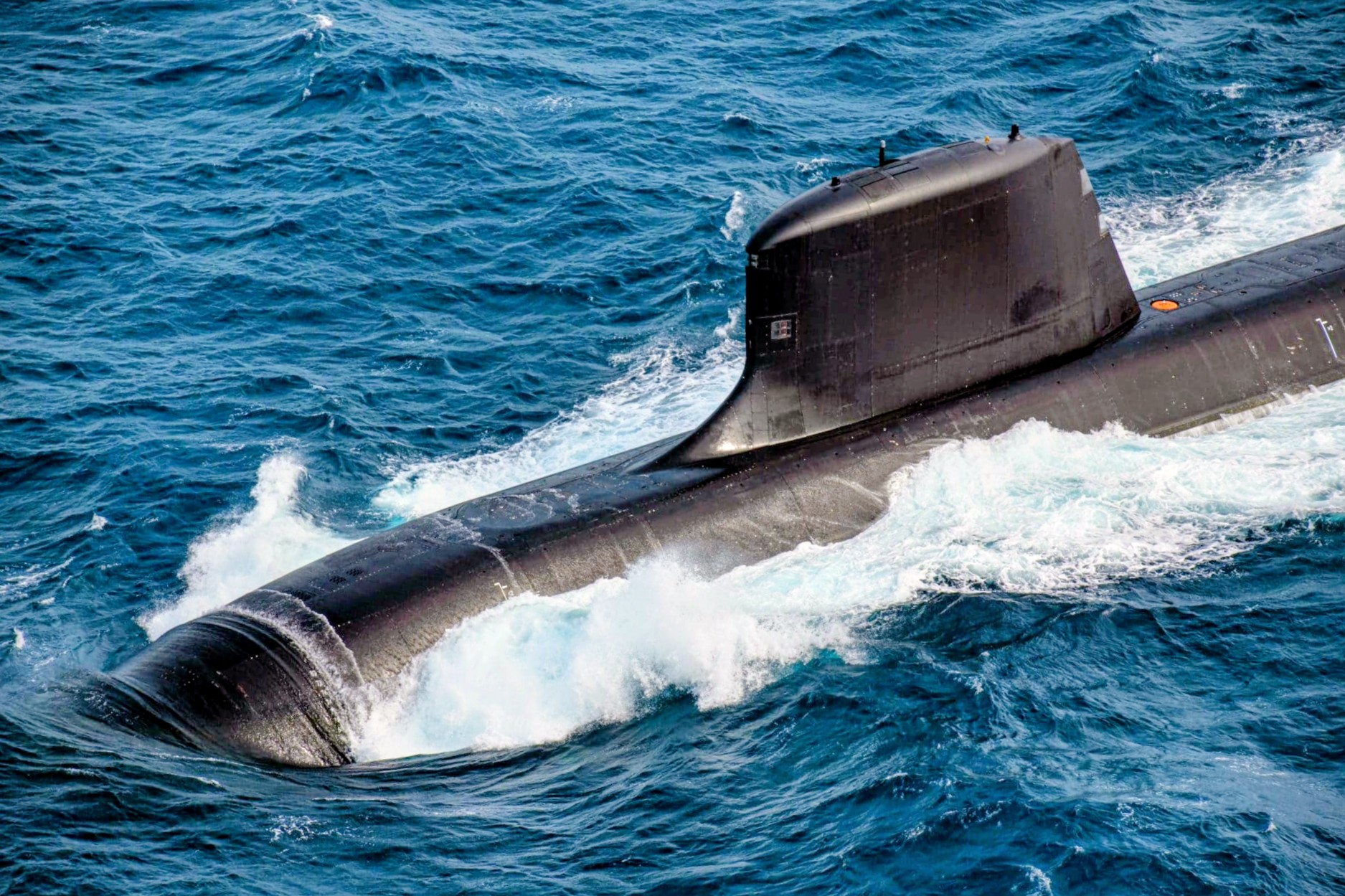
An atomic-powered assault submarine of the French naval force has arrived in the River Clyde.
Digital visuals disseminated online reveal a Suffren-class vessel on the water’s top, representing the newest addition to French operational service, with its inaugural deployment commencing in 2020.
This vessel could potentially be the identical submarine whose prior visit to Scottish waters was lately documented by the UK Defence Journal, though this remains unverified. The French Navy opted to remain silent, a typical practice for topics related to submarine transits.
Constructed by Naval Group, the Suffren class is designed to supersede the outdated Rubis-class assault submarines, thereby becoming the core of France’s traditional atomic undersea fleet. A total of six vessels are projected, with three currently operational.
Measuring slightly less than 100 metres in length and weighing over 5,000 tonnes when submerged, these submarines are propelled by a K15 nuclear reactor that actuates a pump-jet propulsion unit. Their velocity is said to surpass 25 knots. Unlike other atomic-powered submarines, their operational scope is not restricted by fuel capacity; the duration of their patrols is primarily dictated by on-board supplies and mission demands, usually lasting approximately 70 days.
This class is outfitted with Naval Group’s SYCOBS battle control system, along with a Thales sonar suite. This suite comprises hull-mounted, flank array, and towed array systems, in addition to sonar for detecting underwater explosives and impediments. Electronic warfare defenses are supplied via the NEMESIS system.
Through four 533mm torpedo tubes, weapons are discharged, with a capacity for up to 20 armaments. These armaments encompass F21 substantial torpedoes, Exocet SM39 anti-vessel projectiles, and the MdCN maritime cruise projectile, endowing these vessels with a land-attack capacity in addition to anti-submarine and anti-surface functions. Underwater ordnance can also be conveyed.
Faslane frequently accommodates partner submarines, a fact that demonstrates the strong collaborative links existing between the British Navy and its NATO confederates.