
Oil Prices Fluctuate Amid Heightened Middle East Tensions After US Strikes
Global oil markets experienced significant movement on Tuesday, with prices climbing to recover some of the previous day’s losses. This rebound occurred in the wake of an announcement by the United States that it had conducted strikes on missile launch sites located within Iran. The development immediately cast a shadow over prospects for a broader peace deal or de-escalation in the volatile Middle East region.
The reported U.S. military action follows closely on the heels of signals from Israel indicating its intention to intensify its campaign against Hezbollah, a powerful Iranian-backed militant group operating primarily from Lebanon. Iran, a key player in the region, has consistently stated that any comprehensive agreement or resolution would need to address not only its ongoing tensions and perceived conflict with the United States and Israel but also the persistent fighting between Israel and Hezbollah. This intricate web of interconnected conflicts significantly complicates efforts by international and regional actors to achieve a lasting resolution and stability.
Oil Market Reacts to Geopolitical Instability
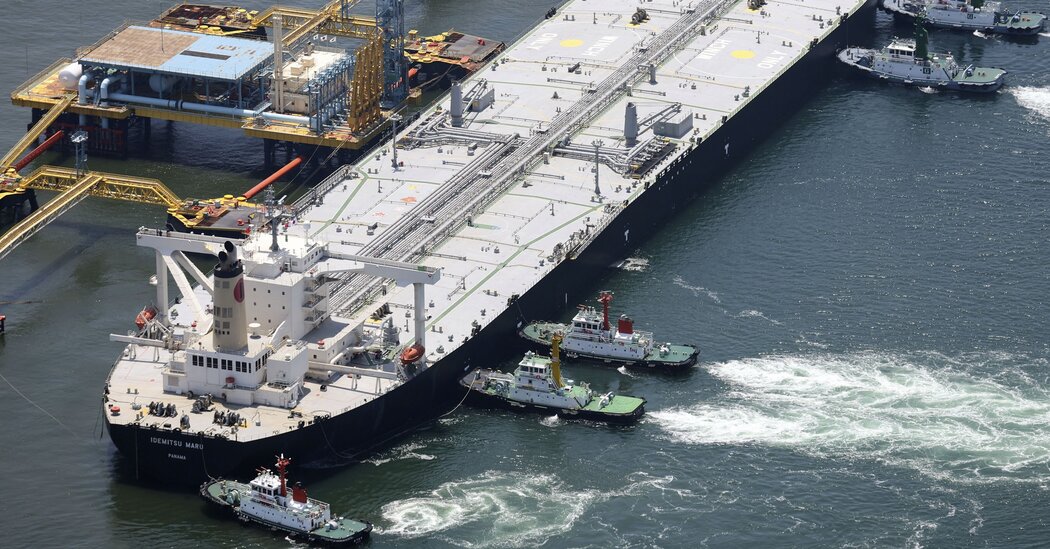
The sensitivity of global oil prices to geopolitical developments in the Middle East was once again evident this week. On Tuesday, benchmark crude prices, including Brent Crude and West Texas Intermediate (WTI), saw an uptick, partially offsetting the dips recorded on Monday. This recovery underscored investor and trader concerns regarding potential supply disruptions emanating from one of the world’s most critical oil-producing regions. The Middle East accounts for a substantial portion of global crude oil supply, and any perceived threat to its stability can trigger sharp price movements.
Concerns often focus on key chokepoints, such as the Strait of Hormuz, a narrow waterway vital for the transit of a significant percentage of the world’s seaborne oil. Escalations involving major regional powers like Iran, or its proxies, invariably raise fears of broader conflict that could impede shipping or damage oil infrastructure. While the immediate impact of specific strikes might be limited, the overarching sentiment of increased risk drives market reactions, prompting a rush to safe-haven assets and pushing up the cost of commodities like crude oil, which are directly tied to regional stability.
United States Conducts Strikes in Iran
According to statements released by the United States, military forces carried out strikes targeting missile launch sites situated within Iran. The U.S. administration has often framed its military actions in the region as responses to threats posed by Iran or its proxies to U.S. personnel, interests, or regional allies. Such actions are typically presented as defensive measures aimed at deterring further aggression or degrading capabilities used to target American forces or their partners.
The nature of these specific strikes – on “missile launch sites” – suggests a targeted approach against infrastructure deemed capable of projecting military force or supporting disruptive activities. While the immediate consequences of these strikes remain to be fully assessed, their execution by the United States inside Iranian territory marks a significant escalation and underscores the deep-seated animosity and strategic rivalry that characterize the relationship between Washington and Tehran. This direct action adds another layer of complexity to already strained diplomatic efforts.
Israel, Hezbollah, and the Lebanese Front
Adding to the regional tensions are the explicit signals from Israel regarding its intensified military campaign against Hezbollah in Lebanon. Hezbollah, a powerful Shi’a political party and militant group, is a crucial component of Iran’s regional “Axis of Resistance.” Equipped with an extensive arsenal of rockets and advanced weaponry, largely supplied by Iran, Hezbollah poses a significant security challenge to Israel along its northern border.
The ongoing exchanges of fire across the Israel-Lebanon border have become a daily occurrence, prompting evacuations on both sides and raising fears of a full-scale war that could engulf Lebanon. Israel views Hezbollah’s military presence and capabilities as an existential threat, particularly in the aftermath of recent conflicts in the broader region. An intensified Israeli campaign against Hezbollah would inevitably draw a strong response from the group, further destabilizing Lebanon, a country already grappling with severe economic and political crises.
Iran’s Conditions for Regional Resolution
Iran’s stance on any potential regional agreement highlights the deeply intertwined nature of these conflicts. Tehran has made it clear that for any lasting resolution to be achieved, it must comprehensively address both what it perceives as its “war” with the United States and Israel, as well as the ongoing hostilities between Israel and Hezbollah. This position reflects Iran’s strategic doctrine of supporting proxy groups across the region to extend its influence and counter the perceived threats from its adversaries.
By linking these distinct, yet related, conflicts, Iran effectively complicates any segmented diplomatic approach. Its insistence on a holistic resolution means that a separate deal between, for instance, Israel and Lebanon regarding Hezbollah might not be sufficient for broader de-escalation if Iran’s grievances with the U.S. and Israel are not simultaneously addressed. This interconnected demand underscores the challenge of untangling the multiple layers of conflict that have characterized the Middle East for decades.
Obstacles to a Lasting Resolution
The recent developments underscore the formidable obstacles standing in the way of a lasting peace or even a significant de-escalation in the Middle East. The region is characterized by a complex interplay of state and non-state actors, each with their own national interests, ideological motivations, and historical grievances. The active involvement of external powers, such as the United States, further complicates the dynamic, often adding to the volatility.
Proxy warfare, a hallmark of regional conflicts involving Iran, allows major powers to exert influence and engage in hostilities without direct, overt confrontation, yet it fuels instability and perpetuates cycles of violence. The lack of direct dialogue channels between key adversaries, coupled with a deep-seated mistrust and divergent strategic objectives, makes consensus-building incredibly difficult. Efforts to forge a durable peace will require unprecedented diplomatic dexterity, a willingness from all parties to compromise, and potentially the involvement of a broad coalition of international mediators to navigate this intricate and dangerous geopolitical landscape.
Why This Matters
- Global Economic Stability:The Middle East is critical to global energy supplies. Escalations, such as the recent US strikes and intensified rhetoric, directly impact oil prices, leading to higher fuel costs for consumers and businesses worldwide. Prolonged instability could disrupt shipping lanes and global trade, with severe economic repercussions.
- Regional Conflagration Risk:The interconnected nature of the conflicts – involving the US, Iran, Israel, and Hezbollah – significantly raises the risk of a wider regional war. A full-scale conflict involving these major players could have devastating humanitarian consequences, massive displacement, and profound destabilization across the entire Middle East.
- Humanitarian Impact:Increased military activity and the potential for expanded conflict directly threaten civilian populations. This could lead to further loss of life, injury, damage to critical infrastructure, and an exacerbation of existing humanitarian crises, particularly in already fragile states like Lebanon.
- International Diplomacy and Security:The escalating tensions complicate international efforts to promote peace and security. It tests the limits of diplomatic engagement and underscores the challenges faced by international bodies and major powers in de-escalating conflicts involving deeply entrenched rivalries and proxy warfare.
- Energy Security:Continued instability in the Middle East poses a significant threat to global energy security. Nations heavily reliant on oil imports from the region face increased vulnerability to price shocks and supply disruptions, potentially forcing a reevaluation of energy policies and diversification strategies.