
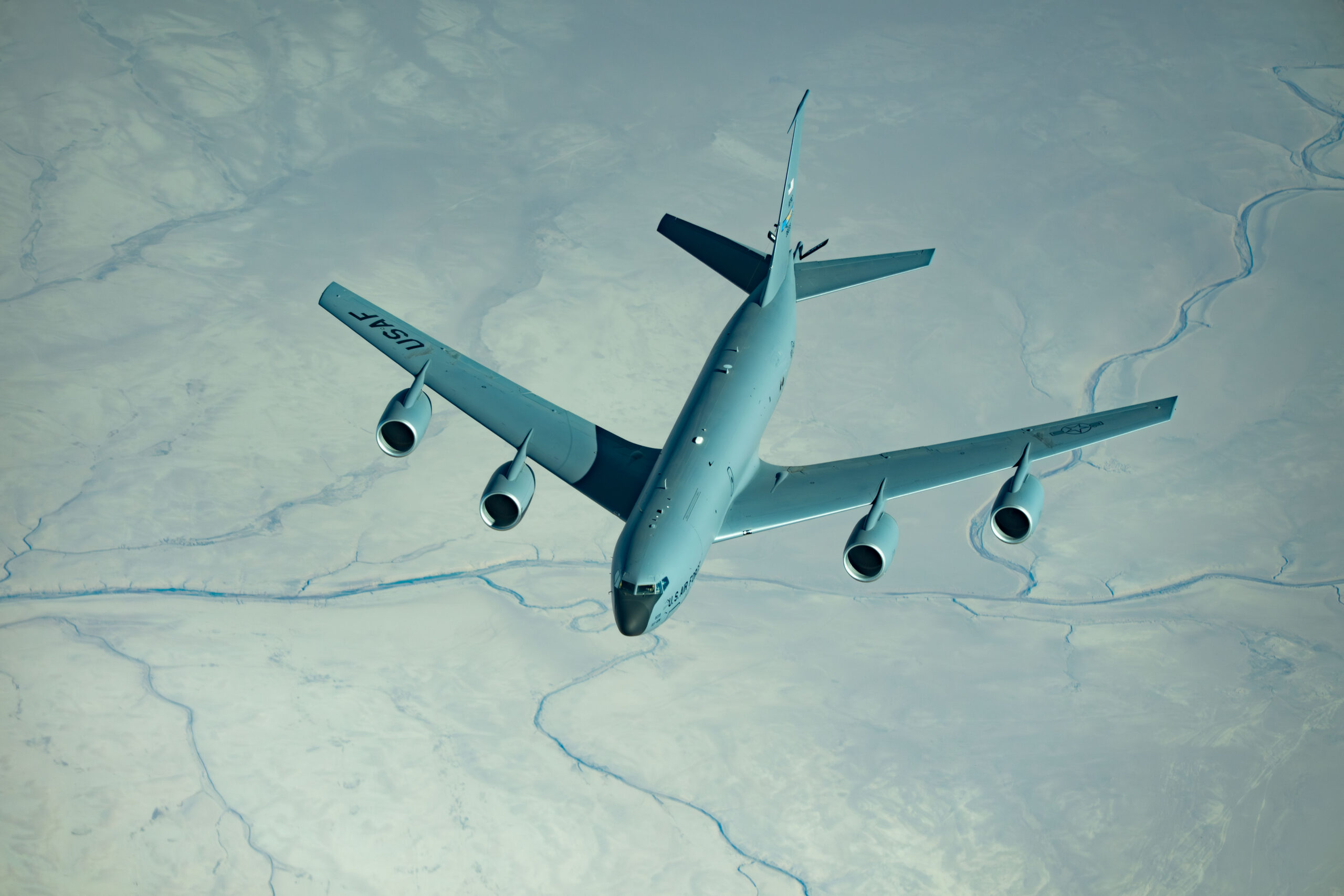
WASHINGTON D.C.– The United States Air Force reactivated a KC-135 Stratotanker aerial refueling aircraft from its vast storage facility, commonly known as the “Boneyard,” in early April. This strategic move takes place as the service navigates the complexities of fleet modernization, strives to meet statutory requirements for fleet expansion, and contends with significant reported aircraft losses during recent operational activities.
The reactivation of KC-135R, tail number 58-011, occurred approximately three weeks after a separate KC-135 crash in Western Iraq on March 12, which tragically resulted in the deaths of all six Airmen on board. During testimony to the House Armed Services Committee on May 20, Air Force Chief of Staff Gen. Kenneth S. Wilsbach mentioned the recent regeneration of a KC-135 from the service’s extensive aircraft storage facility at Davis-Monthan Air Force Base, Arizona. An Air Force spokesperson later confirmed the reactivation took place in early April. While the spokesperson did not explicitly state that the action was a direct response to the March 12 crash, they clarified that the 309th Aerospace Maintenance and Regeneration Group (AMARG) was prompted to regenerate the aircraft following a request from the KC-135 Program Office “to support operational requirements.”
The “Boneyard” and Aircraft Regeneration Process
The 309th AMARG, widely recognized as the “Boneyard,” represents the largest aircraft storage and regeneration facility globally. Situated in the arid climate of Tucson, Arizona, the location provides optimal natural conditions for the long-term preservation of military aircraft, encompassing a diverse range from fighter jets to bombers and transport planes. Aircraft stored at AMARG are either officially retired, awaiting eventual disposal, or maintained in a reserve status for potential future reactivation into the operational fleet. The process of regenerating an aircraft from AMARG is a meticulously complex undertaking, involving extensive maintenance, comprehensive system overhauls, and significant structural repairs to restore the airframe to full operational readiness and safety standards.
On April 2, KC-135R 58-011 departed the Boneyard and subsequently flew to the Oklahoma Air Logistics Complex at Tinker Air Force Base, Oklahoma. Tinker AFB serves as a vital hub for major aircraft maintenance, repair, and overhaul operations within the Air Force, where the Stratotanker is now undergoing the necessary work for its reintegration into the active fleet. The timeline required for such a regeneration process can vary considerably, influenced by the aircraft’s initial condition upon retrieval from storage and the overall scope of work mandated. As a recent illustration of this complexity, the Air Force announced that a B-1B Lancer bomber, which was reactivated from the Boneyard in 2024, only recently achieved operational readiness. This particular B-1B underwent an “intensive regeneration and depot maintenance effort” at Tinker, a massive undertaking that involved over 200 Airmen and civilians from the 567th Aircraft Maintenance Squadron. Their work included replacing approximately 500 components, alongside conducting comprehensive system overhauls and extensive structural repairs.
Fleet Modernization and Statutory Requirements
The Air Force is currently navigating a pivotal and complex period of fleet modernization. A primary objective is the phased replacement of its aging fleet of KC-135 Stratotankers – some of which have been continuously in service for over six decades – with the more modern KC-46 Pegasus aircraft. Simultaneously, the service is actively exploring design concepts and strategies for a Next Generation Air-refueling System (NGAS) to proactively address future operational demands and maintain technological superiority. This comprehensive modernization effort is critically important for sustaining the global reach, power projection capabilities, and overall strategic flexibility of the United States military.
Adding to these modernization challenges are specific statutory requirements mandating an expansion of the aerial refueling fleet. By federal law, the Air Force is required to increase its total number of refueling aircraft from a minimum of 466 to 478 by October 1, 2027, and further to 502 by October 1, 2028. According to Fiscal Year 2027 budget documents released in early April, the service reported an inventory of approximately 370 KC-135s and 105 KC-46s. Air Force officials, however, noted that these figures did not yet account for aircraft subsequently lost or damaged during recent operational activities.
For Fiscal Year 2027, the Air Force has articulated plans to retire 20 KC-135s from active service. Concurrently, the service anticipates the delivery of 20 new KC-46s within the same fiscal year. The decision to reactivate a KC-135 from storage, even amidst these planned retirements, underscores the immediate operational pressures and the imperative need to maintain required fleet numbers and capabilities, particularly during this critical transition phase from older to newer platforms.
Reported Operational Losses During “Epic Fury”
The original source article from Air & Space Forces Magazine links the March 12 KC-135 crash in Iraq to an operation it identifies as “Epic Fury.” This publication describes “Epic Fury” as an “intense air campaign against Iran’s nuclear enrichment and military facilities.” According to the same source, during this operation, the Air Force reportedly sustained significant additional aircraft losses beyond the crashed KC-135. These reported losses include:
- Approximately 38 other manned and unmanned aircraft.
- At least four F-15E Strike Eagles.
- An A-10 Thunderbolt II attack aircraft.
- Nearly 30 MQ-9 Reaper unmanned aerial vehicles.
- An E-3 AWACS (Airborne Warning and Control System) aircraft, which was reportedly severely damaged during a March 27 attack on Prince Sultan Air Base in Saudi Arabia.
- Two MC-130 Hercules special operations transport aircraft, which were reportedly destroyed in place after a dramatic rescue mission of two F-15 crew members shot down over Iran. This destruction was said to be carried out to prevent enemy forces from examining the aircraft’s sensitive technology.
The Air Force spokesperson did not offer comment regarding these specific, widespread losses as reported by the source, nor did they address how the service plans to replace them. The spokesperson did confirm that, apart from the single KC-135 discussed, no additional aircraft have been activated from the Boneyard for U.S. operational forces. However, two C-130s are currently undergoing regeneration at AMARG, designated for foreign military sales programs.
Why This Matters
The reactivation of a single KC-135 Stratotanker, combined with the detailed reports of significant aircraft losses from a prominent defense publication, highlights critical and multifaceted challenges confronting the U.S. Air Force and its foundational ability to project global power. Air refueling is not merely a supplementary function; it is an indispensable strategic capability that underpins the operational reach of fighter jets, bombers, and transport aircraft, enabling them to operate effectively across vast distances and sustain complex missions in contested environments. Without a robust, modern, and reliable tanker fleet, the U.S. military’s capacity for rapid deployment, global deterrence, and sustained combat operations would be severely compromised, impacting its ability to respond to crises and maintain strategic advantage worldwide.
The challenges extend significantly beyond numerical fleet requirements. The Air Force is actively grappling with the realities of an aging fleet, a situation vividly exemplified by the KC-135s, some of which have been flying for over six decades. Modernization efforts, such as the ongoing introduction of the KC-46 Pegasus and the nascent development of a Next Generation Air-refueling System, are absolutely vital for ensuring future operational superiority. However, these initiatives are inherently complex, entail substantial financial costs, and demand considerable time for implementation and full integration. The necessity of reactivating aircraft from storage underscores the immediate, pressing operational pressures to meet current requirements and statutory mandates, even as older aircraft are simultaneously slated for retirement. This dynamic creates a delicate and critical balancing act between maintaining existing capabilities and making essential investments in future ones.
Furthermore, the reported scale of aircraft losses in a described “intense air campaign” against Iran, if corroborated, would represent an unprecedented level of attrition for the U.S. Air Force within a relatively short operational timeframe. Such widespread losses would not only impose immense strain on the service’s budget, procurement plans, and readiness levels but would also inevitably raise profound questions regarding U.S. military strategy, operational planning, and the geopolitical stability of the Middle East. While these specific claims of extensive losses warrant rigorous independent verification due to their gravity and potential implications, the very discussion of such potential attrition powerfully underscores the high stakes and inherent risks of modern air warfare. Any actual losses of this magnitude would carry significant ramifications for military readiness, personnel morale, and national security policy, influencing future strategic decisions and defense posture.
Finally, the extensive and resource-intensive process required to regenerate a complex aircraft like the B-1B Lancer at Tinker Air Force Base clearly demonstrates the substantial investment in resources, time, and highly skilled personnel necessary to maintain, repair, and reactivate these sophisticated platforms. This illustrates the broader economic and logistical burden inherent in sustaining a technologically advanced military force capable of global operations. The Air Force’s strategic decisions regarding its tanker fleet, alongside its responsive actions to operational incidents, directly impact its fundamental ability to safeguard national interests, effectively support allies, and decisively respond to emerging global crises.