
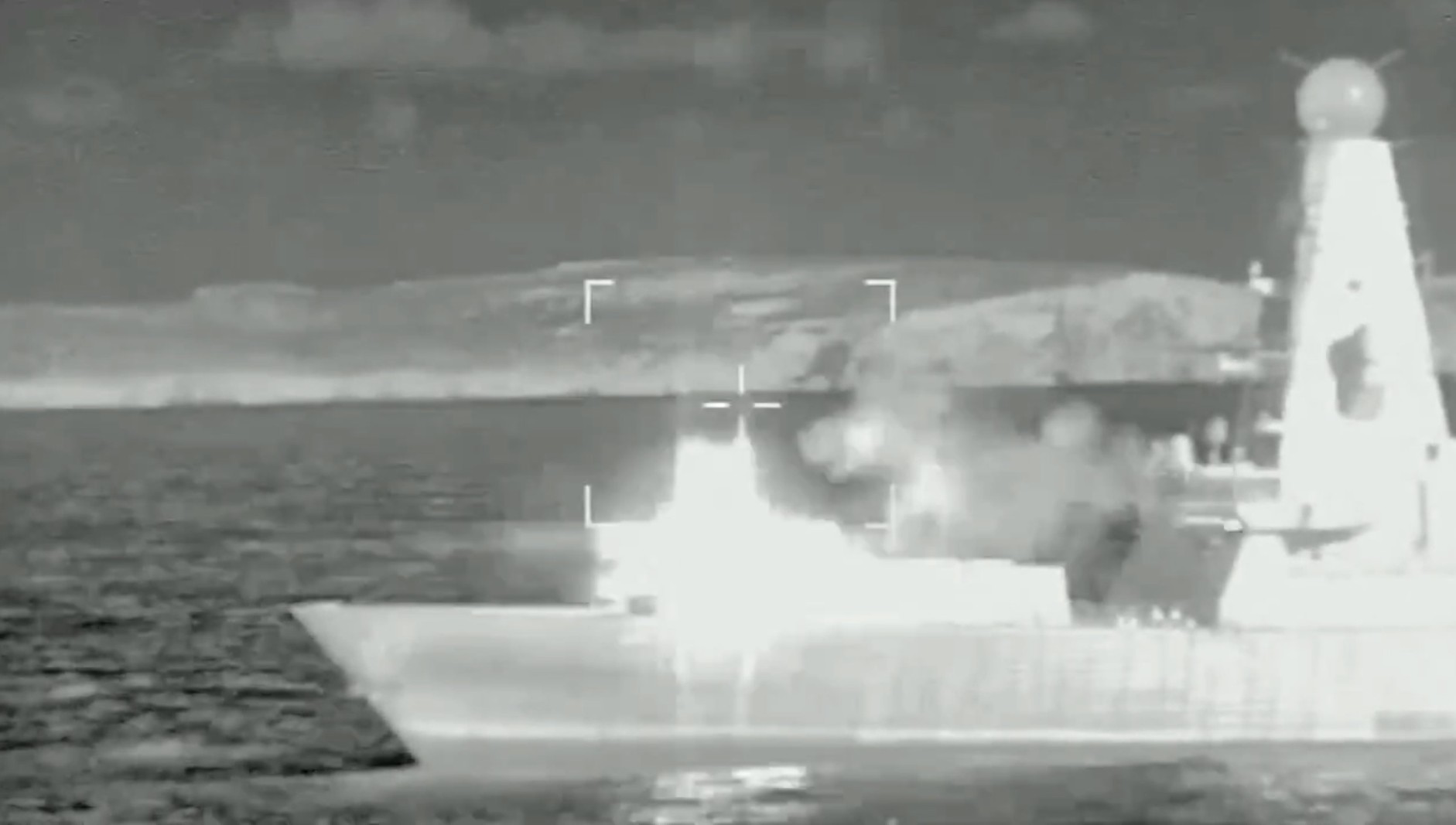
Royal Navy Deploys HMS Dragon to Middle East Amidst Strait of Hormuz Tensions
The Royal Navy has initiated the deployment of HMS Dragon, a Type 45 air defense destroyer, to the Middle East. This strategic move positions the vessel in advance of a potential multinational mission aimed at safeguarding international shipping traversing the Strait of Hormuz, a critical global maritime chokepoint.
A spokesperson for the Ministry of Defence (MoD) confirmed the deployment, stating,“We can confirm that HMS Dragon will deploy to the Middle East to pre-position ahead of any future multinational mission to protect international shipping when conditions allow them to transit the Strait of Hormuz. The pre-positioning of HMS Dragon is part of prudent planning that will ensure that the UK is ready, as part of a multinational coalition jointly led by the UK and France, to secure the strait, when conditions allow.”This statement underscores the proactive and cautious approach taken by the UK in anticipation of potential security requirements in the region.
HMS Dragon is being repositioned from the Eastern Mediterranean, where it had previously been engaged in defending British sovereign bases located on Cyprus. The timing of this relocation is designed to ensure the destroyer’s immediate availability should the proposed multinational defensive mission be formally launched. The MoD has emphasized that any such operation would be described as“strictly defensive and independent,”signaling its intention to focus solely on the protection of commercial vessels and uphold the principle of freedom of navigation, without engaging in offensive actions or becoming embroiled in regional conflicts.
The Strait of Hormuz, linking the Persian Gulf with the Arabian Sea and the wider Indian Ocean, is one of the world’s most vital shipping lanes. An estimated one-fifth of the world’s total oil consumption, along with a significant portion of liquefied natural gas, passes through this narrow waterway daily. Its strategic importance makes it a focal point for international security concerns, particularly given recurring geopolitical tensions in the surrounding region. Disruptions in the strait can have immediate and far-reaching impacts on global energy markets and supply chains, affecting economies worldwide.
HMS Dragon is the fourth of the Royal Navy’s six advanced Type 45 air defense destroyers. Launched in November 2008 and commissioned into service on 20 April 2012, the vessel represents a cornerstone of modern naval technology. The Type 45 class was engineered primarily for area air defense, capable of protecting task groups from sophisticated air threats, including fighter jets, drones, and anti-ship missiles. With a displacement of approximately 8,000 tonnes and a length of 152.4 meters, the destroyer boasts a top speed in excess of 30 knots, providing rapid response capabilities.
The ship’s propulsion system, an integrated electric design, draws power from two Rolls-Royce WR-21 gas turbines and two Wärtsilä diesel generators. This configuration grants HMS Dragon an impressive range exceeding 7,000 nautical miles at a cruising speed of 18 knots, allowing for extended deployments far from home ports. This endurance is crucial for sustained presence operations in distant and strategically important regions like the Middle East.
At the core of Dragon’s defensive capabilities is the Principal Anti-Air Missile System (PAAMS). This sophisticated system utilizes 48 Sylver vertical launch cells, capable of firing both Aster 15 and Aster 30 missiles. These missiles can intercept targets at ranges varying from under two kilometers for close-in threats to well over 100 kilometers for long-range engagements, providing comprehensive protection against aerial adversaries. Complementing its missile systems, the ship is equipped with the advanced SAMPSON multi-function radar and the S1850M long-range air surveillance radar. These radar systems combine to give HMS Dragon one of the most capable air picture compilation and engagement systems in the Royal Navy’s surface fleet, offering unparalleled situational awareness and threat assessment.
For close-range defense against surface threats or asymmetric attacks, HMS Dragon carries a robust array of secondary armaments. These include two 20mm Phalanx close-in weapon systems (CIWS), designed to automatically detect and destroy incoming missiles and aircraft at very short ranges. Additionally, the ship is armed with a 4.5-inch Mark 8 naval gun for surface engagement and naval gunfire support, alongside two DS30B 30mm cannons for precision targeting of smaller vessels or fast-attack craft. These layered defenses ensure the vessel’s ability to respond to a wide spectrum of threats.
The destroyer also possesses significant aviation capabilities, capable of operating one or two Wildcat helicopters. These helicopters can be armed with Martlet multirole missiles or the Sea Venom anti-ship missiles, the latter of which achieved initial operating capability in October 2025, significantly enhancing the ship’s anti-surface warfare capacity. Alternatively, HMS Dragon can embark a Merlin helicopter, primarily utilized for anti-submarine operations, adding another dimension to its defensive and deterrent posture. The ship carries a standard complement of 191 personnel, with accommodation available for up to 235, providing flexibility for additional specialists or command staff during complex missions.
Why This Matters
The deployment of HMS Dragon to the Middle East carries significant implications across several dimensions:
- Global Energy Security:The Strait of Hormuz is the world’s most important oil chokepoint. Any disruption there, whether due to regional conflict or deliberate obstruction, can send global oil prices soaring, impacting economies from energy-producing nations to individual consumers. The presence of international naval forces aims to deter such disruptions and assure the free flow of critical energy supplies.
- Freedom of Navigation and International Law:The principle of freedom of navigation in international waters is a cornerstone of global trade and security. Deploying a warship to this critical waterway underscores the international community’s commitment to upholding this principle against any threats, ensuring commercial vessels can transit safely without undue interference. It sends a clear message that maritime routes are not subject to unilateral control.
- Regional Stability and De-escalation:While a show of force, the stated “strictly defensive and independent” nature of the proposed mission aims to de-escalate tensions by providing a protective presence rather than an offensive one. It seeks to deter aggression and prevent incidents from spiraling into broader conflicts, thereby contributing to regional stability in an already volatile area.
- UK’s Global Role and Influence:This deployment demonstrates the United Kingdom’s continued commitment to international security and its willingness to project naval power to protect global interests. As a leading naval power and a permanent member of the UN Security Council, the UK’s participation alongside France reinforces its diplomatic and military influence on the world stage, especially concerning vital maritime security issues.
- Multinational Cooperation and Interoperability:The formation of a multinational coalition, jointly led by the UK and France, highlights the importance of international cooperation in addressing complex security challenges. Such deployments foster interoperability between allied navies, enhancing collective defense capabilities and strengthening diplomatic ties through shared operational objectives. It also provides a framework for other nations to contribute to a common security goal.
- Protection of Trade and Supply Chains:Beyond energy, many other goods traverse the Strait of Hormuz. Ensuring the safety of international shipping protects global supply chains, preventing costly delays, increased insurance premiums, and potential economic instability that would arise from attacks or heightened risks in this vital maritime corridor.