
United Kingdom Commits £1.5 Billion to Develop Hybrid Naval Fleet, Integrating Autonomous Systems
The United Kingdom’s Ministry of Defence (MoD) has announced a significant investment of at least £1.5 billion over the next four years to initiate the development of a “Hybrid Navy.” This strategic initiative aims to integrate advanced autonomous underwater, surface, and airborne systems with traditional crewed warships, enhancing the Royal Navy’s operational capabilities through increased “mass and persistence.” The announcement was made via a written answer published on Thursday, detailing the government’s commitment to modernising its naval forces.
Luke Pollard, the Minister of State for Defence Readiness and Industry, provided the clarification in response to an inquiry from James Cartlidge, the Conservative Member of Parliament for South Suffolk. Mr. Cartlidge had sought details on the financial allocation for the Hybrid Navy programme across the remaining financial years of the current parliamentary term. Mr. Pollard confirmed the substantial investment, stating that it would underpin the integration of a new generation of uncrewed systems designed to augment the fleet’s reach and endurance.
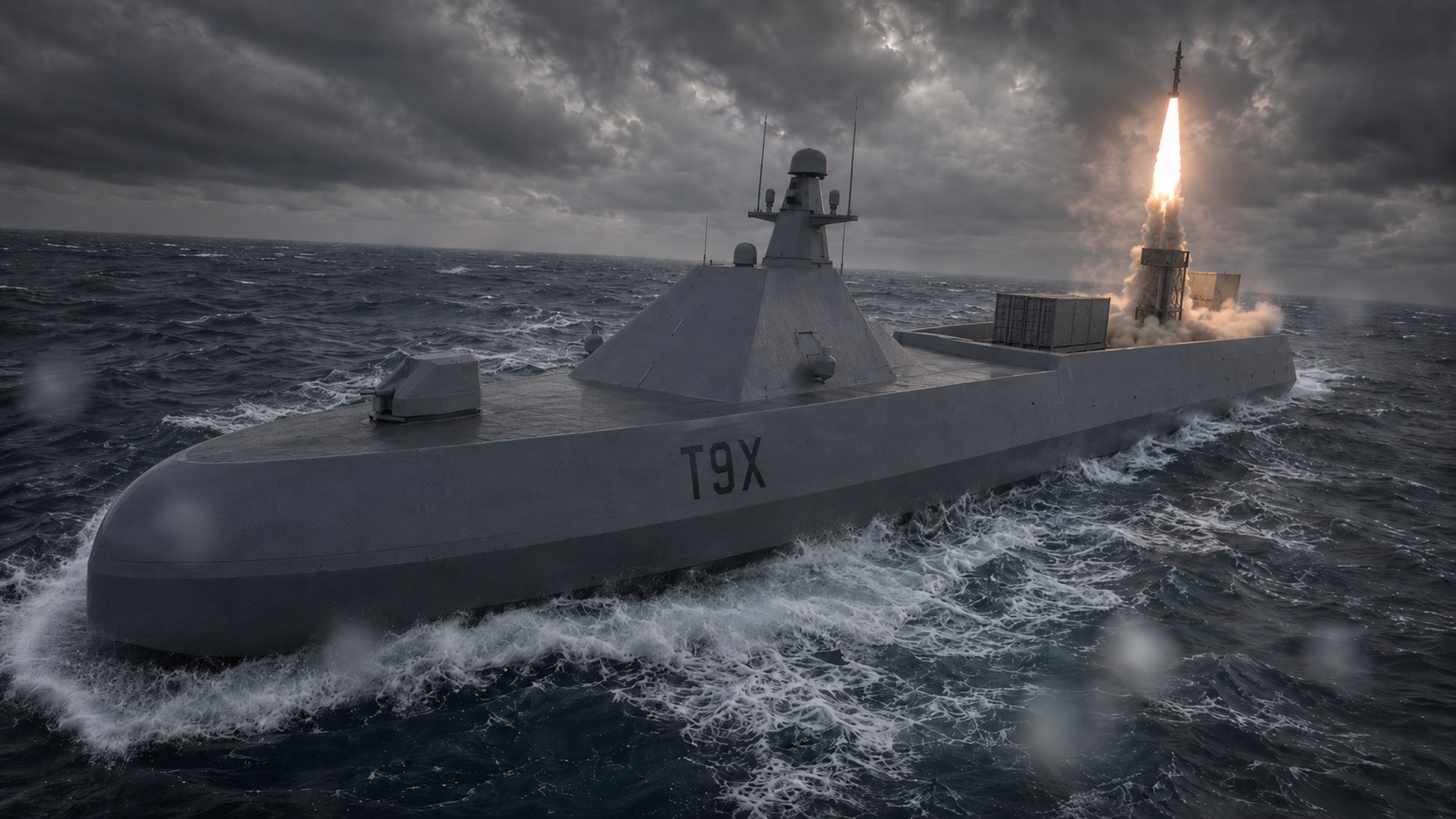
A key objective of this programme is to bring the first large autonomous vessels into service by 2030. These are expected to include a prototype uncrewed missile platform and advanced extra-large uncrewed underwater vessels (XLUUVs). The development of payloads for these XLUUVs will leverage capabilities and collaboration established through the AUKUS security pact, involving Australia, the United Kingdom, and the United States.
The precise allocation of the £1.5 billion investment across different types of vessels will be determined through extensive consultation with industry partners. This approach signifies a departure from traditional procurement methods, where detailed requirements are often set prior to engaging suppliers. Instead, the MoD intends to collaboratively establish the optimal breakdown with manufacturers, focusing on the desired operational effects rather than prescriptive designs from the outset.
The proposed architecture for the Hybrid Navy encompasses several distinct classes of uncrewed platforms, each designed for specialized roles. These include:
- Type 91:Uncrewed missile platforms, intended to provide offensive capabilities without placing personnel at risk in forward positions. A prototype Type 91 is targeted for service by 2030.
- Type 92:Uncrewed underwater sensing platforms, designed for surveillance, reconnaissance, and intelligence gathering in contested environments.
- Type 93:Extra-large uncrewed underwater vessels (XLUUVs), which will offer extended endurance and capacity for various missions, potentially including intelligence collection, mine countermeasures, and special operations support.
- Type 94:Uncrewed radar platforms, enhancing the fleet’s situational awareness and extending detection ranges.
Central to this autonomous fleet will be a future class of crewed vessels known as the Common Combat Vessel (CCV). These CCVs are envisioned as the command and control hubs, coordinating the actions of the numerous uncrewed systems. The concept of the Common Combat Vessel is currently in its initial design phase, with various hull form options still under exploration. The Ministry of Defence has indicated that detailed programme costs for the CCV, including unit cost and the number of hulls required, remain subject to ongoing concept development, formal approvals, and affordability assessments by Parliament.
This flexible, effect-based procurement strategy mirrors the approach taken for “Atlantic Net,” an autonomous sensor network forming the surveillance component of “Atlantic Bastion.” General Sir Gwyn Jenkins, the First Sea Lord, elaborated on this strategy last month, noting that the Royal Navy focused on defining the required operational effect rather than dictating precise technical specifications. He highlighted that much of the initial research behind competing bids for such projects has been privately financed by industry, stating, “We haven’t put a penny into that,” underscoring a model of leveraging private sector innovation.
Furthermore, General Sir Gwyn Jenkins confirmed that the Navy has conducted extensive service-wide war games to rigorously test the operational effectiveness of the hybrid fleet concept. The consistent findings from these exercises underscore the enduring necessity of crewed warships within this new architecture. These traditional vessels are strategically positioned further back from the immediate front lines, assuming critical roles in the command, control, and coordination of the uncrewed systems operating around them. This validates the strategic vision of a truly hybrid force, where human decision-making and autonomous capabilities complement each other to achieve tactical and strategic objectives.
The move towards a Hybrid Navy represents a significant evolution in the United Kingdom’s naval doctrine, aiming to create a more resilient, adaptable, and technologically advanced force capable of addressing the complex and evolving threats of the 21st century maritime environment. By integrating cutting-edge autonomous technologies, the Royal Navy seeks to enhance its operational reach, reduce risk to personnel, and maintain a decisive advantage in future naval engagements.
Why This Matters
The United Kingdom’s commitment of £1.5 billion to develop a Hybrid Navy signifies a profound shift in naval strategy with far-reaching implications for global security, technological innovation, and defence economics. This initiative is not merely an upgrade but a fundamental reimagining of naval power, positioning the UK at the forefront of maritime defence evolution.
Strategic & Geopolitical Impact:This investment directly enhances the UK’s naval capabilities, providing a more agile, persistent, and formidable force. By integrating autonomous systems, the Royal Navy can project power more effectively, conduct longer-duration missions with fewer personnel at risk, and operate in contested environments with greater resilience. This strengthens the UK’s standing within NATO and bolsters its contributions to alliances like AUKUS, which is directly contributing to XLUUV payload development. It signals to potential adversaries a continued commitment to advanced defence capabilities and could influence the naval strategies of other major powers, potentially spurring an international race for autonomous naval superiority.
Technological Leadership & Innovation:The development of the Hybrid Navy pushes the boundaries of naval autonomy, robotics, artificial intelligence, and secure communication systems. Focusing on “effect-based” procurement rather than prescriptive designs encourages innovation from industry, fostering a dynamic ecosystem of defence technology. Success in this domain could establish the UK as a global leader in autonomous maritime systems, leading to export opportunities and further technological advancements that might also have civilian applications, such as in offshore energy or deep-sea exploration.
Economic Implications:A £1.5 billion investment over four years represents a substantial boost for the UK’s defence industry, creating high-skilled jobs in engineering, software development, manufacturing, and research. The collaborative approach with industry ensures that domestic expertise is harnessed and developed, potentially attracting further foreign investment into the UK’s technology sector. This sustained funding also provides long-term stability for companies involved, fostering innovation cycles and helping to secure the industrial base critical for national security.
Evolving Nature of Warfare:The Hybrid Navy concept fundamentally alters the calculus of naval warfare. By deploying uncrewed missile platforms and advanced sensors, the UK can achieve “mass” (more platforms, distributed capabilities) and “persistence” (longer operational durations) without the commensurate human risk or cost of traditional crewed vessels. The validation from war games, confirming the ongoing need for crewed command hubs, highlights a balanced approach where human decision-making remains central, but autonomous systems extend reach and reduce vulnerability. This paradigm shift could redefine naval tactics, deterrence strategies, and the very nature of conflict at sea in the coming decades.
Future Challenges and Considerations:While promising, the transition to a Hybrid Navy also presents challenges. These include ensuring the cybersecurity of highly networked autonomous systems, addressing ethical considerations surrounding autonomous weapon systems, managing the complexity of integrating diverse platforms, and mitigating potential cost overruns inherent in cutting-edge defence programmes. The UK’s approach will serve as a critical case study for other nations grappling with these same complex issues in the pursuit of future naval power.