
**U.S. Deploys Advanced Electronic Warfare Aircraft to Europe Amid Escalating Middle East Tensions**
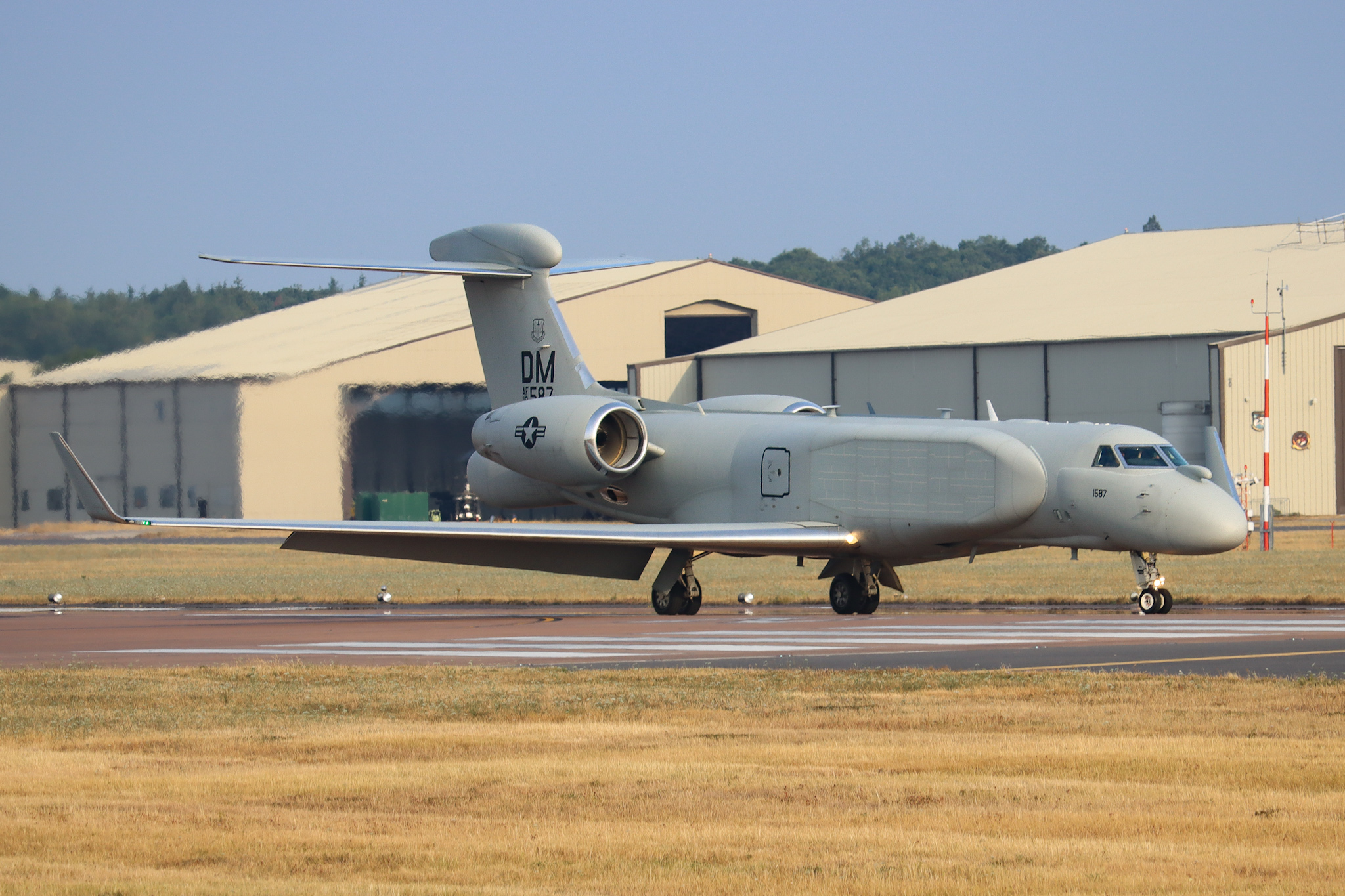
The United States has deployed two of its newest electronic warfare aircraft, the EA-37B Compass Call, to Royal Air Force (RAF) Fairford in the United Kingdom. This deployment, which occurred on July 23, follows a transit from Davis-Monthan Air Force Base in Arizona and comes amidst a period of heightened military activity and ongoing conflict involving U.S. forces in the Middle East. Observers note that similar prior deployments of these aircraft have involved onward movement to the Middle East, suggesting a potential readiness for operations in that theater.
The EA-37B Compass Call is the U.S. Air Force’s most advanced electronic attack aircraft, designed to disrupt adversary command and control, communications, radar, and navigation systems. Operating from outside hostile airspace, these aircraft employ standoff capabilities to jam and degrade enemy signals, thereby creating a safer operational environment for friendly forces. The deployment marks a significant enhancement of U.S. electronic warfare capabilities in the European theater, with potential implications for regional contingencies.
The EA-37B is an upgraded platform, replacing the aging EC-130H Compass Call. The Air Force currently operates five EA-37Bs out of a planned fleet of 22 aircraft. Their previous real-world deployment took place in April, when EA-37s were sent to the Middle East for what was designated “Operation Epic Fury.” That deployment marked the first operational use of the EA-37B in a combat zone.
The arrival of the EA-37Bs at RAF Fairford coincides with the presence of other significant U.S. combat assets at the base. Approximately a dozen B-1B Lancer strategic bombers have been stationed at Fairford since the spring. On July 21, a B-1B Lancer was reportedly used in a strike against targets in Iran, according to a report by Axios. This marked the first reported use of a U.S. bomber in the ongoing conflict since April.
U.S. Central Command (CENTCOM) issued a statement on July 22, confirming ongoing military operations. “This month, American forces have targeted dozens of Iranian military sites on land while resuming a blockade against Iran at sea,” the statement read. CENTCOM further reported that U.S. forces conducted their 13th consecutive day of airstrikes on July 23. These actions indicate a sustained and multi-faceted military campaign in the region.
The broader U.S. military footprint in the Middle East includes approximately 50,000 American troops. Official Defense Department data, updated on July 22, indicates that 18 U.S. troops have been killed and over 480 wounded since the inception of the current phase of the conflict.
Photographs confirming the arrival of the EA-37Bs at RAF Fairford were captured by local aircraft photographer Lee Hathaway and shared with Air & Space Forces Magazine. The aircraft made a brief refueling stop at Bangor Air National Guard Base in Maine before continuing their transatlantic journey to the UK. During their previous deployment to the Middle East in April, two EA-37s were observed at RAF Mildenhall in England prior to their onward movement.
Electronic warfare is a critical component of modern U.S. air operations, aimed at achieving air superiority and enabling successful strike missions. Beyond the EA-37Bs, the U.S. has also integrated Space Force electronic warfare systems into its regional operations.
Further demonstrations of the U.S.’s diverse EW capabilities have been observed in the Middle East. Air Force F-16 Fighting Falcons and A-10 Thunderbolt II attack aircraft have been seen equipped with Angry Kitten electronic warfare jamming pods during combat missions, marking the first recorded combat use of this system. Additionally, F-35 Lightning II fighters, which have been extensively utilized in the conflict, integrate advanced, robust electronic warfare systems as part of their stealth and multi-role capabilities. EA-18G Growlers, specialized electronic attack aircraft that carry jamming pods to escort strike aircraft and engage enemy air defense systems, have also been employed in the region.
The recent days have also seen additional deployments of fighter jets and refueling aircraft to the Middle East, complemented by a continuous flow of cargo aircraft between the Middle East and Europe, indicating ongoing logistical support for sustained operations.
**Why This Matters**
The deployment of advanced electronic warfare aircraft like the EA-37B Compass Call to Europe, with the potential for onward movement to the Middle East, signifies a critical development in the ongoing regional tensions. This move underscores the U.S.’s commitment to maintaining a robust military posture and readiness for complex operations.
**Strategic Signaling and Deterrence:** The presence of high-end electronic warfare assets, alongside strategic bombers, sends a clear signal of U.S. capability and resolve. It aims to deter further escalation by demonstrating the potential for overwhelming technological superiority in any large-scale military engagement. Electronic warfare is crucial for blinding and disrupting an adversary’s defenses, enabling more effective and safer kinetic strikes. Its deployment suggests preparation not just for localized skirmishes but for a more sophisticated, high-intensity conflict environment.
**Modern Warfare Evolution:** This deployment highlights the evolving nature of modern warfare, where control of the electromagnetic spectrum is as vital as air superiority or ground control. The ability to jam communications, radar, and navigation systems can neutralize advanced air defense networks, disrupt command and control, and significantly reduce the effectiveness of enemy forces without necessarily firing a shot. The integration of various EW platforms, from specialized aircraft to pods on fighter jets and Space Force assets, indicates a multi-layered approach to electronic dominance.
**Regional Stability and Escalation Risk:** While intended to deter, such deployments can also be perceived as escalatory by regional adversaries, potentially increasing tensions and the risk of miscalculation. The sustained U.S. military presence, ongoing airstrikes, and reported naval blockade indicate a deepening engagement in the conflict, raising concerns among international observers about broader regional instability and its potential impact on global energy markets and shipping lanes.
**Human and Economic Costs:** The reported casualties among U.S. troops underscore the direct human cost of the ongoing conflict. Any further escalation, particularly a “large-scale operation,” would inevitably lead to increased casualties on all sides and potentially severe humanitarian consequences. Economically, prolonged conflict in the Middle East could disrupt global oil supplies, impact international trade, and place significant financial burdens on involved nations, including the United States.
In essence, the deployment of EA-37B aircraft is not merely a routine military movement; it is a tangible indicator of U.S. strategic preparations and technological commitment in a volatile region, with significant implications for the trajectory of the ongoing conflict and the broader geopolitical landscape.