
New York City is poised for a monumental celebration as the New York Knicks mark their first N.B.A. championship victory in 53 years. This historic achievement will be commemorated with a grand parade through Lower Manhattan’s renowned “Canyon of Heroes,” a route traditionally reserved for significant civic and national triumphs. This event will represent the team’s inaugural procession along this iconic path. City officials are preparing for what is anticipated to be one of the largest public gatherings in New York City’s recent history, necessitating comprehensive logistical planning and heightened security measures.
Parade Schedule and Route Details
The parade is scheduled to commence at 10 a.m., originating near Bowling Green in Lower Manhattan. The procession will proceed northward along Broadway, concluding at City Hall. Authorities have strongly advised early arrival for spectators, as significant crowd formation is expected well in advance of the start time. Public viewing areas along the designated route are free and accessible to all.
Impact on Vehicular and Ferry Traffic
Extensive traffic restrictions will be implemented across Lower Manhattan to accommodate the event. Street parking will be prohibited south of Canal Street beginning at 7 p.m. on Wednesday, with any remaining vehicles subject to immediate towing. On Thursday, a comprehensive vehicular traffic shutdown will be enforced south of Canal Street, spanning from the Hudson River to the East River, effective from 7 a.m. Key arterial routes, including the F.D.R. Drive and West Side Highway, are slated to remain operational. Commuters utilizing the Staten Island Ferry should note an increased frequency, with services running every 15 minutes between 7 a.m. and 9 a.m., and again from 1 p.m. and 4 p.m., to manage anticipated passenger volumes.
Public Transportation Access
Public transportation, particularly the subway system, is the recommended mode of travel to the parade area. However, specific subway station closures will be in effect. Starting at 4:30 a.m. on Thursday, the Wall Street (serving the 4 and 5 trains) and City Hall (serving the R and W trains) stations will be closed. These stations are expected to reopen following the conclusion of the parade and the subsequent City Hall ceremony. The Metropolitan Transportation Authority (MTA) has suggested several alternative stations near the parade route for attendee convenience: South Ferry (1 train); Rector Street (1); Rector Street (R, W); WTC-Cortlandt Street (1); Wall Street (2, 3); Park Place (2, 3); Fulton Street (2, 3, 4, 5, A, C, J, Z); Bowling Green (4, 5); Chambers Street (A, C); World Trade Center (E); Broad Street (J, Z); Cortlandt Street (R, W); and Whitehall Street (R, W).
Recommended Arrival Times
Officials have advised attendees to arrive at least two hours before the 10 a.m. start time to secure a viewing position along the parade route. For those planning to arrive even earlier, security screening operations will commence at 6 a.m., and all attendees must pass through these checkpoints before occupying their chosen spots. Police Commissioner Jessica Tisch stated on Wednesday that attendance at the parade would operate on a first-come, first-served basis. Once designated viewing areas reach capacity, individuals will either be directed to alternative locations or denied access to the route.
Designated Entry Points
Access to the parade route will be facilitated through more than 20 distinct entry points. A comprehensive list of these access points is available on the city’s official parade website, which will be regularly updated with real-time information regarding Thursday’s events.
Access for Local Residents and Workers
Individuals employed in buildings situated along the parade route will be granted entry to their workplaces upon presentation of valid building identification. Similarly, residents of the affected area will be permitted to access their homes by providing appropriate identification to security personnel.
Security Presence and Measures
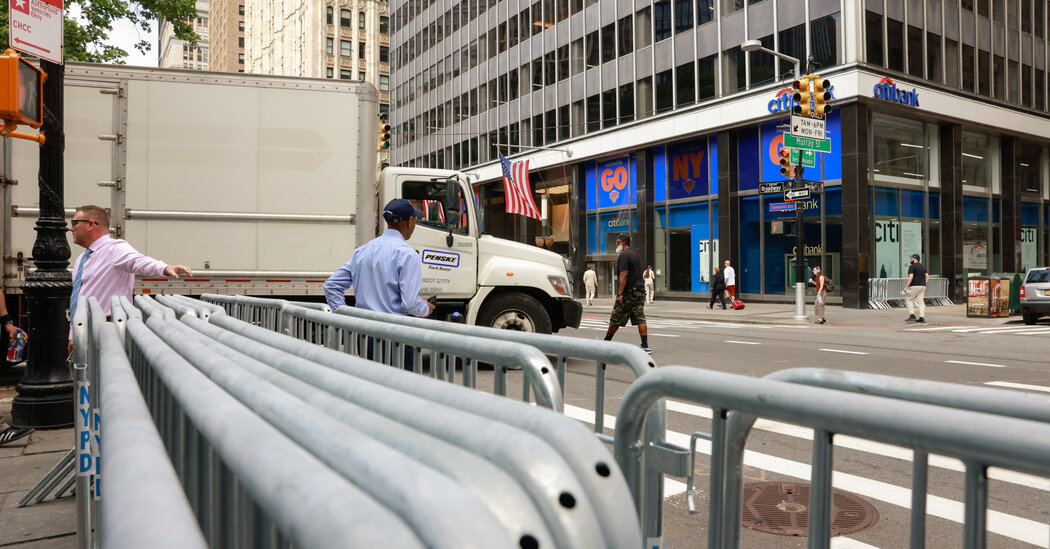
A robust security detail, comprising over 10,000 officers, will be deployed for the parade. This contingent includes specialized units such as heavy weapons teams, as well as personnel from transit, highway, and drone units, ensuring comprehensive coverage and rapid response capabilities. Furthermore, bomb-detecting canine units will actively patrol the area to enhance public safety.
Prohibited Items
For security and safety reasons, the following items are strictly prohibited from the parade area: various types of bags and backpacks; glass or metal water bottles; bats and batons; bicycles and scooters; portable chairs; coolers; drones; pets; strollers; umbrellas; and any form of weapon.
Permitted Items
Attendees are permitted to bring plastic water bottles.
Restroom Facilities
There will be no dedicated public restroom facilities provided along the parade route. Additionally, most street-level businesses in the affected area are anticipated to be closed for the duration of the event. Attendees seeking restroom access may consider options at the Oculus at the World Trade Center or the Staten Island Ferry Terminal, both located relatively nearby.
Weather Forecast for Thursday
As of Wednesday at 1:30 p.m., the National Weather Service forecast indicates cloudy conditions through midmorning, with a gradual clearing expected thereafter. The high temperature is predicted to be near 86 degrees Fahrenheit (approximately 30 degrees Celsius), with a possibility of thunderstorms developing after 2 p.m.
Contingency for Inclement Weather
In the event of significant rainfall or severe weather conditions, the timing and date of the parade may be subject to alteration. Any updates regarding schedule changes will be promptly communicated through the official parade website and the city’s official social media accounts.
City Hall Ceremony Attendance
Access to the post-parade ceremony at City Hall will be restricted to ticket holders only. This includes 600 tickets distributed to the public via a lottery system managed by the city. The ceremony is slated to feature various speakers and musical performances, culminating in Mayor Zohran Mamdani presenting keys to the city to the championship-winning Knicks team.
Confetti, Not Ticker Tape
Despite the popular moniker “ticker-tape parade,” the celebratory shower will not feature traditional ticker tape, which has largely been phased out since the 1960s. Instead, approximately 2,500 pounds of recycled paper, acquired for $7,500 from the Wisconsin-based office-supply company Uline, will be shredded into confetti. Jessica Lappin, president of the Downtown Alliance, a local business improvement group responsible for orchestrating the confetti display, noted that the confetti provided by the alliance would be white, not specifically themed in the Knicks’ orange and blue colors. Given that most office buildings along the parade route feature sealed windows, employees of the alliance have undertaken a door-to-door effort to secure 25 suitable locations from which to release the paper confetti onto the procession.
Post-Parade Cleanup Operations
Following the conclusion of the festivities, city sanitation workers will commence a substantial cleanup operation. Joshua Goodman, a spokesperson for the Department of Sanitation, confirmed that 650 mechanical brooms and backpack blowers would be utilized to clear an estimated 40 tons of litter from the parade route. In a gesture of celebratory solidarity, sanitation workers are permitted to wear New York Knicks caps as part of their official uniform for this week only.
Maia Coleman contributed reporting.
Why This Matters
The New York Knicks’ N.B.A. championship victory, after a 53-year hiatus, transcends mere athletic achievement; it represents a profound cultural and social event for one of the world’s most prominent cities. Such a prolonged wait for a major sports title amplifies the sense of collective triumph and civic pride, offering a rare moment of unity that brings together diverse communities across the metropolis. For a city as multifaceted and often fragmented as New York, a shared celebration of this magnitude can foster a powerful sense of identity and communal spirit, momentarily eclipsing daily challenges and political divides.
Beyond its social impact, the parade underscores the immense logistical capabilities and public safety challenges inherent in managing a massive public event in a global hub. The coordination required to secure Lower Manhattan, manage traffic, reroute public transportation, and deploy thousands of security personnel highlights the sophisticated urban planning and emergency response mechanisms of New York City. The successful execution of such an event serves as a testament to the city’s operational resilience and its capacity to host large-scale gatherings, from cultural festivals to international diplomatic events, reinforcing its status as a major global capital.
Economically, a championship parade of this scale provides a significant, albeit short-term, boost to local businesses, particularly in the hospitality, retail, and food service sectors along the parade route and surrounding areas. Fans traveling from various boroughs and beyond contribute to increased spending, stimulating local commerce. Furthermore, the global media attention surrounding such a parade enhances New York City’s image as a vibrant, dynamic destination, potentially drawing future tourism and investment. In essence, while celebrating a sports victory, the parade also showcases New York’s enduring vitality, its ability to mobilize vast resources, and the deep cultural connection between its residents and its iconic sports franchises.