
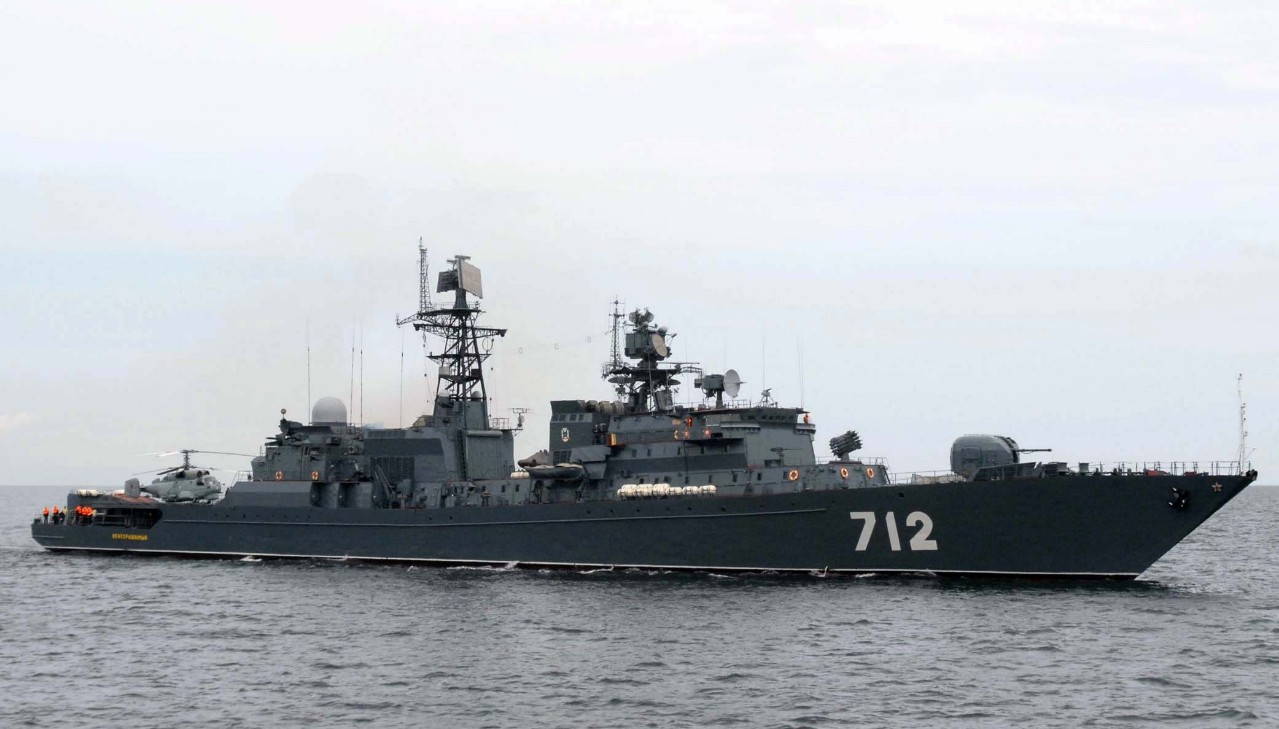
Russian Warship Conducts Gunnery Exercise Off UK Coast Under Royal Navy Watch
A Russian frigate, the *Neustrashimy*, has conducted a live-fire gunnery exercise in international waters off the south coast of England, approximately 40 nautical miles (around 74 kilometers) from Portsmouth. The exercise, which lasted roughly 30 minutes, took place on Monday, July 22, under the close observation of the Royal Navy patrol vessel HMS *Tyne*.
According to reports from the BBC, the *Neustrashimy* informed HMS *Tyne* of its intention to open fire, advising the British vessel to maintain a safer distance during the drills. A Ministry of Defence spokesperson confirmed that the Royal Navy was actively monitoring the Russian frigate. In addition to the Royal Navy’s presence, a French aircraft also made radio contact with the Russian warship to clarify the nature and scope of its activities.
International maritime law permits warships to conduct such exercises in international waters, provided they adhere to safety protocols, including issuing notifications to nearby shipping and shadowing units. This notification process is considered standard practice to ensure the safety of other vessels operating in the area.
The *Neustrashimy*’s presence marks a continuation of a persistent Russian naval presence around the English Channel and UK waters. The frigate was first observed east of Clacton-on-Sea, near Felixstowe, on July 17, where it reportedly took on fuel and stores from a Russian supply ship, as per earlier reporting by Sky News. Its arrival followed the departure of the frigate *Admiral Grigorovich*, which was seen returning towards Kaliningrad on July 16 after an extended period in the Channel. During its deployment, the *Admiral Grigorovich* had, at times, appeared to drift—possibly to conserve fuel—and notably fired warning shots at a private vessel it deemed to have approached too closely. Russian warships have maintained a near-continuous presence in this strategically vital waterway for several months, often escorting tankers and other strategic vessels. The Royal Navy reported last month that it had maintained an unbroken watch on Russian frigates and their accompanying vessels in UK waters for nearly three months, underscoring the sustained nature of these operations.
The *Neustrashimy* (meaning “Fearless”) itself is the lead ship of Project 11540, a class of frigates designed during the final years of the Soviet Union as a successor to the Krivak-class patrol ships. Laid down at the Yantar shipyard in Kaliningrad in 1987, launched in 1988, and commissioned into the Baltic Fleet in 1993, it is one of only two ships of its class ever completed. The collapse of the Soviet Union significantly curtailed the program, leading to lengthy delays for its sister ship, *Yaroslav Mudry*, and the scrapping of a third hull. With a full load displacement of approximately 4,400 tonnes and a length of 129 meters, the *Neustrashimy* is equipped with a 100mm main gun, Kinzhal surface-to-air missiles, Kortik close-in weapon systems, torpedo tubes, and anti-submarine rockets, also featuring a hangar for a Ka-27 helicopter. Designed primarily for anti-submarine escort, its service history has been marked by extended periods of absence, including a counter-piracy deployment off the Horn of Africa and a protracted refit at Yantar starting in 2014, which stretched years beyond schedule after a fire aboard in 2015 compounded existing delays. Despite these challenges, the three-decade-old frigate returned to Baltic Fleet duty towards the end of the last decade, making it one of the older combatants Russia now deploys for its Channel escort tasking.
The task of shadowing such vessels falls to HMS *Tyne*, the first of the Royal Navy’s River-class offshore patrol vessels. Commissioned in 2003, the *Tyne* has accumulated nearly as many years of continuous service in home waters as its Russian counterpart has in the Baltic. Displacing approximately 1,700 tonnes, this Portsmouth-based ship was originally built for fishery protection and general patrol duties. Unlike larger fleet-mates, its armament is limited to a 20mm cannon and general-purpose machine guns. However, its operational economy, high availability, and endurance have made the Batch 1 River-class vessels, including *Tyne* and its sisters *Severn* and *Mersey*, the Royal Navy’s indispensable workhorses for monitoring foreign warships transiting UK waters. These ships, along with HMS *Trent* and other Batch 2 vessels, perform this crucial task on a constant rotation. Over the past decade alone, HMS *Tyne* has escorted dozens of Russian vessels, ranging from destroyers and frigates to submarines and intelligence-gathering ships, through the Channel and North Sea. The demanding tempo of these patrols was highlighted only last week when the *Tyne*’s crew hosted supporting staff at sea in recognition of their operational strain.
The live-fire exercise by the *Neustrashimy* coincided with significant domestic political developments in the United Kingdom. On the same day, London saw a change of government, with Sir Keir Starmer resigning as Prime Minister and Andy Burnham being invited by the King to form a new administration. Furthermore, this event follows a period during which the UK government has intensified its approach to what it terms Russia’s “shadow fleet.” This includes recent actions such as the stopping and seizure of a tanker declared stateless by the government, with its captain now facing trial later this year on charges related to alleged sanctions violations involving Russian oil.
Why This Matters
The live-fire exercise by the Russian frigate *Neustrashimy* in international waters off the UK coast, while legally permissible, is significant for several reasons. Firstly, it represents a continued and assertive projection of Russian naval power into strategically important waters close to NATO territory. The English Channel is one of the busiest shipping lanes in the world and a critical maritime chokepoint, making any military activity there a clear demonstration of presence and capability. Such exercises, even if routine for a navy, serve as a potent signal of intent and a reminder of Russia’s ability to operate far from its home ports.
Secondly, it underscores the persistent operational demands placed upon the Royal Navy. The continuous shadowing of Russian vessels, exemplified by HMS *Tyne*’s decade-long record, highlights the constant vigilance required to monitor foreign naval movements near UK shores. This sustained presence by Russian warships, often escorting other strategic vessels, necessitates a significant commitment of resources from the Royal Navy, even with smaller, more economical patrol vessels. It demonstrates the enduring importance of maintaining maritime domain awareness and the Royal Navy’s critical role in safeguarding national interests and international shipping lanes.
Thirdly, the timing of this exercise, coinciding with a change of government in the UK and heightened British efforts to counter Russia’s “shadow fleet” involved in sanctions evasion, adds a layer of geopolitical context. It suggests that Russia is maintaining its operational tempo irrespective of internal UK political changes, and perhaps even sending a message of defiance in the face of increased pressure on its maritime activities. The UK’s firm stance on the “shadow fleet” reflects a broader hardening of its approach to Russia, particularly in the wake of the ongoing conflict in Ukraine. These naval interactions, while managed professionally in accordance with international law, occur against a backdrop of severely strained Anglo-Russian relations and an elevated security environment across Europe.
Finally, these events serve as a constant reminder of the complex interplay between routine military operations and broader geopolitical tensions. While the *Neustrashimy*’s exercise followed established protocols of notification, the mere presence and activity of a Russian warship so close to a major NATO naval base naturally draw scrutiny and demonstrate the dynamic and often tense nature of international maritime security in the current global climate.