
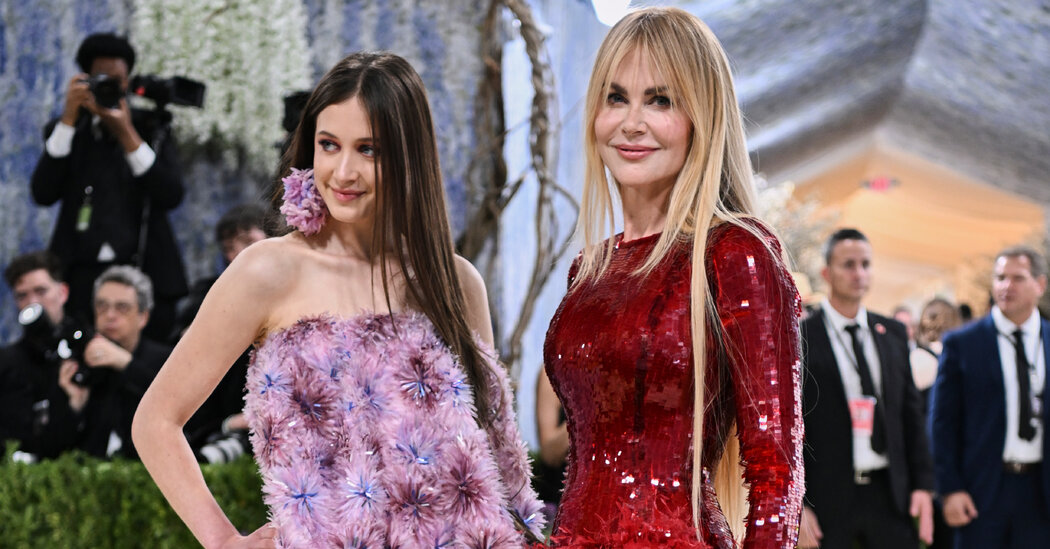
The annual Met Gala, a prominent event in the global fashion and cultural calendar, has once again captured international attention, setting new benchmarks in fundraising for the Metropolitan Museum of Art’s Costume Institute. This year’s event, centered on the theme “Fashion Is Art,” is poised to unveil the institution’s latest exhibition, “Costume Art,” housed within the newly established Condé M. Nast Galleries in the museum’s historic Great Hall.
The gala has reportedly raised a record $42 million, a significant sum dedicated to supporting the Costume Institute’s operations, including its acclaimed exhibitions, acquisitions, and conservation efforts. This philanthropic achievement underscores the event’s critical role as the primary funding source for the only curatorial department at The Met that must self-fund its activities.
Beyond its fundraising imperative, the Met Gala is renowned for its high-profile red carpet procession, which serves as a global stage for elaborate fashion interpretations of the chosen theme. This year, “Fashion Is Art” challenges designers and attendees to explore the intricate relationship between couture and fine art, prompting discussions on fashion’s place within the broader artistic canon. The theme invites a diverse range of interpretations, from garments that mimic classical artworks to those that push the boundaries of wearable sculpture, transforming the red carpet into a living, ephemeral art installation.
The unveiling of the Condé M. Nast Galleries marks a notable development for the Costume Institute and The Met. These dedicated spaces are expected to enhance the visitor experience, providing a more permanent and prominent home for the institute’s extensive collection and future exhibitions. The “Costume Art” exhibition itself is anticipated to delve into the historical and contemporary intersections of fashion design and artistic expression, showcasing pieces that exemplify craftsmanship, innovation, and cultural commentary.
The Met Gala’s allure is further amplified by its curated guest list, comprising influential figures from fashion, film, music, sports, and politics. This year’s event sees the return of global music icon Beyoncé as an official co-chair, marking her first appearance in this capacity in a decade. Her presence, alongside other high-profile co-chairs, amplifies the gala’s media reach and cultural resonance. The event’s red carpet is a highly anticipated spectacle, characterized by intricate ensembles, dazzling jewels, and a flurry of flashbulbs, generating extensive global media coverage and setting fashion trends for the year ahead.
Historically, the Met Gala has evolved from a local society event to an international cultural phenomenon, largely due to the vision and leadership of figures like Anna Wintour, editor-in-chief of Vogue and global editorial director for Condé Nast, who has chaired the event since 1995. Under her guidance, the gala transformed into a meticulously curated spectacle, aligning with the opening of the Costume Institute’s annual exhibition and becoming a crucial platform for both fundraising and artistic discourse.
The event’s emphasis on a specific theme each year encourages designers and celebrities to engage in a creative dialogue, pushing the boundaries of sartorial expression. This engagement not only generates considerable public interest but also fosters critical conversations within the fashion industry about creativity, sustainability, and cultural appropriation. The garments displayed often become iconic, influencing subsequent fashion collections and popular culture. The gala thus serves as a powerful incubator for innovation and a barometer for contemporary aesthetics.
The record $42 million raised this year is a testament to the enduring appeal and financial drawing power of the Met Gala. These funds are vital for the Costume Institute, which houses a collection of over 33,000 costumes and accessories from seven centuries, representing a global panorama of fashionable dress. The money supports everything from the conservation of delicate historical garments to the funding of scholarly research and educational programs, ensuring that the institution can continue its mission of celebrating and preserving the art of fashion for future generations.
As guests interpret the “Fashion Is Art” theme, the event continues to solidify its position as a unique intersection of philanthropy, art, and celebrity, contributing significantly to the cultural landscape of New York City and influencing global trends in fashion and entertainment.
Why This Matters
The Met Gala holds significant importance for several reasons, extending beyond its reputation as a celebrity spectacle:
Philanthropic Impact:As the primary fundraiser for the Metropolitan Museum of Art’s Costume Institute, the gala’s record-breaking $42 million directly enables the preservation, acquisition, and exhibition of fashion as a legitimate art form. This funding is crucial for maintaining one of the world’s most comprehensive costume collections and ensuring public access to its artistic and historical value.
Elevating Fashion as Art:The annual theme, particularly “Fashion Is Art,” challenges conventional perceptions and reinforces fashion’s status as a serious artistic discipline. It prompts cultural discourse on design, craftsmanship, and the socio-cultural significance of clothing, fostering a deeper appreciation for its creative and intellectual dimensions.
Cultural Influence and Trendsetting:The gala serves as a global platform where cutting-edge fashion, celebrity culture, and artistic expression converge. The elaborate interpretations of the theme by designers and attendees often set global fashion trends, influence popular culture, and generate extensive media coverage that shapes public perception of aesthetics and style.
Economic Significance:Beyond direct donations, the event generates substantial economic activity for New York City, impacting industries such as fashion design, haute couture, media, hospitality, and tourism. It provides unparalleled exposure for designers and brands, driving innovation and consumer interest in high fashion.
Institutional Development:The funds raised support critical infrastructure, such as the new Condé M. Nast Galleries, which enhance the museum’s capacity to display and interpret its collections. This physical expansion improves the visitor experience and solidifies the Costume Institute’s standing as a leading global center for fashion scholarship and exhibition.