

Concentric Advisors program manager Mark Trott assesses Silicon Valley’s vulnerability to foreign espionage.
Key Takeaways
- Strategic IP Vulnerability:The investigation into Nvidia CEO Jensen Huang underscores the acute espionage risk faced by market-leading technology firms, particularly those at the forefront of AI and national defense innovation. Compromised intellectual property can severely erode competitive advantage and shareholder value.
- Corporate Governance Under Scrutiny:High-profile incidents like this spotlight the critical importance of robust corporate governance, executive oversight, and comprehensive insider threat programs. Investor confidence hinges on the perceived integrity and security of a company’s leadership and its most valuable assets.
- Systemic Market Risk:Silicon Valley’s position as a global innovation hub makes it a primary target for state-sponsored industrial espionage. The successful acquisition of advanced U.S. technologies by foreign adversaries poses a significant long-term threat to America’s economic competitiveness, national security, and the broader tech market’s stability.
Nvidia, a semiconductor titan whose chips are the lifeblood of the artificial intelligence revolution, finds itself at the epicenter of a geopolitical storm. An internal investigation into the affair between CEO Jensen Huang and an alleged Chinese spy is casting a stark light on the profound risks of espionage targeting Silicon Valley firms – particularly those developing cutting-edge technology critical to AI advancement and national defense. This incident isn’t just a corporate drama; it’s a critical market event that highlights the immense strategic value of intellectual property and the pervasive threat of its compromise.
Huang’s admission of the affair and subsequent apology on Sunday, coupled with Nvidia’s board of directors announcing an independent investigation, sent ripples through the tech community. While the board initially stated no reason to believe national security or Nvidia secrets were compromised, the inquiry will meticulously examine all available information. For a company with a market capitalization often exceeding $2 trillion, whose technological innovations directly influence global economic and military power dynamics, such an investigation carries significant weight for investors, partners, and competitors alike.
Mark Trott, a former FBI special agent and program manager at Concentric Advisors, emphasized the pervasive nature of this threat to FOX Business. “Silicon Valley is a center for espionage and everyone out here should understand that they are not isolated from the world,” Trott stated, asserting that any tech executive or worker with access to proprietary information is a potential target. This isn’t merely a cautionary tale; it’s a stark reminder of the sophisticated and relentless efforts by foreign state actors to gain an edge in the global tech race.
“Other nations are going to work tirelessly to acquire what the U.S. has built in Silicon Valley and the technologies that have been developed here,” Trott said. He elaborated that these technologies “could be potentially game-changing in terms of economic or military power for a nation,” thereby prompting aggressive operations to gain insights, direct access, or to impede U.S. advancements. For investors, this translates directly into a risk to future revenue streams, competitive differentiation, and long-term valuation.
NVIDIA CASE HIGHLIGHTS RISKS OF ALLEGED ‘HONEYPOT’ SCHEMES TARGETING EXECUTIVES
Silicon Valley faces espionage threats from foreign intelligence services.(Tayfun Coskun/Anadolu via Getty Images)
Trott explained that the benefits of such espionage efforts are multifaceted for foreign governments and their industries. Gaining access to a company’s strategic plans, research and development for new technologies like advanced AI chips (which are often subject to stringent export controls), provides an invaluable shortcut. It can allow them to “save untold amounts of money and effort by taking what has been learned,” enabling foreign competitors to leapfrog development stages, reduce their own R&D expenditure, and accelerate their market entry or technological parity.
This IP theft directly impacts market share and profitability for the targeted U.S. companies. If a competitor can bypass years of costly R&D, they can bring similar products to market faster and potentially at a lower cost, eroding the U.S. innovator’s competitive edge and, by extension, shareholder value. Beyond direct IP theft, some foreign intelligence operations aim to feed executives information, hoping it influences political leaders and shapes U.S. policy in a favorable direction, further intertwining corporate security with national strategy.
SHORT SELLER FLAGGED JENSEN HUANG’S ‘UNCOMFORTABLY CLOSE’ TIES TO ALLEGED CHINESE SPY MONTHS AGO

Nvidia CEO Jensen Huang admitted to an affair that is under investigation as an alleged Chinese spying operation.(Obtained by Reuters)
Trott advises tech executives to maintain a defensive posture, “to be on the lookout for potential approaches” that may “run the gamut of any and all human vulnerabilities.” He elaborated on the sophistication of intelligence officers: “If they’re professional, and they’re good – are experts in human behavior, and they’re going to attempt to understand you better than you know yourself, and they will exploit ambition, financial incentives, greed, sometimes personal attractiveness from another asset. Anything that they can to build trust with you and use that against you.” This psychological warfare aspect underscores the profound challenge in protecting corporate secrets, especially when human factors are involved.
The methods often begin subtly. Trott noted that due to the inherent risks in espionage operations, intelligence officers “tend towards something less risky at first, like a social media message or hitting you up on some sort of platform at a conference, using professional vehicles as a way to gather intelligence on you and about you and what you’re working on.” These seemingly innocuous interactions can be the thin end of the wedge, gathering valuable insights into an individual’s background, vulnerabilities, and access. For publicly traded companies, such vulnerabilities within executive leadership can lead to significant governance concerns and potential stock market volatility.
CHINA DENIES SPY PLOT TARGETING NVIDIA CEO JENSEN HUANG, CALLS ALLEGATIONS ‘SMEAR’
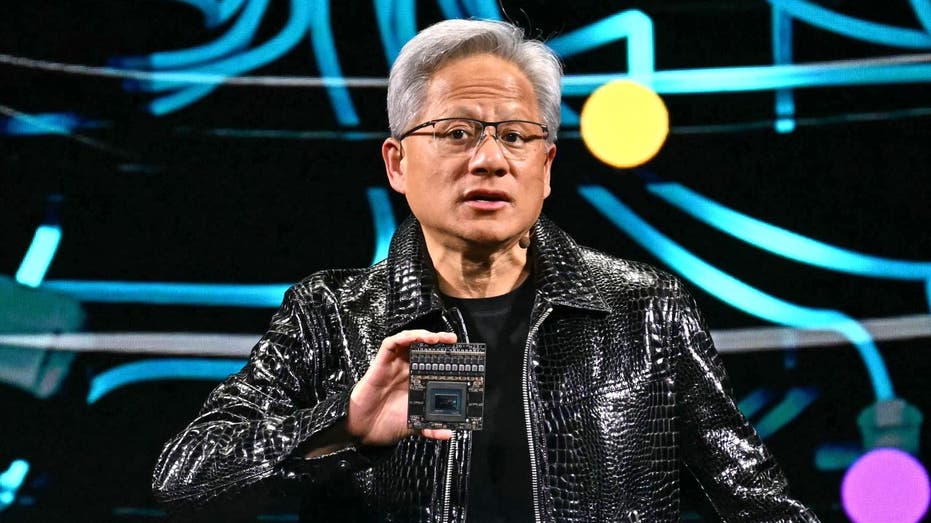
Huang’s Nvidia develops highly sought-after AI chips.(Patrick T. Fallon/AFP via Getty Images)
“There’s a fine line between being paranoid and being self-aware,” Trott said, highlighting the delicate balance required. “Tech industry executives and tech industry workers need to understand that if they have access to something that someone else wants, they are a target, but they also need to collaborate and work within the industry.” He stressed the importance of awareness: “If there’s any question on some sort of message they received or someone who came up to them at a professional conference that seemed a little weird, they need to discuss that with their company’s insider risk program.” Effective insider risk programs are no longer just an IT or HR function; they are a critical component of corporate strategy, safeguarding billions in R&D investment and market value.
Furthermore, companies’ insider risk programs should not solely focus on diplomatic relations between the U.S. and traditionally adversarial countries. Trott advises a holistic approach, looking “holistically at countries that their executives and their employees travel to and what industries are in those countries, even ones that are traditionally allied.” The globalized nature of tech supply chains and talent pools means that vulnerabilities can emerge from unexpected corners, demanding a comprehensive and continuous assessment of risks to maintain competitive advantage in a complex geopolitical landscape.
CLICK HERE TO DOWNLOAD THE FOX NEWS APP
Market Impact
The Nvidia espionage investigation serves as a potent reminder of the escalating risks facing high-value technology companies, with direct implications for market stability and investor confidence. For Nvidia, the immediate impact could include increased scrutiny on corporate governance, potential reputational damage, and a possible short-term dip in stock performance if the investigation uncovers significant vulnerabilities or compromises. More broadly, the incident is likely to prompt a sector-wide re-evaluation of insider threat protocols, cybersecurity investments, and executive vetting processes across Silicon Valley and the broader tech industry. This could lead to increased operational costs for companies as they bolster security, potentially impacting profit margins. Furthermore, the perceived threat of IP theft could deter long-term investment in sensitive R&D areas, particularly given ongoing U.S.-China tech tensions and export controls. Ultimately, a compromised technological advantage, whether through direct IP theft or strategic influence, directly translates into a loss of market share, reduced innovation output, and a diminished competitive edge for U.S. firms on the global stage, impacting long-term shareholder value across the entire tech ecosystem.