
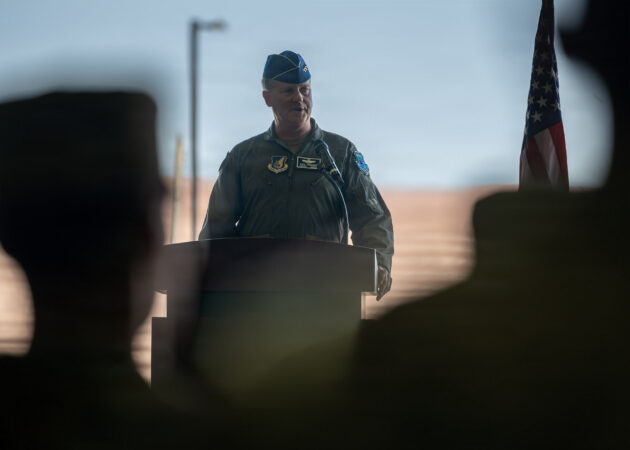
Lieutenant General David G. Shoemaker assumed command of the U.S. Seventh Air Force during a ceremony held on August 7, 2026, at Osan Air Base, Republic of Korea. This critical leadership position oversees U.S. air operations in a strategically vital region, where the Seventh Air Force faces the ongoing task of deterring potential aggression from North Korea and managing the broader security implications of China’s growing military presence in the Indo-Pacific.
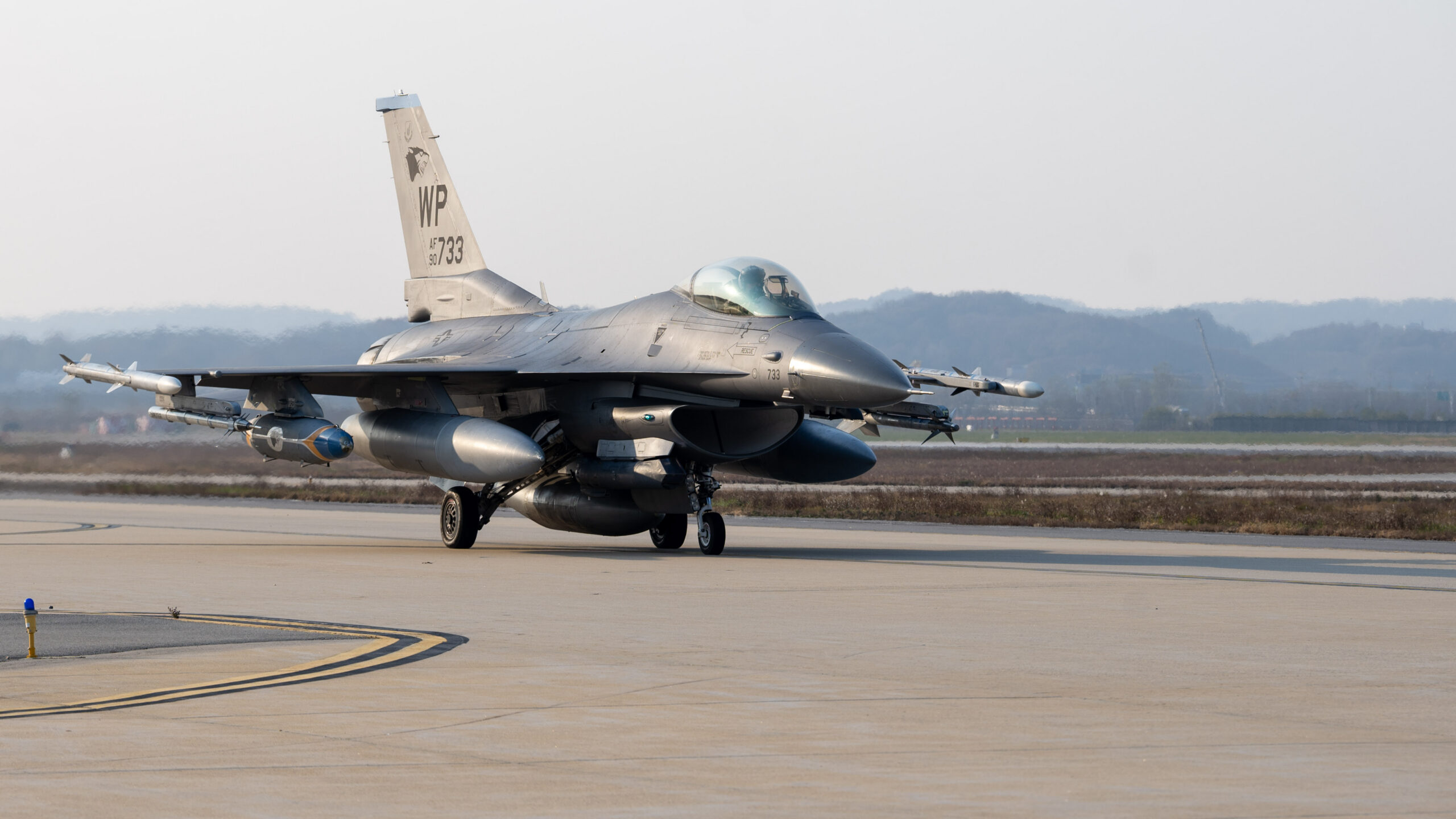
As the new head of the Seventh Air Force, Lt. Gen. Shoemaker is responsible for the operational readiness of the 51st Fighter Wing at Osan Air Base and the 8th Fighter Wing at Kunsan Air Base. These wings primarily operate F-16 Fighting Falcon fourth-generation fighter aircraft, working in close coordination with the Republic of Korea Air Force, which also deploys advanced fifth-generation F-35 Lightning II fighters.
Lt. Gen. Shoemaker brings extensive experience to the role, having previously served as director of operations for Air Combat Command. He is an accomplished F-16 pilot with over 3,900 flight hours and has commanded various units, including the 421st Fighter Squadron, known as the “Black Widows,” and the 8th Fighter Wing, or “Wolf Pack.” His military career began in 1994, following his commission from the Air Force Academy, where he initially served as an air surveillance officer before transitioning to flying operations.
The U.S. Air Force presence on the Korean Peninsula currently relies on a combination of permanently stationed fourth-generation aircraft and rotational deployments of fifth-generation platforms. Advanced U.S. aircraft, such as the F-35 Lightning II and F-22 Raptor, are periodically deployed to the region to participate in exercises and demonstrate capabilities. For instance, ten F-35 Joint Strike Fighters participated in the Ulchi Freedom Shield exercise in August 2025, and F-22s from the 19th and 199th Expeditionary Fighter Squadrons conducted training exercises with Republic of Korea F-35s in 2024.
U.S. Air Power Posture in the Indo-Pacific
The reliance on rotational deployments for fifth-generation aircraft is a recurring discussion point regarding U.S. airpower posture not only in Korea but across the wider Indo-Pacific region. Strategic locations like Kadena Air Base, Japan, are experiencing delays in receiving permanent advanced aircraft. Secretary of the Air Force Troy E. Meink noted in May 2026 that Kadena is approximately a year behind schedule to receive its contingent of F-15EX Eagle II aircraft, an updated version of the F-15, which are now slated for arrival in 2027. Misawa Air Base, Japan, received its first four permanent F-35s in March 2026, but continues to utilize F-16s for a significant portion of its mission requirements.
Experts emphasize the importance of a more permanent presence of advanced aircraft to effectively counter the military ambitions of both North Korea and China. Retired Air Force Col. John “JV” Venable, a senior resident fellow at the Mitchell Institute for Aerospace Studies and a former F-16 pilot and commander, underscored this point. “Korea is one of two nations where U.S. fighters can be permanently stationed within the first island chain,” Venable stated. “Fighters based in either Korea or Japan could sortie to thwart a surprise move by either China or North Korea as soon as it happens.”
Venable highlighted the geographical advantage, noting that the next closest U.S. military locations outside this strategic island chain are Hawaii and Alaska. From these locations, it would take at least a day to mobilize and deploy aircraft to the region, potentially impacting the ability to respond to immediate threats. The “first island chain” refers to a series of archipelagos that extend from the Kuril Islands, through Japan, Taiwan, the Philippines, and Borneo, forming a natural barrier off the East Asian continental mainland. Maintaining a robust military presence within this chain is considered crucial for regional deterrence and rapid response.
Retired Navy Cmdr. J. Michael Dahm, also a senior fellow for Aerospace and China Studies at the Mitchell Institute, added that the sheer presence of additional fighter aircraft contributes significantly to deterrence. “Just having more forces in theater makes them available to the Pacific Air Forces (PACAF) commander on short notice, even if they’re not fighting from the peninsula,” Dahm explained, referencing the broader Agile Combat Employment (ACE) concept being integrated by the Air Force in the Pacific.
Agile Combat Employment is a strategic framework designed to enhance survivability and operational flexibility by rapidly dispersing aircraft and personnel across multiple, often smaller and austere, locations. This strategy aims to complicate an adversary’s targeting calculus and maintain operational continuity in a contested environment. “If they deployed out of Korea and were flying out of the Philippines or somewhere else in Southeast Asia, they could get there in a relatively short period of time, and that could have a deterrent effect,” Dahm continued. “China would need to consider the U.S. presence in theater beyond Okinawa, Yokota, or Guam.”
The “Super Squadron” Experiment
In an effort to optimize combat power generation and operational efficiency, the U.S. Air Force conducted a multi-year “Super Squadron” experiment on the Korean Peninsula. This initiative explored whether consolidating F-16 squadrons could lead to more efficient aircraft employment and maintenance.
The experiment unfolded in two phases. The initial phase, which began in 2024, involved the relocation of nine F-16s and approximately 150 Airmen from Kunsan Air Base, home of the 8th Fighter Wing’s 80th and 35th Fighter Squadrons, to Osan Air Base, where the 51st Fighter Wing is situated approximately 50 miles from the North Korean border. The second phase commenced in October 2025, with an additional 22 F-16s moving from Kunsan to Osan, bringing the total number of consolidated Kunsan fighters at Osan to 31, operating alongside Osan’s existing F-16 squadrons.
Described as a “force optimization” test, the Super Squadron experiment aimed to assess whether a larger, combined unit could more effectively launch and maintain fighter aircraft. Captain Bryce Hughe noted in a July 2025 release that the test was designed to generate more combat power and operate more efficiently. Although originally slated to continue until October 2026, Pacific Air Forces (PACAF) commander Gen. Kevin Schneider concluded the experiment early in April 2026. The Air Force has indicated that the lessons and data gathered from this test “are informing readiness enhancements across PACAF and the U.S. Air Force F-16 enterprise.” Following the experiment’s conclusion, the F-16s returned to their previous three-squadron structure at both Osan and Kunsan Air Bases.
Separate from the Super Squadron experiment, two F-16s were permanently moved from Misawa Air Base, Japan, to Osan Air Base in June 2025. Long-term plans outline the relocation of all F-16s from Misawa to Korea as F-35s are delivered to Japan. The F-16s transferred from Misawa, which replaced legacy F-15C/Ds and A-10s under Osan’s 51st Fighter Wing, feature advanced upgrades including new active electronically scanned array (AESA) radar systems, enhancing their capabilities in the region.
Why This Matters
The command change at the U.S. Seventh Air Force, coupled with ongoing discussions about fighter aircraft deployments and strategic experiments, highlights critical aspects of regional security and global power dynamics. Lt. Gen. Shoemaker’s tenure will directly influence the U.S. military’s ability to maintain stability and deter aggression on the Korean Peninsula, a flashpoint with global implications due to North Korea’s nuclear program and unpredictable behavior. The strategic competition with China further elevates the importance of a robust and agile U.S. air presence in the Indo-Pacific.
The debate over the optimal mix of fourth and fifth-generation aircraft, and whether they should be permanently stationed or rotationally deployed, underscores the challenges of projecting military power effectively and economically. Delays in receiving advanced aircraft at key bases like Kadena affect the speed and scale of potential responses to regional crises. The “first island chain” remains a crucial geopolitical buffer, and U.S. capacity to operate within it directly impacts its ability to support allies like South Korea and Japan, safeguard vital shipping lanes, and deter larger-scale conflicts.
Experiments such as the “Super Squadron” demonstrate the U.S. Air Force’s continuous efforts to innovate and optimize its operational capabilities in a complex security environment. The lessons learned from these tests inform future force structure decisions and readiness strategies, ensuring that U.S. forces can adapt to evolving threats. Furthermore, the emphasis on Agile Combat Employment (ACE) reflects a broader strategic shift towards distributed operations, designed to increase survivability and maintain combat effectiveness against technologically advanced adversaries. These developments are not merely military logistics; they are fundamental to maintaining regional stability, preserving international norms, and protecting U.S. interests and those of its allies in one of the world’s most dynamic geopolitical theaters.