
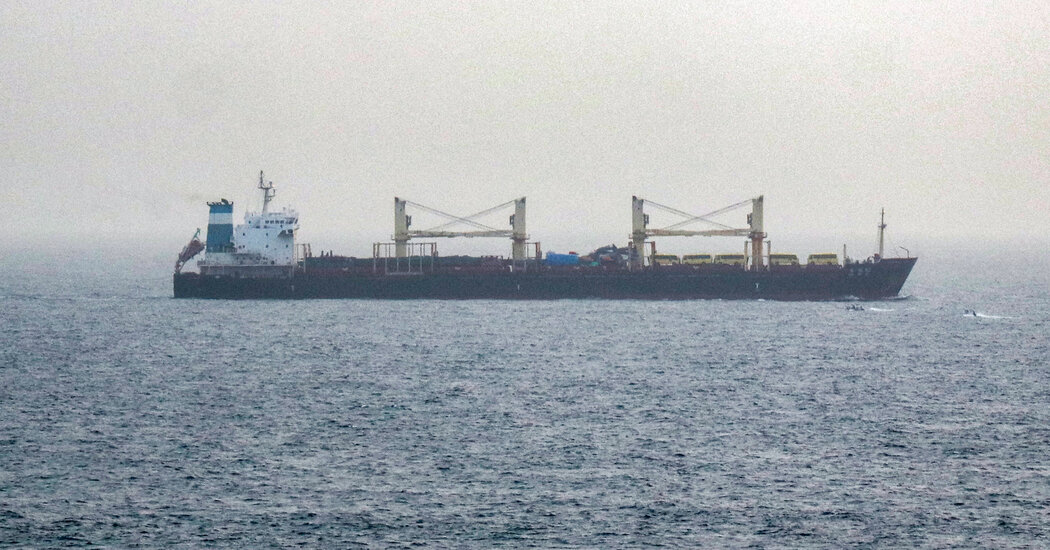
Saudi Arabia, historically the world’s largest oil exporter, is currently navigating a complex and increasingly perilous environment to maintain the flow of its crude oil to international markets. Heightened regional tensions and direct military exchanges, particularly involving Iranian-backed groups, have necessitated a series of strategic adaptations to its primary export routes, impacting global energy stability and shipping operations.
For decades, the Strait of Hormuz served as Saudi Arabia’s principal conduit for oil exports. However, in response to disruptions and threats of closure by Iran, the Kingdom initiated a “Plan B,” significantly ramping up exports through an extensive pipeline network to its Red Sea terminals. This alternative allowed Saudi oil to bypass the contested strait, a critical choke point for global oil supplies.
Further challenges emerged when the Iranian-backed Houthi militia in Yemen declared a blockade in the Red Sea, targeting Saudi-linked shipping. This development forced Saudi Arabia to implement yet another detour, directing its oil tankers northward towards pipelines connected to the Suez Canal. While this Mediterranean route offers a viable alternative, it introduces considerable additional costs and extends voyage times by several weeks, particularly for shipments destined for Asia, which represents the majority of Saudi Arabia’s customer base.
The Kingdom’s ability to reliably deliver its oil is facing its most significant test amidst intensifying hostilities with the Houthis. Saudi officials have indicated a commitment to retaliatory actions following recent Houthi attacks that reportedly injured 73 civilians and targeted energy infrastructure in the southern regions of Saudi Arabia, signaling a potential escalation towards more direct conflict.
The escalating risk in the Red Sea has significantly eroded confidence among shipping companies, according to Peter Sand, a shipping analyst at Xeneta. “Whatever comfort shipping companies may have found using the Red Sea before the most recent escalation has clearly soured,” Sand stated, reflecting the industry’s growing apprehension.
The consistent supply of Saudi oil is a critical factor in maintaining stability in global energy prices. However, the Kingdom’s export capacity has demonstrably been constrained by the ongoing disruptions. Data from Kpler, a maritime information company, indicates that Saudi oil exports fell last month to 3.2 million barrels per day, marking the lowest level recorded in at least 13 years. Furthermore, in the preceding week, Kpler reported that only two Saudi Arabian crude cargoes successfully transited the Bab al-Mandab Strait into the Red Sea, underscoring the severity of the operational challenges.
These challenges to Saudi oil exports coincide with a broader surge in global oil prices, which surpassed $100 a barrel on Wednesday. This price increase is largely attributed to escalating military exchanges between the United States and Iran. Recent reports from Iran claimed the launch of missiles at a U.S. base in Jordan and engagements with two U.S. Navy destroyers. These actions were presented as retaliation for American military operations that the U.S. stated had destroyed five Iranian oil tankers. Additionally, a drone strike on a ship off the coast of the United Arab Emirates on Wednesday resulted in the death of one sailor and the disappearance of another, according to Dimitris Maniatis, the founder of Marisks, a maritime risk agency.
The combination of Houthi militant attacks and persistent tensions in the Strait of Hormuz is compelling significant shifts in international trade routes. This situation highlights how the broader geopolitical conflict in the region, encompassing direct and proxy engagements, has severely disrupted established commercial pathways.
“For commercial shipping, the immediate concern is therefore not simply the number of individual attacks, but the expansion of targeting criteria and geography,” Maniatis observed, emphasizing the widening scope of maritime threats.
Last week witnessed an intensification of fighting in Yemen, with Houthi forces reportedly attempting to seize territory that would enhance their control over critical shipping lanes in the Red Sea, according to local security officials. Since July 20, when the Houthi group formally announced a blockade on Saudi shipping in the Red Sea, they have claimed responsibility for at least seven attacks on vessels either en route to or departing from Saudi ports, as reported by Allison Minor, a former U.S. deputy special envoy for Yemen.
A notable incident involved an attack on a Saudi tanker in late August. This strike occurred in the central Red Sea, an area previously considered a relatively safe alternative to the more dangerous southern waters around the Bab al-Mandab Strait. Maniatis highlighted this attack as evidence that the threat to shipping is no longer confined to the immediate vicinity of Yemen’s coast.
While ships not directly linked to Saudi Arabia continue to utilize the Bab al-Mandab Strait, their transit rates have diminished. Maritime data company Leth Agencies reported that transits through the strait in August averaged 35 per day, marking the fewest since July 2005. Allison Minor, now a director at the Atlantic Council, explained that the Houthis have explicitly stated their intention to allow passage for non-Saudi-linked vessels, a strategy aimed at avoiding broader U.S. military retaliation.
Despite this selective targeting, the escalating confrontation between Saudi Arabia and the Houthis remains a significant concern for global trade, according to Burcu Ozcelik, a senior research fellow specializing in the Middle East at the Royal United Services Institute, a defense research group based in London. Dr. Ozcelik emphasized that “You don’t need the Bab al-Mandab to be physically closed for this to have a lasting economic impact.” She noted that Houthi attacks, which intensified in late 2023, had already prompted many major shipping companies to bypass the Red Sea entirely, opting for the considerably longer and more expensive route around the Cape of Good Hope off South Africa for voyages between Asia and Europe.
The conflict in Yemen between the Houthis and Saudi Arabia has persisted since 2014. However, the current period of heightened regional tensions, involving the United States, Israel, and Iran, has introduced a dangerous new dimension to the conflict. While the Houthis pursue their own specific political objectives, their actions against Saudi Arabia are also perceived to align with a broader Iranian strategy aimed at exerting pressure on global supply chains, Dr. Ozcelik explained.
Fawaz A. Gerges, a professor focusing on the Middle East at the London School of Economics, suggested that the Houthis view the current regional instability as “a golden opportunity” to fundamentally alter the balance of power with Saudi Arabia within Yemen. Gerges added, “Iran directly and indirectly benefits from what the Houthis have been doing,” and warned that “All-out war could have major implications for the global energy supply.”
Why This Matters
The ongoing struggle by Saudi Arabia to maintain its oil exports amidst escalating regional conflicts carries profound implications for the global economy and international stability. As the world’s leading oil exporter, any significant disruption to Saudi supply routes can immediately translate into higher global oil prices, impacting everything from transportation costs to consumer goods. The current situation has already seen oil prices surge past $100 a barrel, contributing to inflationary pressures worldwide.
Beyond energy markets, the rerouting of international shipping away from vital maritime passages like the Red Sea and Bab al-Mandab Strait leads to increased transit times and higher operational costs. This directly affects global supply chains, potentially causing delays and driving up prices for a vast array of goods. Major shipping companies have already diverted routes around Africa, signaling a sustained shift in global trade patterns.
The conflict also underscores the dangerous interconnectedness of regional proxy wars with broader geopolitical rivalries. The Houthi actions, while driven by local objectives, are seen as aligning with Iran’s strategic interests in pressing global commerce and challenging the influence of rivals. This dynamic risks drawing major international powers further into regional disputes, increasing the potential for direct military confrontation and destabilizing an already volatile region. The prospect of an “all-out war” in this context poses an existential threat to global energy security and could trigger a wider, unpredictable conflict with devastating humanitarian and economic consequences.