
Royal Navy Demonstrates Advanced Remote Control of Uncrewed Aircraft Over 200 Miles
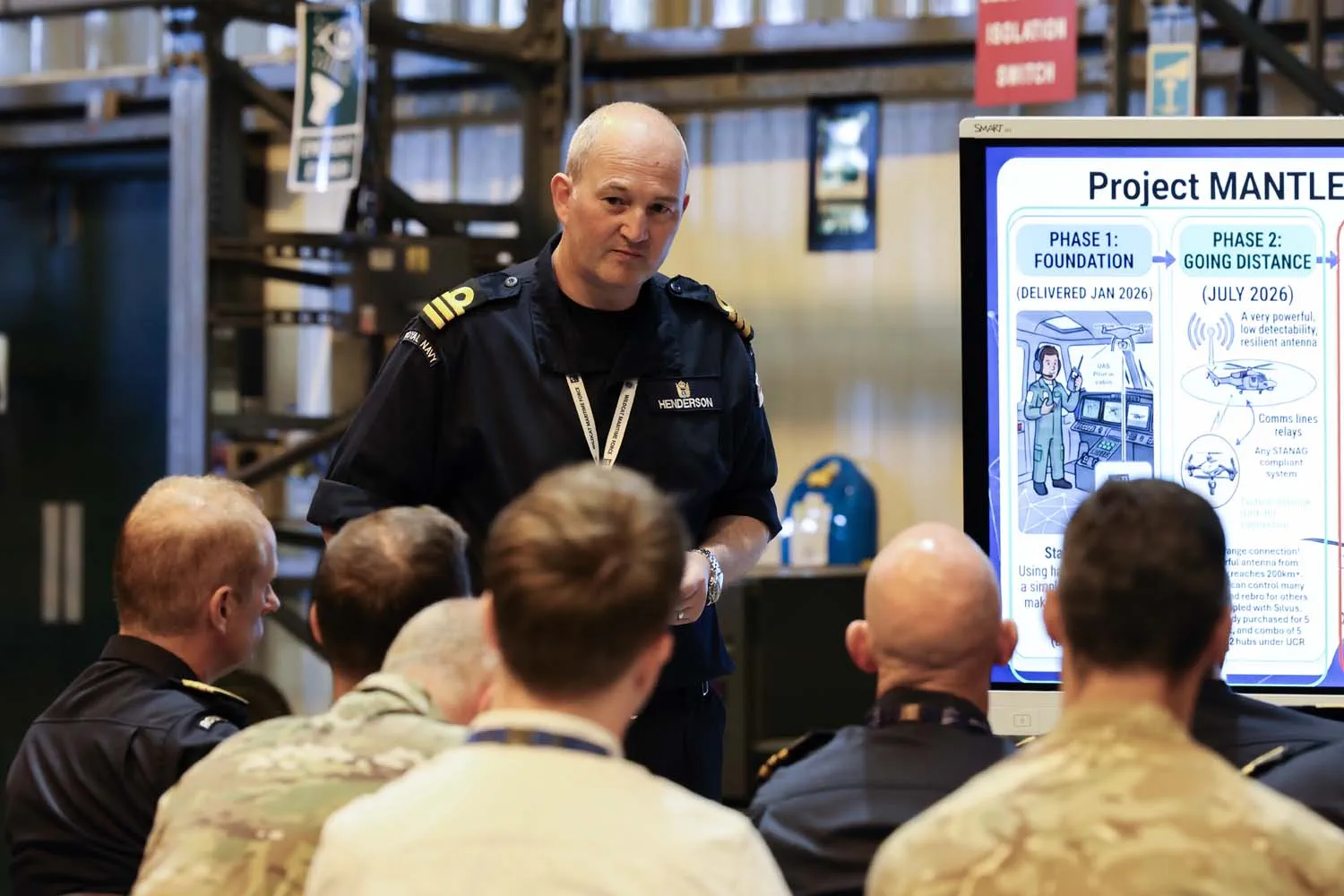
The Royal Navy has successfully demonstrated a sophisticated system enabling personnel to receive data from and remotely control multiple uncrewed aircraft across a distance exceeding 200 miles within southern England. This significant week-long activity, designated Exercise Dragon Rider, involved a specially modified Wildcat maritime strike helicopter, alongside drone operators, Royal Marines, and personnel stationed at a central control hub located at Royal Naval Air Station Yeovilton in Somerset.
According to official statements from the Royal Navy, the primary objective of this trial was to meticulously examine how crewed aircraft, naval vessels, and land-based forces could effectively exchange critical information with aerial drones operating well beyond the typical constraints of their direct radio communication links. The exercise was designed to push the boundaries of current operational capabilities and integrate uncrewed systems more deeply into conventional military operations.
The operational area for Exercise Dragon Rider spanned a considerable geographical region, encompassing the Lizard peninsula in Cornwall, large parts of Somerset, and Salisbury Plain. A Wildcat HMA2 helicopter, equipped with additional advanced sensors and communication suites, served a crucial role as an airborne communications relay. This enabled the helicopter to collect and transmit data from various drones operating across the expansive network to the personnel at the Yeovilton control hub. Operators at the hub were able to view live video feeds from the uncrewed aircraft, exchange secure messages, and practice identifying potential targets in real-time across the integrated network. Furthermore, they demonstrated the capability to remotely assume direct control of the drones, allowing aircraft operating in geographically distinct areas of southern England to be directed and commanded from the central control location.
This intricate work was orchestrated by the Maritime Aviation Strike Operational Advantage Group, a unit previously known as the Wildcat Maritime Force. This specialized group is responsible for operating the Royal Navy’s Wildcat HMA2 helicopters from Yeovilton and plays a pivotal role in developing and integrating new tactics and technologies related to maritime aviation. Exercise Dragon Rider builds upon previous successful trials, including the Eagles Eye activity conducted in Cornwall in January. During the Eagles Eye trial, drones transmitted live data directly to Wildcat crews, who then utilized this information to effectively locate and track a moving vehicle. Elements of this evolving system were subsequently tested in Norway during Exercise Tamber Shield, further validating the technology in diverse environments.
The latest Dragon Rider trial significantly expanded both the number of systems involved and the operational distances over which they could effectively function. By strategically employing the Wildcat helicopter as an airborne communication relay, the Royal Navy aimed to overcome the inherent line-of-sight radio limitations that typically restrict the operational range and control capabilities of smaller uncrewed aircraft. Communications within the network were facilitated by a mobile ad hoc network (MANET). MANETs are characterized by their ability to allow individual radios and transmitters to function as dynamic nodes, seamlessly passing information between users without relying on a single, fixed communications point. This architecture provides inherent flexibility and resilience in challenging operational environments.
The Royal Navy highlighted the advanced capabilities of the network utilized during Dragon Rider, noting its capacity to automatically reroute data if any part of the system experienced an outage or became unavailable. The service also confirmed that this communications technology has previously seen operational deployment in Ukraine, underscoring its robustness and proven performance. It is specifically designed to maintain functionality and operational integrity even in environments heavily affected by electronic interference and jamming, a critical consideration in modern warfare.
Lieutenant Commander Rhydian Edwards, who has spearheaded the effort to integrate uncrewed systems with the Wildcat force, commented on the trial’s success, stating in a press release that “The trial proved that this low-cost system is ready for the Royal Navy to use right now.” He further elaborated on the strategic implications, adding that “This successful test is a major step forward in keeping human crews safer by letting drones handle dangerous tasks further ahead of the main military force, whilst also greatly increasing the number of units we can field at the same time.” These statements emphasize both the immediate operational readiness and the long-term strategic benefits of the developed system.
The collaborative nature of this initiative was evident in the involvement of several small and medium-sized companies from the United Kingdom, the United States, and Norway. These companies, specializing in drone technology and networked communications, contributed their expertise and innovative solutions to the project, demonstrating international cooperation in defense technology development.
The Royal Navy is actively developing what it terms a “Hybrid Navy” concept. This strategic vision involves seamlessly combining conventional ships, submarines, and aircraft with an array of autonomous and remotely operated systems. Under this forward-looking concept, uncrewed aircraft and surface vessels could perform critical roles such as scouting ahead of a naval formation, significantly extending sensor coverage, or undertaking tasks in areas deemed too hazardous or risky for crewed platforms. This approach aims to enhance both the capabilities and the safety of naval operations.
Wildcat helicopters already perform a range of essential duties, including surveillance, targeting, and anti-surface warfare, operating from Royal Navy frigates and destroyers. The successful integration demonstrated in Dragon Rider, connecting these aircraft to distributed groups of drones, could allow valuable information gathered by smaller, more numerous uncrewed systems to be shared efficiently with ships and command centers over vastly greater distances. This promises to create a more comprehensive and resilient operational picture for naval commanders.
Looking ahead, the next phase of this ambitious program is expected to introduce satellite communications into the network architecture. According to the Royal Navy, this future integration could eventually provide commanders with the capability to direct uncrewed systems deployed overseas from secure control locations situated within the United Kingdom, representing a significant leap in global command and control capabilities for autonomous systems.
Why This Matters
The Royal Navy’s Exercise Dragon Rider represents a crucial advancement in military technology and strategic doctrine, with implications extending across defense capabilities, international collaboration, and the future of warfare. This successful demonstration of remote control and data relay for uncrewed aerial systems (UAS) over extended distances underscores a fundamental shift in how modern navies plan to operate and project power.
Firstly, this development is a clear step towards a **more distributed and resilient military force**. By enabling a Wildcat helicopter to act as a communication relay, the Royal Navy effectively overcomes the inherent line-of-sight limitations of smaller drones, dramatically extending their operational reach. This means that uncrewed systems can operate further afield, gathering intelligence, conducting reconnaissance, or even engaging targets in areas that would be too dangerous or inaccessible for manned platforms. This “force multiplication” effect allows a smaller number of crewed assets to command a greater number of uncrewed systems, enhancing situational awareness and operational tempo without exposing human personnel to undue risk. The ability for a control hub to direct multiple drones across hundreds of miles also signifies enhanced command and control capabilities, centralizing oversight while distributing assets.
Secondly, the integration of uncrewed systems into a “Hybrid Navy” strategy is **transformative for naval warfare**. The concept of using autonomous and remotely operated platforms for scouting, extending sensor coverage, or performing hazardous tasks ahead of a main naval formation fundamentally alters traditional naval tactics. It allows for a more comprehensive and layered defense, where drones can act as forward scouts, decoys, or precision strike assets, providing early warning and reducing the vulnerability of high-value crewed platforms. This shift reflects a broader trend across global militaries to leverage automation and remote operation to enhance effectiveness and reduce human casualties, particularly in contested environments. The potential to direct overseas deployments from the UK via satellite communications further centralizes strategic control, offering flexibility and rapid response capabilities.
Thirdly, the emphasis on a **robust and resilient communication network** is paramount. The use of a Mobile Ad Hoc Network (MANET) that can reroute data and is designed to operate in environments affected by electronic interference directly addresses critical vulnerabilities in modern warfare. Adversaries increasingly deploy sophisticated electronic warfare capabilities to disrupt communications and disable drones. The fact that this technology has already been utilized in Ukraine, a real-world conflict zone with intense electronic warfare activity, lends significant credibility to its effectiveness. This focus on anti-jamming and secure communications is essential for maintaining operational continuity and decision-making in high-intensity conflicts, ensuring that distributed assets can remain connected and responsive.
Finally, this exercise highlights the **importance of international collaboration and innovation**. The involvement of small and medium-sized companies from the UK, US, and Norway underscores a growing trend in defense procurement towards leveraging agile private sector innovation. Such partnerships foster technological advancement, reduce development costs, and ensure that defense capabilities remain at the cutting edge. For the UK, this reinforces its position as a leader in naval innovation and strengthens alliances by developing interoperable systems that can be shared and integrated with partner nations, enhancing collective security.
In essence, Dragon Rider is not merely a technical demonstration; it is a strategic indicator of how the Royal Navy, and indeed naval forces worldwide, are evolving. It points towards a future where unmanned systems are integral to operational strategy, enhancing safety, expanding reach, and building more adaptable and formidable military capabilities in an increasingly complex global security landscape.