
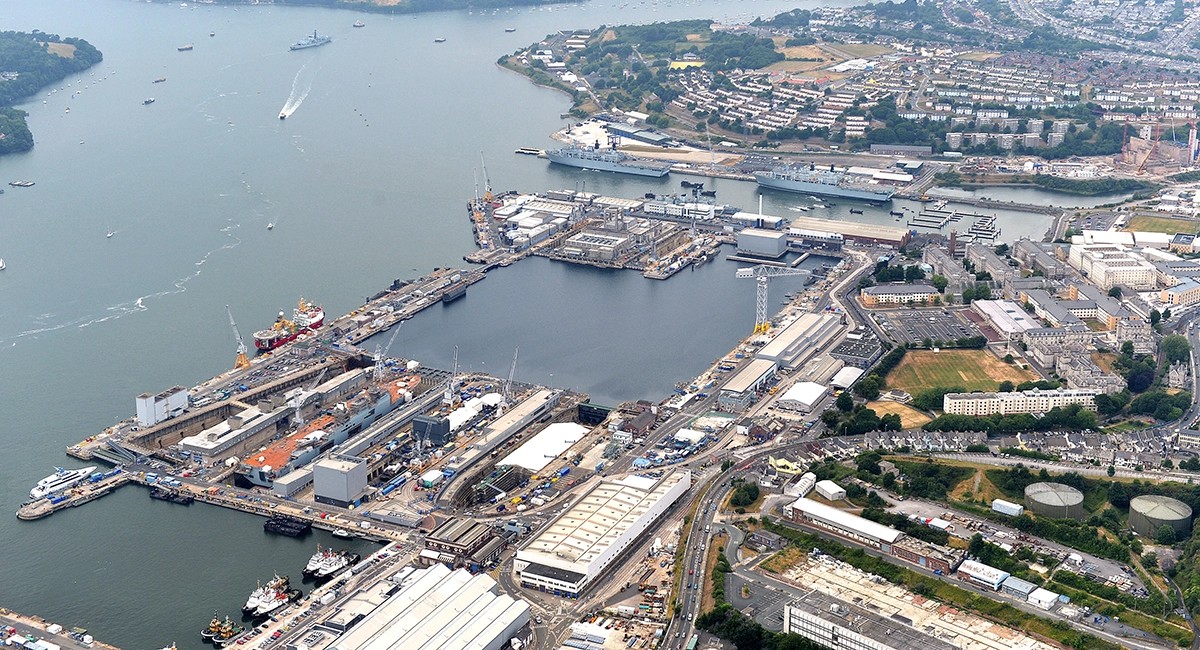
UK Ministry of Defence Reviews Accelerated Upgrade for Naval Base Devonport as Part of £26 Billion Investment
The UK Ministry of Defence (MOD) is currently assessing whether work at His Majesty’s Naval Base (HMNB) Devonport can be expedited following a recent nuclear regulatory review. This forms a critical component of a broader £26 billion investment program aimed at modernising the Royal Navy’s three primary naval bases over the next decade.
Luke Pollard MP, representing Plymouth Sutton and Devonport, clarified the progress of the Devonport Infrastructure Programme in response to a written parliamentary question from Conservative MP Ben Obese-Jecty. Pollard underscored the ongoing efforts to modernise the base and reinforce its established role as the Royal Navy’s central facility for deep maintenance of its submarine fleet.
According to Pollard, the Devonport Infrastructure Programme has made substantial advancements in upgrading facilities at HMNB Devonport. These improvements are designed to solidify the base’s position as the Royal Navy’s primary hub for complex submarine maintenance operations. Significant upgrades to docking and waterfront infrastructure have already facilitated Astute Class submarines undergoing essential maintenance activities at Devonport, with further enhancements actively continuing across the expansive site.
Beyond existing capabilities, the programme is also set to deliver enhanced support for both current and future submarine classes. Crucially, it includes the recommencement of the submarine defueling programme – a vital process for the safe handling and eventual decommissioning of nuclear-powered vessels. Additionally, the investment will create new maintenance berthing capacity, directly contributing to and strengthening the Royal Navy’s overall warfighting readiness and operational capabilities.
The MOD is actively exploring opportunities to accelerate various aspects of this work. Pollard stated that the department is reviewing possibilities to bring forward projects in the wake of a nuclear regulatory review, expressing a continued commitment to achieving the earliest possible delivery of these critical upgrades.
The extensive work at Devonport is part of a larger initiative known as Project Royal Oak, a comprehensive £26 billion investment package. This package is allocated across HMNB Devonport, HMNB Portsmouth, and HMNB Clyde over the next ten years. In a separate series of parliamentary responses to Shadow Defence Secretary James Cartlidge, Pollard detailed that Project Royal Oak encompasses a wide array of activities including infrastructure development, estate renewal, accommodation improvements, engineering works, sustainment efforts, and operational support across all three strategically important bases.
Elaborating on the strategic vision, Pollard highlighted that Project Royal Oak is instrumental in delivering key recommendations stemming from the Strategic Defence Review. It aims to recapitalise the Defence estate and significantly strengthen the Strategic Base. With its £26 billion investment over the coming decade, the programme is designed to achieve several critical objectives: enhance warfighting readiness, provide robust support for the Defence Nuclear Enterprise (which includes the UK’s nuclear deterrent), enable the future Hybrid Navy (integrating crewed and uncrewed systems), and bolster the resilience of critical maritime infrastructure, thereby reinforcing support for both NATO and wider UK national security interests.
In response to inquiries regarding the specific allocation of the £26 billion – how much was earmarked for new capabilities versus accommodation – Pollard explained the aggregate nature of the funding. He noted that the £26 billion investment for Project Royal Oak represents a comprehensive package that covers activities across all three naval bases (HMNB Clyde, HMNB Devonport, and HMNB Portsmouth). This package broadly covers infrastructure, estate renewal, accommodation, engineering, sustainment, and operational support activities.
Pollard further clarified that a detailed disaggregation of these specific outputs would involve commercially and operationally sensitive information. However, he directed attention to the Annual Report on the Government Major Projects Portfolio (GMPP) published by the National Infrastructure and Service Transformation Authority (NISTA), which provides financial data on MOD major projects for public scrutiny.
Addressing another question from Cartlidge concerning how much of the £26 billion represented genuinely new funding versus previously announced commitments, Pollard stated that the £26 billion investment package for Project Royal Oak emerged from the Defence Investment Plan (DIP). This plan involved a “zero-based review” of Defence budgets, meaning that all expenditures were scrutinised and justified from scratch, rather than simply adjusted incrementally. This process suggests the investment package is a fresh commitment, encompassing a broad spectrum of infrastructure, estate renewal, accommodation, engineering, sustainment, and operational support activities.
At Devonport specifically, the substantial investment is intended to provide critical support for both existing and future classes of submarines. Key outcomes include the expansion of maintenance berthing facilities and the resumption of vital submarine defueling activities. Completed upgrades to docking and waterfront infrastructure have already proven effective, allowing the advanced Astute-class submarines to undergo essential maintenance at the base, with further comprehensive work continuing across the site to enhance its capabilities.
Project Royal Oak also includes plans for the establishment of a Skills and Development Centre. When asked about the projected number of apprentices and adult learners this proposed facility would support annually, Pollard indicated that the scope of the Skills and Development Centre is still being refined. The precise number of apprentices and adult learners it will be capable of supporting will be confirmed once this detailed planning work has been concluded, highlighting a focus on long-term workforce development.
The overarching £26 billion programme, initially announced in July, is designed to recapitalise vital infrastructure at the Royal Navy’s principal bases. Its strategic objectives are multifaceted, aiming to support the UK’s nuclear enterprise, meet the requirements of the future fleet, and enhance the overall readiness and operational effectiveness of the Service for decades to come.
Why This Matters
The UK Ministry of Defence’s £26 billion investment in its naval base infrastructure, particularly the focus on accelerating work at HMNB Devonport, carries profound implications for national security, defence capabilities, and the broader economic landscape. This extensive modernisation programme, known as Project Royal Oak, is not merely about updating old facilities; it is a strategic imperative designed to secure the Royal Navy’s operational effectiveness for decades into the future.
Firstly, the upgrades at HMNB Devonport are critical for maintaining the UK’s nuclear deterrent. As the primary hub for deep maintenance of the submarine fleet, Devonport directly supports the operational readiness of the Vanguard-class submarines that carry the Trident nuclear missiles, as well as the advanced Astute-class attack submarines. Any delays or deficiencies in maintenance infrastructure could compromise the credibility and reliability of this vital component of UK defence policy. The recommencement of the submarine defueling programme is also crucial for nuclear safety and the long-term management of the UK’s nuclear legacy.
Secondly, this investment is a tangible commitment to the Royal Navy’s future warfighting readiness. By enhancing docking, maintenance, and berthing capacities across Devonport, Portsmouth, and Clyde, the UK ensures its fleet, including aircraft carriers, destroyers, frigates, and the next generation of submarines, can be repaired, refitted, and made ready for deployment more efficiently. This directly impacts the UK’s ability to project power, respond to global crises, and uphold its international commitments, including those to NATO, in an increasingly complex and contested geopolitical environment.
Thirdly, Project Royal Oak underscores the strategic importance of the UK’s naval bases as critical national infrastructure. HMNB Clyde, for instance, is home to the entire submarine fleet and the nuclear deterrent, while HMNB Portsmouth supports surface warships. Strengthening these bases improves their resilience against various threats, from cyber-attacks to extreme weather, safeguarding the core assets of the Royal Navy and ensuring continuous operational capacity. This resilience is vital for both national defence and the UK’s role as a key contributor to global maritime security.
Lastly, beyond defence, this £26 billion programme represents a significant economic stimulus and a long-term commitment to highly skilled jobs. The construction, engineering, and maintenance work required will support thousands of jobs, directly and indirectly, in regions like the South West, Scotland, and the South East of England. The planned Skills and Development Centre further highlights an investment in future talent, ensuring a pipeline of skilled apprentices and adult learners to sustain the Defence Nuclear Enterprise and the broader maritime industry. This not only bolsters regional economies but also maintains a critical national capability in engineering and manufacturing that is essential for sovereign defence capabilities.
In essence, Project Royal Oak is a foundational investment in the UK’s defence posture, ensuring its naval power remains robust and adaptable in the face of evolving global threats, while also providing significant economic and social benefits across the nation.