
As the U.S. Southern Command (SOUTHCOM) transitions its counter-narcotics mission to a permanent operational structure, the involvement of the U.S. Air Force in the broader effort against criminal organizations in Latin America and the Caribbean is anticipated to expand.
On August 3, U.S. Marine Corps General Francis Donovan, commander of SOUTHCOM, announced the conclusion of the temporary Joint Task Force-Southern Spear and Operation Southern Spear. In their place, the command has established the Joint Task Force-Western Hemisphere (JTF-WH), signaling a long-term commitment to confronting regional threats.
General Donovan described JTF-Western Hemisphere as “SOUTHCOM’s action arm for confronting threats across the hemisphere.” He further characterized the new task force as a “purpose-built and task-organized” headquarters designed to integrate “tailored military capabilities and trusted partnerships to increase total systemic friction, operational tempo, impose sustained pressure on criminal organizations and strengthen the security of the United States and our partners.”
While General Donovan did not specify the exact composition of the new task force, he confirmed it would be commanded by Marine Major General Kevin Jarrad, who most recently led humanitarian relief operations in Venezuela. JTF-WH is slated to collaborate with 18 partner nations, including members of the five-month-old Americas Counter Cartel Coalition, such as El Salvador, Ecuador, and Honduras. Notably, Mexico and Colombia, despite being significant centers for cartel activity and drug production, are not listed as participants, with Mexico falling under the jurisdiction of U.S. Northern Command.
Questions directed to the White House and Pentagon regarding the transition were referred to SOUTHCOM, where a spokesperson confirmed via email that the new task force “represents an evolution” from Southern Spear. The spokesperson emphasized that JTF-WH reinforces a “whole-of-government, multinational approach to defending the homeland and bolstering regional partnerships.”
Experts specializing in the region and its military missions, interviewed by Air & Space Forces Magazine, indicated that the shift from a temporary operation to a permanent, more comprehensive command structure was not unexpected.
Retired Lieutenant General Norm Seip, who commanded U.S. Air Forces Southern (AFSOUTH) from 2006 to 2009, commented on the development: “This is going to be an ongoing, large-scale type of operation to support the strategic desires of the President.” Seip suggested that this permanency would likely lead to increased prioritization of assets for the SOUTHCOM commander and the 12th Air Force commander, who serves as the air component lead.
The 12th Air Force, based out of Davis-Monthan Air Force Base, Arizona, played a significant role in Operation Southern Spear and is expected to continue its critical support with JTF-WH. An AFSOUTH spokesperson stated via email, “Our focus during Operation Southern Spear has been to provide rapid air mobility, comprehensive air domain awareness, and essential logistical support to joint forces, ensuring the overall success of the operation’s strategic objectives in the region.”
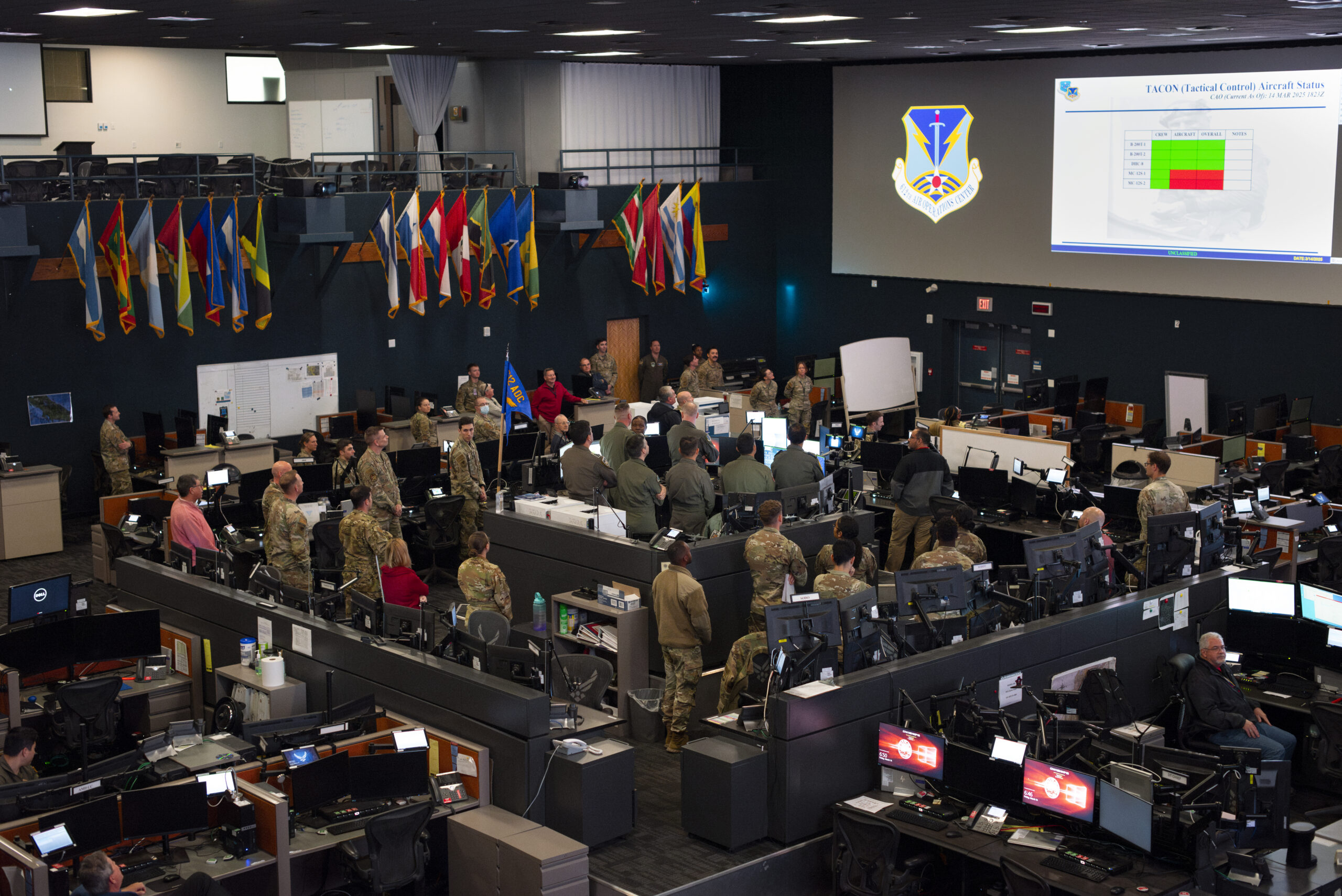
During its 10-month duration, the 12th Air Force executed approximately 1,700 sorties, transporting 27,000 tons of cargo and over 4,500 personnel. This effort was largely managed through the 612th Air Operations Center, also at Davis-Monthan, which functions as the central hub for air operations within SOUTHCOM. The air support encompassed a diverse range of capabilities, including airlift, air refueling, command and control, intelligence, surveillance, and reconnaissance (ISR), rotary wing operations, strike missions, and tiltrotor aircraft, all vital for sustaining operations across the vast area of responsibility.
At the peak of Operation Southern Spear, AFSOUTH oversaw 2,800 Airmen and 80 aircraft across seven operating locations. As the joint forces air component, the 12th Air Force maintained operational control over 150 aircraft stationed across 15 different land bases. With the establishment of JTF-WH, AFSOUTH is integrating air, space, and cyber capabilities to support the task force’s mission, focusing on agile combat support, robust ISR capabilities, and enhanced interoperability with regional partners.
While components of Southern Spear’s activities included counter-maritime operations and drone strikes conducted by U.S. Special Operations Command assets under SOUTHCOM, a substantial part of both the counter-cartel efforts and broader regional monitoring heavily relies on ISR platforms and personnel provided by AFSOUTH. These platforms, either part of the existing fleet or specifically assigned to SOUTHCOM missions, include the E-3 Sentry airborne warning and control system, the RC-135VW Rivet Joint reconnaissance aircraft, the MQ-9 Reaper drone, and the KC-135 Stratotanker for aerial refueling. These assets are essential for covering approximately 15 million square miles of territory.
Henry Ziemer, a fellow with the Americas Program at the Center for Strategic and International Studies (CSIS), underscored the critical need for such assets. He told Air & Space Forces Magazine, “The number one thing we need in Latin America and the Caribbean is ISR, and air and space assets are absolutely critical for that.” Ziemer highlighted that partner and allied nations in the region, such as Chile and Ecuador, often possess limited ISR capabilities, making U.S. intelligence gathering and reconnaissance vital for identifying illicit activities.
Ziemer also identified space assets as an increasingly important piece of the broader ISR puzzle. The U.S. Space Force’s space component of SOUTHCOM became operational on December 1, 2025, shortly before a significant operation to capture Venezuelan President Nicolas Maduro on January 3. General B. Chance Saltzman, Chief of Space Operations, remarked at the component’s activation ceremony on January 21, “This new organization reaffirms our commitment to address local threats of all shapes and sizes, ranging from malign state actors to violent extremist organizations and to transnational criminal organizations.”
The integration of space capabilities further enhances SOUTHCOM’s burgeoning responsibilities in counter-cartel operations through the new task force. Lieutenant General Seip recalled that during his tenure, immediate access to satellites and other ISR assets was often challenging, as the wars in Iraq and Afghanistan frequently diverted significant Department of Defense operational resources away from SOUTHCOM’s area of responsibility. The current establishment of a permanent task force with dedicated air and space components signifies a more sustained and integrated approach to regional security challenges.
Why This Matters
The U.S. Southern Command’s transition to the Joint Task Force-Western Hemisphere (JTF-WH) marks a significant evolution in the United States’ strategy for addressing transnational criminal organizations and other security threats in Latin America and the Caribbean. This shift from a temporary operation to a permanent task force signals a long-term, sustained commitment to regional stability, with profound implications for both U.S. national security and international partnerships.
Firstly, the establishment of JTF-WH underscores the enduring and complex nature of threats emanating from the Western Hemisphere, including drug trafficking, human smuggling, and illicit financial flows. These activities directly impact the security and stability of partner nations, often fueling violence, corruption, and undermining governance. By creating a permanent operational arm, the U.S. aims to impose “sustained pressure” on these criminal networks, which can help to reduce the flow of illegal drugs into the United States, mitigate border security challenges, and protect American communities from associated crime and public health crises.
Secondly, this development highlights the critical and expanding role of military components, particularly the Air Force and Space Force, in modern counter-narcotics and security operations. The emphasis on Intelligence, Surveillance, and Reconnaissance (ISR) capabilities—leveraging advanced aircraft like the E-3 Sentry and RC-135VW Rivet Joint, as well as drones such as the MQ-9 Reaper, supported by KC-135 Stratotankers for aerial refueling—is vital for monitoring vast territories and identifying illicit activities where partner nations may lack sophisticated resources. The integration of U.S. Space Force assets further augments these capabilities, providing a comprehensive, multi-domain approach to threat detection and tracking.
Thirdly, the multinational dimension of JTF-WH, collaborating with 18 partner nations through initiatives like the Americas Counter Cartel Coalition, is crucial for fostering collective security. This “whole-of-government, multinational approach” aims to build capacity within partner militaries and law enforcement agencies, enhance interoperability, and strengthen regional defense architectures. Such partnerships are essential for sharing intelligence, coordinating operations, and ensuring that security efforts are regionally owned and sustainable, contributing to a more secure and prosperous hemisphere. The exclusion of key countries like Mexico and Colombia from the immediate coalition, however, also indicates potential diplomatic and operational complexities that may need to be addressed in the future.
Finally, the shift to a permanent task force reflects a strategic prioritization of the Western Hemisphere by the U.S. Department of Defense. Historically, resources for SOUTHCOM have sometimes been constrained by global contingencies. The institutionalization of this mission suggests a long-term allocation of resources and attention, ensuring that persistent threats in America’s immediate neighborhood receive consistent focus. This could lead to more robust military readiness, enhanced technological integration, and a more adaptive defense posture to counter evolving challenges in a region vital to U.S. national interests.
The U.S. Southern Command (SOUTHCOM) is experiencing a strategic shift, marked by increased resources and a broadened mission focus on the Western Hemisphere. This change is partly driven by the establishment of new task forces and a renewed emphasis from the U.S. administration on regional security challenges.
Former U.S. Air Force Major General Randall Seip, who previously served with SOUTHCOM and now presides over the nonprofit American Security Project, noted the significant transformation in the command’s operational environment. “It’s certainly a different world in SOUTHCOM than when I was there, based on force protection, security of the Western Hemisphere,” Seip stated, highlighting that the region’s importance is now explicitly recognized in the National Defense Strategy, a departure from past strategic documents.
This increased strategic focus is translating into tangible support for SOUTHCOM. Historically, the command has been allocated the lowest budget priority among the Pentagon’s Unified Combatant Commands. However, Seip indicated that the situation is improving: “SOUTHCOM is under resourced. It’s getting better resourced now that there’s such a focus on that area of the world.” Despite these gains, SOUTHCOM continues to compete for resources with other high-priority global theaters, such as the U.S. Indo-Pacific Command (PACOM) and U.S. Central Command (CENTCOM).
One of the key initiatives reflecting this shift is Operation Southern Spear. Government reports estimate its cost at approximately $820 million between September 2025 and June 2026. In contrast, Operation Epic Fury, a separate military engagement, is reported to have cost $29 billion between March and mid-May, according to Pentagon figures. Other analyses suggest the actual cost of Operation Epic Fury could range significantly higher, between $50 billion and $110 billion during the same period.
A Growing Mission in the Western Hemisphere
The current expansion of U.S. military activities in the Western Hemisphere began during President Donald Trump’s first term with the launch of the Enhanced Counter Narcotics Operations deployment, which aimed to bolster regional counter-narcotics enforcement efforts.
A pivotal moment in this evolving strategy occurred on September 5, 2025, with the first reported U.S. strike on a suspected drug boat in international waters. This was followed in November 2025 by an announcement from then-Secretary of Defense Pete Hegseth, who confirmed the formation of Joint Task Force Southern Spear (JTF-SS) and the launch of Operation Southern Spear.
The initial strikes under these operations faced significant criticism from both political parties within the U.S. Congress. Despite the bipartisan rebuke, legislative efforts in both the House and Senate to curtail the President’s military actions in the region ultimately failed.
Mark Ziemer, a fellow at the Center for Strategic and International Studies (CSIS), highlighted specific aspects of the operation’s inception. “What’s notable about Southern Spear is that it begins right on Sept. 5, 2025, with a U.S. strike in international waters,” Ziemer observed. He further noted the apparent lack of multilateral engagement, stating, “There’s no coalition. There’s no notice, as far as we can tell, to our partners in the region.”
Following these initial actions, President Trump released his National Security Strategy in December 2025, formally codifying a shift in U.S. security focus toward the Western Hemisphere. Concurrently, strikes on suspected drug vessels continued. On January 3, 2026, during Operation Absolute Resolve—an initiative described as an outgrowth of Southern Spear—U.S. forces successfully captured Nicolás Maduro. He was subsequently extradited to the United States to face criminal charges related to an alleged decades-long conspiracy to traffic cocaine into the country.
The operations involving watercraft strikes under Southern Spear resulted in at least 67 vessels being struck and an estimated 221 fatalities between September 2025 and June 2026, according to a Department of Defense Inspector General report released in July 2026.
While the vessel interdictions have garnered significant media attention as the “centerpiece” of Southern Spear, Ziemer emphasized that other counter-drug and anti-cartel activities conducted by JTF-SS and SOUTHCOM are also noteworthy. “We’re still seeing kind of unprecedented activity in the Western Hemisphere, post Maduro,” Ziemer concluded, indicating a sustained level of engagement beyond the high-profile strikes and arrests.
Why This Matters
The expanded mission of U.S. Southern Command and the scope of operations like Southern Spear represent a significant evolution in U.S. foreign policy and military strategy in the Western Hemisphere. This shift carries substantial implications for regional stability, international law, and the fight against transnational crime. Firstly, the increased U.S. military presence and direct interdiction operations signal a heightened commitment to combating drug trafficking and organized criminal networks that pose threats to U.S. national security and the stability of partner nations. The capture and extradition of figures like Nicolás Maduro underscore a more aggressive stance against state actors allegedly involved in such activities, potentially setting new precedents for international law enforcement and sovereignty.
Secondly, the nature of these operations, particularly unilateral strikes in international waters without reported coalition involvement or prior notification to regional partners, raises questions about diplomatic relations and international norms. While aimed at disrupting illicit flows, such actions can strain relationships with neighboring countries and evoke concerns about sovereignty and the principle of non-intervention. The bipartisan criticism within the U.S. Congress further highlights domestic debate over presidential authority in deploying military force and the long-term effectiveness and legality of these operations.
Thirdly, the financial investment in Operation Southern Spear, while comparatively smaller than other major U.S. military engagements like Epic Fury, still represents a substantial allocation of resources. This suggests a sustained strategic commitment to the region, potentially impacting budget priorities for other global theaters. The reported casualties and vessel strikes also point to the human cost of these operations, prompting discussions about collateral damage, rules of engagement, and accountability in combating complex criminal enterprises.
Finally, the sustained “unprecedented activity” in the Western Hemisphere post-Maduro’s capture indicates that these operations are not merely reactive but part of a broader, enduring strategy to reshape the security landscape of the region. This has long-term implications for the structure of international criminal organizations, the flow of illicit drugs, and the overall governance and stability of countries within SOUTHCOM’s area of responsibility. Understanding these evolving dynamics is crucial for assessing future U.S. engagement, regional cooperation, and the efficacy of military solutions to deeply entrenched socio-economic and security challenges.