
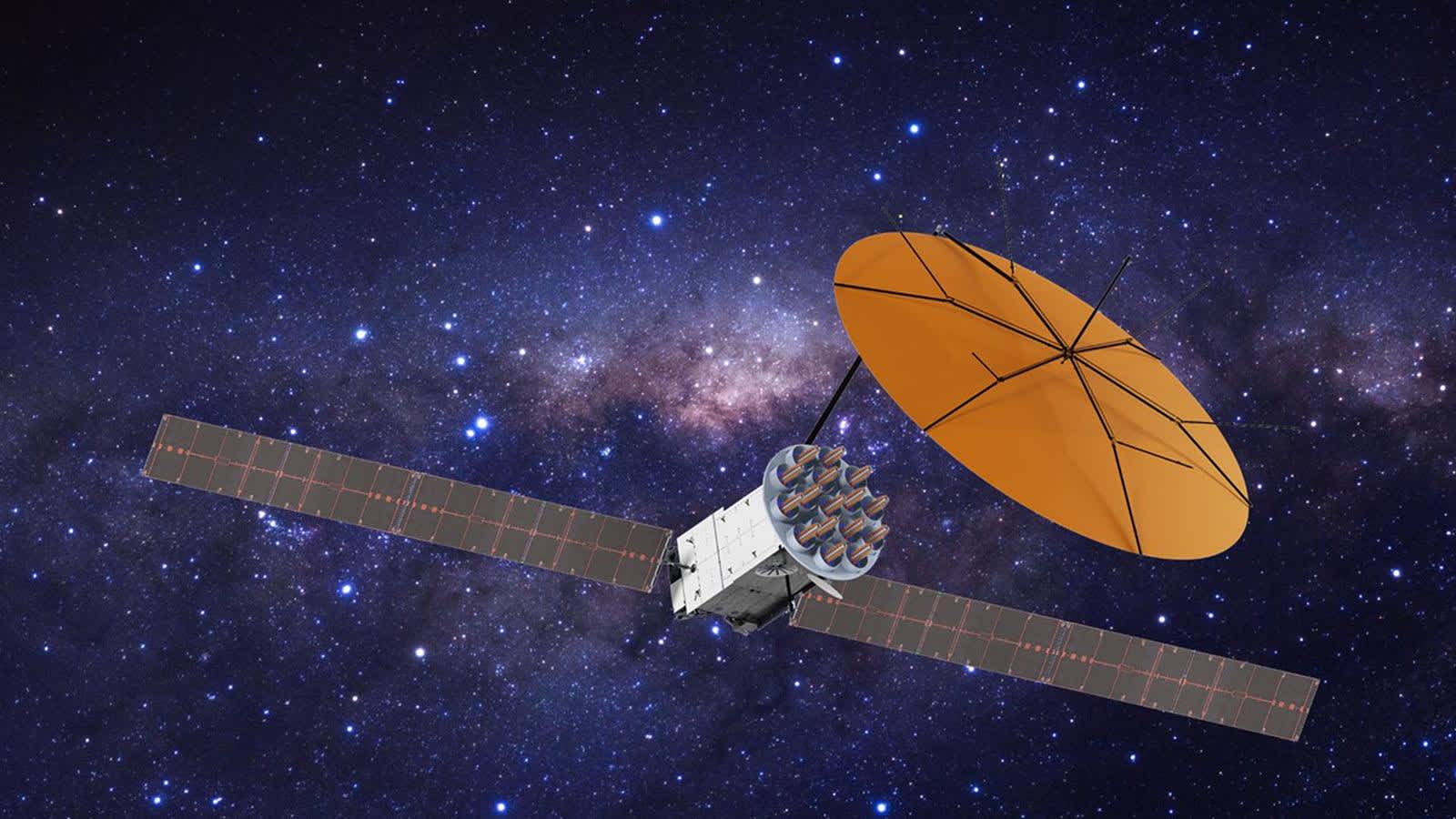
The United States Space Force is initiating a series of experimental efforts aimed at expanding its narrowband satellite communication capabilities into medium-Earth orbit (MEO). This strategic move involves soliciting commercial satellite operators to demonstrate the feasibility of a future hybrid communication architecture, combining both government and commercial assets across different orbital altitudes.
According to a notice issued by Space Systems Command (SSC) on July 24, the Space Force is seeking proposals from industry for commercially owned and operated narrowband satellites, payloads, or communication links in MEO. The objective is to utilize these commercial capabilities in upcoming experiments, though a specific timeline for these efforts was not provided. The notice emphasizes a preference for capabilities available “immediately or as soon as possible,” indicating an urgency to proceed with the testing phase.
While an “Initial Launch Capability (ILC) by 2030 is potentially useful,” the Space Force explicitly stated that “innovative approaches leading to earlier on-orbit capability are strongly desired.” This underscores a focus on accelerating the development and implementation of new communication paradigms. The notice also clarifies that this initial prototype phase may not fully represent the final architecture but serves as a crucial first step in exploring the provision of Ultra High Frequency (UHF) services from MEO.
The overarching goal of this experimentation campaign is to demonstrate seamless interoperability between commercial satellites operating in MEO and existing government spacecraft positioned in geosynchronous orbit (GEO). The insights gained from these experiments are expected to inform the Space Force’s long-term strategy, which could involve either augmenting current GEO satellite fleets or potentially replacing them with a more proliferated MEO constellation. Space Systems Command has indicated a requirement for access to these commercial capabilities for a minimum of three years, allowing for robust and sustained testing.
Currently, the Space Force relies on its Mobile User Objective System (MUOS) constellation for narrowband, or UHF, communications. This fleet, comprising four operational satellites and one on-orbit spare, provides secure tactical communication capabilities from geosynchronous orbit. UHF bands, while offering limited bandwidth compared to other frequencies, possess distinct advantages critical for military operations. They are less susceptible to weather interference, can operate effectively through challenging terrain, offer better range and signal strength, and are more resistant to jamming attempts. These characteristics make UHF vital for reliable communication in contested or difficult environments.
The transition to a hybrid architecture has already begun to take shape. In late June, Boeing secured a significant $2 billion contract to construct two additional MUOS satellites. These new spacecraft are intended to serve as a transitional bridge, linking the current MUOS constellation with the Space Force’s envisioned future narrowband architecture. This future architecture is anticipated to integrate a mix of spacecraft in both GEO and MEO, moving towards a more resilient and diversified communication network. Previously, in a 2024 request for information, the service had explored concepts for a proliferated MEO constellation, characterized by lower-cost satellites, to enhance resilience and coverage.
The development of this future architecture is an ongoing process, with the Space Force actively crafting its strategic vision. Charlotte Gerhart, deputy portfolio acquisition executive for satellite communications and positioning, navigation, and timing, recently affirmed that the service is exploring a comprehensive range of options. In an interview with Air & Space Forces Magazine, Gerhart highlighted the importance of monitoring industry advancements, stating, “We’ll continue to watch and be aware of how industry and that commercial business case is adapting overall.” She emphasized that Space Systems Command is still in the process of defining its next steps and refined acquisition strategy for these critical communication assets.
According to fiscal year 2027 budget documents, the Space Force projects the launch of a prototype for this new architecture as early as fiscal year 2030. In the immediate coming year, preparatory work will commence on both the ground and space segment prototypes. This includes initiating the procurement of long-lead parts essential for the communication payload and the MEO satellites themselves, signaling a tangible commitment to advancing this multi-orbit communication strategy.
Why This Matters
The Space Force’s pursuit of a hybrid, multi-orbit narrowband communication architecture represents a significant strategic shift with wide-ranging implications for national security, technological innovation, and the future of military operations in space. This initiative directly addresses the evolving threats and challenges in the space domain, particularly the increasing sophistication of adversaries capable of disrupting or denying satellite communications.
From a national security perspective, enhancing the resilience and redundancy of military satellite communications is paramount. By diversifying its narrowband assets across both GEO and MEO, the Space Force aims to create a more robust network that is less vulnerable to single points of failure, whether from direct attack, jamming, or orbital debris. MEO constellations, characterized by their lower altitude and the potential for a larger number of satellites, can offer advantages in terms of lower latency and greater coverage flexibility, especially in polar regions or difficult terrain where GEO satellites may have limitations. This resilience ensures that tactical commanders and warfighters maintain critical communication links during conflicts, enabling effective command and control, intelligence sharing, and operational coordination even in highly contested environments.
Technologically, this endeavor pushes the boundaries of satellite communication. It fosters innovation in integrating diverse orbital regimes and leveraging commercial capabilities for defense purposes. The experimentation with commercial MEO satellites underscores a growing trend of military reliance on the burgeoning private space sector. This collaboration can accelerate the development and deployment of advanced technologies, potentially reducing costs and allowing the Space Force to benefit from the rapid pace of commercial innovation. It also sets a precedent for future hybrid architectures across other critical space-based services, blurring the lines between government and commercial space assets.
Economically, the Space Force’s strategy presents substantial opportunities for the commercial space industry. The demand for commercial bandwidth, payloads, and satellite services for experimentation and future operational constellations translates into significant contracts and investment in private companies. The $2 billion Boeing contract for MUOS satellites is just one example, with further procurements anticipated for MEO prototypes and eventual full constellations. This government demand can stimulate growth within the commercial space sector, fostering job creation and technological advancement across the aerospace and defense industries.
Ultimately, this initiative is about ensuring the U.S. military maintains a decisive advantage in space. Reliable, secure, and resilient communications are the backbone of modern military operations. By actively exploring and investing in multi-orbit, hybrid architectures, the Space Force is not merely upgrading its systems; it is fundamentally transforming how it ensures information superiority and operational effectiveness for the nation’s defense in an increasingly complex and competitive global landscape.