
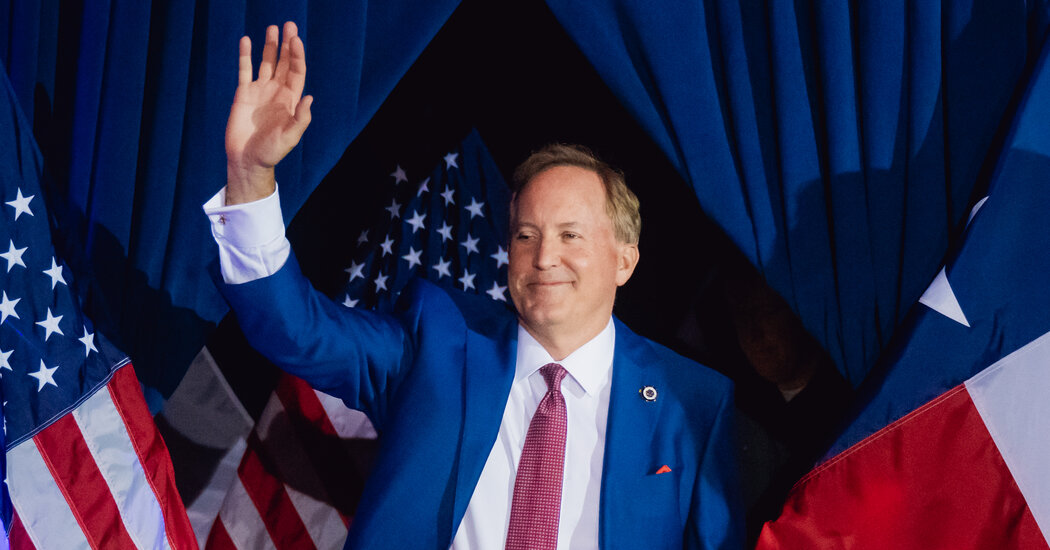
Ken Paxton, endorsed by former President Donald Trump, secured a victory over incumbent Senator John Cornyn in a Republican primary runoff election on Tuesday. This outcome marks the second instance in less than two weeks where a primary challenger has defeated a sitting Republican senator, underscoring the ongoing influence of former President Trump within the party’s base.
The contest was distinguished as the most expensive primary election in American history. Mr. Paxton’s win occurred despite being significantly outspent on advertising, with pro-Cornyn entities investing approximately $80 million more than his campaign.
Looking ahead, Republicans anticipate a potentially competitive general election in Texas, a state where Democrats have not achieved statewide electoral success in decades. The Democratic nominee, James Talarico, a 37-year-old state legislator, has garnered substantial attention and financial support from Democratic donors nationwide. These donors express hope that Mr. Talarico could present a viable challenge in a state traditionally considered Republican.
For several months, national Republican strategists had voiced concerns that Mr. Paxton’s past legal and ethical controversies could jeopardize the Republican Party’s hold on the Senate seat. However, primary voters on Tuesday demonstrated a clear preference for Mr. Paxton, opting against the counsel of Senator Cornyn and other established party figures.
Senator Cornyn, who previously held a leadership position as the No. 2 Republican in the Senate, experienced a broad defeat, trailing Mr. Paxton in nearly all of Texas’ 254 counties. This wide margin indicates a significant shift in voter sentiment within the primary electorate.
Tuesday’s elections also featured several other notable contests across the country. One such outcome included the defeat of an incumbent Democratic congressional member by a younger challenger in a primary race, marking a generational shift in that particular district.
Trump’s Influence on Republican Primaries Evident
Despite Texas being home to nearly 19 million voters, the Republican Senate primary leading up to 2026 was heavily influenced by candidates’ efforts to secure the endorsement of former President Donald Trump.
Allies of Senator Cornyn invested tens of millions of dollars in advertising campaigns. These efforts were designed to demonstrate the senator’s electability and, by extension, to garner Mr. Trump’s support. His super PAC engaged a top Trump adviser, Chris LaCivita, to lead its initiatives, and his campaign utilized the services of Mr. Trump’s pollster, Tony Fabrizio.
Following the initial primary round in March, where Mr. Cornyn slightly surpassed expectations by edging ahead of Mr. Paxton, many observers anticipated an endorsement from the former president for the senior senator. Mr. Trump himself suggested an endorsement was forthcoming and publicly stated on social media that any candidate not receiving his backing should withdraw from the race.
Ultimately, Mr. Trump endorsed Mr. Paxton, who has been a consistent loyalist, despite the Attorney General’s history of legal challenges, including an indictment, an impeachment trial, and accusations related to his personal conduct.
The final runoff election was not closely contested. With approximately three-quarters of the votes tallied, Mr. Paxton had expanded his lead significantly from the March primary, securing a victory margin of more than 25 percentage points.
Internal Divisions Within the Republican Party
The primary contest between Mr. Cornyn and Mr. Paxton was marked by intense animosity, which has created notable divisions within the Republican Party in Texas.
In the final hours leading up to Tuesday’s vote, Senator Cornyn continued to criticize Mr. Paxton, telling CNN that he was an “embarrassment” and referencing personal accusations.
Mr. Cornyn’s direct statement, “You can’t trust Ken Paxton,” provides a soundbite that the Democratic campaign could potentially use during the general election.
The Democratic primary also saw a contentious race between Mr. Talarico and Representative Jasmine Crockett, which at times highlighted racial divisions. However, Mr. Talarico has had approximately three months since that primary to engage in efforts to unify his party’s base.
While Mr. Cornyn’s campaign had emphasized his electability, Republican groups are now rapidly pivoting to characterize Mr. Talarico as holding positions too liberal for Texas, with one Republican organization specifically labeling him a “woke weirdo.”
In his victory speech, Mr. Paxton asserted that Texas would become “the radical left’s No. 1 priority,” and stated, “We’re not going to let them take it.”
Projected High Costs for General Election
The upcoming general election in Texas is expected to be exceptionally expensive. James Talarico has demonstrated significant fundraising prowess, reporting higher contributions than most other Democratic Senate candidates nationwide even before his matchup with Mr. Paxton was finalized.
In the first quarter, Mr. Talarico raised $27 million. In contrast, no Republican Senate candidate in any state raised more than $4 million for their primary campaign account during the same period.
Senator Cornyn was widely recognized as one of the Republican Party’s most effective fundraisers, a capacity that Mr. Paxton has not historically demonstrated. Consequently, Republican party leaders in Washington have suggested that Mr. Paxton’s nomination could necessitate a diversion of as much as $100 million in donor funds to retain the Senate seat. There is an expectation that former President Trump and his associated super PAC, which holds substantial funds, might contribute to this effort. However, it is noteworthy that the main Republican Senate super PAC has not included Texas in its preliminary fall advertising reservations.
Despite their fundraising efforts, Democratic strategists have not currently placed Texas in their top tier of targeted Senate seats as they aim to flip four seats nationally to regain a majority in the chamber. Their current top-tier targets include Alaska, North Carolina, Maine, and Ohio. Nevertheless, Texas continues to be an attractive state for Democrats due to its substantial electoral size and symbolic significance in national political discourse.
Implications for Capitol Hill and Republican Dynamics
Throughout much of former President Trump’s second term, many Republican lawmakers have largely conformed to his political agenda and directives.
However, some Senate Republicans have recently expressed reservations regarding specific proposals from Mr. Trump. These include his requests for security funding for a White House ballroom and a $1.8 billion “anti-weaponization” fund, which critics suggest could be used to benefit his political allies. The successful primary challenges against incumbent Republican senators, including Bill Cassidy in a prior election and now John Cornyn—a long-serving figure popular among many colleagues—are perceived to have potentially emboldened other Republican senators who may feel less constrained by Trump’s influence on party policy and strategy.
Why This Matters
The defeat of incumbent Senator John Cornyn by Ken Paxton in the Texas Republican primary carries significant implications for both the Republican Party and the broader national political landscape.
**Influence of Former President Trump:** Paxton’s victory, particularly after receiving an endorsement from former President Trump, reinforces the former president’s continued power over the Republican base. This outcome, coupled with a similar defeat of another incumbent Republican senator earlier, suggests that Trump’s endorsement can still be a decisive factor in primary contests, even against well-established and well-funded incumbents. This dynamic may lead more Republican candidates to seek Trump’s favor, potentially shaping the party’s platform and leadership for future elections.
**Internal Republican Divisions:** The contentious nature of the Texas primary has exposed deep divisions within the Republican Party, particularly between the establishment wing, represented by Senator Cornyn, and a more populist, Trump-aligned faction. These internal fissures could complicate party unity and strategy heading into the general election, especially as the Democratic nominee, James Talarico, seeks to capitalize on any perceived weaknesses. The public criticisms exchanged between Cornyn and Paxton could provide valuable material for the Democratic campaign, making the general election more challenging for Republicans.
**Financial Landscape of the General Election:** The primary’s record-breaking cost and the subsequent financial disparity between the new Republican nominee, Ken Paxton, and the Democratic nominee, James Talarico, highlight a significant challenge for Republicans. While Senator Cornyn was a formidable fundraiser, Paxton has not demonstrated similar capabilities. This shift could necessitate substantial financial infusions from national Republican entities, potentially diverting resources from other competitive Senate races across the country. The decision by a major Republican Senate super PAC to omit Texas from its initial fall ad reservations underscores the perceived financial risk and strategic re-evaluation occurring within the party.
**Potential for a Competitive Texas Senate Race:** While Texas has long been a Republican stronghold, Mr. Paxton’s nomination, coupled with his history of legal and ethical controversies, could make the general election more competitive than previous cycles. Democratic nominee James Talarico’s strong fundraising and the state’s growing demographic diversity offer the Democratic Party a renewed sense of opportunity. A competitive Senate race in Texas, a state with significant electoral votes and symbolic importance, would force both national parties to invest heavily, potentially impacting the overall balance of power in the U.S. Senate. If Democrats were to successfully flip the seat, it would represent a monumental shift in American politics and significantly alter the path to a Senate majority.
**Reverberations on Capitol Hill:** The defeat of a long-serving, popular, and once-powerful senator like John Cornyn could send a clear message to other Republican members of Congress: aligning with or crossing former President Trump can have direct electoral consequences. This may influence how Republican senators approach future legislative battles, leadership elections, and their relationship with Mr. Trump’s political agenda, potentially leading to increased deference or, conversely, a growing willingness among some to challenge his influence if they feel their seats are secure from primary challenges.
Key Outcomes from Recent Primary Elections: Republican Factions Emerge, Generational Shifts in Democratic Races, and Influential Campaign Spending
Recent primary elections have revealed significant shifts within both major political parties, indicating evolving dynamics regarding presidential influence, generational leadership, and the impact of campaign finance. Outcomes included instances of Republican lawmakers openly challenging endorsed candidates, a prominent Democratic incumbent losing to a younger challenger, substantial spending by the cryptocurrency industry, and a failed attempt by a super PAC to strategically influence a primary result.
Internal Dynamics Within the Republican Party
The primaries suggested a potential weakening of former President Donald Trump’s perceived absolute influence over the Republican Party. Notably, Senator Ken Paxton, despite receiving a strong endorsement from Mr. Trump, faced a significant primary challenge. Mr. Paxton has been under indictment for securities fraud charges for nearly a decade and is currently facing a pending impeachment trial, issues that have drawn scrutiny to his candidacy.
Some Republican senators appear to be increasingly willing to express dissent regarding candidates facing ethical or legal challenges, even those endorsed by the former president. Senator Thom Tillis, a Republican from North Carolina, publicly criticized Mr. Paxton in an interview, describing him as “ethically challenged” and “an empty suit” and drawing a stark comparison to a serial killer. Such public rebukes signal a potential shift in party discipline and a willingness among some Republicans to prioritize other considerations beyond presidential endorsements.
This internal dynamic holds implications for legislative processes. With the Republican Party holding 53 seats in the Senate, even a small faction of senators breaking ranks can significantly alter the outcome of votes, potentially challenging party-line legislation or nominations.
Generational Shifts in Democratic Primary Contests
A notable outcome in the Democratic primaries was the defeat of Representative Al Green, 78, by Christian Menefee, 38, in a Houston-area contest. This marks the first instance in these primaries of an incumbent Democratic House member losing to a younger challenger. The primary race was a direct result of a Republican-led redistricting effort that redrew Mr. Green’s Ninth Congressional District, forcing him to compete in the 18th District, where Mr. Menefee had recently won a special election.
This primary is seen as an early indicator of Democratic primary voters’ receptiveness to new, younger leadership, following national conversations about the age and competence of older politicians, particularly after former President Joseph R. Biden Jr. withdrew from his re-election bid amid public concerns about his age. The outcome in Houston may signal a broader trend. Upcoming primaries, including several in California, are expected to feature similar generational challenges, with younger candidates advocating for fresh leadership against incumbent Democrats.
Another instance of an incumbent Democrat losing occurred in Dallas, where Colin Allred defeated Representative Julie Johnson. Mr. Allred, who had previously run for Senate in 2024 and subsequently withdrawn from a 2026 Senate primary, successfully reclaimed the nomination for the 33rd District, which he formerly represented.
The Influence of Cryptocurrency Industry Spending
The primary race between Representative Green and Christian Menefee also highlighted the substantial financial influence of the cryptocurrency industry in electoral politics. Fairshake, a prominent super PAC associated with the crypto industry, invested heavily in the contest. By the end of the runoff, an affiliated entity of Fairshake had injected approximately $6.5 million into the race, primarily in support of Mr. Menefee.
The super PAC’s targeting of Mr. Green was significant, as he serves on the House Financial Services Committee, a key committee for legislative oversight of the financial sector, including cryptocurrency. Mr. Green had been an outspoken critic of the industry, campaigning on a platform of being “unbought” and publicly criticizing those within his party who aligned with crypto interests, whom he referred to as “cryptocrats.” An unusual aspect of Fairshake’s campaign was a late advertisement featuring Representative Jasmine Crockett, a sitting lawmaker from Texas, advocating for a “new generation of fighters,” a rare occurrence for a sitting legislator to appear in an industry group’s political advertisement.
Strategic Campaigning and Unexpected Primary Outcomes
Another primary race saw a strategic attempt by an external group to influence the outcome, which ultimately failed. A super PAC with reported links to Republican interests spent nearly $900,000 in an effort to promote Maureen Galindo, a left-wing sex therapist, in a Democratic primary. Ms. Galindo had garnered controversy due to remarks she made about imprisoning “American Zionists,” which drew widespread criticism from national Democratic leaders and accusations of antisemitism.
The apparent objective of this significant spending was to elevate a candidate perceived as less electable in the general election, thereby improving the Republican Party’s prospects in the redrawn district. However, this strategy did not succeed. Ms. Galindo lost the primary to Johnny Garcia, a deputy sheriff. Democratic leaders are now hoping Mr. Garcia will prove to be a competitive candidate in the general election for a seat that Republicans had sought to gerrymander in their favor the previous year.
Why This Matters
These primary election outcomes offer crucial insights into the evolving political landscape in the United States, carrying implications for party dynamics, future elections, and policy directions. The observed internal dissent within the Republican Party, particularly concerning presidential endorsements and candidates with ethical issues, suggests a potential fracturing of party unity. This could lead to more diverse voices within the GOP, but also create challenges for party leadership in uniting behind legislative agendas or general election candidates. It indicates that the influence of a single figure, even a former president, may not be as absolute as once perceived, allowing for greater autonomy or opposition among elected officials.
The generational shift evidenced in Democratic primaries, with incumbent older politicians losing to younger challengers, signals a potential transformation in the party’s image and priorities. This trend reflects a demand among Democratic voters for fresh leadership and new approaches, possibly influencing future policy debates on issues like climate change, economic inequality, and social justice. Should this trend continue, it could reshape the Democratic Party’s platform and its appeal to various voter demographics nationwide.
Furthermore, the substantial spending by the cryptocurrency industry highlights the increasing influence of specific economic sectors in political campaigns. The millions poured into a single House primary, particularly one involving a member of a key financial committee, underscores how well-funded industry groups can actively shape electoral outcomes and potentially influence legislative agendas. This raises broader questions about campaign finance regulations, the role of super PACs, and the potential for special interests to impact the democratic process and policy-making.
Finally, the failed attempt by a super PAC to manipulate a primary outcome by boosting a controversial candidate demonstrates the complexities and risks of strategic campaigning. While such tactics are designed to weaken an opponent in the general election, they can sometimes backfire, leading to unexpected results and potentially empowering stronger candidates. This underscores the unpredictable nature of elections and the constant evolution of campaign strategies, as parties and external groups seek to gain an advantage in tightly contested political environments. Collectively, these primary results provide early indicators of the forces that will likely shape the upcoming general election cycle and the legislative priorities of the next Congress.