
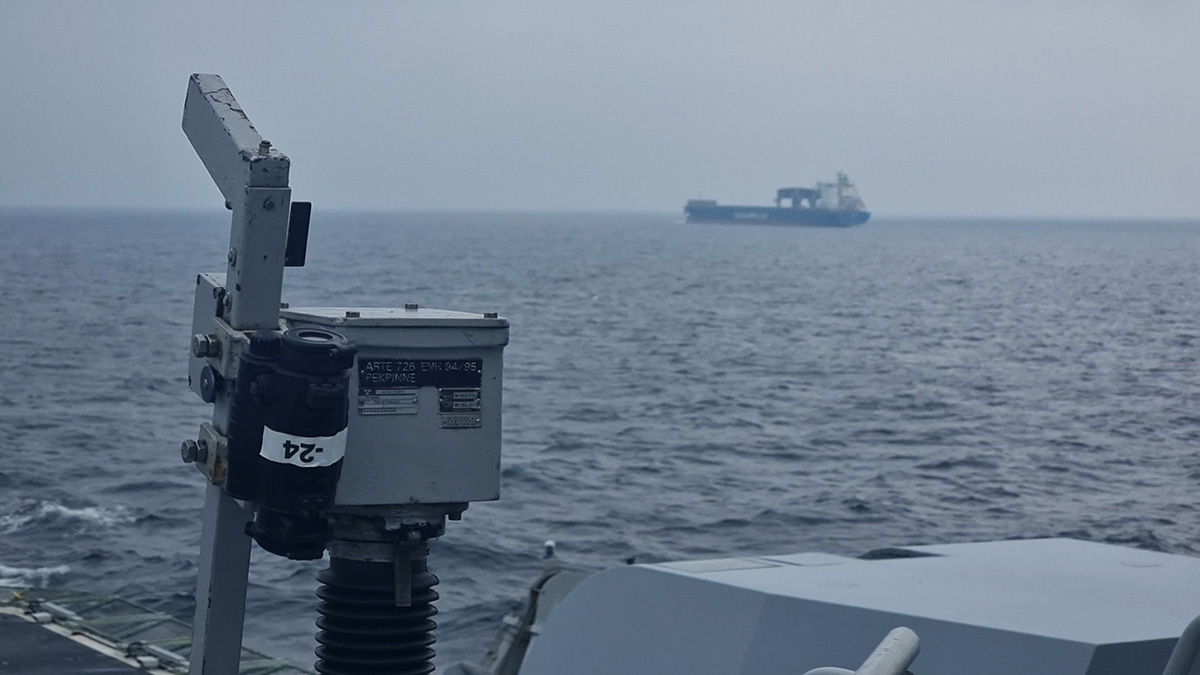
A high-ranking European Union representative has cautioned that Russia’s “shadow fleet” presents an escalating danger to oceanic safety and subaquatic infrastructure, as apprehensions intensify over the susceptibility of vital navigation paths and submarine communication lines.
Addressing a session on naval safety at the Munich Security Conference on Friday, Belén Martinez Carbonell, Head of the European External Action Service, asserted that the covert fleet constitutes an immediate peril to Europe, by virtue of its part in upholding Russia’s conflict-driven financial system and the hazards it engenders in maritime environments.
“For us, there’s an unambiguous danger right on our doorstep,” she remarked. “I identify it as stemming from a significant breach of the United Nations Founding Document, and that’s the magnification of Moscow’s belligerence via the clandestine flotilla.”
She further stated:“For us, the Russian shadow fleet represents the paramount immediate danger to the safety of Europe.”
Carbonell contended that the matter transcended the circumvention of embargoes, cautioning that inadequately supervised ships introduced ecological hazards and might imperil vital sea-based facilities.“We know that those shadow fleets present hazards beyond enriching conflict funds,”she stated.“They also are at ecological jeopardy… They also pose a risk, because of the perils to lines, underwater conduits.”
The forum, chaired by Mina Al-Oraibi, Chief Editor ofThe National, centered on the increasing worldwide significance of oceanic safety against a backdrop of geopolitical strain and assaults on navigation routes. Al-Oraibi informed the attendees that maritime security now impacts daily existence across the globe.“More than 80% of global commerce depends on the world’s aquatic thoroughfares,”she stated, and elaborated that“95 to 99% of our interconnectedness hinges on submarine lines that have transformed into the vital conduits for international trade.”
Carbonell indicated the EU was employing a variety of civilian and supervisory actions to address dangers presented by the covert fleet, encompassing punitive economic restrictions, engagement with vessel-registering nations, and judicial instruments stipulated by the UN Convention on the Law of the Sea.“We already possess punitive measures, affecting approximately 600 clandestine fleet vessels and 40 facilitating entities,” she noted.
She further stated that the EU was also interacting immediately with nations whose ensigns were employed by ships connected to embargo circumvention.“We are conducting engagement with flag-issuing nations that may be unaware of the entities operating under their ensigns,”Carbonell remarked. The representative further highlighted statutory clauses within UNCLOS, contending they were applicable for managing craft without identification.“We are also endeavoring to leverage every opportunity specifically provided by UNCLOS,”she declared, referencing“article 110… [which] permits, subject to specific criteria, the inspection of unidentifiable ships.”
Carbonell additionally mentioned efforts were underway via the Global Seafaring Body, especially concerning ecological and security benchmarks.
In conjunction with supervisory endeavors, she underscored the EU’s maritime deployments as components of a wider strategy for safeguarding unhindered passage at sea.“We maintain several seafaring assignments and naval deployments,”she stated, identifyingIrini, Atalanta and Aspidesas principal instances. Concerning the Red Sea deployment, Aspides, she mentioned it had already facilitated numerous commercial passages.“Its purpose is to guarantee secure passage, and has already accomplished this for over 600 trade ships in the Red Sea,”Carbonell affirmed.
She further stated:“Through this operation, we have rescued over 100 mariners and ocean voyagers.”
The forum additionally featured Rashad Mohamed Ali Al-Alimi, Head of Yemen’s Presidential Leadership Council, who cautioned that localized turmoil in the Red Sea was being propelled by paramilitary factions supported by Iran.“The paramount immediate danger originates from that specific region,”he stated, charging Iran with heavily funding armed factions to acquire influence over sea lane safety.
Singapore’s Minister of Defense Chan Chun Sing additionally cautioned that escalating tactical distrust among prominent nations was progressively influencing worldwide oceanic peril.“The primary danger… would stem from the escalating tactical distrust among the leading global states,”he noted.