
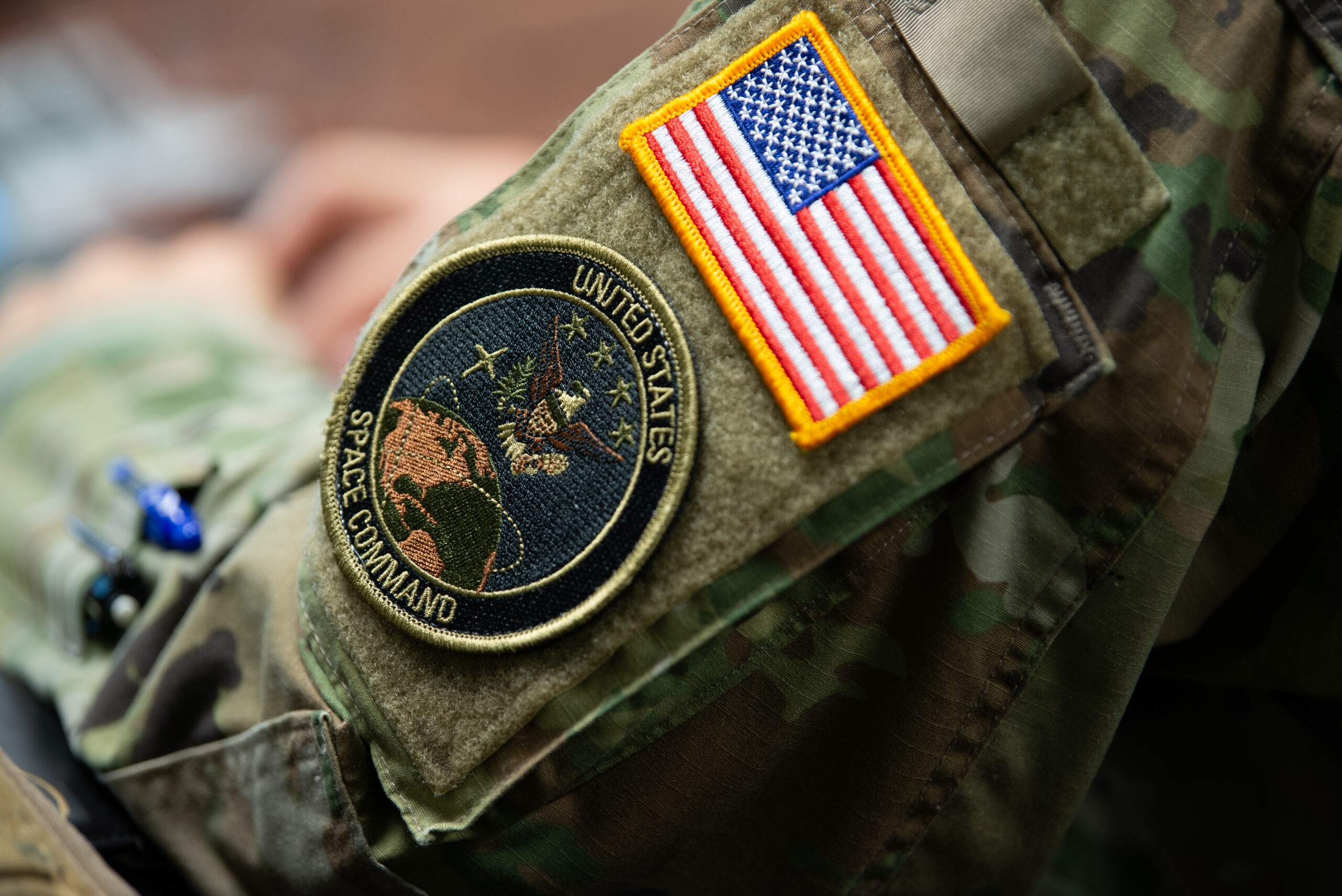
As General Stephen Whiting’s tenure as Commander of U.S. Space Command (USSPACECOM) approaches its potential conclusion in January 2027, a significant discussion is emerging within U.S. defense circles regarding the service affiliation of his successor. The question of who should lead this critical combatant command, and what criteria should guide that selection, is poised to become a key consideration for the President and the Senate in the coming years.
The debate centers on whether the commander of USSPACECOM should exclusively be a member of the U.S. Space Force, commonly referred to as a “Guardian,” or if the position should remain open to leaders from other military branches. Proponents for a Space Force-only command argue that such a selection is dictated by operational necessity, given the unique demands of space as a modern warfighting domain. This perspective holds that Guardians are uniquely trained and equipped to integrate spacepower into global, multi-domain operations, fulfilling the Space Force’s mandate to generate the nation’s combat-ready space forces.
Space is no longer perceived merely as an enabling domain for terrestrial operations; it has evolved into an active warfighting domain capable of delivering decisive effects. USSPACECOM’s core mission involves securing space superiority to ensure continued access to vital space capabilities, as well as planning, executing, and integrating military spacepower across all multi-domain global operations. Consequently, the command’s leader requires more than a passing familiarity with space-enabled assets. The role demands a profound understanding and mastery of orbital warfare, comprehensive space domain awareness, sophisticated command and control protocols, the intricate electromagnetic and cyber dependencies of space systems, the spectrum of counterspace threats, and the seamless integration of space effects across every geographic combatant command. According to those advocating for Space Force leadership, Guardians are the only service members whose professional training, from initial accession through senior command, is comprehensively centered on this full and complex mission set.
The establishment of the Space Force by law dictates specific responsibilities: to ensure freedom of operation for the United States in, from, and to space; to conduct space operations; and to protect U.S. interests in space. While other military services maintain space expertise to support their respective missions, Congress assigned the Space Force the unique statutory responsibility to organize, train, and equip forces specifically for prompt and sustained space operations. This legislative foundation is cited as a primary reason for aligning USSPACECOM leadership with the Space Force.
Advocates suggest that a Guardian commanding USSPACECOM would bring both the necessary depth of expertise to effectively fight for space superiority and the requisite breadth to lead a joint team comprising Soldiers, Sailors, Airmen, Marines, and allied forces. The principle of “jointness” in military command is presented not as a rotation of leadership among services for the sake of balance, but rather as the strategic selection of the officer best prepared to accomplish the assigned mission, irrespective of their branch of origin.
When U.S. Space Command was re-established in August 2019, President Trump initially selected General John “Jay” Raymond to serve as its commander. Gen. Raymond would soon become the first Chief of Space Operations, following the Space Force’s creation four months later. His initial appointment to USSPACECOM was a temporary, one-year arrangement. Subsequently, President Trump selected Army General James Dickinson to lead U.S. Space Command from August 2020 to January 2024. At the time of Gen. Dickinson’s assumption of command, the Space Force was less than a year old, and a developed pool of seasoned Guardian leaders capable of competing for such a senior joint position did not yet exist. This appointment is generally viewed as a sound transitional exception, rather than a precedent for an enduring rotational system between the Army and Space Force.
In 2023, President Biden nominated Gen. Whiting for the position, and his confirmation by the Senate marked a return to Space Force leadership for USSPACECOM. Since its inception, the Space Force has reportedly made significant strides in developing Guardian leaders, cultivating critical operational experience, specialized expertise, and an unparalleled understanding of space as a warfighting domain. The argument is made that the conditions that necessitated an Army general’s command during the Space Force’s nascent stage no longer apply.
The Space Force asserts that it has established multiple positions and clear pathways designed to prepare its senior leaders for the extensive responsibilities inherent in commanding U.S. Space Command. One such pathway involves leadership within Combat Forces Command, which traces its lineage through Space Operations Command and Air Force Space Command, both of which were previously commanded by generals who went on to lead USSPACECOM, including Gen. Whiting and Gen. Raymond. Currently, Lt. Gen. Gregory Gagnon commands CFC, and his predecessor, Lt. Gen. David “Rock” Miller, now serves as Deputy Chief of Space Operations, Strategy, Plans, Programs and Requirements on the Space Force staff.
A second pathway involves the Space Force’s component commands, which present the service’s forces to various combatant commands. These component commanders, ranging in rank from colonel to three-star general (such as Lt. Gen. Dennis Bythewood at Space Forces-Space), gain essential experience in integrating space effects into broader combat operations. These roles are seen as providing Guardians with distinct expertise in merging space effects with those from all other domains to achieve national objectives, both terrestrially and in orbit. This pipeline is presented as now consistently producing leaders who possess both the experience of commanding dedicated space forces and the capability to integrate their effects across the entire U.S. military, a combination deemed precise for the demands of U.S. Space Command.
Developments such as the Army’s June 2026 decision to establish its own Space Operations Branch, along with the planned relocation of U.S. Space Command to Huntsville, Alabama, are acknowledged as factors that could reasonably fuel an Army case for future leadership of Space Command. However, proponents of Space Force leadership contend that neither of these developments fundamentally alters the core requirement for the command: to ensure space superiority in support of national objectives across all domains.
The Army’s new branch is reportedly designed to enhance Army component access to space-enabled capabilities at the tactical edge, a mission that, according to the Space Force, does not displace its broader responsibility for space warfare or its extensive mission set. Similarly, while the Army’s space expertise at Redstone Arsenal in Huntsville is recognized as valuable to USSPACECOM, this expertise is characterized as primarily technical and geographical. The argument is made that locating a combatant command on an Army installation does not inherently justify an Army claim to command it, nor does it affect the fundamental governance structure of USSPACECOM.
Concerns that a Guardian commander might diminish the “joint” character of U.S. Space Command are addressed by those advocating for Space Force leadership. They contend that such concerns are specious, as the command is expected to continue utilizing capabilities and personnel from every service and collaborate extensively with the intelligence community, international allies, and commercial partners. However, to ensure space superiority, the officer leading U.S. Space Command must be capable of making time-critical decisions to protect, defend, and employ space combat power, particularly under threat. At this critical level, the domain expertise inherent to Space Force Guardians is presented not as a mere parochial preference, but as an operational warfighting requirement. From this perspective, true jointness is achieved not through rotational command appointments, but by selecting the most qualified commander for the specific mission.

Photo by Jud McCrehin, Air & Space Forces Association
The ongoing discussion points to a desire for the President to clarify the institutional logic for future U.S. Space Command leaders, advocating for a standard where they consistently come from the Space Force. The Senate’s role in reinforcing such a standard through its confirmation process is also highlighted. This approach is intended to align operational command with the service Congress specifically created to protect U.S. interests in space, sharpen accountability for space superiority, and preserve, rather than diminish, the command’s essential joint character.
The relocation to Huntsville is expected to foster a deeper partnership between U.S. Space Command, the Space Force, and the Army, but supporters of Space Force leadership argue that this should not obscure the distinct responsibilities for leading the nation’s space warfighting enterprise. The perspective articulated is that not only General Whiting’s immediate successor, but every subsequent commander of USSPACECOM, should be a Guardian.
Why This Matters
The debate over who should command U.S. Space Command carries significant implications for national security, inter-service dynamics, and the future trajectory of space warfare. Space has become an indispensable domain for both military operations and civilian infrastructure, underpinning everything from global communications and navigation to intelligence gathering and precision targeting. The leadership of USSPACECOM directly affects the United States’ ability to protect its assets in orbit, deter adversaries, and project power from space.
Firstly, the decision impacts the **effectiveness of U.S. space operations**. If space is indeed a unique warfighting domain requiring specialized expertise, then placing a leader with comprehensive domain mastery is critical for ensuring space superiority. A misstep in leadership selection could compromise the command’s ability to make time-sensitive, critical decisions under threat, potentially jeopardizing national security interests in a rapidly evolving and increasingly contested environment.
Secondly, this discussion highlights **inter-service rivalry and the evolution of “jointness.”** The Space Force, as the newest branch, is asserting its foundational role in space. How this assertion is balanced against the historical contributions and expertise of other services, particularly the Army, will set precedents for future command structures in emerging domains. The definition of “jointness”—whether it requires rotational leadership or simply the selection of the most qualified individual from any service—is being tested and redefined in this context, affecting how military branches collaborate and integrate their capabilities.
Thirdly, the outcome will shape the **future development of space warfare doctrine and capabilities**. A commander with deep Space Force roots may prioritize certain aspects of orbital warfare, space domain awareness, and counterspace capabilities, potentially influencing research, development, and acquisition strategies. Conversely, a commander from another service might bring a different perspective, emphasizing integration with ground operations or specific tactical applications, which could alter the strategic direction of space force development.
Finally, the decision holds **geopolitical significance**. As global competitors like China and Russia accelerate their own space capabilities and challenge U.S. dominance, the perceived strength and focus of U.S. Space Command leadership sends a clear message about American commitment to space as a critical theater of operations. The choice of commander will reflect the U.S.’s strategic priorities in space and its determination to maintain freedom of action in, from, and to this vital domain.