
The audio for this piece is presented by the Air & Space Forces Association, which venerates and assists our Airmen, Guardians, and their relatives. Discover more at afa.org
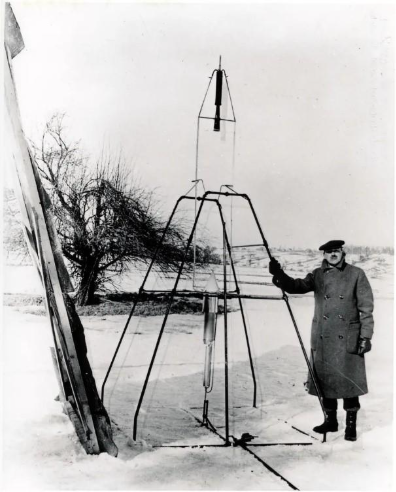
A century will have passed on March 16, 2026, since Dr. Robert H. Goddard propelled the globe’s inaugural liquid-fueled rocket.
Goddard utilized a blend of gasoline and liquid oxygen (LOX) to drive a rocket for two and a half seconds, attaining an elevation of 41 feet and traversing over 184 feet downrange. While this might appear to be a minor feat, it stands comparable to what the Wright Brothers accomplished with their initial motorized aircraft flight in 1903.
Just like the Wright Brothers before him, Goddard’s innovation paved the way for a novel realm and the exploration, activities, and economic expansion that have unfolded since.
Over the preceding hundred years, fresh and increasingly sophisticated liquid-fueled rockets have quite literally propelled humanity into the cosmos.
Why liquid-fueled rockets?
Black powder, or gunpowder, rockets had seen use for centuries in projectiles and pyrotechnics. Nevertheless, once a powder rocket ignites, it continues to burn until its propellant is depleted. The necessity to regulate thrust and to halt and reignite rocket engines, both fundamental to spaceflight, was solely attainable with liquid-fueled rockets. Their superb efficiency and thrust capabilities represent additional benefits. Solid rocket motors can provide greater thrust, which is why many launch systems incorporate supplementary solid rocket motors for additional lift.
Liquid-fueled rockets employ a combination of an oxidizer and a fuel source. The oxidizer enhances engine performance and permits the combustion of the fuel even in the vacuum of space. LOX is the most prevalent oxidizer, employed both on Goddard’s initial flight and on contemporary rockets today. While LOX has remained a consistent element as an oxidizer, the fuel has progressed from gasoline, to encompass kerosene, liquid methane, and liquid hydrogen.
Some liquid rockets utilize hypergolic fuel, two liquids that, upon commingling, are reactive and promptly ignite, generating the explosive propulsion required to drive boosters and space vehicles. Commonly used hypergolic propellants include Aerozine or hydrazine and nitrogen tetroxide. By obviating the requirement for an igniter, hypergolic engines can be simpler and more dependable, rendering them optimal for propulsion once in space. It’s crucial to recall that liquid-fueled rocket engines are not exclusively for the primary boosters, but also for upper stages to maneuver satellites to their ultimate orbits, for attitude control, and for propulsion aboard spacecraft, particularly those demanding substantial agility.
Evolution of Liquid-Fueled Rockets
Following Robert Goddard’s groundbreaking flight, numerous endeavors to advance liquid-fueled rockets proceeded globally. Most notably, the Germans developed rocket technology during World War II, culminating in the V2 rocket. After the conflict, Wernher von Braun and other German-born scientists shared their expertise with the United States, furnishing vital knowledge to enhance U.S. rocket technology. Their efforts led to the creation of intercontinental ballistic missiles and the rocket boosters necessary for spaceflight.
In the 1950s, the Army, Navy, and Air Force devised rocket systems to deploy ballistic missiles. Some of the initial triumphs in spaceflight originated from the Army’s initiatives, under Wernher von Braun. The adaptation of the Army’s Jupiter-C intermediate ballistic missile launched the United States’ first satellite, Explorer 1, in 1958. Then, on May 5, 1961, a similar craft propelled the first U.S. astronaut, Alan Shepard, on a suborbital journey into space.
Within the Air Force, Gen. Bernard Schriever at the Western Development Division oversaw programs to introduce the Atlas, Thor, and Titan boosters. These systems led to other remarkable accomplishments, including John Glenn’s orbital mission, Friendship 7, which ascended atop an Atlas rocket, and the deployment of the initial reconnaissance satellites atop a Thor rocket. Subsequent missions, such as the Gemini program, utilized Titan boosters.
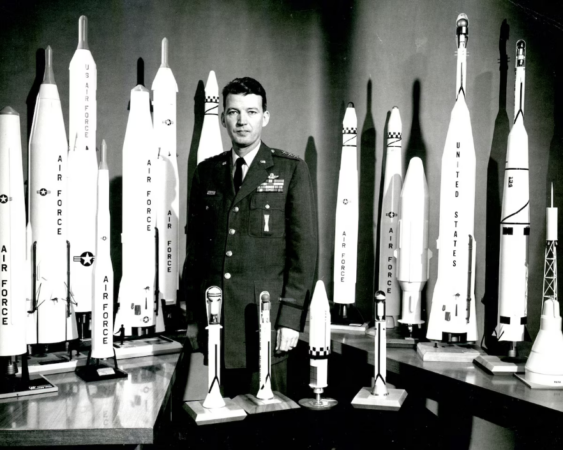
Over the years, systems like Titan and Atlas became the foundational boosters for U.S. national security endeavors, transporting humans as well as apparatus and satellites into space.
Of course, one of the paramount achievements of liquid-fueled rockets was the Saturn V, which launched the Apollo 11 crew in 1969. Taking off from Cape Canaveral, Fla., the mission landed Neil Armstrong and Buzz Aldrin on the lunar surface and successfully brought them back to Earth, along with Michael Collins, the Command Module pilot.
During the 1960s and 1970s, liquid-fueled rockets deployed much of the initial U.S. space satellite capabilities, including the first global positioning system (GPS) satellite. In the 1970s, the Space Shuttle program facilitated reusable liquid rockets. The Space Shuttle System, with its maiden operational flight in 1981, effectively rendered the shuttle a reusable upper stage and was only conceivable due to its liquid-fueled rockets.
After the Challenger catastrophe in 1986, NASA redirected shuttle crew missions and reinvigorated the disposable launch market. Programs like the Atlas II and Delta II supported the launch of smaller satellites and payloads into orbit. Disposable boosters continued to advance, giving rise to the Atlas V and Delta IV medium and heavy launch systems. These two programs were structurally aligned under the United Launch Alliance in 2006.
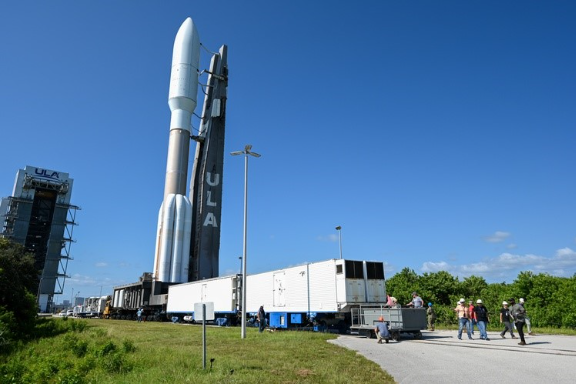
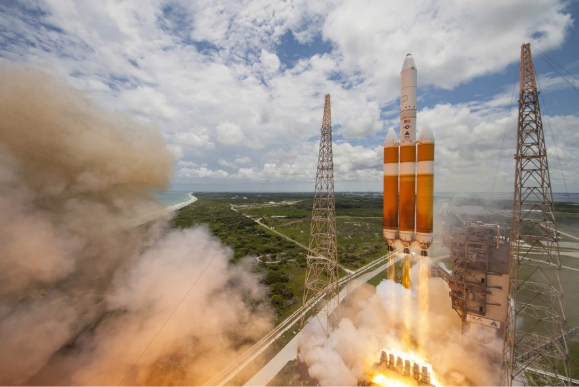
In 2008, SpaceX entered the scene as a commercial provider and in 2015, demonstrated the reusability of Falcon 9 and Falcon Heavy booster systems.
Today, an expanding array of launch suppliers and boosters are either available or planned to support national security launch operations, including ULA’s Vulcan, Blue Origin’s New Glenn, Firefly’s Alpha, and Rocket Lab’s Neutron, in addition to the SpaceX systems.
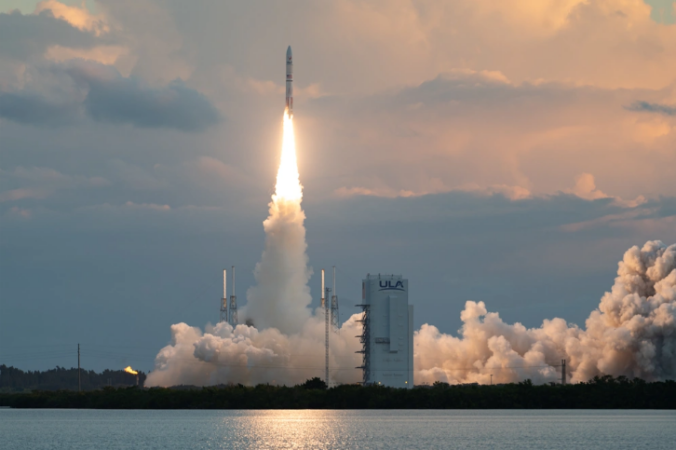
Novel launch systems such as Artemis and Starship will facilitate the return of Americans to the Moon and, perhaps, beyond. And it all commenced a century ago in a field in Massachusetts.
Whether you’re a Space Force Guardian, a spacepower aficionado, or simply fond of rockets, take a moment to ponder this significant event and the advancement we’ve achieved over the past 100 years.
Robert Goddard’s initial liquid-fueled rocket ascended barely four stories into the atmosphere. But that modest stride initiated us on a voyage with monumental leaps and an infinite future.
Charles Galbreath is Director of Mitchell Institute’s Spacepower Advantage Center of Excellence, and John Reed is Chief Rocket Scientist at United Launch Alliance.
The audio for this piece is presented by the Air & Space Forces Association, which venerates and assists our Airmen, Guardians, and their relatives. Discover more at afa.org