
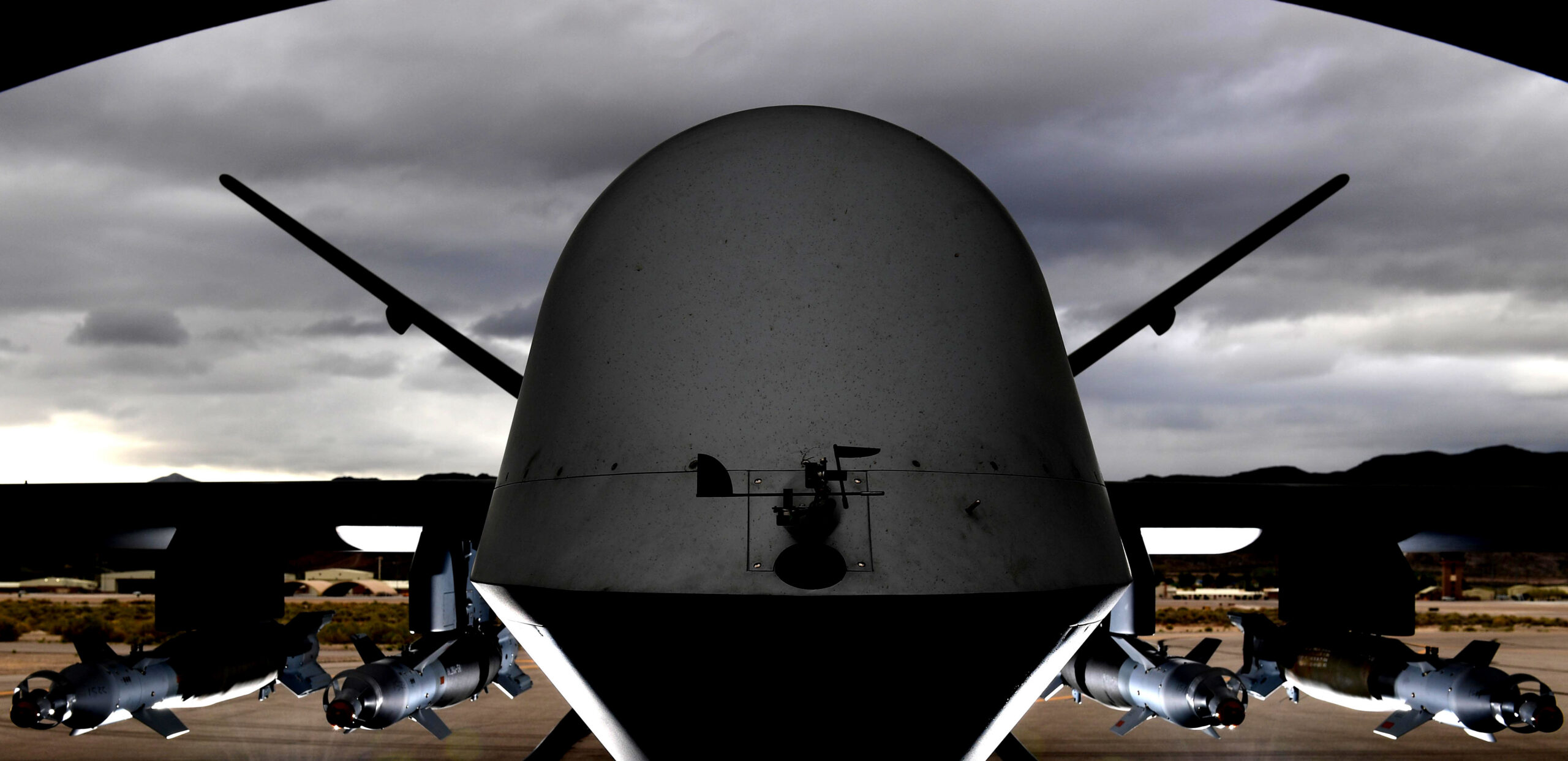
**Reported Deployment of MQ-9 Reaper Drones to Latin America Signals Shift in U.S. Counter-Narcotics Strategy**
Recent reports indicate a significant deployment of MQ-9 Reaper drones to Latin America, a move that experts suggest could substantially expand intelligence gathering capabilities and provide additional options for kinetic strikes against cartels operating in the region. This strategic shift marks an evolving role for the Reapers, traditionally associated with counterinsurgency operations in the Middle East and Africa, towards intensified counter-narcotics efforts in the Western Hemisphere.
According to numerous media outlets, including CNN, the New York Times, and the Wall Street Journal, the Pentagon has supplied Colombia and Ecuador with several MQ-9 Reapers. Additionally, an undisclosed number of these unmanned aerial vehicles (UAVs) have reportedly been transferred from U.S. Africa Command (AFRICOM) to U.S. Southern Command (SOUTHCOM). Officials in both Colombia and Ecuador have publicly confirmed to local media that they are in the process of receiving MQ-9s.
While spokespeople from AFRICOM and SOUTHCOM declined to comment specifically on the movement of any aircraft, the consistent reporting underscores a discernible trend: the increasing integration of Reapers into the U.S. military’s strategy for combating drug trafficking. This transition highlights a broader reliance on advanced autonomous systems to enhance regional security and partner nation capabilities.
Henry Ziemer, an associate fellow with the Center for Strategic and International Studies (CSIS) Americas Program, commented on the significance of this support. “We’re helping our partners build up their capabilities, and then that allows us to kind of push more resources into countries with fewer capabilities,” Ziemer told Air & Space Forces Magazine, emphasizing the collaborative nature of the initiative.
This focus on unmanned systems aligns with the strategic priorities articulated by Marine Corps Gen. Francis L. Donovan, who assumed leadership of SOUTHCOM in February. General Donovan has consistently highlighted the importance of integrating autonomous warfare systems to enhance domain awareness across maritime, air, and border areas within SOUTHCOM’s area of responsibility.
“U.S. Southern Command is focusing on integrating autonomous warfare systems to enhance domain awareness across maritime, air, and border areas,” SOUTHCOM spokesperson Steven McCloud informed Air & Space Forces Magazine. McCloud further explained, “These unmanned systems allow our partners to monitor their territory better and facilitate informed interdiction decisions. Improved data flows and situational awareness benefit everyone.” Reflecting this commitment, SOUTHCOM established an Autonomous Warfare Command in April, specifically tasked with spearheading these efforts.
The reported increase in long-endurance intelligence, surveillance, and reconnaissance (ISR) platforms, both piloted and remotely piloted, provides the combatant commander with an expanded range of options and facilitates greater intelligence sharing with partner nations. Retired Air Force Maj. Gen. Julian “Ghost” Cheater noted that any new allocation of ISR assets would be predicated on the combatant commander’s priorities, suggesting General Donovan’s emphasis on enhanced intelligence gathering.
The demand for intelligence has surged amid a heightened effort to combat cartels and disrupt drug flows in the region. This intensified campaign, initiated under the Trump administration and bolstered by regional allies and partners, has seen significant developments. In March, a U.S.-led initiative led to the formation of the Americas Counter Cartel Coalition, which has expanded from an initial twelve members to nineteen nations, with Colombia being the most recent addition. Further solidifying this commitment, SOUTHCOM announced the establishment of its new Joint Task Force-Western Hemisphere (JTF-WH) in August, designated as the region’s “action arm” for critical missions such as counter-narcotics.
Former Air Forces Southern Commander Lt. Gen. Norm Seip, speaking to Air & Space Forces Magazine at the time, indicated that the new task force could lead to greater prioritization of assets for the SOUTHCOM commander. Maj. Gen. Cheater, who retired in June and previously served as the director of strategy, policy, and plans for SOUTHCOM, elaborated on the operational command structure. “Ultimately, AFSOUTH is responsible for providing that comprehensive command and control of airborne operations in theater,” he stated. “This component reports directly to the combatant commander, and if AFSOC or another entity provides those assets, those are generally commanded and controlled via AFSOUTH.” Cheater brings extensive experience, including over 3,700 flight hours, a significant portion of which was on drones, and commanded drone units such as the 432nd Wing out of Creech Air Force Base, Nevada.
Beyond the reported MQ-9 transfers, SOUTHCOM also announced in mid-September the sale of K1000 ultra-long endurance drones to Panama, valued at over $6 million. These drones are intended to “monitor remote borders, safeguard strategic maritime corridors, and dismantle illicit drug trafficking and human smuggling networks,” according to a command release. Built by Kraus Hamdani Aerospace, the K1000 is a compact yet capable drone, weighing 45 pounds with a 9.8-foot length and a 16.4-foot wingspan. It can achieve speeds of up to 75 miles per hour and operate at an altitude of 20,000 feet. The K1000 offers impressive endurance, flying continuously for 24 hours in its solar-recharge configuration or 12 hours in its electronic vertical take-off and landing configuration, with a range of approximately 1,000 miles. It supports both line-of-sight communications up to 90 miles and beyond-line-of-sight control via satellite. A three-person crew can pack the K1000 into Pelican cases in under 15 minutes, highlighting its deployability.
The MQ-9 Reaper, in contrast, is a larger and more complex platform. Its airframe alone costs between $30 million and $50 million, with additional costs for sensors and weaponry. It is a medium-to-high-altitude, long-endurance drone, featuring a 66-foot wingspan and a service ceiling of 50,000 feet. The Reaper can fly for 27 continuous hours, with extended-range variants capable of up to 42 hours, covering a range of 1,000 to 1,400 nautical miles. Similar to the K1000, it possesses both line-of-sight and beyond-line-of-sight command and control capabilities. As of September 30, 2025, the Air Force reported 182 Reapers in its inventory, although at least 45 have been reported lost during operations, particularly those involving Iran.
Escalation of Operations and Kinetic Engagements
As operations within SOUTHCOM have intensified, particularly under the policies initiated by the Trump administration, the MQ-9 Reaper has reportedly played a role in kinetic engagements. Since September 2025, SOUTHCOM has conducted at least 71 lethal kinetic strikes, primarily targeting suspected drug boats. These strikes, some of which are reported to have involved MQ-9s, have resulted in the deaths of at least 215 individuals, with another 17 reported missing or presumed dead, according to government accounts and media reports.
The majority of these strikes have occurred in critical transit areas, including waters near Venezuela’s coast, in the Pacific Ocean, and across the Caribbean. The initial strikes preceded the Pentagon’s formal announcement of Operation Southern Spear in November 2025, a broader effort designed to target cartel assets through kinetic means and other operational strategies. This temporary operation has since evolved into the more permanent Joint Task Force-Western Hemisphere (JTF-WH).
Reported Drug Boat Strikes (September – October 2025)
| Month | Total Killed |
|---|---|
| September 2025 | 17 |
| October 2025 | 44 |
Why This Matters
The reported surge of MQ-9 Reaper drones and other autonomous systems into Latin America represents a significant evolution in U.S. counter-narcotics strategy with far-reaching implications. This shift matters for several key reasons:
**Enhanced Intelligence and Operational Capacity:** The deployment of long-endurance ISR platforms like the MQ-9 Reaper dramatically increases the U.S. and its partners’ ability to monitor vast, often remote, territories and maritime corridors. This enhanced domain awareness is crucial for tracking drug movements, identifying cartel infrastructure, and ultimately facilitating interdiction efforts. It allows for more data-driven decisions and potentially more effective disruptions of illicit networks.
**Shift in U.S. Military Priorities and Resource Allocation:** Moving Reapers from AFRICOM to SOUTHCOM, coupled with the establishment of SOUTHCOM’s Autonomous Warfare Command and the new Joint Task Force-Western Hemisphere, signifies a clear prioritization of counter-narcotics in Latin America. This indicates a strategic re-orientation of high-value assets and a sustained commitment to combating drug trafficking, potentially impacting resource allocation in other theaters.
**Implications for Regional Sovereignty and Partnerships:** While presented as a collaborative effort to bolster partner capabilities, the increased presence and potential for U.S.-controlled or supported drone operations raise questions regarding national sovereignty and the U.S. military footprint in the region. The effectiveness and legitimacy of these operations will heavily rely on strong, transparent partnerships and adherence to international law and host-nation agreements.
**Ethical and Humanitarian Concerns of Kinetic Strikes:** The documented increase in lethal kinetic strikes, reportedly involving MQ-9s, introduces significant ethical and humanitarian considerations. The potential for civilian casualties, questions of accountability, and the long-term impact on regional stability and local populations are critical concerns that accompany the use of armed drones in these operations. Transparency regarding strike criteria, collateral damage assessment, and redress mechanisms becomes paramount.
**Advancement of Autonomous Warfare:** This deployment underscores a broader trend in modern warfare and security operations: the growing reliance on unmanned and autonomous systems. The integration of MQ-9s and smaller drones like the K1000 into varied operational contexts highlights the versatility and perceived cost-effectiveness of these platforms for intelligence gathering, surveillance, and potential strike missions, setting a precedent for future deployments and technological developments.
**Impact on Drug Trafficking Dynamics:** The ultimate impact on drug trafficking remains to be seen. While increased interdiction capabilities may disrupt current routes and methods, criminal organizations often adapt quickly. This escalation of counter-narcotics efforts could lead to shifts in trafficking patterns, increased violence in certain areas, or the adoption of new tactics by cartels. The long-term effectiveness will depend on a comprehensive strategy that includes socio-economic development, law enforcement, and judicial reforms alongside military operations.
**WASHINGTON D.C.** – The United States Southern Command (SOUTHCOM) is reportedly recalibrating its strategy for combating drug trafficking in Central and South America, shifting away from a primary reliance on targeted “boat strikes” towards a more comprehensive “counter-cartel campaign.” This strategic evolution, highlighted by recent congressional testimony and expert analysis, suggests an increased integration of advanced surveillance assets, particularly MQ-9 Reaper drones, to disrupt illicit networks across the region.
For years, U.S. counter-narcotics efforts in the SOUTHCOM area of responsibility have included direct interdiction operations, such as strikes against vessels suspected of transporting illegal drugs. Data reveals a fluctuating but consistent pattern of such engagements over recent years, with a total of 215 documented boat strikes between November 2025 and October 2026.
| November 2025 | 21 |
| December 2025 | 32 |
| January 2026 | 2 |
| February 2026 | 24 |
| March 2026 | 13 |
| April 2026 | 21 |
| May 2026 | 16 |
| June 2026 | 8 |
| August 2026 | 6 |
| September 2026 | 7 |
| October 2026 | 4 |
| Total | 215 |
Despite these efforts, the effectiveness of these strikes has been increasingly questioned. The Washington Post reported in July on a Drug Enforcement Administration (DEA) assessment which concluded that such operations have not succeeded in substantially reducing the flow of cocaine into the United States. This finding has intensified a broader debate among legal experts and lawmakers regarding the efficacy and strategic value of relying heavily on direct interdiction tactics.
Ben Friedman, policy director at Defense Priorities, a Washington D.C.-based think tank advocating for a more restrained U.S. foreign policy, expressed profound skepticism regarding the long-term effectiveness of military force in counter-narcotics operations. “I don’t think it—using military forces to counter the flow of narcotics—works particularly well, and we have decades of experience at that. Even if we intensify it, I think we’ll get the same result at a higher price,” Friedman stated in an interview with Air & Space Forces Magazine, underscoring the historical challenges of this approach.
In congressional testimony delivered on March 19, General Laura Richardson, Commander of SOUTHCOM (though the source refers to “Donovan,” assuming this is an error and referring to the SOUTHCOM commander given the context), indicated a strategic pivot. Addressing Senator Mark Kelly (D-Ariz.), the commander acknowledged the limitations of past methods: “We’ve seen changes in the narco-traffickers’ patterns, and in a closed setting I’d like to provide some more details specifically on that, but … the boat strikes aren’t the answer.” This statement signaled a clear recognition that the operational landscape for drug cartels has evolved, necessitating a corresponding change in U.S. strategy.
The commander further elaborated on the new direction: “What we’re moving for right now [is] … really a counter-cartel campaign process that puts total systemic friction across this network.” This signifies a move beyond intercepting individual shipments to targeting the entire logistical, financial, and organizational infrastructure of drug cartels. Such a comprehensive approach aims to disrupt operations at multiple points, making it harder and more costly for cartels to function.
A crucial component of this expanded effort is the potential increased deployment of MQ-9 Reaper Unmanned Aircraft Systems (UAS). These advanced drones are valued for their extensive intelligence, surveillance, and reconnaissance (ISR) capabilities and their long loiter times. While Reapers are currently operated from various locations, including U.S. facilities in Puerto Rico, their regional reach from these distant bases is not infinite. Positioning these assets closer to operational hotspots, such as in Ecuador and Colombia, would significantly enhance their effectiveness by reducing transit times and allowing for more sustained surveillance. This strategic placement would also free up assets for other critical operations with regional partners.
Wilder Alejandro Sanchez, president of Second Floor Strategies, a D.C.-based consulting firm, and a nonresident senior associate at the CSIS Americas program, emphasized the immediate benefits of such deployments. Speaking to Air & Space Forces Magazine, Sanchez noted, “These drones to SOUTHCOM, they can also be operated out of Colombia. I think the drones of Panama [are] really going to help find the targets that they’re looking for, targets being drug traffickers.” This proximity would allow for more timely and precise intelligence gathering on cartel movements and operations.
Potential MQ-9 Operating Locations
| Air Base | Location | Distance to Colombia (mi) | Distance to Ecuador (mi) |
|---|---|---|---|
| Soto Cano Air Base | Comayagua, Honduras | 1,080 | 1,320 |
| Comalapa Air Base | San Luis Talpa, El Salvador | 1,150 | 1,280 |
| Hato International Airport | Willemstad, Curaçao | 620 | 1,210 |
| Flamingo International Airport | Bonaire, Caribbean Netherlands | 660 | 1,250 |
| Muñiz Air National Guard Base | San Juan, Puerto Rico (U.S.) | 1,080 | 1,670 |
| Naval Station Guantanamo Bay | Guantanamo Bay, Cuba | 920 | 1,510 |
| Homestead Air Reserve Base | Homestead, Florida, USA | 1,510 | 1,980 |
| MacDill Air Force Base | Tampa, Florida, USA | 1,680 | 2,110 |
The increased use of drones like the MQ-9 is also expected to significantly enhance ISR capabilities and facilitate data and communications sharing between the United States and its regional allies and partners. Experts, including Ziemer (whose full name and affiliation are not provided in the original text), highlight the versatile utility of long-endurance UAS. “Long-endurance UASs are tremendously useful to patrol large swaths of the jungle, patrol large maritime borders, looking for illicit activity,” Ziemer stated, noting that this illicit activity extends beyond drug trafficking to include illegal mining and fishing, human trafficking, and other nefarious practices by cartel, criminal, or foreign terrorist organizations.
Retired Air Force Lt. Gen. Mark “Chris” Nowland, who previously served as deputy chief of staff for operations and commander of Air Forces Southern, underscored the intelligence-gathering potential. He explained to Air & Space Forces Magazine that these airborne assets would be vital for building “patterns of life” on cartel activities. “The advantage of the Reaper being there is it gives you this incredible distance that you can cover now and put ISR on,” Nowland said. “Now you just have something that you can cue and go and get better vigilance on or discover new stuff that you couldn’t because of the sensor capabilities they have.” This granular understanding of cartel routines and infrastructure is critical for dismantling their operations more effectively.
Risks and Limitations
While military officials and experts largely commend the enhanced capabilities that a greater deployment of MQ-9s could bring, they also acknowledge inherent limitations and potential risks associated with the strategic shift. Sanchez, a Peruvian native, along with Ziemer, emphasized that large, high-altitude drones like the MQ-9 are not the sole solution for the complex operational environment of Latin America. While Reapers play a crucial role in wide-area surveillance, the unique challenges posed by dense jungles and remote mountain ranges necessitate a multi-faceted approach.
For operations under the thick canopy of a jungle or within inaccessible mountainous terrain, smaller, more agile, and even backpack-portable drones are already proving valuable in counter-narcotics efforts and will become increasingly essential. Sanchez articulated this need, stating, “It’s not just big, expensive Reapers or MQ-4 Tritons, but also small [drones] that they can transport in a backpack, which provide the localized, tactical intelligence needed when larger platforms cannot penetrate or effectively observe the immediate environment.” This highlights the requirement for a layered approach to drone technology, combining strategic oversight with tactical flexibility to achieve comprehensive coverage and actionable intelligence in challenging geographical conditions.
Why This Matters
The strategic shift by U.S. Southern Command (SOUTHCOM) in its approach to counter-narcotics operations carries significant implications for regional stability, U.S. foreign policy, and the global fight against organized crime.
Firstly, it represents an evolution in U.S. military engagement in Latin America. Moving from direct interdiction strikes to a “counter-cartel campaign process” suggests a recognition that merely disrupting drug shipments addresses symptoms rather than root causes. A comprehensive approach targeting entire networks—their financing, logistics, and leadership—could yield more sustainable results in weakening transnational criminal organizations. This shift acknowledges the adaptive nature of cartels and the need for equally sophisticated countermeasures.
Secondly, the increased deployment of advanced ISR assets like the MQ-9 Reaper drones enhances the U.S.’s ability to gather intelligence and share it with partner nations. This can foster stronger security cooperation, build trust, and empower local law enforcement and military forces in countries like Colombia and Ecuador. However, it also raises questions about sovereignty, data privacy, and the potential for mission creep or unintended consequences associated with foreign military presence and surveillance technology within national borders.
Thirdly, the debate over the effectiveness of past strategies, as highlighted by the DEA assessment and expert skepticism, underscores the persistent challenge of drug trafficking. The illicit drug trade fuels violence, corruption, and instability across Latin America, impacting millions of lives and undermining democratic institutions. A more effective U.S. strategy, if successful, could significantly alleviate these pressures, contributing to greater security and economic stability in the region. Conversely, continued ineffectiveness, despite increased investment in advanced technology, could lead to further disillusionment and questions about the allocation of resources.
Finally, this development reflects broader trends in modern warfare and international security, where intelligence gathering and network disruption are increasingly prioritized over direct kinetic action. The integration of long-endurance UAS and potentially smaller, tactical drones illustrates a nuanced understanding of diverse operational environments. Understanding the efficacy and ethical considerations of these evolving strategies is crucial for policymakers, partner nations, and the public as the fight against complex transnational threats continues.
Discussions among defense experts are highlighting significant shifts in potential U.S. military strategy concerning Latin America, particularly regarding the deployment of advanced assets like drones and the overall approach to combating drug cartels. These conversations come amid a hypothetical future political landscape suggesting a more aggressive, militarized stance toward organized crime in the Western Hemisphere, as outlined in a series of potential policy shifts.
A key focus of these expert deliberations revolves around the practical application of unmanned aerial systems (UAS), such as the Reaper drone, in operations against drug trafficking organizations. According to Sanchez, a military analyst, the strategic advantage of these drones lies in their ability to support smaller ground units in complex operational environments.
“Equipping small squads with these unmanned aerial systems could significantly enhance their operational capabilities, allowing them to deploy more rapidly and pinpoint objectives on the ground with greater efficiency,” Sanchez stated. This approach suggests a move towards more agile, decentralized operations where real-time intelligence and rapid response are critical for success against elusive non-state actors.
However, Sanchez also underscored the necessity of robust and seamless communication and intelligence-sharing mechanisms, regardless of the technological platform. Achieving this, he noted, would require substantial investment in building capacity within partner nations that often possess limited resources and infrastructure for advanced military operations.
“Consider a scenario where a Reaper drone gathers crucial intelligence. This information is typically transmitted to a central base. The critical question then becomes: how quickly can that vital intelligence be relayed from the base to the ground troops who need to act on it at a specific location?” Sanchez posed, highlighting potential bottlenecks in the intelligence dissemination chain that could undermine the effectiveness of drone-gathered data.
The operational deployment of U.S. assets, such as Reaper drones, within partner nations also presents its own set of challenges and inherent risks. Nowland, another defense expert, pointed out that if U.S. assets prove effective in their missions, they inherently become high-value targets for adversaries, including sophisticated drug cartels.
“Should these U.S. assets demonstrate their effectiveness, they could easily become primary targets,” Nowland warned. “This raises a crucial question regarding their protection wherever they are stationed. This is undoubtedly a complex dilemma that U.S. Southern Command (SOUTHCOM) is actively contemplating.” The protection of such assets would necessitate significant security infrastructure, personnel, and potentially lead to an increased U.S. security footprint in host countries, raising further logistical and diplomatic considerations.
Beyond immediate operational concerns, broader geopolitical and ethical issues have been raised by experts. Friedman, a policy analyst, expressed apprehension regarding the potential misuse of military assets, particularly if they are sold or provided to partner nations, especially in regions with a history of political volatility and shifting alliances.
“While political stability in South America has improved compared to previous decades, the region is still subject to changes in government, shifts in leadership, and even the potential for coups,” Friedman observed. He articulated concerns that under such circumstances, advanced military assets provided by the U.S. could be employed in ways lacking discretion and appropriate control, potentially against civilian populations or for internal political repression.
Specifically, Friedman voiced a profound concern over the possibility of a South American government utilizing U.S.-supplied drone capabilities to conduct strikes against its own population, mirroring the tactics sometimes employed by the U.S. in other contexts. This scenario raises serious questions about human rights, accountability, international legal norms, and the long-term implications of arming nations without absolute certainty of political stability and consistent adherence to ethical military conduct.
More fundamentally, Friedman argued that the intensified push for military asset deployment and a militarized approach across Latin America represents an escalation in the region. He suggested this could transform the decades-long “Drug War,” which has traditionally been approached with a blend of law enforcement, interdiction, and some military support, into a literal armed conflict, with potentially far-reaching and negative consequences.
“I do not perceive significant merit in adopting a more militarized strategy for the Western Hemisphere,” Friedman stated, articulating a preference for non-military solutions to complex socio-economic problems. He further contended that involving the Pentagon primarily in such operations would likely lead to actions that are not strategically sound or effective in addressing the root causes of drug trafficking, which often extend beyond mere interdiction.
Friedman concluded by suggesting an alternative use for these military capabilities. “If I had my preference, these assets would likely be utilized more for training purposes within the United States, rather than for either of these proposed missions,” he remarked. His preference stems from a belief that advanced military resources should primarily be focused on “preparing for a war that actually involves some kind of core U.S. interest,” implying that current counter-cartel operations may not align with this definition or represent the highest strategic priority for these specific assets.
Hypothetical Future Policy Shifts and Actions
The expert discussions are framed against a hypothetical future timeline outlining potential policy shifts and actions by a U.S. administration, specifically under President Donald Trump, indicating a significantly altered strategic approach to drug cartels:
- **January 20, 2025:** President Donald Trump is hypothesized to sign an executive order designating drug cartels as Foreign Terrorist Organizations (FTOs). This order would assert that the U.S. is engaged in a “non-international armed conflict” with drug-trafficking entities, a significant redefinition of the conflict’s legal and operational parameters, potentially allowing for broader military engagement.
- **September 2, 2025:** Under this hypothetical scenario, President Trump and SOUTHCOM would confirm the first lethal strike against a drug boat. This strike reportedly resulted in the deaths of 11 individuals identified as members of the Tren de Aragua gang, marking a direct application of lethal military force in counter-drug operations under the new strategic framework.
- **December 2025:** The Trump administration is projected to release a new National Defense Strategy and National Security Strategy. These documents would reportedly prioritize the Western Hemisphere and endorse military actions against drug cartels. Crucially, they would advocate for “targeted deployments to secure the border and defeat cartels, including where necessary the use of lethal force to replace the failed law enforcement-only strategy of the last several decades.” This signifies a formal shift towards a military-first, lethal-force enabled approach.
- **March 5, 2026:** At an Americas Counter Cartel Coalition conference, President Trump is depicted as stating the U.S. commitment to work with Latin American countries, declaring, “We’ll use missiles. … But we’ll do whatever you need. The only way to defeat these enemies is by unleashing the power of our militaries.” This statement underscores a potential willingness to employ a wide range of military capabilities, including offensive weaponry, in cooperation with regional partners, emphasizing a doctrine of overwhelming military force.
Why This Matters
The discussions surrounding an escalated, militarized U.S. approach to drug cartels in Latin America, particularly as outlined in the hypothetical future policy shifts, carry profound implications across multiple dimensions: geopolitical, humanitarian, and strategic.
**Redefinition of Conflict and International Law:** Designating cartels as Foreign Terrorist Organizations and declaring a “non-international armed conflict” fundamentally redefines the nature of the “Drug War.” Historically, this has been primarily a law enforcement challenge, albeit one with significant security dimensions. Shifting it to an armed conflict framework could alter the legal justifications for military action, potentially lowering the threshold for the use of lethal force and impacting the applicability of international humanitarian law. This raises questions about national sovereignty, as military actions within another nation’s territory, even with consent, blur the lines of traditional international relations and could set precedents for future interventions.
**Regional Stability and U.S.-Latin American Relations:** A militarized U.S. strategy risks being perceived as interventionist, potentially straining diplomatic relations with Latin American nations. While some governments might welcome robust U.S. assistance, others could view it as an infringement on sovereignty or an unwelcome escalation that could destabilize their internal political situations. The explicit deployment of U.S. military assets and the threat of “missiles” could foster resentment, fuel anti-U.S. sentiment, and potentially strengthen the hand of political factions opposed to closer ties with Washington. This could undermine long-term cooperation on issues beyond drug trafficking, such as trade, migration, and environmental protection.
**Humanitarian and Ethical Concerns:** The increased use of lethal force and advanced military capabilities, such as drone strikes, carries a significant risk of civilian casualties and collateral damage, particularly in densely populated or complex urban environments. As Friedman noted, the potential for partner nations to misuse U.S.-supplied assets against their own populations for political or repressive purposes is a serious ethical concern, potentially leading to human rights abuses and further destabilizing societies. A military-first approach often overlooks the root causes of drug trafficking, such as poverty, lack of economic opportunity, and corruption, which military force alone cannot resolve. This could lead to a cycle of violence without addressing the underlying systemic issues, potentially creating more complex humanitarian crises and refugee flows.
**Effectiveness and Unintended Consequences:** Experts like Friedman question the overall efficacy of a purely militarized approach to a problem that has deep socio-economic roots. Decades of the “Drug War” have shown that interdiction and military operations, while disrupting supply chains, often lead to the adaptation of cartels, shifts in trafficking routes, and increased violence as groups compete for control. A more aggressive military stance could inadvertently strengthen cartel resolve, drive them further underground, or prompt them to diversify their criminal enterprises, making them harder to combat. It could also draw the U.S. into protracted conflicts with non-state actors, similar to experiences in other regions, with high financial and human costs, without achieving lasting peace or stability.
**Resource Allocation and Strategic Priorities:** The proposal to prioritize the Western Hemisphere and direct significant military assets towards counter-cartel operations raises questions about resource allocation within the broader U.S. defense strategy. Friedman’s point about focusing military assets on “core U.S. interests” highlights a debate about whether combating drug cartels with military force represents the most effective use of advanced capabilities, particularly when facing evolving geopolitical challenges from state actors elsewhere in the world. Shifting resources to Latin America could potentially divert attention, funding, and capabilities from other strategic theaters or readiness requirements, impacting overall U.S. global defense posture.
In summary, the potential pivot towards a militarized “Drug War” signifies a fundamental re-evaluation of U.S. foreign policy in Latin America. It prompts critical examination of its legality, its impact on regional stability and human rights, its likely effectiveness, and its alignment with broader U.S. strategic interests, setting the stage for potentially far-reaching and controversial outcomes that would redefine America’s role in the hemisphere.