
Tragedy Strikes New York Harbor: Mother and Infant Die in Boat Capsizing, Captain Charged
NEW YORK, NY– A catastrophic boating accident in Upper New York Bay on Saturday night resulted in the deaths of a 27-year-old woman and her 5-month-old daughter, prompting a swift law enforcement response and the arrest of the vessel’s captain. The incident, which occurred near the iconic Liberty Island, has brought renewed focus on maritime safety and the dangers of unregulated charter operations in one of the world’s busiest waterways.
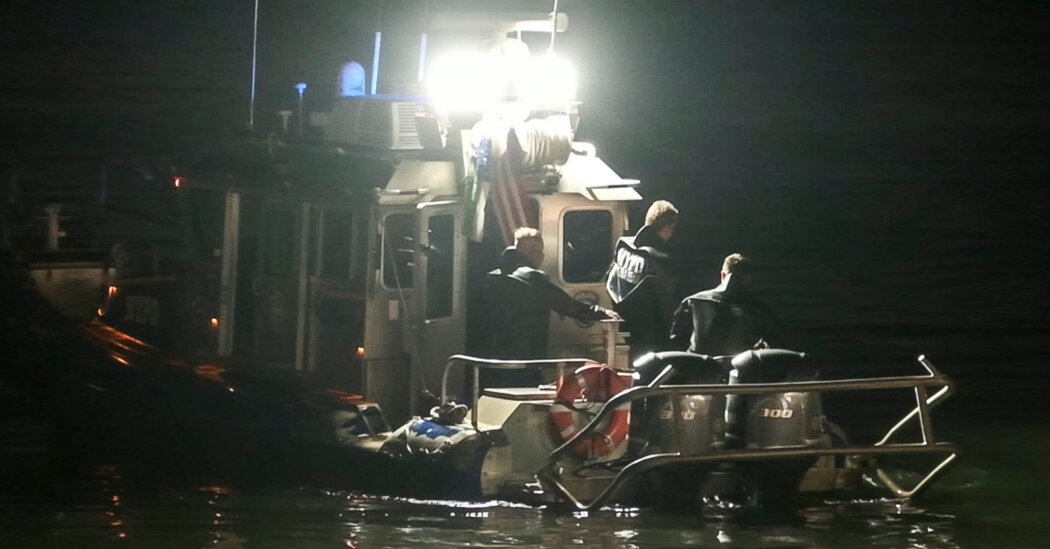
Emergency services were alerted to an overturned vessel at approximately 10:25 p.m. on Saturday, July [insert current day – e.g., 20th], after receiving a 911 call reporting a distressed situation. The New York City Police Department (NYPD) confirmed the deployment of an extensive air-and-sea rescue unit to the scene, including police divers who faced challenging conditions in the nocturnal waters of the harbor.
Officials identified the deceased as Sara Sanchez, 27, of Queens, and her infant daughter, Antonella Garcia. Rescuers found Ms. Sanchez and her daughter in the water in critical condition. They were immediately transported to NYU Langone Hospital in Brooklyn, where medical personnel tragically pronounced them dead shortly after arrival. The loss of a mother and her child has cast a somber shadow over the city, prompting an outpouring of condolences.
Manuel Hernandez, 46, who was operating the ill-fated boat, was arrested on Sunday and subsequently charged with 13 counts of reckless endangerment. The precise nature of the charges, implying a potential endangerment to 13 individuals, is under investigation, accounting for the two fatalities and potentially the 11 others who were rescued from the water. Reckless endangerment, under New York law, involves conduct that creates a substantial risk of serious physical injury or death to another person.
Intensive Rescue Operations Under Challenging Conditions
Beyond the tragic fatalities, the incident could have been far worse without the rapid response from both official agencies and private citizens. Officials reported that 12 other individuals were rescued from the bay, many even before police arrived on scene. These survivors were transported to various area hospitals, all reported to be in stable condition with minor injuries.
Adam Schwartz, owner of Sea the City, a local tour and jet ski rental company, recounted his company’s critical role in the immediate aftermath. Schwartz stated that one of his boats was the first on the scene, successfully rescuing 11 people from the cold harbor waters. This swift, civilian-led rescue operation highlights the importance of local maritime knowledge and preparedness in emergency situations on the water, often acting as the crucial first line of defense before larger official operations can be fully mobilized.
The U.S. Coast Guard (USCG), which also responded to the incident, has launched a collaborative investigation with the NYPD. A primary focus of this joint inquiry is to determine whether the capsized vessel was operating as an illegal charter. Captain Doreen McCarthy, head of the New York sector for the Coast Guard, issued a stern warning regarding such operations. “We are committed to holding illegal operators accountable to the highest extent of the law to ensure the safety of everyone on our waterways,” Captain McCarthy stated, emphasizing the federal agency’s dedication to maritime safety and regulatory enforcement.
An illegal charter is defined as any recreational or for-hire vessel that operates without the necessary U.S. Coast Guard credentials, lacks essential safety equipment, or does not possess a valid certificate of inspection. Such operations pose significant risks to passengers due to a lack of oversight regarding vessel maintenance, crew qualifications, and adherence to safety protocols. These regulations are designed to prevent tragedies by ensuring vessels are seaworthy, equipped for emergencies, and operated by licensed professionals.
Initial police reports indicate that no other boats were believed to be involved in the incident, suggesting the capsizing was an isolated event related to the vessel’s operation or condition. Weather conditions at the time were described as moderate, with the National Data Buoy Center recording wind speeds of 14 knots (approximately 16 miles per hour) at 10:24 p.m., just moments before the 911 call. While not severe, these conditions can still pose challenges for certain vessels, especially if improperly loaded or operated.
Why This Matters
This tragic incident in New York Harbor serves as a stark and painful reminder of the critical importance of maritime safety and regulatory compliance, particularly in densely trafficked urban waterways. The deaths of a mother and her infant highlight the devastating consequences when safety protocols are disregarded, or when vessels operate outside the bounds of established law.
Firstly, the investigation into whether this was an “illegal charter operation” underscores a pervasive and dangerous issue. Unlicensed and unregulated charters often bypass essential safety inspections, employ unqualified operators, and may not carry adequate safety equipment or insurance. This puts unsuspecting passengers at grave risk, as they are often unaware they are boarding a vessel that does not meet federal safety standards. For legitimate charter companies, illegal operations create unfair competition and tarnish the industry’s reputation, making it harder to ensure public trust in maritime travel.
Secondly, the incident calls attention to the shared responsibility for safety on the water. While authorities like the USCG and NYPD are tasked with enforcement and rescue, boat operators have a paramount duty to ensure the safety of their passengers and vessels. For the public, this tragedy is a cautionary tale, urging individuals to verify the credentials and safety records of any charter service they use. Asking for proof of Coast Guard licensing, insurance, and safety inspections can be a life-saving precaution.
Finally, the rapid multi-agency response and the crucial role played by a private company like Sea the City demonstrate the resilience and interconnectedness of maritime communities. However, even the most efficient rescue efforts cannot always prevent loss of life when preventative measures fail. As the investigation continues, it is anticipated that this incident will not only lead to legal consequences for those found responsible but may also prompt increased enforcement efforts and public awareness campaigns to prevent similar tragedies from occurring on New York’s vital waterways.