
United Kingdom’s 40 Commando Emerges Victorious at Inaugural International Special Operations Drone Competition
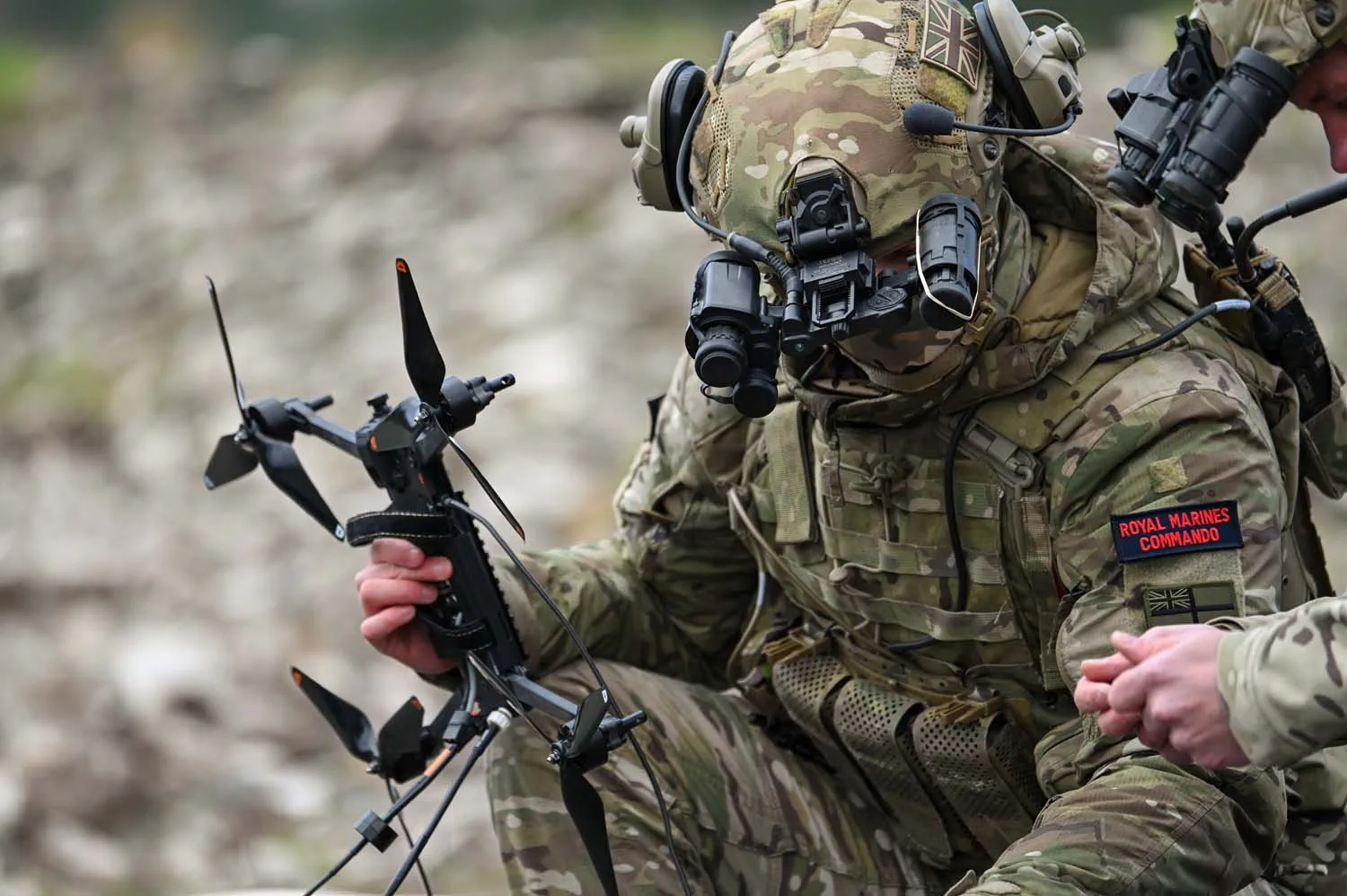
A five-member team from the United Kingdom’s 40 Commando Royal Marines has secured the top position at the first-ever Drone Crucible, a specialized drone competition for special operations forces. Held at the extensive Grafenwöhr Training Area in Bavaria, Germany, the event saw the British contingent outperform counterparts from the United States, Germany, Latvia, and Ukraine. Over three days, participating teams conducted a total of 400 drone sorties, showcasing advanced capabilities in reconnaissance, precision strike, and agile flight operations, according to an official statement from the Royal Navy.
The competition, hosted by the US National Drone Association, was designed to test the limits of unmanned aerial system (UAS) operation in complex, high-stakes scenarios. The Taunton-based 40 Commando team received commendation for its “outstanding performance, professionalism and dedication” throughout the rigorous event. The challenges were multifaceted, requiring teams to:
- Locate a designated target situated more than two kilometers away.
- Confirm the target’s identity and status using a surveillance drone.
- Execute a precision strike on the identified target.
- Assess the damage inflicted post-strike.
- Navigate drones through and within two-storey buildings and confined urban spaces, simulating close-quarters combat environments.
The final and perhaps most demanding challenge involved coordinating three separate drones to strike a single target in rapid succession, demonstrating advanced swarm tactics and operational synchronization. While individual challenges saw different winners, the UK team’s consistent excellence and adaptability across all disciplines earned them the overall championship.
Major William Docherty, Officer in Command of the Information Warfare Company at 40 Commando, highlighted the agility and rapid learning demonstrated by his team.“What impressed me most was how quickly the 40 Commando Information Warfare (IW) Company team adapted,”Major Docherty stated.“With minimal preparation time as a team, Marines from different specialisations learned at pace and performed exceptionally well against experienced pilots from the Special Operations community.”He further elaborated on the strategic role of his unit, explaining,“IW Company brings together sensors, communicators and strike options to solve operational problems; so when a new capability like FPV (First Person View) strike emerges, our Marines are perfectly placed to understand how it can be employed and integrated.”This emphasis on the IW Company underscores the integration of advanced technology and information gathering into modern combat tactics.
The Royal Navy emphasized that the victory at the Drone Crucible is a direct reflection of the rapid advancements in drone skills within the Commando Force and signifies significant progress towards establishing a credible First Person View (FPV) drone strike capability for the United Kingdom. FPV drones, often controlled by operators wearing goggles that provide a live, immersive video feed from the drone’s perspective, offer unparalleled precision and maneuverability, crucial for complex operational environments. The competition also served as a vital platform for industry partners to showcase their latest equipment and technological innovations, fostering collaboration between military users and defense technology developers.
In a separate but related development highlighting the UK’s commitment to drone integration, Malloy Flight, part of Delta Squadron, 48 Commando (Support Group), has been diligently developing streamlined procedures for rapid drone deployment. The squadron recently spent five intensive days at the Spadeadam Training Area in Cumbria, focusing on optimizing tactics for its Malloy quadcopter. This robust drone, capable of carrying payloads up to 63 kilograms, is central to their efforts to enable a freshly trained drone team to prepare and launch within a mere three minutes during daylight operations and five minutes at night. This rapid deployment capability is critical for achieving tactical surprise and launching drones before an adversary can detect or react, a strategy heavily influenced by lessons meticulously gathered from the ongoing conflict in Ukraine, where the speed and ubiquity of drone operations have proven decisive.
The UK Commando Force has been systematically investing in and integrating drone technology into its operational doctrine for a considerable period. Previous initiatives include a dedicated commando drone project aimed at significantly boosting Arctic combat power, recognizing the unique challenges and opportunities drones present in extreme cold weather environments. The Royal Marines have also successfully demonstrated the capability to launch drones from amphibious vessels, underscoring their commitment to multi-domain operations. Furthermore, drones have already been deployed in active combat scenarios, notably accompanying commando units during operations on Cyprus, showcasing their proven utility in surveillance, reconnaissance, and potentially direct engagement.
Why This Matters
The victory of the UK’s 40 Commando at the inaugural Drone Crucible competition, coupled with other ongoing drone development initiatives within the Royal Marines, signals a profound and accelerating shift in modern military strategy and capabilities. This event is not merely a showcase of technical prowess but a crucial indicator of how special operations forces are adapting to the evolving landscape of warfare, heavily influenced by recent conflicts.
Firstly, the emphasis on First Person View (FPV) drone strike capabilities represents a significant tactical leap. FPV drones offer unparalleled precision, agility, and situational awareness, allowing operators to navigate complex environments, identify targets with extreme accuracy, and execute strikes with minimal collateral damage. This technology can act as a force multiplier, enabling small special operations teams to exert disproportionate influence on the battlefield, reduce risks to human operators by engaging targets remotely, and operate effectively in urban or otherwise challenging terrains. The ability to “learn at pace” and integrate diverse specializations within the Information Warfare Company highlights an organizational agility critical for incorporating rapidly advancing technologies.
Secondly, the participation and performance of nations like Ukraine, alongside NATO allies, underscore the critical lessons being drawn from contemporary conflicts. The conflict in Ukraine has dramatically illustrated the transformative impact of drones, from their use in reconnaissance and artillery spotting to direct strike missions and even psychological operations. The UK’s rapid launch procedures (three minutes by day, five by night) and the ability to carry substantial payloads (63kg by the Malloy quadcopter) are direct responses to these lessons, prioritizing speed, versatility, and pre-emptive engagement. This demonstrates a proactive approach to integrating combat-proven tactics and technologies into special operations doctrine.
Thirdly, the Drone Crucible serves as a barometer for international collaboration and technological exchange among elite forces. Competing against and learning from counterparts from the United States, Germany, and Latvia fosters a shared understanding of best practices, technological requirements, and operational challenges. The involvement of industry partners further accelerates innovation, ensuring that military forces have access to cutting-edge equipment tailored to their specific needs. This symbiotic relationship between military users and defense technology developers is vital for maintaining a competitive edge.
Finally, for the United Kingdom, these developments reinforce its commitment to maintaining a leading position in advanced military capabilities, particularly within its Commando Force. The ongoing investments in drones for Arctic combat, amphibious operations, and historical deployments in Cyprus demonstrate a long-term strategic vision. By enhancing precision strike, reconnaissance, and rapid deployment capabilities, the Royal Marines are ensuring they remain highly adaptable, effective, and relevant in an increasingly complex and technologically driven global security environment, contributing significantly to national defense and international stability.