
GCHQ Director Warns of Unprecedented Risk in Global Geopolitics
Anne Keast-Butler, Director of GCHQ, has issued a stark warning regarding the current state of international relations, stating that the risk of miscalculation between nations is at its highest point in her three-decade career in national security. Speaking at Bletchley Park, she characterized the global environment as occupying “a space between peace and war.”
The Director delivered the agency’s inaugural Annual Lecture in the Fellowship Auditorium at Bletchley Park on Wednesday, May 27th. This location holds historical significance as the wartime hub where British codebreakers operated during the Second World War. Keast-Butler acknowledged the rarity of an intelligence agency head speaking publicly, framing her decision to do so as a direct response to what she termed “a moment of consequence.” She reiterated, “The risk of miscalculation is as high as I’ve ever seen it,” attributing this heightened danger to an era defined by radical uncertainty, contested geopolitics, and rapidly evolving technology.
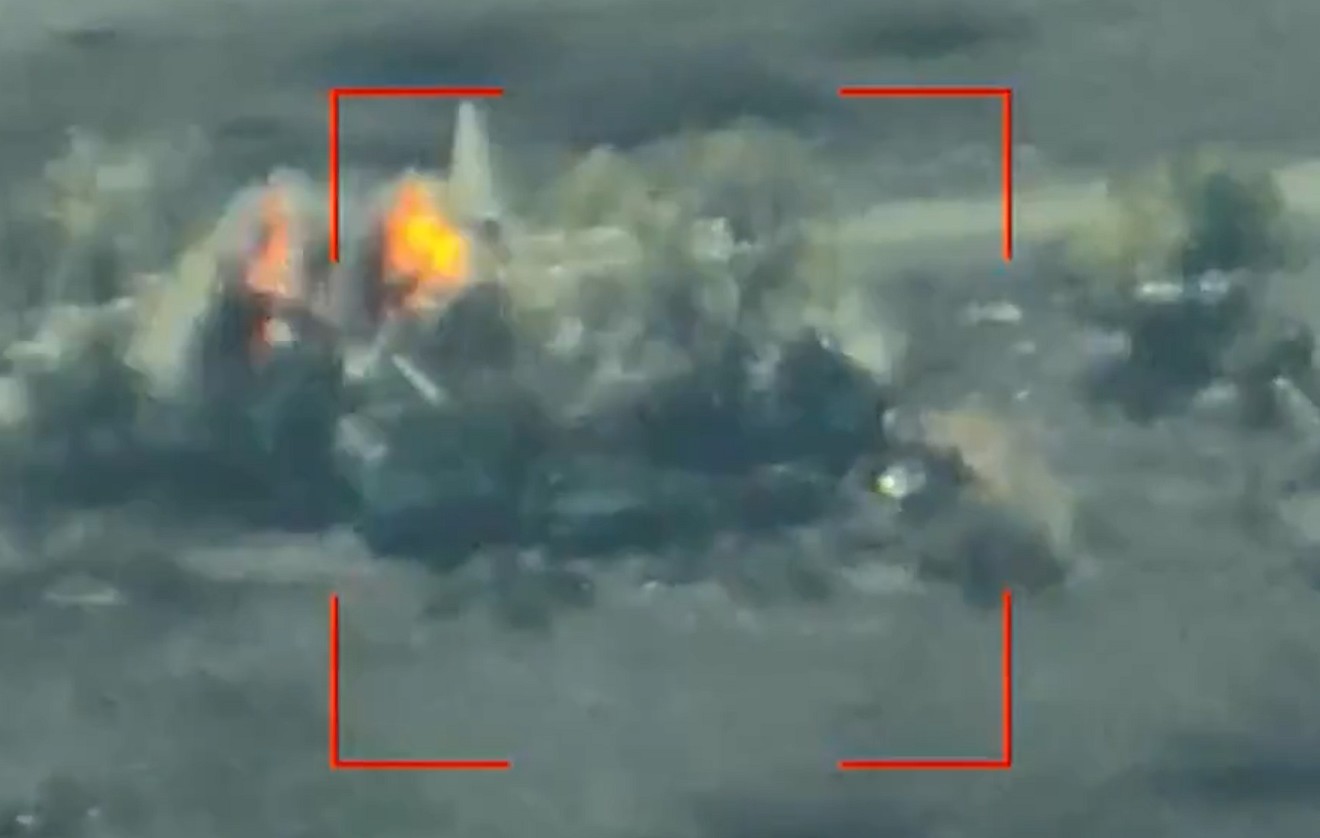
Addressing the conflict in Ukraine, Keast-Butler presented new intelligence indicating that nearly half a million Russian soldiers have been killed since the war’s inception. She further asserted that President Putin is “going backwards on the battlefield” while affirming Britain’s sustained support for Kyiv. This assessment was part of a broader discussion on Russia, which Keast-Butler described as escalating daily hybrid activity against the UK and wider Europe. This activity spans a broad spectrum, from seabed operations to cyberspace, and specifically targets critical infrastructure, democratic processes, supply chains, and public trust. She detailed GCHQ’s collaborative efforts with intelligence and defence partners to counter this threat, which includes exposing Russian intentions and underwater capabilities near British waters, as well as disrupting attempts to smuggle Western technology.
A significant portion of the Director’s address focused on the accelerating pace of technological change and its impact on warfare. Keast-Butler highlighted that modern warfare is being reconfigured, becoming increasingly data-driven, AI-enabled, and automated, citing examples from conflicts in Ukraine to Iran. She identified China as a technological superpower possessing sophisticated cyber, intelligence, and military capabilities. “Technology and data are no longer just tools; they are transformational forces,” she stated, underscoring data’s role as a strategic asset whose value exponentially increases when combined with artificial intelligence. She emphasized its pervasive importance, declaring, “Data is the lifeblood of our society, our economy, and our warfighting capability.”
On the subject of cyber security, Keast-Butler urged businesses to take immediate action. “Cyber security is a critical priority for all businesses,” she asserted, noting that GCHQ experts are providing extensive advice but that “we need businesses to take immediate action now.” She described the current security landscape in stark terms, informing the audience that “the ground beneath our feet is shifting, and shifting fast.” In response to this evolving threat, GCHQ has reportedly developed a blueprint for a new national cyber defence capability in recent months, designed to integrate ‘agentic AI’ into machine-speed cyber defence systems.
Quantum technology also featured prominently in the lecture. Keast-Butler, a mathematician by training, acknowledged that the timeline she had previously assumed for the operational deployment of quantum technologies had significantly shortened. According to GCHQ, quantum sensing is already in practical use, with ongoing collaborative work involving academia and industry aimed at identifying the signatures of stealth technologies, including the detection of missile launches. She issued a cautionary note, stating that “once they are operational, quantum computers will be able to complete, in a matter of seconds, tasks that currently take years” — including the ability to defeat the encryption that safeguards today’s classified information. She reiterated a previous call for businesses to migrate their critical systems in accordance with the timelines established by the National Cyber Security Centre.
The Director also addressed the concept of technology sovereignty, clarifying that it concerns a nation’s agency, ability, and agility to shape its own digital future, rather than an insistence on domestic manufacturing for every component. “Sovereignty doesn’t have to mean ‘made in the UK’, so long as we carefully manage our supply chains, dependencies, and data,” she explained. She drew a historical parallel to GCHQ’s pioneering work in public key cryptography in the 1970s, noting that the same mathematical principles now secure online commerce, ensure the operational capability of fighter jets, and protect nuclear deterrents.
Partnerships emerged as a recurring and central theme throughout the speech, echoing the foundational example of Alastair Denniston, GCHQ’s first Director. Keast-Butler marked the 80th anniversary of the UKUSA intelligence-sharing partnership with the United States National Security Agency, describing the Five Eyes alliance (comprising the UK, US, Canada, Australia, and New Zealand) as the agency’s most critical partnership and the one most feared by adversaries. She also noted the deepening of strategic intelligence relationships with European partners, which she stated are strengthening NATO. Drawing a clear contrast with Britain’s adversaries, whose partnerships she asserted intelligence shows to be strained and transactional, Keast-Butler concluded emphatically: “Our adversaries don’t do teamwork – we do.”
Why This Matters
The GCHQ Director’s address is critically important for several reasons, signaling profound shifts in global security, economic stability, and technological development. Her warning of an unprecedented risk of miscalculation underscores a precarious geopolitical landscape where traditional mechanisms for de-escalation may be less effective. This “space between peace and war” implies a constant state of tension and potential for rapid escalation, demanding vigilance from governments, businesses, and citizens alike.
The insights into Russia’s hybrid activities highlight the multifaceted nature of modern conflict, extending far beyond conventional military engagements to target critical infrastructure, democratic processes, and public trust. This means that national security is no longer solely the domain of defence ministries but requires a whole-of-society approach to resilience. For businesses, the urgent call to action on cyber security is a direct imperative; failure to invest in robust defences can have severe economic consequences, impacting supply chains, intellectual property, and consumer confidence.
Furthermore, the speech provides a sobering glimpse into the transformative power of emerging technologies, particularly AI and quantum computing. The notion of warfare becoming “data-driven, AI-enabled and automated” suggests a future where decision-making speed and technological superiority could be decisive. The advent of operational quantum computers, capable of defeating current encryption, poses an existential threat to data privacy and national secrets, necessitating immediate migration to quantum-resistant systems. This technological arms race has implications for international power dynamics, potentially widening the gap between nations that invest heavily in these areas and those that do not.
Finally, Keast-Butler’s emphasis on partnerships, particularly the enduring strength of alliances like Five Eyes and NATO, serves as a crucial counterpoint to the fragmented nature of adversarial relationships. In an era of escalating threats, international cooperation remains a cornerstone of collective security and resilience. The Director’s remarks are not merely an intelligence briefing; they are a strategic warning and a call to action for a world grappling with radical uncertainty, urging proactive measures in diplomacy, defence, economic policy, and technological innovation to navigate a perilous future.