

JOINT BASE ANACOSTIA-BOLLING, Washington—The U.S. Air Force is implementing a revised Physical Fitness Readiness Assessment (PFRA) this summer, with a three-month diagnostic period underway since March to allow service members to adapt to the new standards. Official scores for the assessment will begin counting in July. On May 5, Airman 1st Class Rickey Newton, among 10 other members of the Air Force Honor Guard, participated in a diagnostic session here, showcasing the demands of the updated test.
During the core endurance portion, Newton held a forearm plank for 5 minutes and 18 seconds, significantly surpassing the 3 minutes and 30 seconds required for a maximum score. Despite visible exertion, he continued for an additional 1 minute and 48 seconds beyond the maximum threshold, demonstrating the physical rigor of the new test components.
The Air Force first announced changes to its fitness program last fall, mandating that Airmen undergo the assessment twice annually. The new PFRA introduces several key modifications. For the cardiovascular component, Airmen can now choose between a two-mile run—an increase from the previous 1.5-mile standard—or a 20-meter High Aerobic Multi-Shuttle Run (HAMR). The assessment also incorporates a body composition measurement and offers alternative exercise choices for evaluating muscular strength and core endurance, moving beyond the previous fixed regimen of push-ups and sit-ups.
Photo by Jud McCrehin, Air & Space Forces Association
Initial scoring charts for the new PFRA were released in September to prepare personnel for the upcoming changes. However, these charts were updated in March following additional feedback, data analysis, and input from fitness experts. Air Force Chief Exercise Physiologist Jason Ham explained in an emailed statement that the revisions aimed to “better calibrate” the scoring. For instance, the updated HAMR scoring is designed to align more accurately with the average VO2 max—a measure of maximum oxygen consumption during exercise—across different demographic groups.
The ongoing diagnostic test period, which commenced in March, serves a dual purpose. Ham stated it provides Airmen an opportunity to practice the assessment under the new, more demanding standards. Simultaneously, it allows “policy makers a chance to understand areas that could use a little refinement in a major change such as this one.” As of May, it was too early to determine if further adjustments to the scoring charts would be necessary.
Members of the Air Force Honor Guard, who are required to achieve a minimum score of 85 percent on fitness tests—10 percent higher than the service-wide minimum—participated in the May 5 diagnostic session. All 10 males and one female scored 90 percent or higher, with some achieving a perfect 100 percent. However, participants noted the learning curve involved in identifying which exercise options best leverage their individual strengths.
Airman Newton, for example, typically maxes out on traditional sit-ups but opted to try the forearm plank during the diagnostic. He observed that the plank might be more advantageous for individuals with less lower abdominal endurance, as it allows for greater engagement of quadriceps and arm muscles. Despite his exceptional plank performance, Newton noted that the exertion impacted his subsequent performance in the HAMR event due to lack of rest. He scored 91 percent overall and plans to re-evaluate his exercise choices for his official assessment after July 1, stating, “You’ve kind of got to figure out where your strengths and weaknesses are within your body. I’m just trying to gauge which one is best for me.”
A significant change in the new PFRA is the choice between the two-mile run and the HAMR, with each accounting for 50 percent of the total score. The Air Force had initially considered making the two-mile run mandatory for all personnel. However, in January, the service announced that Airmen would retain the option. An Air Force official clarified in January that “The goal is to test physical fitness and cardiovascular fitness—both the two-mile run and the 20-meter HAMR do that equally.”
During the May 5 event, six Airmen selected the HAMR, while five opted for the two-mile run. The HAMR requires participants to shuttle between two lines 20 meters apart, with the pace progressively increasing through a series of timed beeps. Participants begin with a slow jog and incrementally quicken their pace with each new level. Master Sgt. Craig Harrison, observing the test, noted that “By the time you get to like level 7, that’s when you see the real runners.”
Only three Airmen continued past level 9-4 of the HAMR. Airman 1st Class Zachery Chance, an 18-year-old sprinter, was the last to remain, reaching level 11-3, or 95 repetitions. This performance exceeded the 87 repetitions required for a maximum score in his age group. Chance, who achieved an overall score of 99 out of 100 on the PFRA, explained his choice: “I used to run track in high school; my thing is short distances. Long distance was something that always tripped me up.” He advises participants to carefully manage their pace, noting that many start too fast and “burn out because they run faster than they have to.”
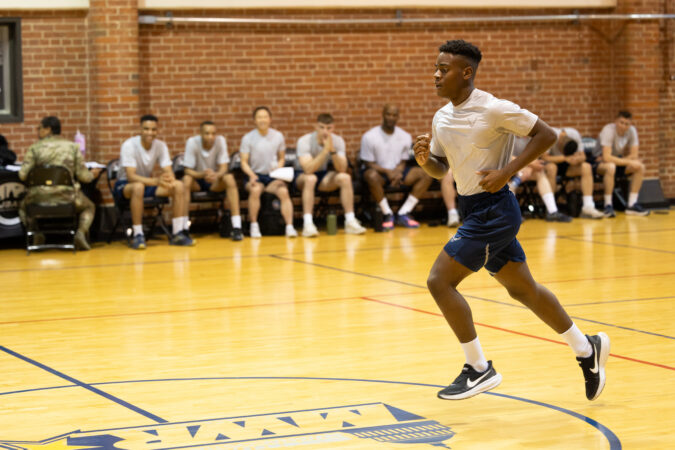
Photo by Jud McCrehin, Air & Space Forces Association
Airman 1st Class Jordan De Guzman, 19, reached level 10-1 (82 repetitions) on the HAMR, attributing his endurance to Stairmaster training. “For me, what helped a lot was the Stairmaster machine,” he said. “We had a Mount Everest challenge at the gym, and I did it for a week… by the end of the week, I was doing about two hours on the Stairmaster.”
Among those who chose the two-mile run, several indicated that the increased distance from 1.5 miles did not significantly alter their approach. Staff Sgt. Ryne Montgomery, 34, who runs three times a week for distance, completed the two miles in 11 minutes and 58 seconds. He also achieved maximum scores on the traditional push-up and sit-up events, resulting in an overall score of 100. Montgomery acknowledged that the additional half-mile “is certainly more challenging for people who aren’t accustomed to running,” highlighting the varied impact of the new standard on Airmen with different fitness profiles.
Why This Matters
The U.S. Air Force’s overhaul of its Physical Fitness Readiness Assessment (PFRA) is more than just an administrative change; it reflects a broader strategic imperative to maintain a physically capable and resilient fighting force. For a global power like the United States, the fitness of its military personnel directly correlates with its operational readiness and ability to project power and respond to threats worldwide. By updating its fitness standards, the Air Force aims to ensure its Airmen possess the physical attributes necessary for modern military operations, which increasingly demand diverse physical capabilities beyond traditional benchmarks.
This revised assessment emphasizes a more holistic approach to fitness, moving beyond a “one-size-fits-all” model. Offering choices for cardiovascular and strength components allows Airmen to leverage their individual strengths, potentially fostering a more sustainable approach to physical training and reducing injuries associated with rigid, less personalized tests. The inclusion of the High Aerobic Multi-Shuttle Run (HAMR), for instance, better simulates the stop-and-go, multi-directional movements often encountered in operational environments, compared to a continuous long-distance run. Such changes indicate a military seeking to align its fitness evaluations with the realities of contemporary warfare and mission requirements.
Furthermore, the diagnostic period before official implementation highlights the Air Force’s commitment to data-driven policy and continuous improvement. Gathering feedback and refining scoring methodologies based on real-world application underscores an adaptive organizational culture. This iterative process is crucial for ensuring that the new standards are fair, effective, and achieve their intended purpose of promoting optimal fitness across the force. The twice-yearly assessment frequency also signifies a sustained emphasis on fitness, integrating it as an ongoing component of military professionalism rather than an intermittent hurdle.
Ultimately, these changes impact thousands of Airmen globally, influencing their daily routines, career progression, and overall well-being. A modernized fitness test can contribute to greater job satisfaction, reduced attrition due to physical readiness issues, and a healthier force capable of meeting the dynamic challenges of global security. For international observers and allied nations, the physical standards of the U.S. Air Force offer insights into its human capital strategy and its sustained commitment to maintaining a robust and effective military, an essential component of global stability.
WASHINGTON D.C. –The United States Air Force continues to refine its approach to physical fitness, with recent discussions and policy adjustments highlighting the importance of varied training methodologies and flexible assessment options for its personnel. A key component of this ongoing evolution revolves around the two-mile run, a staple of military fitness tests, and the broader Physical Fitness Readiness Assessment (PFRA).
For many Airmen, achieving peak performance on the two-mile run is directly linked to developing a robust cardiovascular foundation. Staff Sgt. Ryne Montgomery, a proponent of this training philosophy, emphasized, “a foundational base of cardio endurance is the only way to get better scores on the two-mile run.” This perspective underscores a widely accepted principle in endurance sports: consistent, progressive training is essential for improving stamina and speed over longer distances.
Montgomery detailed his personal training regimen, which focuses on gradually increasing mileage to build endurance. “Just gradually increase your mileage, week-by-week,” he advised. His routine includes an eight-mile run on Tuesdays to build sustained endurance, followed by a track workout on Thursdays dedicated to speed work and anaerobic conditioning. Saturdays are reserved for long runs, typically ranging from 13 to 15 miles, designed to further enhance cardiovascular capacity and mental fortitude.
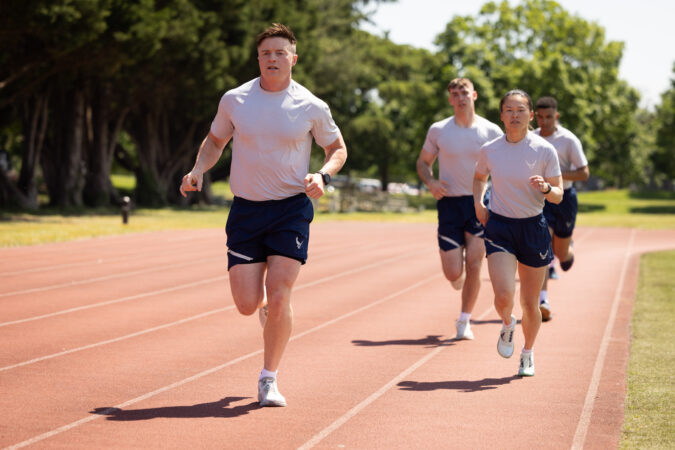
Photo by Jud McCrehin, Air & Space Forces Association
While Montgomery’s long-distance approach may be intense for some, experienced Airmen largely concur on the importance of regular running. Most recommend incorporating running into a routine at least three times per week. Capt. Rachel Smith, a 28-year-old flight commander in the Honor Guard, exemplified a balanced approach, achieving a perfect 100 score on her overall PFRA. Her strategy involved mixing three-to-five-mile runs three times a week with calisthenic workouts on non-running days. This combination of cardiovascular training and strength conditioning highlights the benefits of a holistic fitness program for military readiness.
Tech. Sgt. Devonte Hentley, 37, who scored a 96 on the test, also emphasized varied running intensities and the critical role of recovery. His weekly schedule includes a moderate three-to-four-mile run, a faster-paced two-to-2.5-mile run, and concludes with a four-to-five-mile run at a comfortable, conversational pace. Hentley underscored the importance of allowing the body to recover, stating, “But you don’t have to run every day,” a sentiment that resonates with modern athletic training principles emphasizing rest and muscle repair.
For units like the Honor Guard, managing individual fitness routines presents unique challenges due to varying work schedules and mission requirements. As the lead unit fitness program manager for the unit, Harrison noted that most Airmen currently manage their own workout routines. This decentralized approach has proven effective, with Harrison observing, “Luckily, we haven’t had that; everybody’s fit and doing pretty well.” He indicated that unit-wide physical training (PT) would only be considered if discrepancies in fitness levels arose, suggesting a proactive yet flexible leadership style.
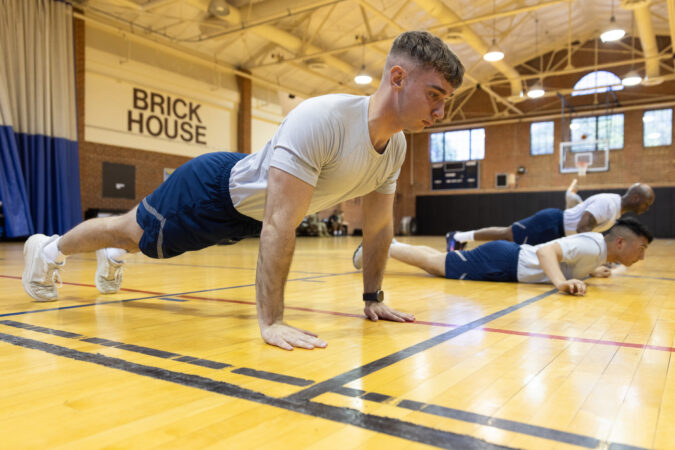
Photo by Jud McCrehin, Air & Space Forces Association
Harrison, 38, himself achieved a score of 95.5 on an earlier diagnostic test, which he plans to submit as his official recorded score after the July 1 deadline for new fitness standards implementation. His experience highlights a significant recent policy shift within the Air Force regarding the two-mile run. Initially, Harrison was training for the two-mile distance, but he changed his approach after the Air Force announced it would not make the two-mile run a mandatory component of the PFRA. Instead, Airmen would be given a choice between the two-mile run and other options, such as the shuttle run.
This policy adjustment was met with positive reception by many, including Harrison, who discovered he performed better in shorter, more explosive movements. “I can do long-distance running; I don’t mind it. However, I’m more of a sprinter type, so doing the shuttles back and forth is more comfortable for me,” he explained. He expressed pleasant surprise at the Air Force’s decision, noting its benefit for a diverse force. “A lot of people aren’t necessarily long-distance runners. I think some people perform better at shorter sprints, so for them having an option is good.”
Despite his preference for sprints, Harrison plans to attempt the two-mile run on a future PFRA, demonstrating a willingness to challenge himself across different modalities. “I’ve timed myself around the 15:30 mark, so it’s not bad—could do with some improvement—but I am going to attempt the two-mile, just to see where I’m at,” he stated. This reflects a broader understanding within the Air Force that adaptability and a well-rounded fitness profile are valuable assets for its personnel.
The flexibility in fitness testing and the emphasis on diverse training methodologies aim to ensure that Airmen can maintain optimal physical readiness while accommodating individual strengths and preferences. This approach not only supports individual well-being but also contributes to the overall operational effectiveness of the Air Force.
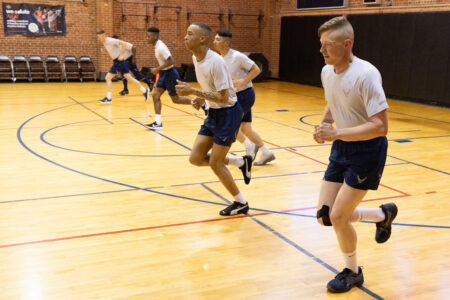
05/05/2026
PT Test at Joint Base Anacostia-Bolling
Hammer Shuttle
Photo by Jud McCrehin, Air & Space Forces Association
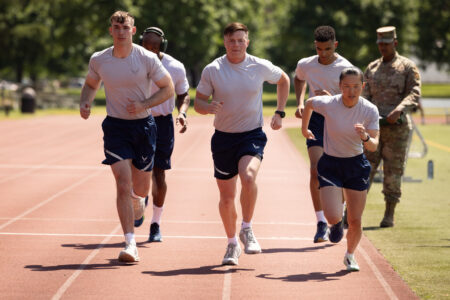
05/05/2026
PT Test at Joint Base Anacostia-Bolling
2 mile run during the PT Test.
Photo by Jud McCrehin, Air & Space Forces Association
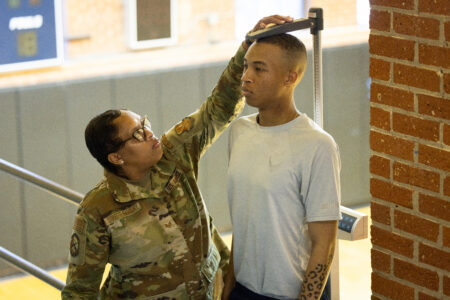
05/05/2026
PT Test at Joint Base Anacostia-Bolling
Staff Sgt. Melissa Streete-Bambury measures A1C Alan Burton’s height before the PT Test.
Photo by Jud McCrehin, Air & Space Forces Association
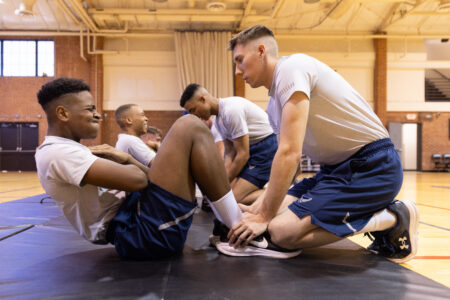
05/05/2026
PT Test at Joint Base Anacostia-Bolling
A1C Zachary Chance does sit-ups while A1C Andrew Bailitz holds his feet.
Photo by Jud McCrehin, Air & Space Forces Association
Audio of this article is brought to you by the Air & Space Forces Association, honoring and supporting our Airmen, Guardians, and their families. Find out more at afa.org
Why This Matters
The Air Force’s ongoing evolution of its physical fitness standards and training methodologies is critical for several reasons, impacting both individual service members and the broader operational capabilities of the military.
1. Enhancing Operational Readiness:Physical fitness is a cornerstone of military effectiveness. Airmen must be prepared for a variety of demanding scenarios, from combat operations to humanitarian aid missions. By promoting robust cardiovascular endurance, strength, and agility, the Air Force ensures its personnel can perform under pressure, endure prolonged physical exertion, and react effectively in dynamic environments. Flexible fitness options can help more Airmen achieve and maintain these standards, contributing directly to a more capable and ready force.
2. Promoting Airmen Well-being and Retention:A fitness program that acknowledges individual differences and offers choices can significantly improve morale, reduce the risk of injuries, and foster a more positive relationship between Airmen and physical training. When individuals can choose components that align with their natural strengths or preferred training styles (e.g., long-distance running versus sprinting), they are more likely to stay engaged, avoid burnout, and sustain a high level of fitness over their careers. This focus on well-being can also play a crucial role in recruitment and retention efforts, as a supportive and adaptable environment is more attractive to potential and current service members.
3. Adapting to Modern Warfare and Diversity:Modern military operations demand a diverse range of physical attributes. While some roles require extreme endurance, others might prioritize explosive power or short-burst speed. By offering choices in fitness assessments, the Air Force demonstrates an understanding of its diverse mission sets and the varied physiological profiles of its personnel. This adaptability ensures that the fitness standards remain relevant and equitable, catering to a broader range of talent and optimizing the potential of every Airman, regardless of their natural athletic inclinations.
4. Informed Policy-Making and Continuous Improvement:The Air Force’s willingness to review, discuss, and adjust its fitness policies, such as the decision not to mandate the two-mile run, reflects an organization committed to continuous improvement. By integrating feedback from Airmen, leveraging diagnostic testing, and observing real-world performance, the military can develop policies that are not only effective but also fair and sustainable. This iterative process of policy refinement sets a precedent for responsive leadership and an evidence-based approach to personnel management.
In conclusion, the discussions and adjustments around Air Force physical fitness are not merely about passing a test; they are about cultivating a resilient, adaptable, and healthy fighting force prepared for the complexities of global challenges. The emphasis on individualized training, flexible assessment options, and a holistic approach to wellness directly supports the core mission of safeguarding national security.