
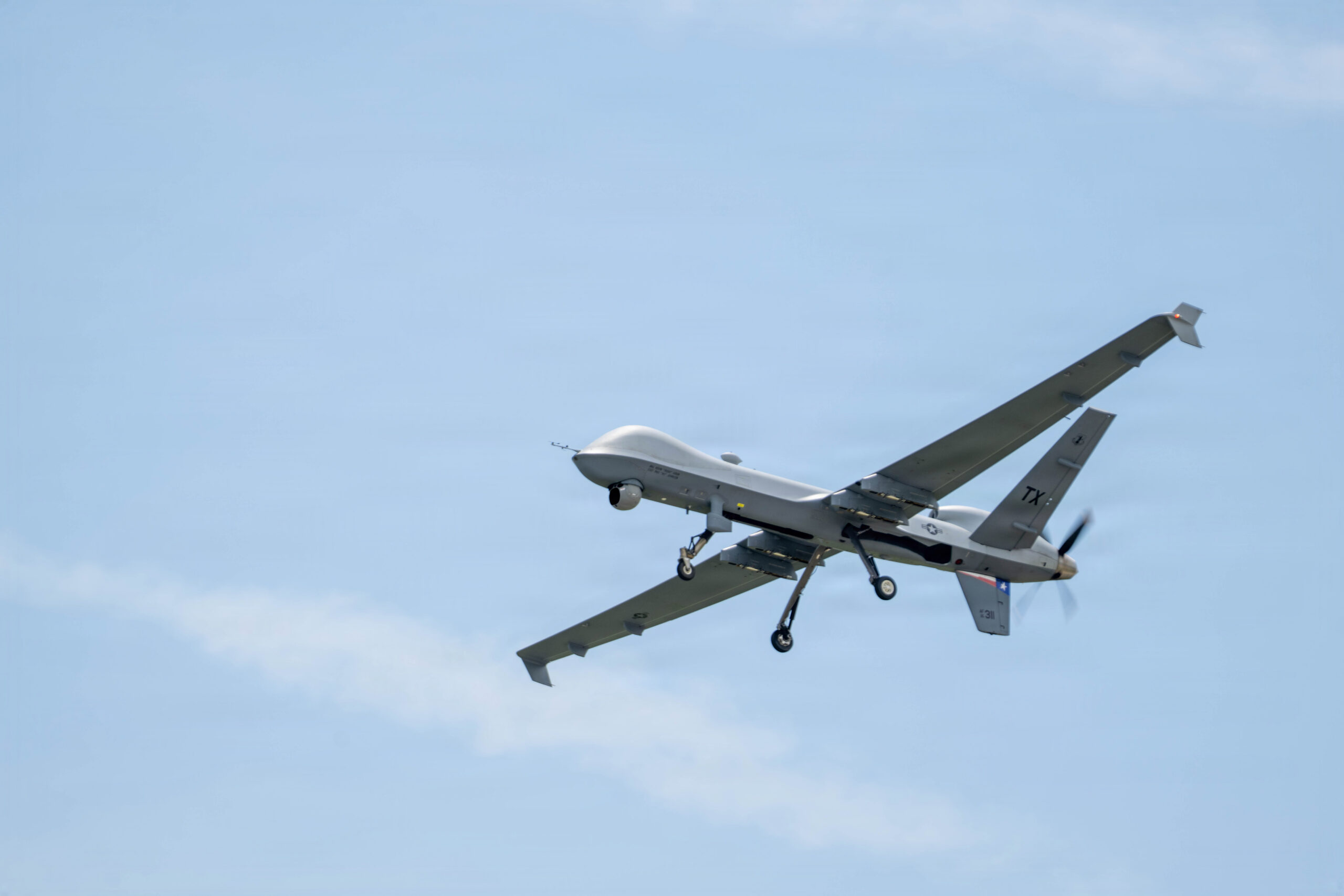
Washington D.C. – The United States Air Force’s strategic direction regarding its uncrewed aerial vehicle (UAV) fleet is facing a significant challenge from Congress, with the Senate Armed Services Committee (SASC) issuing a directive to halt the divestment of MQ-9 Reaper drones and, instead, increase their inventory by 2028. This move comes despite a notable reduction in the fleet over recent months and a desire within some Air Force circles to transition to more advanced platforms.
On June 11, the SASC approved its iteration of the 2027 National Defense Authorization Act (NDAA), which includes a provision mandating “the Secretary of the Air Force to limit divestment and to submit a report and briefing on the MQ-9 aircraft, while directing the MQ-9 to increase inventory by 2028.” This legislative measure underscores a congressional belief in the continued operational relevance and necessity of the MQ-9 platform.
The directive from the SASC directly counters the recent trajectory of the Air Force’s Reaper fleet. As of October last year, the Air Force maintained 182 MQ-9s, comprising 158 in the Active fleet and 24 within the National Guard. However, this number has diminished considerably. Lt. Gen. David Tabor, Air Force deputy chief of staff for plans and programs, testified last month that the current operational fleet stands at approximately 135 aircraft, reflecting both attrition from ongoing operations and a broader strategy of divestment.
Despite the declining numbers, the MQ-9 Reaper has been lauded for its operational effectiveness. Gen. Kenneth S. Wilsbach, Air Force Chief of Staff, recently highlighted the drone’s critical role in a specific conflict, describing it as the “most valuable player” during Operation Epic Fury, where it was extensively utilized against more than 13,000 targets. The primary advantage of the uncrewed Reaper is its capacity for risk reduction: it can be deployed into higher-threat environments and maintained on station for extended periods, tasks that would expose human pilots to unacceptable danger in crewed aircraft. This inherent characteristic makes attrition of the platform more tolerable when no human lives are directly at stake.
The Air Force has expressed a desire to replace its MQ-9s, but the options for doing so are currently constrained. Production of the MQ-9A model ceased in 2024. General Atomics (GA), the manufacturer of the Reaper, is now promoting an upgraded and larger variant, the MQ-9B, which also comes with a higher price tag. General Atomics has indicated that it possesses sufficient components to assemble a limited number of additional MQ-9A units. Furthermore, the possibility exists to reactivate older Reapers currently stored at the “Boneyard” facility at Davis-Monthan Air Force Base in Arizona, providing a potential avenue to bolster the fleet.
However, General Atomics’ primary focus is on its newer MQ-9B model. This advanced version boasts enhanced capabilities, including a larger airframe, the capacity to carry a heavier payload, and a significantly extended flight range compared to its predecessor. C. Mark Brinkley, a spokesman for General Atomics, emphasized the company’s proactive stance. “We are proactively developing options and offering solutions to the problem,” Brinkley stated. He added, “The MQ-9B line is hot, with 100 aircraft on order from 10 different nations. It is better in every way than the MQ-9A and is a true asset for America. We know there is a solution to this problem, and we’re prepared to help.”
David Alexander, president of General Atomics, confirmed that discussions regarding the MQ-9B have been ongoing since May. Crucially, the Senate Armed Services Committee is not prescribing a specific solution for the Air Force to adopt. A congressional official informed reporters that the committee prefers to grant the Air Force “flexibility” in how it addresses the mandate to increase its MQ-9 inventory, allowing for various acquisition or reactivation strategies.
General Atomics has openly welcomed the committee’s intervention. “Congress is keenly aware of the problem, and understands there are solutions available today. It’s great to see everyone moving so quickly to prevent this loss of American capability,” Brinkley remarked, highlighting the industry’s readiness to support the congressional directive.
The SASC’s clear directive sets up a critical juncture for the Air Force, balancing its long-term modernization goals with immediate operational demands and congressional oversight regarding a proven and frequently deployed asset.
Space Editor Courtney Albon and Staff Writer Stephen Losey contributed reporting.
Why This Matters
National Security and Military Readiness:The MQ-9 Reaper is a foundational asset for U.S. national security, providing critical intelligence, surveillance, and reconnaissance (ISR) capabilities, as well as precision strike options, in diverse operational theaters worldwide. A reduction in its fleet directly impacts the U.S. military’s capacity to conduct counter-terrorism operations, monitor geopolitical hotspots, and support allies. The SASC’s directive underscores a concern that the Air Force’s planned divestment could create a capability gap, hindering current operational readiness and strategic flexibility. Maintaining or increasing the fleet ensures the U.S. retains a robust “eyes in the sky” and rapid response capability in an increasingly unstable global environment.
Evolution of Uncrewed Warfare and Strategic Debate:This situation highlights a broader strategic debate within the Pentagon and Congress regarding the future of uncrewed aerial systems. While the Air Force often seeks to modernize with cutting-edge, stealthier, and potentially more autonomous platforms for contested environments, the MQ-9 represents a cost-effective, proven workhorse for less contested or persistent ISR/strike missions. The congressional push to retain the Reaper signifies a recognition of its enduring utility and the current necessity for a balanced portfolio of uncrewed systems, rather than an exclusive focus on future-generation platforms that may be more expensive or less readily available for current needs. It reflects a tension between long-term strategic vision and immediate tactical and operational requirements.
Defense Industrial Base and Technological Innovation:The decision directly impacts General Atomics, a key player in the U.S. defense industrial base. The closure of the MQ-9A production line and the push for the MQ-9B illustrate the constant evolution of defense technology and the challenges manufacturers face in adapting to military requirements and budget cycles. The SASC’s intervention could stimulate further investment in drone technology, either through reactivating older lines or accelerating the adoption of newer models like the MQ-9B. This has implications for jobs, research and development, and the U.S.’s competitive edge in the global drone market, especially given the MQ-9B’s international sales success.
Budgetary and Resource Allocation Implications:Acquiring or reactivating MQ-9s, whether A or B models, entails significant financial investment. This decision will influence how defense budgets are allocated, potentially shifting funds from other modernization programs or personnel initiatives. It underscores the ongoing challenge of balancing fiscal constraints with strategic imperatives and the need for robust military capabilities. The flexibility offered by Congress for the Air Force to choose its solution—whether reactivating older units, utilizing spare parts, or purchasing new B models—will have distinct cost and timeline implications for taxpayers and military planners alike.