
UK and France Deepen Strategic Nuclear Deterrence Cooperation with Joint Air Exercise
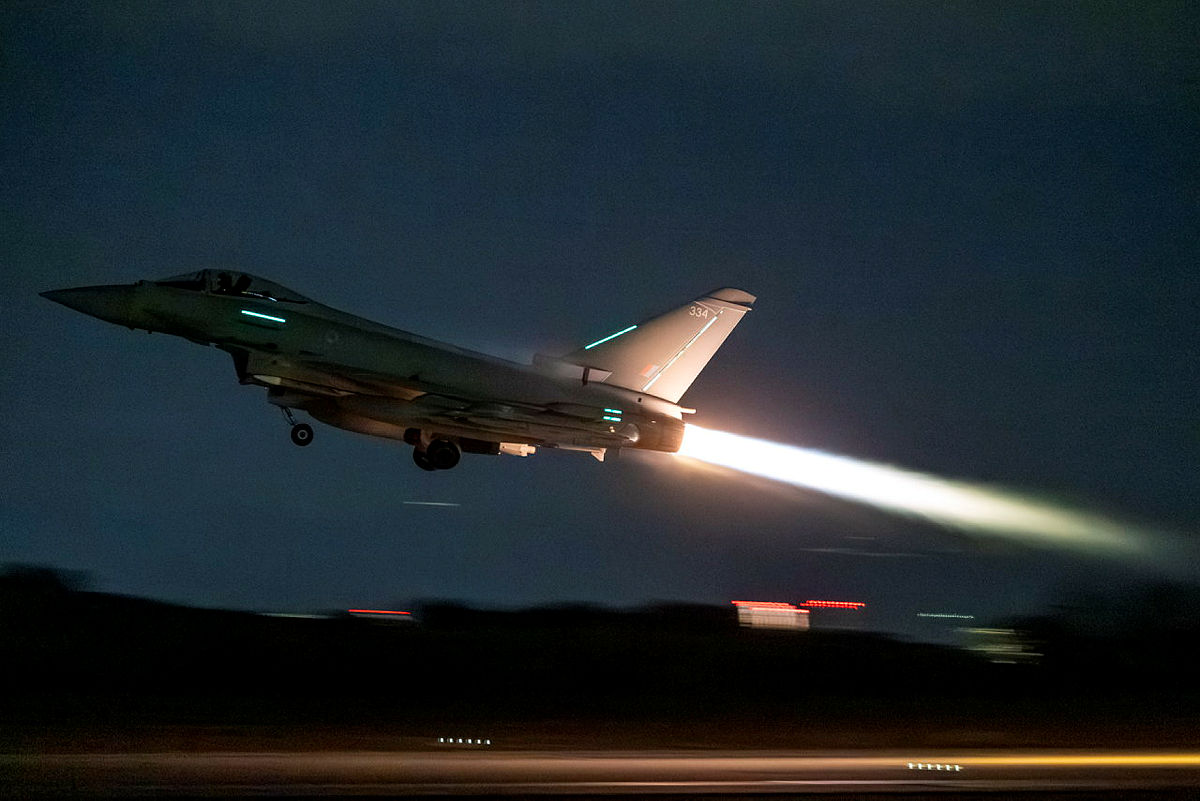
In a significant demonstration of deepening Anglo-French defence ties, Royal Air Force (RAF) Typhoon fighter jets recently participated in Exercise Rummy, a joint military drill focused on conventional offensive counter-air operations in support of French Air Force strike aircraft simulating a nuclear deterrent mission. This marks the first occasion British aircraft have directly taken part in a French nuclear exercise, underscoring enhanced strategic coordination between the two nations.
The exercise, which took place over the Mediterranean Sea on October 20 and 21, involved French Rafale jets launching from Saint-Dizier airbase to simulate a nuclear strike. RAF Typhoons were tasked with escorting these French strike aircraft and protecting them from simulated adversaries, operating in a conventional Offensive Counter Air (OCA) role. It is important to note that no actual nuclear weapons were involved in the exercise, which was designed purely for training and coordination purposes.
The participation of RAF assets was confirmed by Armed Forces Minister Louise Sandher-Jones, who responded to an inquiry from Ben Obese-Jecty, the Conservative MP for Huntingdon. Mr. Obese-Jecty had sought clarity regarding the scope of RAF involvement alongside the airborne nuclear component of the French air force, highlighting parliamentary interest in sensitive defence collaborations.
In her detailed response, Minister Sandher-Jones affirmed the exercise’s alignment with the Northwood Declaration, an agreement signed last year between the United Kingdom and France. “Under the Northwood Declaration, the UK and France are strengthening their coordination and deepening their collaboration across nuclear policy, operations and capabilities,” Sandher-Jones stated. She further elaborated, “We welcome the progress we are making on implementation, and this activity is a practical demonstration of the Northwood Declaration in action, underpinning political commitment with tangible Defence cooperation between the UK and France.”
The Minister stressed that Exercise Rummy was “conducted under robust safety and security arrangements,” with its primary objective being to improve interoperability and cohesion between the two nations’ forces. The role of the RAF Typhoon aircraft as escorts, protecting French strike aircraft from simulated threats, was specifically highlighted as a demonstration of British and French forces being “ready and able to operate together to protect shared interests and contribute to collective security.”
The Northwood Declaration itself establishes a joint nuclear steering group. This group is tasked with coordinating policy, capabilities, and operations related to nuclear deterrence. Crucially, the declaration explicitly maintains that both the United Kingdom and France retain sovereign, independent nuclear forces and decision-making authority. This balance allows for deepened collaboration without compromising the national control over their respective deterrents, a fundamental principle for both nations.
This joint exercise builds upon a long history of defence cooperation between the UK and France, most notably underpinned by the Lancaster House Treaties of 2010. These treaties initiated a new era of bilateral defence and security cooperation, leading to initiatives such as the development of joint weapon systems and enhanced intelligence sharing. However, the direct involvement of British aircraft in a French exercise simulating a nuclear strike mission represents a new echelon of strategic trust and operational integration, particularly in the context of the complex and sensitive domain of nuclear deterrence.
The conventional Offensive Counter Air (OCA) role undertaken by the RAF Typhoons is a critical component of modern air warfare, designed to destroy or neutralize enemy aircraft and air defence systems, thereby gaining and maintaining air superiority. In the context of Exercise Rummy, this meant providing a protective umbrella for the French Rafales as they executed their simulated long-range mission. Such drills are vital for ensuring that both air forces can operate seamlessly together under various scenarios, enhancing their collective effectiveness and readiness.
The timing of such an exercise is also pertinent. In an increasingly complex global security landscape, marked by heightened geopolitical tensions in Europe and beyond, major European powers like the UK and France are re-evaluating and reinforcing their defence postures. Strengthening bilateral and multilateral defence arrangements, particularly among nuclear-armed allies, is seen as a crucial element in maintaining stability and deterring potential aggression.
Why This Matters
The participation of RAF Typhoons in Exercise Rummy, escorting French aircraft on a simulated nuclear deterrent mission, carries significant strategic implications for Anglo-French relations, European security, and the broader landscape of global deterrence. This event transcends a mere military drill; it is a powerful geopolitical signal:
- Reinforcing Deterrence Credibility:Both the UK and France maintain independent nuclear deterrents, which are cornerstone elements of their national security and contributions to NATO’s collective defence. By practicing the operational aspects of a nuclear mission, even in simulation and with conventional support, the exercise demonstrates a high level of readiness and capability. This visible commitment to operational proficiency strengthens the credibility of their deterrent forces, sending a clear message to potential adversaries that their nuclear assets are robust and operationally viable.
- Deepening Anglo-French Strategic Alignment Post-Brexit:In the wake of the UK’s departure from the European Union, bilateral defence and security cooperation with key European partners like France has become even more vital. This exercise, conducted under the framework of the Northwood Declaration, signifies a profound deepening of strategic trust and interoperability, particularly in a domain as sensitive as nuclear deterrence. It underscores that despite political divergences, both nations remain aligned on fundamental security priorities and are committed to practical collaboration that contributes to collective security outside of EU structures.
- Enhancing Interoperability and Trust in High-Stakes Scenarios:Operating effectively together in complex air defence scenarios, especially those linked to nuclear missions, requires extensive interoperability – shared doctrines, seamless communication, and compatible command and control structures. The ‘first time’ nature of British aircraft participating in a French nuclear exercise highlights a new level of mutual trust. Such integration is not only technical but deeply strategic, demonstrating confidence in each other’s capabilities and intentions during potentially the most critical defence operations.
- Contributing to European Security Architecture:With geopolitical tensions escalating across Europe, particularly following recent conflicts, the reinforcement of robust defence capabilities among key European nations is paramount. This exercise showcases the combined strength and resolve of two of Europe’s most significant military powers. It contributes to the overall resilience and deterrence posture of the European continent, complementing broader NATO efforts and demonstrating a commitment to collective security in an increasingly volatile world.
- Demonstrating Political Will and Practical Implementation:The exercise serves as a tangible manifestation of the political commitments made in the Northwood Declaration. It moves beyond rhetoric to practical implementation, showing that agreements on paper are being translated into real-world operational cooperation. This commitment to ‘walking the talk’ in defence matters signals a strong, enduring partnership that is prepared to evolve and adapt to contemporary security challenges.