
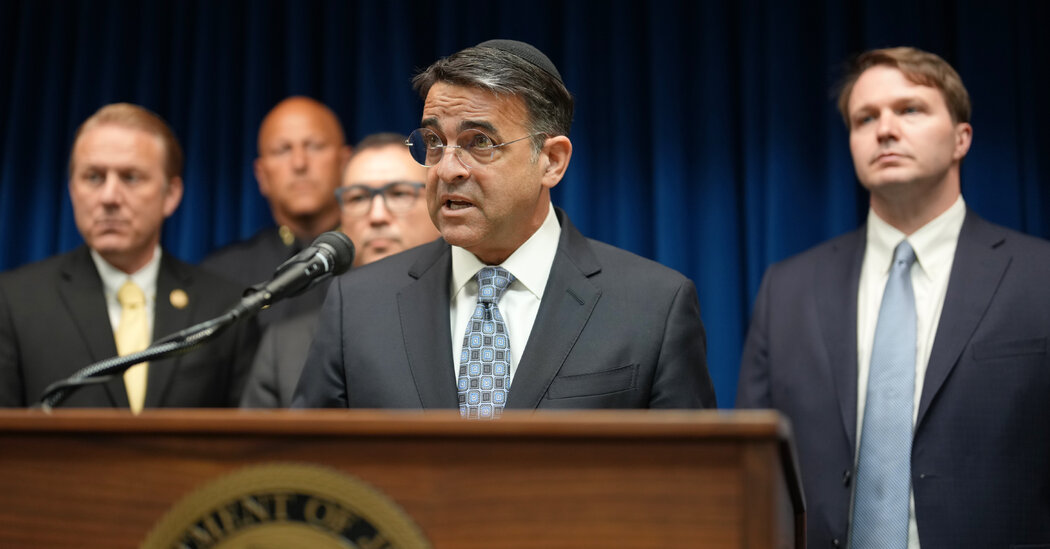
Federal prosecutors in Minnesota have unsealed an indictment against 15 individuals, alleging conspiracy, assault, and other charges related to their alleged violent obstruction of immigration enforcement officers during a crackdown in Minneapolis earlier this year. The indictment was announced on Tuesday by Daniel N. Rosen, the top federal prosecutor for Minnesota, who stated that the defendants are members of two Minneapolis-based groups identified as being connected with antifa, a far-left, anti-fascist movement.
According to Mr. Rosen, twelve of the named defendants were arrested on Tuesday, one was already in custody on unrelated charges, and two individuals remain at large. Antifa, short for “anti-fascist,” is described by authorities and analysts not as a single organization with a defined leadership structure, but rather as a decentralized protest culture composed of activists who generally oppose far-right ideologies and movements. While often associated with protests, the movement sometimes involves confrontations.
The charges laid out in the 94-page indictment include conspiracy to impede or injure a federal officer; solicitation to commit a crime of violence; interstate stalking; assault on a federal officer; and destruction of government property.
During a news briefing on Tuesday, Mr. Rosen articulated the broader significance of the charges. “Today’s charges and arrests reflect a broad federal effort to address organized lawless behavior, which seeks to disrupt the execution of federal law, endanger law enforcement, and importantly endanger the very communities that these defendants falsely claim to be protecting,” he stated.
As of the initial court appearances, it remained unclear whether all the defendants had secured legal representation.
The filing of this extensive indictment occurs at a challenging juncture for federal prosecutors in Minnesota. Since the Trump administration initiated an aggressive immigration enforcement crackdown in the state late last year, the U.S. Attorney’s office has encountered difficulties in sustaining numerous criminal cases brought against individuals protesting Immigration and Customs Enforcement (ICE) operations. This new indictment appears to represent a strategic attempt to delineate between legally protected protest activities and criminal conduct, by linking those accused of conspiracy with a wider group engaged in what prosecutors describe as “apparently lawful protests.”
Defense lawyers have pointed out that approximately half of the 36 federal cases in Minnesota, which specifically charge individuals with assaulting or interfering with federal agents involved in the immigration crackdown, have already been dismissed. These dismissals have often followed judicial scrutiny and questions regarding the sufficiency of the evidence presented by the prosecution.
Reporters at Tuesday’s news conference pressed Mr. Rosen on his office’s prior struggles with prosecuting officer assault cases. In response, Mr. Rosen defended the new indictment, stating, “You watch how this case plays out, you watch how the evidence plays out.”
The Trump administration has consistently prioritized bringing criminal cases against individuals associated with antifa, particularly those who have protested the president’s stringent immigration policies. This approach has drawn criticism from Democrats, who argue that the administration is attempting to suppress political dissent.
Following the news conference, a group of demonstrators gathered near the venue to protest the charges. Participants chanted “shame,” and some displayed signs asserting that “observing law enforcement is protected by the First Amendment.”
Bruce Nestor, an immigration lawyer representing one of the defendants, characterized the indictment as “an act of political oppression” designed “to punish and intimidate.”
The 15 defendants identified in the indictment and charged with conspiracy to impede or injure a federal officer are: Isaac Auman Sant, Emmett James Doyle, Cameron Kennedy, Callum Robinet, Erik Davis, Brian Stillwell Apland, Kyle Wagner, Hannah Margaret Van De Water Davis, Treasure Cay Thoreson, Nathan Junho Kim, Alec Stewart, Douglas Misterek, Dustin Scott Beisell, William Morgan, and Natasha Rakotz.
The indictment alleges that these individuals used various methods to obstruct federal law enforcement operations, including deploying debris, vehicles, and other objects to block roads used by agents. They are also accused of wielding homemade shields to resist officers on foot.
More specific charges were leveled against certain defendants. William Morgan, a transgender woman who was referred to as Ms. Morgan in court, and Natasha Rakotz were each charged with one count of assault on a federal officer. Mr. Rosen did not confirm whether any officers sustained injuries during the alleged incidents. Kyle Wagner, who was already in custody on separate charges, faces additional counts of solicitation to commit a crime of violence and interstate threats. Ms. Morgan and Isaac Auman Sant are charged with interstate stalking, and Ms. Morgan also faces a charge of destruction of government property.
On Tuesday afternoon, the defendants made their initial appearances in groups before Magistrate Judge John Docherty in the U.S. District Court for the District of Minnesota, located in St. Paul. Judge Docherty read the charges aloud and sought confirmation from each defendant that they understood the accusations.
During their initial courtroom appearance, the first group of defendants entered holding up their fists and shaking their heads as the prosecutor spoke. Judge Docherty determined that the conditions for a detention hearing had not been met, and consequently, the defendants were released. Their release was conditional upon them refraining from contacting other defendants and staying off federal property.
Erik Davis, identified as a religious studies professor at Macalester College in St. Paul and one of the defendants, addressed the judge directly, stating, “I looked through the indictment at all the things that include my name, and I seem to be indicted for holding meetings.” This comment highlights a potential point of contention regarding the scope and nature of the alleged conspiracy.
Outside the courthouse, the atmosphere intensified after a protester reportedly attempted to enter the building through a secure entrance, according to The Minnesota Star Tribune. Law enforcement officers responded by deploying chemical irritants and flash bangs. One individual exposed to pepper spray received medical attention from paramedics.
The indictment further detailed that the alleged conspirators frequently utilized information gathered from group chats. Members of these chats reportedly tracked and monitored vehicles associated with the Whipple Building, a known hub for immigration agents. Notably, the indictment clarified that these members, who were not charged, appeared to be acting within legal boundaries by simply observing and sharing information. Prosecutors did not preclude the possibility of additional arrests in Minnesota as the investigation continues.
Many of the allegations outlined in the indictment appear to originate from an announcement made in January by Kash Patel, then acting Director of the FBI. At the height of the protests, Mr. Patel promised an investigation into encrypted chat communications used by activists to monitor immigration raids. This move immediately drew strong condemnation from free-speech advocacy groups, including the Cato Institute, a libertarian think tank, which denounced it as unlawful and contrary to the constitutional protections afforded to political organizations and their members.
Federal prosecutors across the United States have been subject to considerable pressure from Justice Department officials in Washington D.C. to intensify efforts against ICE protesters. For instance, in January, Aakash Singh, a senior department official, reportedly instructed prosecutors from all 93 U.S. Attorney’s offices during a conference call to “go big and go loud” in their enforcement actions.
However, the Justice Department’s efforts have yielded mixed results. As recently as last month, prosecutors dismissed all charges against four protesters who had been accused of interfering with federal agents, underscoring the challenges faced in these types of cases.
Why This Matters
This case in Minneapolis carries significant implications that extend beyond the immediate charges against the 15 defendants:
Balancing Rights and Enforcement:At its core, this situation highlights the persistent tension between the First Amendment rights to freedom of speech and assembly, particularly the right to protest, and the government’s mandate to enforce federal laws and ensure the safety of its officers. The indictment’s attempt to draw a line between “lawful protest” and “criminal behavior” will be closely watched, as it could influence how future protest movements are prosecuted and how citizens can legally observe government activities.
The Role and Definition of “Antifa”:The government’s characterization of the defendants as connected to “antifa” is notable. Given the diffuse nature of the antifa movement—described as a protest culture rather than a formal organization—this case could shape public and legal understanding of how such groups are identified and prosecuted. It raises questions about collective responsibility versus individual culpability within decentralized movements.
Federal Prosecutorial Strategy and Oversight:The indictment comes amidst a backdrop of previous struggles by federal prosecutors in Minnesota to sustain similar cases, with judges questioning evidence. The Justice Department’s directive to “go big and go loud” suggests a broader federal strategy to crack down on certain protest activities. The outcome of this case will serve as a significant test of this strategy and may prompt further scrutiny into whether political motivations influence federal law enforcement priorities and resource allocation.
Immigration Policy and Dissent:The events are directly linked to protests against the Trump administration’s immigration enforcement policies. As national debates over immigration continue, cases like this illustrate the confrontational fault lines between government actions and those who oppose them, providing a glimpse into the tactics used by both sides.
Digital Privacy and Free Speech:The investigation’s reliance on encrypted group chats used by activists to monitor ICE operations raises critical concerns about digital privacy and the extent to which government agencies can surveil and use information from private communications, even when some participants are engaged in legally protected activities. This could set precedents for how law enforcement interacts with online organizing in the future.
Impact on Activism:The broad nature of the charges, coupled with the Justice Department’s stated intent to vigorously pursue such cases, may have a chilling effect on protest movements. Activists and civil liberties groups will be observing whether these prosecutions deter or embolden future acts of civil disobedience and observation of law enforcement.
Legal Precedent:The legal arguments and rulings in this case, particularly concerning conspiracy, obstruction, and the definition of what constitutes an “assault” on a federal officer in a protest context, could establish important legal precedents for how similar situations are handled across the United States.
The United States Justice Department has announced a new domestic terrorism conspiracy case in Minnesota, charging six individuals with offenses stemming from protests against federal immigration enforcement activities earlier this year. The indictment alleges that the defendants, identified as members of organizations including Direct Action Minnesota and subgroups such as the Black Cat Workers Collective, engaged in a conspiracy to commit domestic terrorism during demonstrations in St. Paul in January and March.
According to prosecutors, the defendants “infiltrated and exploited lawful protests to more efficiently carry out its direction actions.” Specific alleged actions included throwing ice blocks at law enforcement vehicles and forming blockades to impede federal agents during protests held at the Whipple Building in St. Paul. On January 23, protesters are said to have gathered at the Whipple Building, where they allegedly threw ice blocks and formed a blockade that prevented federal agents from moving freely. A similar incident is described for March 1, when conspirators reportedly used shields to block the Whipple Building, even after law enforcement officers had issued multiple dispersal orders.
This new case aligns with a pronounced emphasis by the Trump administration on prosecuting what it characterizes as domestic terrorism, particularly targeting groups aligned with the anti-fascist movement, commonly known as antifa, and other left-leaning organizations. Attorney General William Barr and other senior officials have repeatedly voiced concerns about these groups, asserting their involvement in violent acts and calling for robust federal responses. The administration has sought to elevate certain protest-related actions to the level of domestic terrorism, a move that has drawn both support and scrutiny regarding its legal implications and potential impact on civil liberties.
The legal framework for this and similar cases is largely based on National Security Presidential Memo 7 (NSPM-7), a directive issued by President Trump last September. This directive significantly expanded the definition of domestic terrorism. Traditionally, domestic terrorism has been understood to involve violent crimes intended to intimidate or coerce a civilian population, influence government policy through intimidation, or affect the conduct of government by mass destruction, assassination, or kidnapping. However, NSPM-7 broadened this scope to include not only violent crimes like assault but also actions previously considered relatively minor offenses. These include revealing the personal details of agents, often referred to as doxxing, or obstructing federal immigration enforcement operations. This expansion reflects a deliberate strategy by the administration to use a wider range of legal tools against individuals and groups involved in protests that interfere with federal activities.
To facilitate the prosecution of cases under this expanded definition, the Justice Department has begun to establish a specific bureaucratic architecture. This includes placing “coordinators” in various U.S. attorneys’ offices across the country, tasked with overseeing and streamlining cases involving this directive. Furthermore, the Minnesota case was reportedly investigated by a group known as Joint Task Force Vanguard. This task force appears to be specifically dedicated to pursuing inquiries into left-wing groups and individuals, signaling a centralized federal effort to monitor and prosecute activities deemed to fall under the purview of NSPM-7.
Despite the administration’s stated commitment and the energy it has dedicated to building cases against antifa and other left-leaning movements, the actual number of charges filed against them has, so far, remained relatively small. One of the most prominent examples prior to the Minnesota indictment was a case brought in Texas, which resulted in the conviction in March of a group of young protesters. They were accused of being members of antifa and taking part in an armed assault on an immigration facility. While the Texas case demonstrated the administration’s capacity to secure convictions in such matters, the overall volume of charges has not matched the intensity of the rhetoric surrounding the issue.
Regarding the specific defendants in Tuesday’s indictment, it was not immediately clear whether all of them self-identified as antifa, and if so, to what extent. Prosecutors described the individuals as members of Direct Action Minnesota and its subgroups, emphasizing their alleged strategy to integrate into and leverage lawful protests for their “direct actions.” This distinction is significant, as the administration’s public statements often broadly categorize individuals involved in certain protests under the “antifa” label, while specific indictments may focus on organizational affiliations and alleged actions.
This federal action also comes with a backdrop of previous controversies regarding the Justice Department’s handling of related enforcement efforts. For instance, an extraordinary pardon was issued for a security guard in Chicago involved with federal agents at an ICE facility, after a judge in that separate case discovered what was described as an “extraordinary series of grand jury violations.” This prior incident highlights the potential for intense judicial scrutiny and legal challenges that can accompany federal efforts to prosecute individuals involved in protests and immigration enforcement-related activities, particularly when due process concerns are raised.
Why This Matters
The indictment of six individuals on domestic terrorism conspiracy charges in Minnesota holds significant implications for several reasons, extending beyond the immediate legal proceedings. Firstly, it represents a tangible application of the Trump administration’s expanded definition of domestic terrorism, as outlined in National Security Presidential Memo 7 (NSPM-7). By characterizing actions such as throwing ice blocks or forming blockades as domestic terrorism, the case sets a potentially far-reaching precedent for how the federal government categorizes and prosecutes protest-related activities. This expansion of what constitutes “domestic terrorism” could significantly alter the legal landscape for activists and organizers, increasing the potential severity of charges for actions that might previously have been treated as lesser offenses like disorderly conduct or obstruction.
Secondly, this case raises critical questions about freedom of assembly and speech, fundamental rights enshrined in the U.S. Constitution. Critics argue that broadening the definition of domestic terrorism, particularly to include “relatively minor” infractions, could have a chilling effect on legitimate protest. Individuals and groups might become more hesitant to participate in demonstrations if they fear that actions, traditionally viewed as acts of civil disobedience or minor offenses, could be escalated to federal domestic terrorism charges, carrying far more severe penalties and social stigma. This could stifle dissent and limit public expression, which are vital components of a democratic society.
Thirdly, the establishment of a bureaucratic architecture within the Justice Department, including “coordinators” and specialized units like Joint Task Force Vanguard, signals a systemic and sustained federal effort to target specific ideological groups. The apparent focus of these entities on left-wing groups and individuals, particularly those associated with “antifa,” suggests a politically motivated application of federal enforcement powers. This could lead to concerns about governmental overreach and selective prosecution, where certain political leanings are disproportionately subjected to federal scrutiny and prosecution under the guise of national security. The historical context of the Chicago grand jury violations further underscores the importance of judicial oversight and due process in such high-stakes cases.
Finally, the outcome of this case, and others brought under NSPM-7, will shape the future of protest movements and the government’s response to dissent in the United States. It will test the legal boundaries of free expression versus national security, and potentially redefine the balance of power between citizens exercising their rights and the federal government’s authority to maintain order. The way these charges are adjudicated will provide clarity on whether the expanded definition of domestic terrorism will withstand legal challenges and how it will be applied in practice, ultimately impacting civil liberties and the nature of public discourse for years to come.