
United Kingdom Announces Next-Generation Hybrid Warship Program to Command Uncrewed Systems
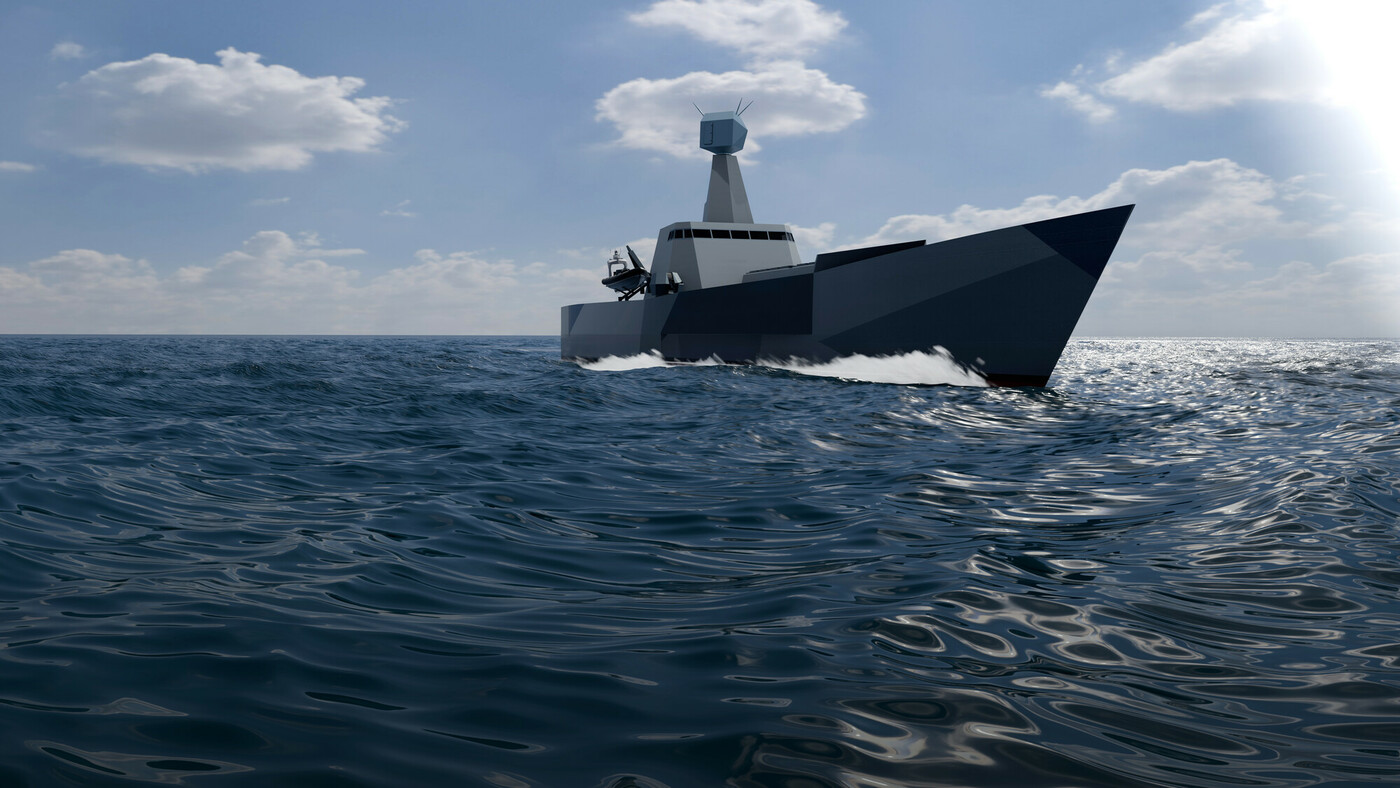
The United Kingdom’s Ministry of Defence has confirmed plans to build a fleet of at least six new Common Combat Vessels (CCVs) for the Royal Navy. These advanced warships are designed to operate as central command hubs for uncrewed systems across air, surface, and subsurface domains, marking a significant evolution in naval strategy. The CCVs will replace the Royal Navy’s aging Type 45 destroyers and the previously planned Type 83 program.
Described as the Royal Navy’s first “hybrid warship,” the Common Combat Vessel is intended to coordinate a diverse array of drones to provide comprehensive air defense capabilities. The first ships are projected to enter service by the early 2030s. They are envisioned as the crewed core of a much larger, integrated “mixed force,” operating alongside the existing fleet of eight Type 26 and five Type 31 frigates. This mixed force will also incorporate a new family of uncrewed platforms, including the Type 91 missile platform, the Type 92 underwater sensing platform, the Type 93 extra-large uncrewed underwater vehicle (XLUUV), and the Type 94 sensor platform. The Ministry of Defence characterizes this initiative as a “once in a generation investment in maritime capability,” with funding allocated in the Defence Investment Plan to commence the crucial design work.
Defence Secretary Dan Jarvis emphasized the forward-looking nature of the new class, stating that the vessels are “designed and built for the increasing threats we face,” offering sailors “hybrid ships.” He highlighted the economic benefits, noting that the ships would be “British-built, supporting jobs across the nation,” with related programs expected to sustain tens of thousands of employment opportunities. The Ministry of Defence explained that this strategic shift—moving away from concentrating capability in a few large, expensive hulls—is expected to expand the Navy’s “reach, resilience and firepower without a proportional increase in crew or cost.”
Beyond national defense, the Common Combat Vessel program is designed to underpin three new Atlantic initiatives: Atlantic Bastion, Atlantic Shield, and Atlantic Strike. These efforts are specifically aimed at countering Russian activity in the North Atlantic and High North regions, protecting critical undersea infrastructure, and reinforcing NATO’s overall deterrence posture. Ministers also pointed to the potential for international sales, citing the successful export of the Type 26 frigate to Australia, Canada, and Norway as a precedent for adaptable British designs.
The decision to proceed with the CCV marks a departure from the Type 83 program, which had long been earmarked as the successor to the six Type 45 air defense destroyers. The Type 45s are slated for retirement by the end of 2038. However, the Type 83 concept never progressed beyond an early developmental stage within the Future Air Dominance System. Defence Minister Luke Pollard informed Parliament earlier this year that approximately £1 million had been spent on platform-specific design work over three financial years, as part of a wider £6.9 million investment, noting that the concept had been inherited in an “underdeveloped state.” The existing Type 45 destroyers have faced significant operational challenges, particularly persistent propulsion faults stemming from a design flaw in their gas turbines, with one vessel, HMS Daring, reportedly unable to deploy for over 3,000 days.
The requirement for a new generation of air defense platforms had attracted considerable interest from the defense industry. At DSEI 2025, as reported by UK Defence Journal, BAE Systems presented a “system-of-systems” vision. This concept centered on a large Air Warfare Command Ship, equipped with advanced sensors, missile batteries, guns, and directed-energy weapons, operating in conjunction with smaller, more adaptable combatants. One specific BAE concept, drawing on the Triton trimaran demonstrator, proposed a lean-crewed sensor and effector platform with full autonomy under study. Gavin Rudgley, a design lead at BAE, indicated that reduced crewing levels would be achieved through “automation, autonomy and the embodiment of artificial intelligence.” Geoff Searle of BAE Systems stated that the firm was modernizing its combat management system under the Re-Code contract to build the “foundation of the sovereign core” capability. BAE representatives also confirmed that evolving a future ship design from the proven Type 26 frigate was among the options under consideration, with one official describing it as “an obvious thing to build on.”
A competing approach was put forward by Babcock, which had previously proposed its Type 31 frigate for a similar role. Under its “ARMOR Force” concept, Babcock envisioned transforming the Type 31 into a controlling node for a fleet of large autonomous surface vessels, to be built by the United States shipbuilder HII. This strategy aimed to disperse anti-submarine, air defense, and strike capabilities across vast ocean areas using swappable containerized payloads, which could be handled at its Rosyth yard. Babcock positioned this proposal as an industrial response to the First Sea Lord’s call for a “hybrid navy” and a direct enabler of the Atlantic Bastion, Atlantic Shield, and Atlantic Strike programs. Sir Nick Hine, Babcock’s chief executive, described ARMOR Force as “our response to the First Sea Lord’s call for a re-imagined Hybrid Navy,” demonstrating the industry’s engagement with the Royal Navy’s evolving strategic needs.
Why This Matters
The United Kingdom’s commitment to the Common Combat Vessel (CCV) program signals a fundamental shift in naval warfare doctrine, moving beyond traditional crewed platforms to embrace a sophisticated, integrated “hybrid” approach. This decision holds significant implications for national defense, international alliances, and the future of maritime technology.
Firstly, from a strategic perspective, the CCVs are designed to bolster the UK’s defensive capabilities in an increasingly complex global environment. By acting as control hubs for diverse uncrewed systems, they aim to enhance the Royal Navy’s “reach, resilience, and firepower” without a proportional increase in crew or cost. This is crucial for maintaining a credible deterrent and projecting influence, particularly in the North Atlantic and High North, where Russian activity has been a growing concern. The explicit linkage to NATO’s Atlantic Bastion, Shield, and Strike programs underscores the UK’s commitment to collective security and its role in protecting critical undersea infrastructure, which is vital for global communications and energy supply.
Secondly, the program represents a substantial technological leap. The emphasis on autonomy, artificial intelligence, and a “system-of-systems” approach places the Royal Navy at the forefront of future naval warfare. This shift away from concentrating all capabilities into a few large, expensive vessels towards a distributed network of crewed and uncrewed platforms could redefine operational flexibility, survivability, and cost-effectiveness. The experience gained from developing and deploying these hybrid warships will likely influence naval strategies globally, setting a precedent for other nations contemplating similar integrations of advanced technology.
Economically, the “British-built” mandate of the CCV program is expected to generate and sustain tens of thousands of jobs across the UK’s defense industry. This investment supports high-skill manufacturing, research, and development, ensuring the UK retains sovereign capabilities in critical defense sectors. Furthermore, the potential for export, highlighted by the success of the Type 26 frigate, could bring significant economic benefits and strengthen defense relationships with allied nations.
Finally, the CCV program addresses critical shortcomings identified in the current fleet, specifically the operational challenges and impending retirement of the Type 45 destroyers. By moving forward with a new design that incorporates lessons learned and cutting-edge technology, the UK aims to ensure its naval forces are equipped to face contemporary and future threats effectively. This investment signifies a long-term vision for the Royal Navy, positioning it as a technologically advanced and adaptable force for decades to come, while also signaling a strategic pivot towards a more decentralized and resilient naval architecture.